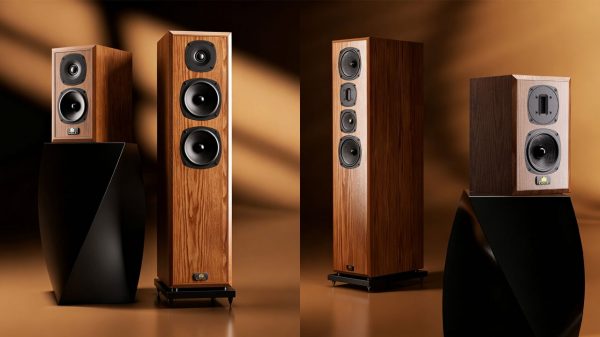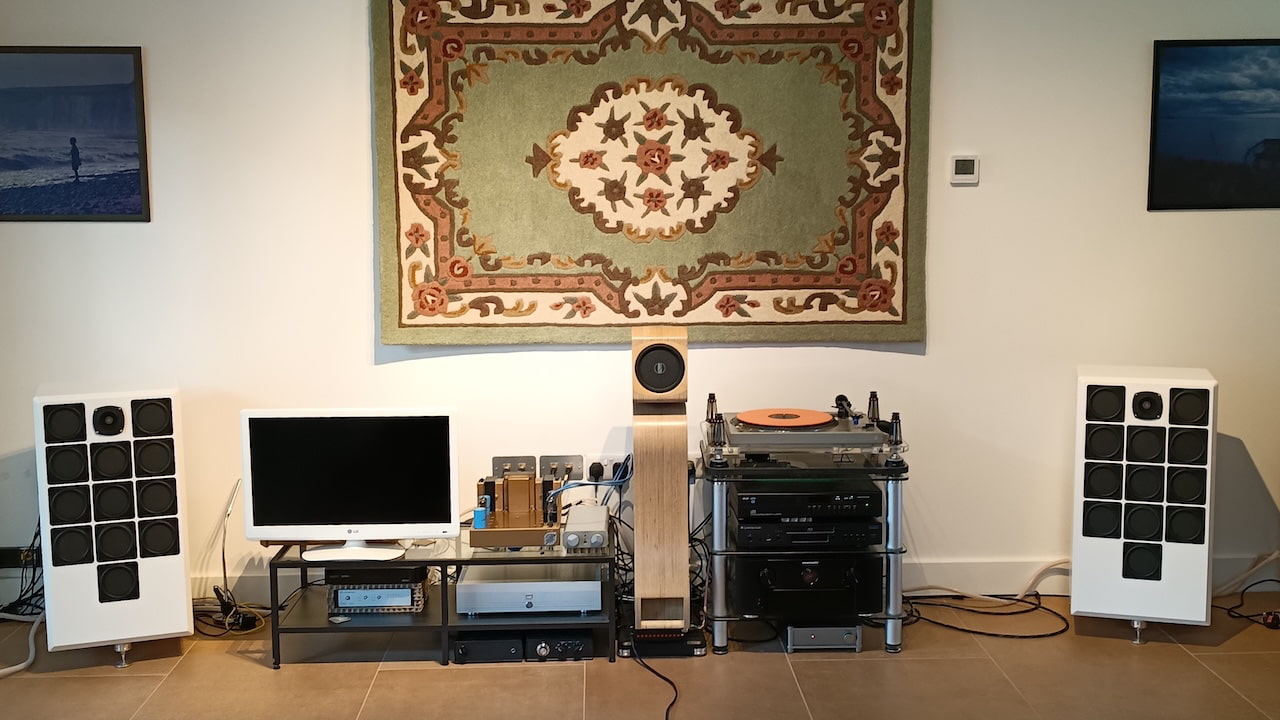
Most loudspeaker launches arrive with a familiar recipe: a slim bass reflex cabinet, some reassuringly expensive looking binding posts, and a promise that the laws of acoustics have finally been fired for incompetence. The Etude Tri Linear Array, or ETLA, takes a different route.
CML Music will launch the ETLA at the North West Audio Show 2026 in Cheshire. It is a sealed, boundary loaded floorstander built around twelve 85mm Balanced Mode Radiator drivers, a compression tweeter, and a cabinet designed to work close to the rear wall rather than demand that the rest of the room move out.
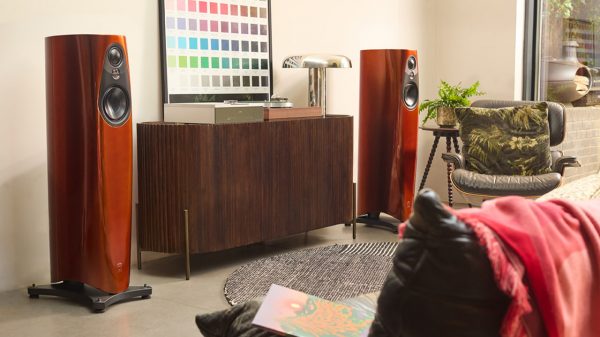
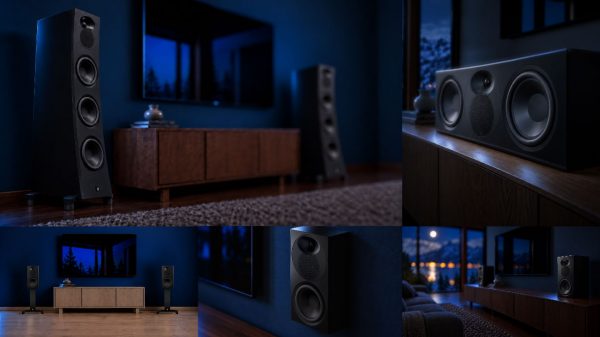
The ETLA is not a conventional narrow tower. At 760mm tall, 400mm wide, and 386mm deep (29.9 x 15.7 x 15.2 inches), it is a deliberately broad shouldered loudspeaker with an angled baffle intended to align the drivers with a seated listener. Its three vertical arrays of four BMR drivers share one sealed internal volume, while a compression tweeter above the central array begins contributing from approximately 4 to 5kHz through a second order roll in.
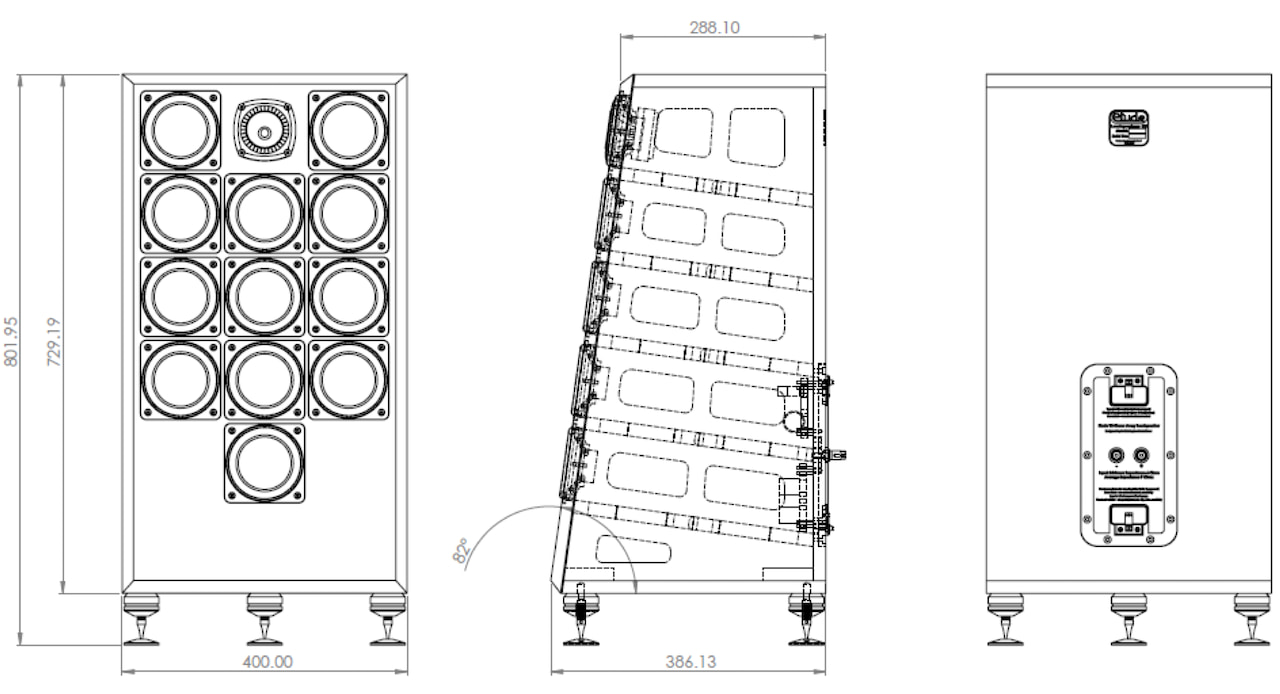
Etude claims sensitivity of approximately 99dB/W under its stated 600Hz measurement condition, with a nominal 8 ohm impedance and 240 watt programme power handling. The goal is clear: real output and dynamic freedom from amplifiers with modest power reserves, including single ended valve designs. The company says amps above 3 watts should be sufficient in an average UK sized room.
That may sound like the sort of thing normally claimed by a man in sandals selling a horn loudspeaker the size of a Fiat Panda, but the published impedance and EPDR data suggest the ETLA has been designed to be a relatively benign load.
Anyone see my Wavelength Audio Duetto?
Boundary Loaded and User Adjustable
The ETLA is voiced for boundary placement, meaning it is intended to sit relatively close to the wall behind it. Etude says the sealed system is tuned for even bass response to around 50Hz before room reinforcement extends the claimed in room reach to 32Hz at minus 6dB. Its published 32Hz to 20kHz response figure is based on sixth octave pink noise measurements in the designer’s listening room, so it should be treated as useful context rather than a standardized anechoic result that you can take to the bank.
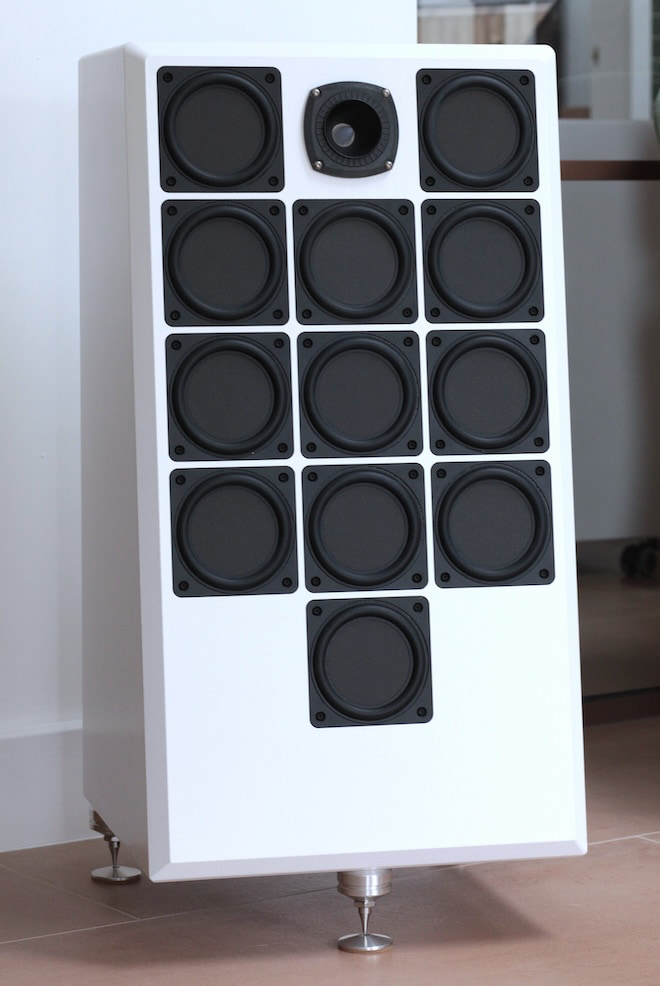
There is also more user control than one normally expects from a £3,000 loudspeaker. The two outer BMR arrays can be rolled off or stepped down to adjust the depth of the presence dip and horizontal dispersion. Owners can also alter the compression tweeter level through solderless resistor changes at the rear of the cabinet. This is either a genuinely useful way to tailor the ETLA to a real room or an excuse to lose an entire Saturday behind the speakers with a flashlight and a growing distrust of resistor values. Probably both. It certainly beats taking the kids to the park or joining the weekly grocery expedition. And if that answer gives you pause, perhaps call the therapist before ordering anything with binding posts.
The cabinet uses 18mm CNC machined, high density exterior grade MDF with internal bracing and no fibre or foam damping material. CML Music specifies crossover parts from Jantzen, Clarity Cap, Bourns, Customcoilsnstuff, and Vishay, with the network boards mounted on elastomeric isolators. Standard finish is satin crackle, with piano lacquer and veneer upgrades available.
Why the BMR Array Matters
The ETLA’s twelve 85mm Balanced Mode Radiator drivers are not conventional midrange units. At lower frequencies, they move like normal speaker cones. Higher up, the surface of each driver is designed to flex in a controlled way, helping it reproduce a wider range of frequencies and spread sound more evenly around the room than a typical small cone. Etude uses the drivers as a high-sensitivity array, handing off to its compression tweeter above the usual midrange crossover region rather than in the middle of the vocal range.
Etude has not identified the BMR manufacturer or exact model used in the ETLA, so it would be misleading to assign the drivers to a specific supplier. BMR technology itself is well established and appears in products from brands such as Cambridge Audio, but Etude’s application is rather different: twelve small wideband drivers arranged as a high-sensitivity array in a sealed, boundary-loaded floorstander, crossed to a compression tweeter above the usual 2kHz to 3kHz vocal range.
8 Watts of 300B Power at Cranage
At the show, the ETLA will be demonstrated in Room 142 with Super Natural Audio electronics, including an 8 watt per channel 300B single ended triode integrated amplifier, plus the company’s valve DAC and preamplifier. Analog playback will come from the Clipaudio Dolomite turntable and Nine Wave titanium tonearm, fitted with an Ortofon Cadenza Bronze and partnered with an EAR Yoshino 834 phono stage.
CML Music says the ETLA will sell direct for £3,000 per pair in satin crackle finish with M8 polypropylene tipped furniture gliders. A grille has been designed, but its price is not final; the current estimate is an additional £200 per pair. The company has not announced North American distribution, U.S. pricing, or a final retail availability date. Its own release note also states that specifications and component choices remain subject to change.
The Bottom Line
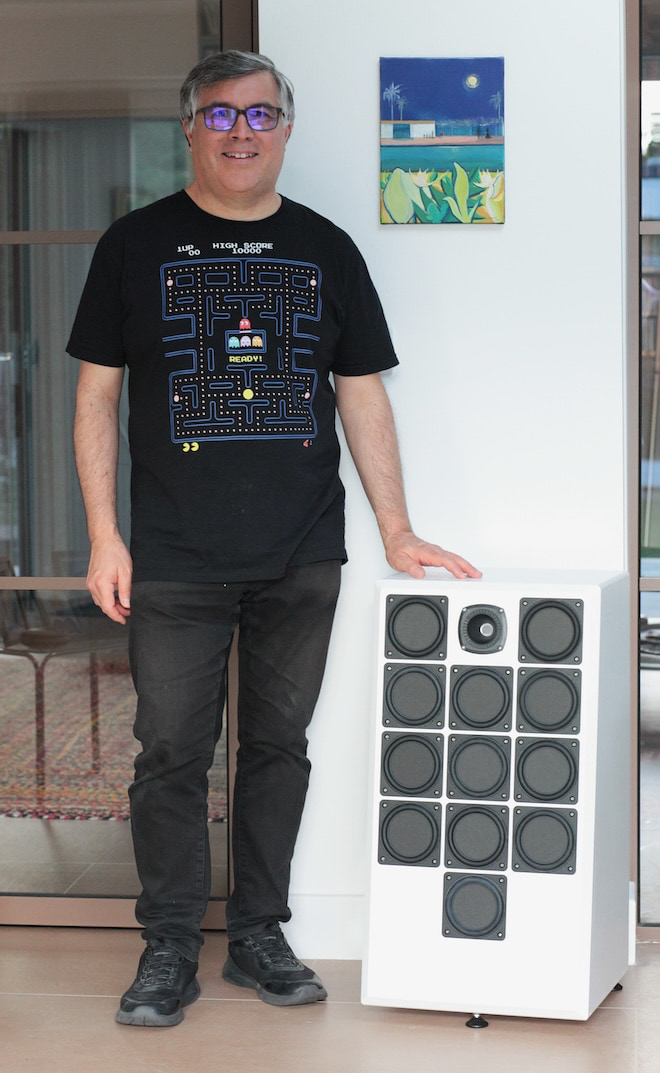
The ETLA is unusual because it combines a sealed, near wall friendly cabinet with 12 BMR drivers, claimed 99dB sensitivity, and compatibility with low powered 300B amplifiers. At £3,000 per pair, it is an ambitious alternative to the usual slim reflex tower. Whether it delivers real bass, scale, and dynamic ease outside its designer’s room remains the only question that matters.
For more information: etude-speakers.com
Related Reading:
- Jean-Marie Reynaud AURALIS Loudspeaker: French Finesse With A Tuned Triangular Transmission Line
- ESD Acoustic Super Dragon First Listen: High End Vienna’s Wildest $3.6 Million Horn System
- Klipsch Heritage First Listen At High End Vienna 2026: Rebellion, OJAS And Klipschorn Bring The Horns
- Ruark Talisman R Floorstanding Speakers At AXPONA 2026: The $2,000 Underdog That Deserved A Crowd