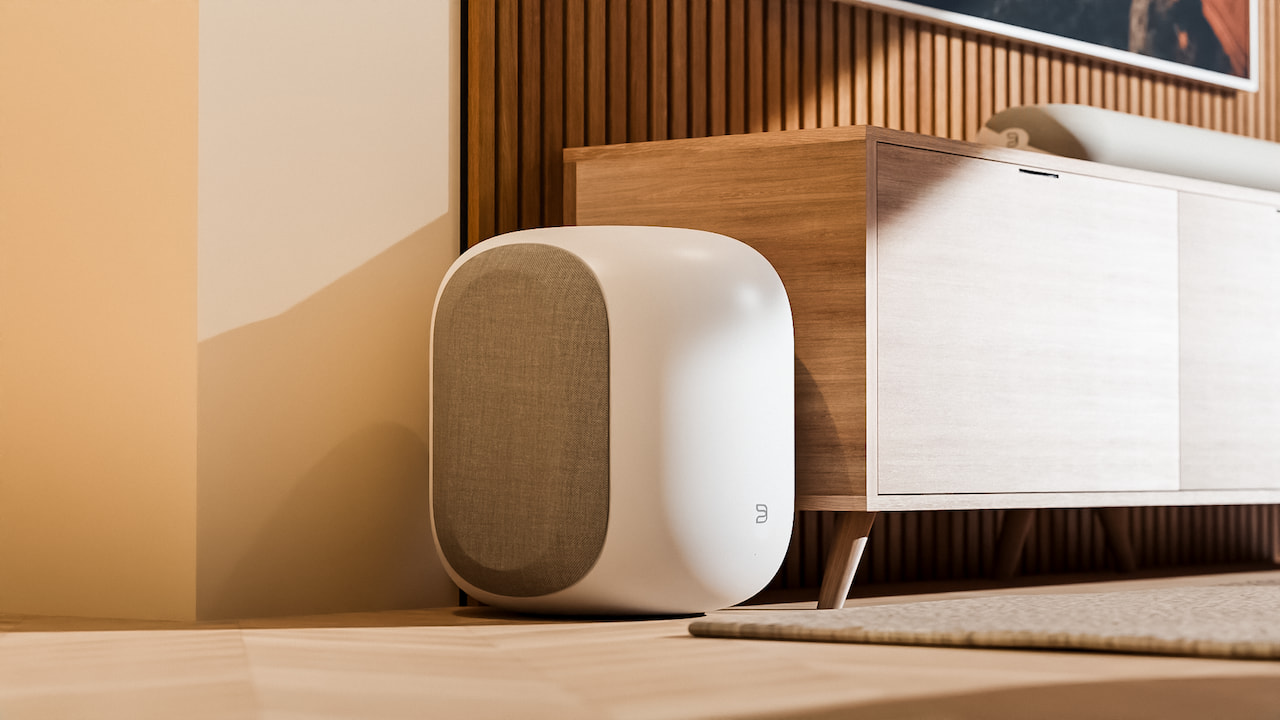
Bluesound has spent the past year rebuilding its wireless home theater lineup around the PULSE CINEMA and PULSE CINEMA MINI soundbars. Now the bass department has finally received the memo.
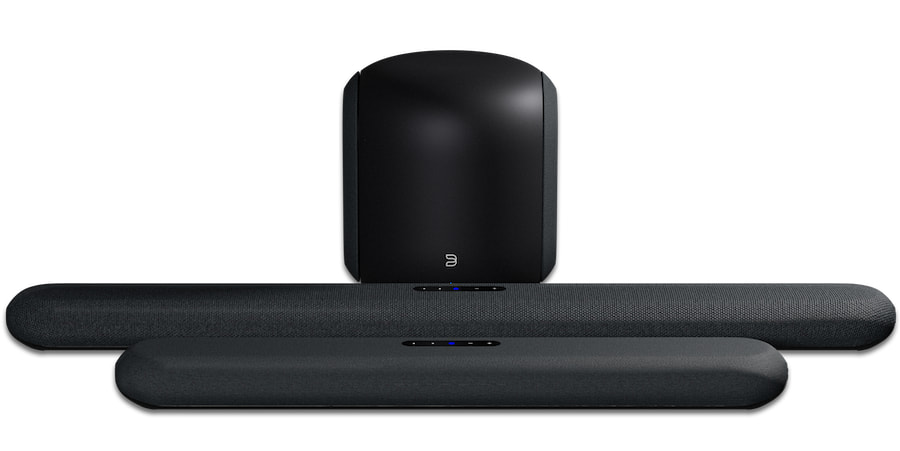
The new Bluesound PULSE SUB is a completely redesigned wireless powered subwoofer featuring a 350-watt amplifier, dual opposing 6.5-inch woofers, Smart DSP, and BluOS integration. It will sell for $1,099 USD and $1,299 CAD when it arrives later in 2026, although Bluesound has not announced a specific shipping date.
Related Reviews:
- Q Acoustics Q SUB100 Review: A Powerful 10-Inch Subwoofer For Music And Home Theater You Can Afford
- Podcast: SVS 3000 Micro R|Evolution Subwoofer At AXPONA 2026
- Bluesound Pulse Cinema Review: Powerful BluOS Soundbar
A Completely Different PULSE SUB
The biggest change is the acoustic architecture.
Two custom 6.5-inch woofers are mounted on opposite sides of the enclosure and driven by the 350-watt amplifier. Because the drivers move in opposition, their mechanical forces counteract one another, reducing cabinet vibration and resonance. Bluesound says the new design has 2.5 times more amplifier power than the previous generation.
Force-canceling subwoofers are not new, but the approach makes considerable sense in a compact product intended for living rooms. Less cabinet movement means more of the energy should be used to move air rather than trying to send the furniture for a walk across the floor.
Bluesound also uses Smart DSP to manage the low-frequency performance, although there is one notable omission from the launch material: the company has not published a frequency response specification. There is also no maximum SPL figure, weight, complete dimensions, or clarification of whether the 350-watt amplifier rating is continuous or peak.
At $1,099, those are specifications we would like to see before getting too excited about the numbers on the front of the brochure.
Built Around the PULSE CINEMA System
The strongest argument for the new subwoofer is not the driver configuration. It is BluOS.
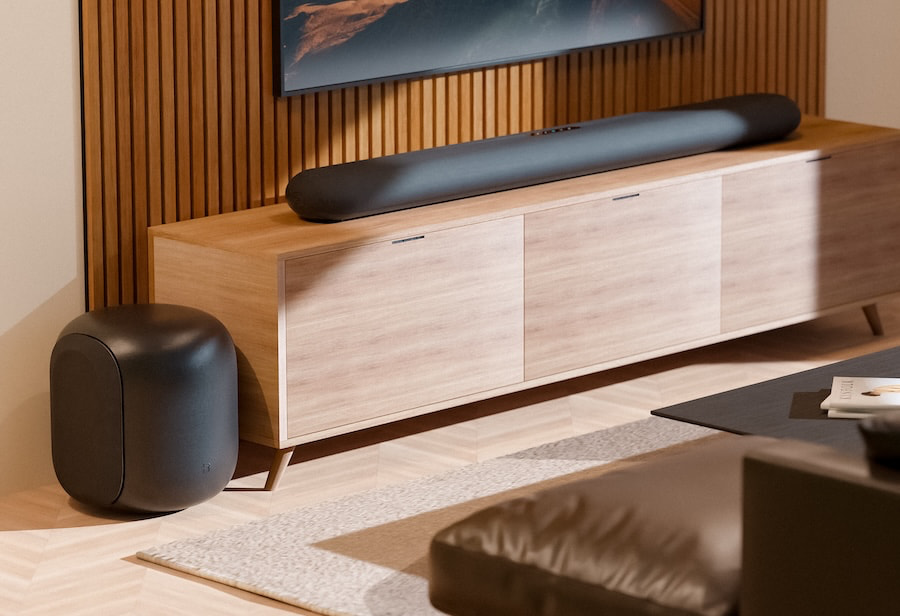
The PULSE SUB was developed as the natural companion for the PULSE CINEMA and PULSE CINEMA MINI wireless soundbars. Once added through the BluOS Controller app, users can adjust subwoofer level, crossover frequency, and phase without introducing another control system or wireless adapter.
That potentially turns the PULSE CINEMA into the center of a fully wireless home theater system. Bluesound specifically suggests combining the soundbar and PULSE SUB with PULSE FLEX speakers for surround duty.
It is also not limited to home theater.
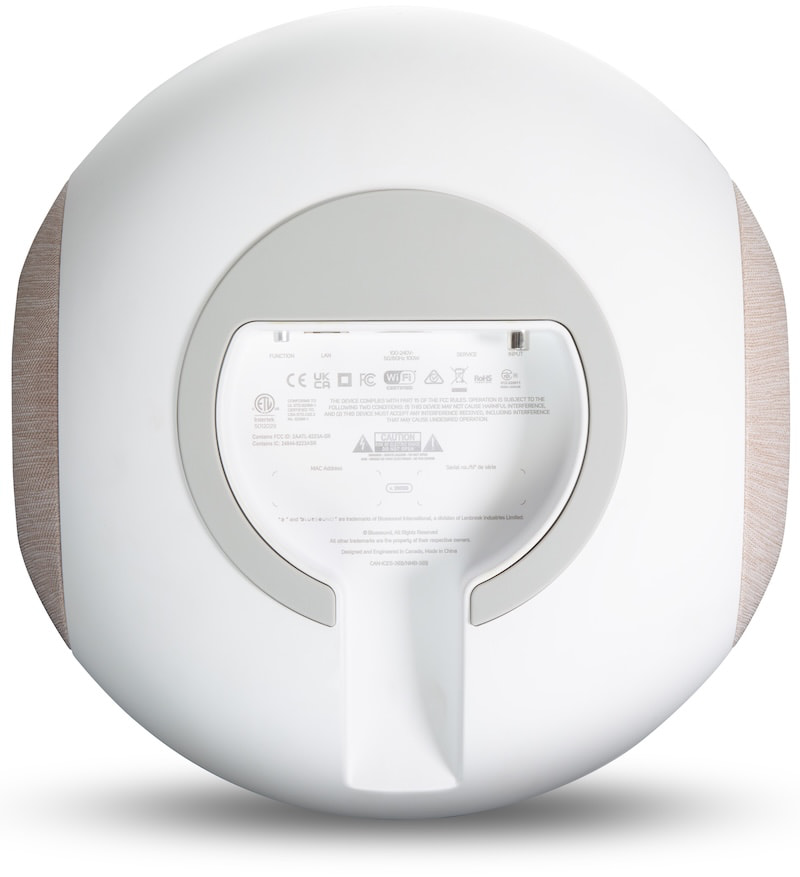
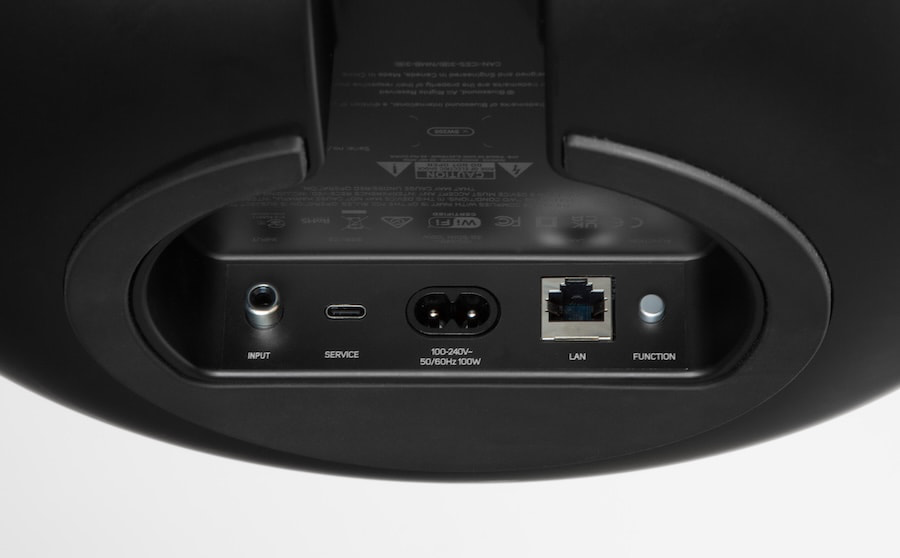
The PULSE SUB can connect with compatible Bluesound products including the POWERNODE, PULSE M, and PULSE FLEX, giving BluOS users another option for two-channel music systems and multi-room installations. Wi-Fi and Ethernet networking are supported, while a low-level analog input allows the subwoofer to work as a conventional wired active subwoofer outside the Bluesound ecosystem.
That analog input is a smart inclusion. Nobody should have to dispose of a $1,099 subwoofer because they decided to switch streaming platforms three years from now.
What Is Actually Unique?
The dual-opposing woofer design isn’t.
Sonos Sub 4 uses two drivers in a force-canceling arrangement and sells for $899. It connects wirelessly to compatible Sonos soundbars and speakers and also offers Trueplay room optimization within the Sonos ecosystem.
The SVS 3000 Micro R|Evolution is an even more uncomfortable comparison at $999.99. It uses dual opposing 9-inch active drivers, 1,200 watts of continuous amplification, a published frequency response of 20Hz to 230Hz ±3dB, and extensive app-based DSP controls.
Then there is the KEF KC62, which costs $1,699.99 and uses two 6.5-inch force-canceling drivers with KEF’s Uni-Core architecture and 1,000 watts RMS of Class D amplification. It is considerably more expensive, but it demonstrates just how established this compact, opposed-driver category has become.
So Bluesound is not reinventing the subwoofer.
Its advantage is how completely the PULSE SUB fits into BluOS. For someone already using a PULSE CINEMA, POWERNODE, PULSE M, or other compatible Bluesound component, adding the subwoofer becomes part of the same control environment rather than another box with another app and another set of setup headaches.
Convenience sounds boring until you’ve spent forty-five minutes trying to make three wireless products from three different companies acknowledge that the others exist.
Designed for the Living Room
The industrial design has also been overhauled.
The new PULSE SUB occupies just over one square foot of floor space and uses rounded contours, tonal-weave fabric grilles, matte satin surfaces, and integrated cable management. Bluesound will offer it in Matte Black and Matte White/Tan finishes.
This is clearly not aimed at the home theater enthusiast running enormous ported subwoofers behind an acoustically transparent screen. Bluesound is targeting people who want meaningful low-frequency output without turning the living room into a commercial cinema or explaining to their spouse why another 100-pound black cube appeared next to the sofa.
That is a large market.
The Bottom Line
The Bluesound PULSE SUB makes the most sense for PULSE CINEMA, PULSE CINEMA MINI, and POWERNODE owners who want deeper bass without adding another control platform or complicating an otherwise clean BluOS system. That integration is the strongest part of the pitch, and the ability to manage level, crossover, and phase from the BluOS app should make setup far less painful than cobbling together products from different ecosystems.
The dual-opposing 6.5-inch woofer design should also help keep cabinet vibration under control, while the compact enclosure is clearly aimed at real living rooms rather than dedicated theaters with enough space for something the size of a dorm refrigerator. The analog input is another smart touch because it means the PULSE SUB can still be useful even if the rest of the system eventually changes.
The problem might be the $1,099 price. That puts Bluesound into direct competition with some very serious subwoofers, and the launch material still does not include a published frequency response, maximum SPL figure, or complete clarification of the amplifier rating. SVS offers considerably more published performance data and deeper DSP control for less money, while Sonos gives ecosystem-focused buyers a lower-cost alternative.
For committed BluOS users, the convenience and system integration could justify the premium. For everyone else, the value proposition is harder to defend until we know how deep, loud, and controlled the PULSE SUB actually is.
Pricing & Availability
The Bluesound PULSE SUB will be available later in 2026 through authorized Bluesound retailers, Bluesound.com, and Amazon. Preorders will begin at a later date.
Price: $1,099 USD / $1,299 CAD at Bluesound.com
Related Reading: