
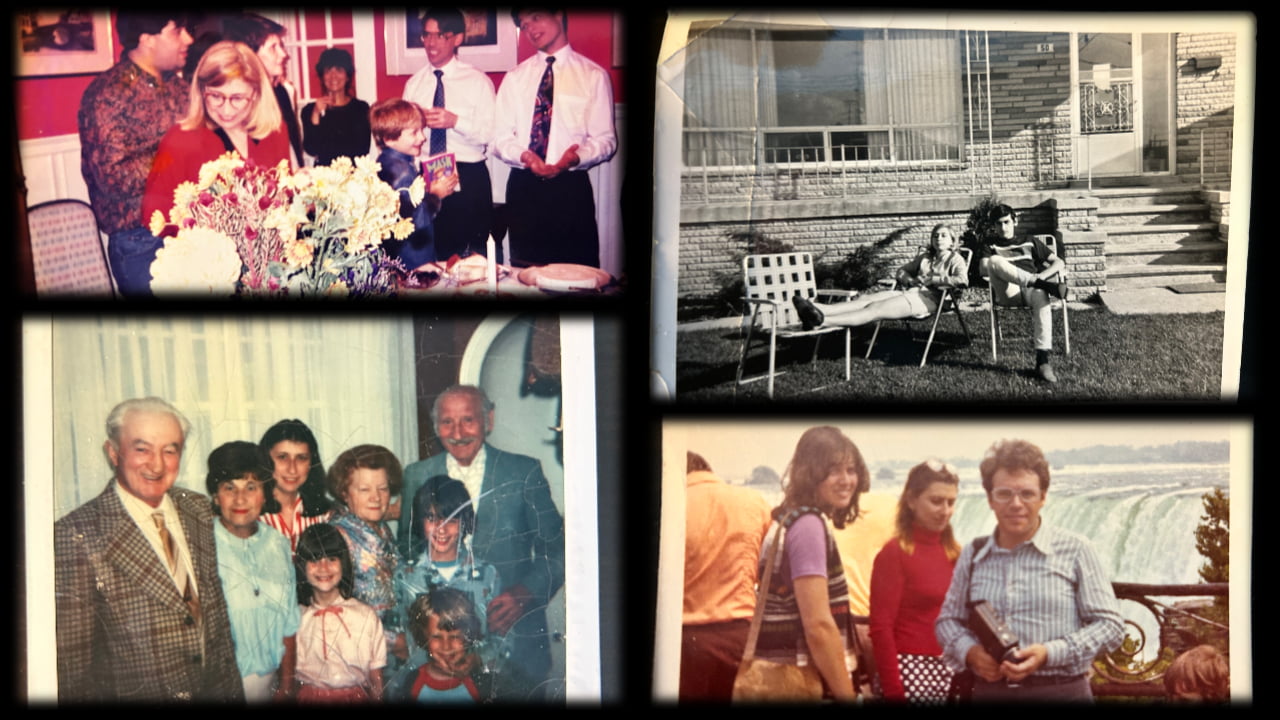
This Sunday is Mother’s Day, and my mom turned 79 this week. She still has her mental health. Which is more than I can say for some of the people currently running the world, but let’s not ruin the challah before we even slice it.
Like any proper Jewish mother and Bubie operating in 2026, she remains loving, formidable, occasionally unhinged, and fully capable of turning a 12-minute phone call from Florida into a hostag e negotiation with weather updates, medical footnotes, and a side order of guilt. We talk three or four times a week, and while the monologues can drift somewhere between family briefing, courtroom questioning, and cable-news crawl, I’m grateful that I still get to hear them.
Have we always agreed on everything? Not exactly. My taste in women and wives has apparently required a congressional inquiry. Being bipolar? “Not a thing.” Hospitalized? Also apparently up for debate, despite the fact that I have the Nurse Ratched scars and a lifetime supply of insurance bills to suggest otherwise.
But putting all of that aside, and I do mean all of it, I’m lucky. Lucky that she’s still here. Lucky that she still picks up the phone. Lucky that she still cares enough to tell me I’m wrong, question my life choices, conduct a long-distance medical audit from Florida, and then ask if I ate. A lot of my closest friends have lost their mothers over the past few years, and many of those same women fed me for decades: cakes, cookies, grilled cheese sandwiches, Kraft Dinner, and the occasional piece of biltong from the South African moms who clearly understood that childhood required protein and protection from the emotional damage to come when I was an adult.
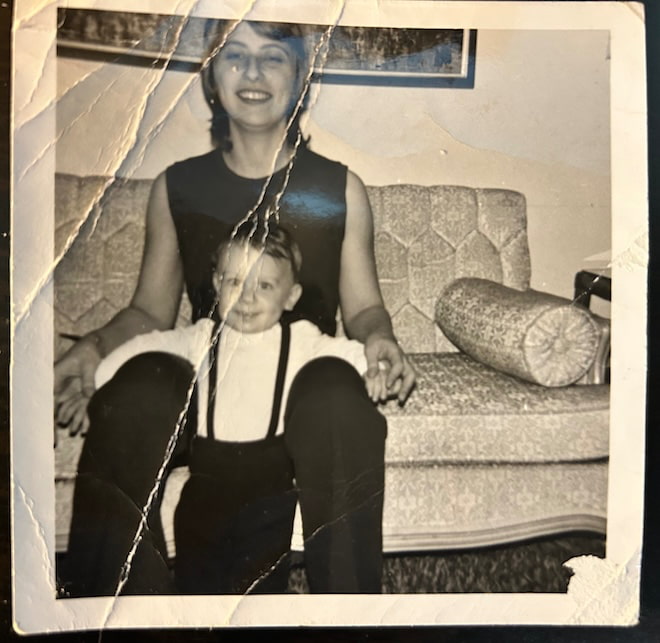
My mother was a prosecutor. A feared one. Her nickname was “Hang ’Em High Lilli,” which tells you everything you need to know about discipline in our house and why I never missed curfew. And on the rare occasion that I did, justice was swift, sentencing was non-negotiable, and the appeal process involved sleeping on the front porch in the falling snow until my father quietly let me in. Warm family memories. With frostbite.
And more than anything, I’m grateful for what she gave me long before I knew what any of it meant: the music, the movies, the voices, the books, and the emotional wiring that turned into a lifetime obsession with high-end audio, home theater, records, films, literature, and the strange belief that all of this actually matters.
Because it does. Not the boxes. Not the price tags. Not the spec-sheet sword fights in the comments section on Audio Science Review. The memories matter. The first songs matter. The movies that rewired your brain before you had the language to explain why. The albums your mother played in the car, in the kitchen, or from the next room while you were too young to understand that those moments were being filed away permanently.
So this week’s roundup starts and ends there: with Songs of My Mother, a Mother’s Day nod to the woman who helped build the soundtrack in my head before I ever reviewed a loudspeaker, argued about a DAC, or lost part of my soul reading another press release about “disruptive lifestyle audio.”
Songs of My Mother
I’ve explained in these pages more than a few times that I was raised in a home of Holocaust survivors. I knew where Auschwitz and Bergen-Belsen were before I knew the location of the secret Rebel base on Yavin IV. That probably explains a few things. My mother was born in a DP camp in Stuttgart, West Germany, because our family’s postwar planning committee had already been handed enough bad options to fill a Soviet filing cabinet.

My grandparents could have stayed in Europe. My Bubie’s only surviving relatives — and we lost dozens on both sides of the family — were her two older sisters in Paris, both of whom barely survived the war and both of whom lost husbands and children. There was a life waiting there, or at least the bones of one: family in the Marais, leather and luggage stores run by my great-aunt and great-uncle, another great-aunt with extensive properties, and the possibility of rebuilding around people who understood the silence between sentences.
It would have been easier in some ways. Family. Money. Paris. Baguettes. Galettes. French wine. Cafés filled with stylish French Jewish women named Leia or Tammy who would have ignored me with world-class precision. Well deserved. Maybe I would have ended up working for Focal, YBA, or some other French audio company where the products are either beautifully austere or wildly over-the-top, with very little interest in the boring middle where beige people go to die.
But they didn’t stay. They got on a boat, crossed the Atlantic, and landed in Toronto. Not exactly the Marais with better hockey. Canada gave them safety, snow, smoked meat, and the chance to build something that wasn’t haunted by every street corner. It also meant that instead of becoming some insufferable Frenchman in a scarf arguing about amplifier topology over a glass of Burgundy, I became this: a Jewish kid from Toronto, raised by survivors, shaped by records, movies, guilt, food, Maple Leafs playoff trauma, humour, and the absolute certainty that mothers do not suggest things. They issue rulings.
My parents were also big technology people. First home computer on the block. First VCR. First projection TV. First CD player. Outdoor speakers before anyone else had figured out that music could follow you into the backyard like divorce proceedings. We were not rich. Not by neighborhood standards. But I have no right to complain. Some kids got a babysitter from Denmark. I got a basement command center.
Being effectively taped to the basement floor with an Atari, a 28-inch Zenith, Celestion loudspeakers, a Marantz integrated amplifier, a JVC Vidstar VCR, and enough books and movies to fill a Corellian freighter was a strange form of supervision. Possibly child abuse. Possibly genius parenting. The jury is still out, but the evidence suggests it worked.
But with all of that technology came some very interesting musical choices, because apparently my mother’s record collection was curated by a French cabaret singer, a Catskills emcee, a Motown producer, and someone who had recently escaped a Nashville honky-tonk with emotional and physical injuries. Édith Piaf was a constant presence. I was not a fan. Barbara Streisand was also in heavy rotation, which means that somewhere in the house, at any given moment, someone was asking “Papa, can you hear me?” The answer, judging by the volume, was yes.
But my mother also had a much funkier side, and that’s where things got interesting. The Animals. The Rolling Stones. The Beatles. Ray Charles. The Supremes. Dolly Parton. Patsy Cline. Elvis. Etta James. Sam Cooke. Leonard Cohen. Carl Perkins. Del Shannon. Booker T. & The MGs. The Kinks. Bob Dylan. Jimi Hendrix.
So I offer, without apology, some of her favorites.
Not the polite list. Not the audiophile-approved dinner-party playlist for men who use record clamps and emotional suppression in equal measure. These are the songs she would approve of if I had to go out fighting: with Leia holding a stolen Imperial blaster and dropping Death Troopers in a corridor, me with Han Solo’s DL-44 punching holes through blast doors, and the Millennium Falcon waiting in the hangar with the engines hot, the hyperdrive questionable, and my mother yelling from the Emeperor’s Throne Room that I should have brought a sweater.
Ray Charles — “I Got a Woman”
Ray Charles recorded “I Got a Woman” in Atlanta on November 18, 1954, and Atlantic released it that December. Built from the gospel framework of the Southern Tones’ “It Must Be Jesus,” Charles turned the sacred into the secular and helped draw the blueprint for soul music before the industry had fully figured out what to call it. It became his first No. 1 R&B hit in early 1955, which is a polite way of saying Ray kicked the church doors open, moved the piano into the club, and nobody was quite the same afterward.
For anyone under 40 who thinks they discovered it through Kanye West’s “Gold Digger,” slow down. That 2005 track samples Ray Charles’ “I Got a Woman” and opens with Jamie Foxx interpolating Charles, fresh off playing him in Ray. It was a clever modern reframe, but the engine under the hood was still Ray: gospel heat, R&B swing, and that voice making trouble sound inevitable.
Frankie Lymon & The Teenagers — “Why Do Fools Fall in Love”
Released in 1956, “Why Do Fools Fall in Love” turned Frankie Lymon & The Teenagers into one of early rock and roll’s first true teen sensations. Lymon was only 13 when he recorded it, and that impossibly high, bright lead vocal helped push the single to No. 1 on the R&B chart, No. 6 on the U.S. pop chart, and No. 1 in the U.K. The song’s authorship and royalties later became a legal mess, because of course the music business saw a teenage Black singer with a generational voice and thought, “How can we make this worse?”
As for the title question, my mother has been asking a version of it about me since I was old enough to carry a Star Wars knapsack and a Sherwood hockey stick to school. “Why do fools fall in love?” became less doo-wop lyric and more maternal cross-examination, especially after she reviewed some of my romantic choices and mentally prepared sentencing guidelines. Frankie made it sound innocent. My mother made it sound like her closing argument before sentencing.
Johnny Cash — “I Walk the Line”
Released by Sun Records in 1956, “I Walk the Line” became Johnny Cash’s first No. 1 country hit and helped define the Man in Black before the mythology got fully dressed and started glaring from the corner. Written by Cash and produced by Sam Phillips, the song was built around that clipped, train-like rhythm and Cash’s low vocal discipline, with the lyric framed around fidelity, temptation, and keeping himself in check while married to Vivian Liberto.
“I keep a close watch on this heart of mine” hits a little differently when you’ve spent quality time incarcerated at one of the state’s better mental health facilities, where the décor says “institutional beige,” the food says “appeal denied,” and the staff speaks fluent Nurse Ratched with a side of clipboard. Cash sang it like a man trying to stay on the rails. I heard it later as someone who knew what it felt like when the rails were no longer taking calls. My mother probably heard it and thought, “Good. Finally, a man with boundaries.” Then asked why I didn’t have any.
Sam Cooke — “You Send Me”
Released in 1957 on Keen Records, “You Send Me” was Sam Cooke’s debut pop single and the record that moved him from gospel royalty with The Soul Stirrers into secular superstardom. Written by Cooke, produced by Bumps Blackwell, and arranged by René Hall, it reached No. 1 on both the Billboard pop and R&B charts, which is a tidy way of saying that Cooke didn’t just cross over; he walked into the room, took the microphone, and made everyone else sound like they were still waiting for permission.
Cooke remains, for my money, the greatest soul and R&B singer of all time. Smooth without being soft. Romantic without sounding neutered. Spiritual even when he was singing to someone across the room and not upstairs. And then, in December 1964, he was dead at 33, shot at the Hacienda Motel in Los Angeles by motel manager Bertha Franklin; authorities ruled it justifiable homicide, though the circumstances have remained disputed for decades.
Elvis Presley — “Are You Lonesome Tonight?”
Written by Roy Turk and Lou Handman in 1926, “Are You Lonesome Tonight?” had been around for decades before Elvis Presley recorded his version at RCA Studio B in Nashville on April 4, 1960. RCA released it that November, and Elvis took it to No. 1 on the Billboard Hot 100 for six weeks.
Even that level of lonesome never justified any of my behavior in my mother’s eyes. Loneliness? Not a defense. Bad judgment? Also not a defense. Romantic stupidity? She had sentencing guidelines prepared before I finished explaining myself. As kids, we always assumed she played this one because my father was constantly on the road, either running our pizza empire — you had to be there — or giving financial seminars to people who probably behaved better than I did. Elvis asked, “Are you lonesome tonight?” My mother heard, “Where is your father, why are you like this, and did anyone remember to turn off the oven?”
Del Shannon — “Runaway”
Released in February 1961, “Runaway” was written by Del Shannon and keyboardist Max Crook, recorded at Bell Sound Studios in New York, and built around Crook’s strange, brilliant Musitron keyboard break; one of those sounds that still feels like it escaped from a haunted jukebox and refused to identify itself.
We always wondered whether my mother played “Runaway” as a subtle hint to the five of us, or whether she just liked that it became the theme song to Crime Story, the Michael Mann-produced police/gangster series I loved in the 1980s. Del Shannon re-recorded it for the show with altered lyrics, which made perfect sense: the original already sounded like someone fleeing bad decisions down a wet alley at 2 a.m. In our house, it could have been a warning, a soundtrack, or a maternal threat with a backbeat. With my mother, those categories were never mutually exclusive.
Booker T. & The M.G.’s — “Green Onions”
Released in 1962, “Green Onions” is one of the defining instrumentals of the Stax era: Booker T. Jones on Hammond organ, Steve Cropper on guitar, Lewie Steinberg on bass, and Al Jackson Jr. on drums. Built around a 12-bar blues groove and Booker T.’s Hammond M3 riff, the track hit No. 3 on the Billboard Hot 100 and became the kind of record that doesn’t need lyrics because it already walks into the room wearing sunglasses.
Steve Cropper later became famous to another generation as Steve “The Colonel” Cropper in The Blues Brothers, but before the black suits, porkpie hats, and vehicular felonies, he helped build the Memphis soul sound at Stax and played on enough essential records to make most guitar heroes look like they were still tuning in the hallway. Cropper died in December 2025 at 84, but “Green Onions” still sounds like trouble getting organized. I loved The Blues Brothers so much that I named my son after Joliet Jake.
Jimi Hendrix — “Hey Joe”
Released in the U.K. on December 16, 1966, “Hey Joe” was the debut single from The Jimi Hendrix Experience, backed with “Stone Free,” and it reached No. 6 on the U.K. singles chart. The song predates Hendrix — Billy Roberts is credited with writing it, and The Leaves had already taken a faster garage-rock version into the U.S. Top 40 — but Hendrix’s version slowed the tempo, leaned into the tension, and gave the song a darker, more deliberate shape.
It is also, let’s not dance around the crime scene, a murder ballad about a man who shoots his unfaithful woman and heads for Mexico. Which means my mother’s prosecutor brain would have skipped the guitar tone entirely and gone straight to indictment, conviction, sentencing, and whether the accused had the nerve to wear a clean shirt to court. Adultery was not a grey area in our house. The Torah treated it as a capital offense worthy of stoning. My mother called that “something to do after breakfast.” Hendrix made “Hey Joe” sound dangerous and doomed. Mom would have called it Exhibit A.
The Animals — “House of the Rising Sun”
Recorded in 1964, The Animals’ version of “House of the Rising Sun” brought a traditional folk song about ruin in New Orleans into the British Invasion era. Released by MGM in the U.S. and Columbia in the U.K., it reached No. 1 on both sides of the Atlantic, driven by Eric Burdon’s vocal and Hilton Valentine’s arpeggiated guitar intro, which remains one of the most recognizable openings in rock.
I remember my mother playing it for us on their Thorens and thinking this was the greatest song imaginable if one had to go out in a blaze of glory. Not Sharon Stone dying in Casino glory. Too much powder, too much bad judgment, not enough lift. More like sitting in the cockpit of the Falcon, throttles forward, flying straight into the Death Star’s reactor core while everyone else argues about whether the hyperdrive works. In hindsight, that may not have been the healthiest takeaway from a childhood listening session, but compared to some of my later decisions, it was practically a strategic plan.
Related Reading:
- The Wichita Lineman Walks Out Of The Hidden Fortress, Dodges Godzilla, Grabs A Dog At Rutt’s Hut, And Ends Up In The Cuckoo’s Nest: Editor’s Round-Up
- Record Store Day, AXPONA 2026, And The Americanization Of Emily: Editor’s Round-Up
- Audiophile Lust, Hoarding, Systems You Can’t Afford & The Bad Sleep Well Is No Picnic: Editor’s Round-Up



































Asa
May 8, 2026 at 3:34 pm
Thanks for the writeup, Ian. It feels like some of your writing is therapeutic in nature. A way to get it off your chest and into words on a page. Well done and keep rolling!
Your mom sounds like my dad (RIP), who dicatated the music in the house and was into tech early on, but later seemed to not find any happiness nor peace in it. It had its effects and
Your entrance into Toronto also reads like Geddy Lee’s book, “My Effin’ Life”. Read it if you haven’t. I read the first part, but had to put it down later as his take on current events is like any rock star’s view, but I did enjoy the stories about how he got here, early life, school, mom and relatives, etc. You share a similar beginning.
Happy TGIF and here’s to our moms who, while flawed like the rest of us, seemed to know when to defend and when to sit back and watch the consequences run their course.
Ian White
May 8, 2026 at 4:26 pm
Asa,
Every word is therapeutic. Geddy’s mother (RIP) survived Auschwitz and was liberated with my Bubie from Bergen-Belsen.
They came over at different times but knew one another in the camps and Bathurst Manor. My mom is older than Geddy but went to the same HS.
HMD to your mom and all of them who gave us a chance.
IW
Asa
May 8, 2026 at 6:21 pm
Wow…thanks for the additional context, Ian. Small world indeed.
Ian White
May 8, 2026 at 7:05 pm
Asa,
I’ve seen Rush 19 times but I must confess that I’m not a Geddy fan. He was somewhat of a dick to me as a kid at a Blue Jays game and it left an impression. I met Alex at a Whole Foods in Toronto in 2002 and he was super nice. Neil was irreplaceable and while I’m sure Anika will be amazing — I’m not really that into their new tour.
IW
Asa
May 8, 2026 at 7:37 pm
I’m sorry to hear that, Ian (Mr. Weinrib being a dick). As a long-time RUSH fan who has seen several concerts (not 19!), I enjoyed their music, but like you, was turned off by his attitude about many things. I know he’s a big baseball fan and too bad that he couldn’t show a little care given how he got to where he is.
I saw a few clips of their new tour and seemed a bit “meh”. They had their time and “the band” is no longer, so do a solo thing or whatever, but time to hang up the band name, imho.
Alex and Neil both seemed like cool blokes and maybe Neil always ran off the stage so quickly because of Geddy. Ha. Neil liked his solo time which I can relate to!
Hope your new digs are treating you well!
Ps. I was doing some grocery shopping many years ago and turned to go down the next aisle and standing there was Eddie Van Halen with Valerie. He looked up briefly and they just kept going. He looked like shiz. Rock n’ roll lifestyle is real.
Ian White
May 8, 2026 at 8:15 pm
Gary was always a dick. I think he ran from his past for many years and felt guilty when his mother passed away a few years ago. I’ve actually been to the Negro League Hall of Fame. It’s a worthwhile visit. He donated a sizeable portion of his baseball collection from that era to the Hall.
I watched the lame Canadian version of the Grammy Awards (Juno) and was horrified by his singing. He sounds bad. Like “Geddy needs to reconsider and just be a Jewish Zaida” bad.
Alex is just superb. He was definitely underrated. Neil was in a different league. Top 5 all-time.
I’m doing ok. Spending time in Jersey and Florida. Texas might be calling this summer.
Eddie! She was just on TV the other day. She’s had a rough go of it.
IW
Chris Boylan
May 11, 2026 at 7:39 pm
Hey, Asa,
What do you mean about clips of the new Rush tour being “Meh?” Doesn’t the tour start on June 7th? I personally was dubious when I first heard about the tour, but I became more optimistic when I started checking out some of Anika’s performances. She is an amazing drummer with an innate feel for odd time signatures. I did idolize Neil back in the day, but she seems like a worthy spiritual successor.
Bad Son
May 9, 2026 at 11:43 am
What a wonderful tribute, although, I’m not sure your mother would appreciate all of the spilled milk.
It does explain a lot. 🙂
Ian White
May 9, 2026 at 3:23 pm
Bad Son,
Appreciate that. She cracked the case with a hammer a long time ago.
IW