
The hangover from AXPONA 2026 is real. Forty-plus articles, podcasts, and videos from the eCoustics team are already live, with more still coming, and at this point the elevator delays feel easier to recall than half the systems we heard. That’s not a knock on the show — it’s a reality check. There were 750 brands, hundreds of rooms, and more six-figure systems than anything resembling sanity. We covered as much ground as six people could, but let’s be honest: it was physically impossible to hear it all, and even harder to process it after the fact. What stuck? The sound, sure, but also the price tags.

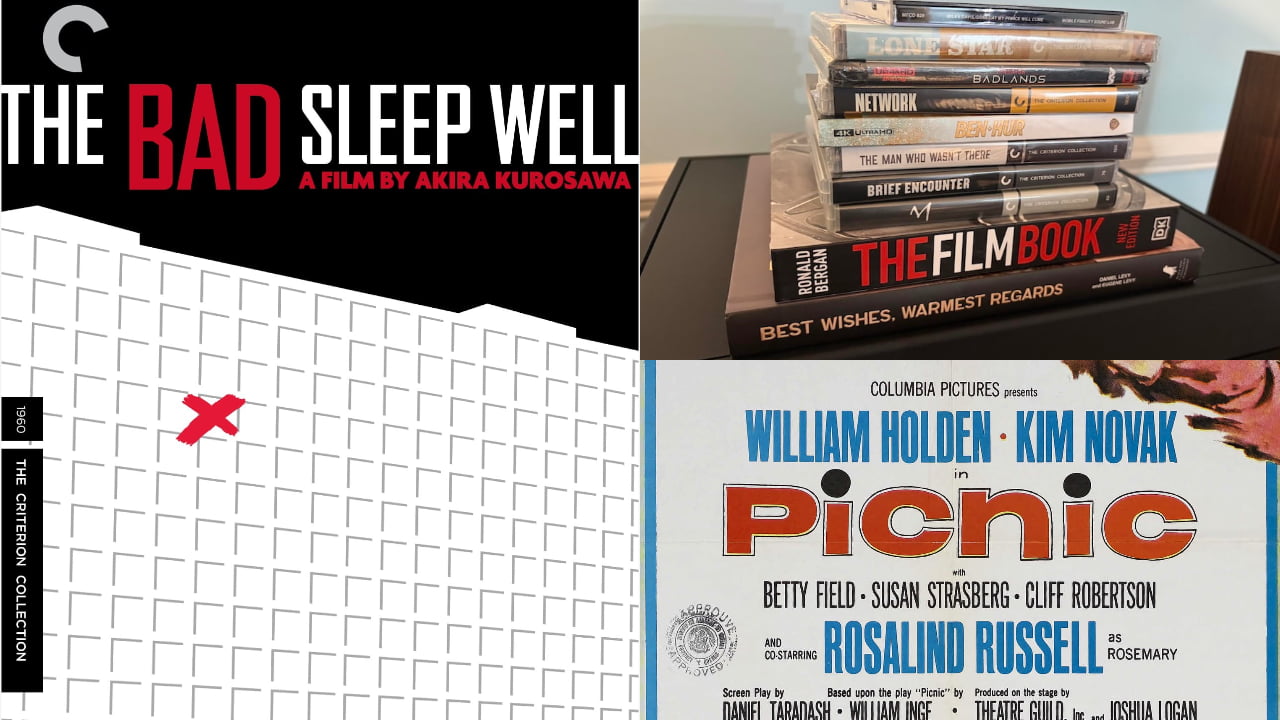
Audiophile lust is a powerful thing. So is the quiet jealousy when you realize most of what impressed you lives well beyond your budget. That tension between passion and reality is where this round-up lives. Along the way, we’ll drag in a pair of films worth your time, The Bad Sleep Well and Picnic, because they capture something about obsession, corruption and consequence that feels uncomfortably familiar. And yes, we probably need to have a conversation about hoarding.
Audiophile Lust, Jealousy, and Systems You Can’t Afford
Don’t get me wrong, I’m not here to torch capitalism. It works, mostly because human nature demands it. My personal shopper at Huckberry can pay her rent because of it. The idea behind Karl Marx’s famous line, “from each according to his ability, to each according to his needs,” sounds noble until you drop it into a room full of audiophiles. Needs? That word doesn’t survive first contact with a six-figure system.
Because what we saw at AXPONA wasn’t about need — it was about want, dialed up to a level that borders on irrational. You sit down, and the system locks onto you like the Death Star’s tractor beam and for a few minutes, everything makes perfect sense. Then you glance at the price sheet and reality kicks the door in. That’s where audiophile lust lives. Right next to it? Jealousy. Not the petty kind—the quiet, calculating kind that starts inventorying your life like a liquidation sale, figuring out what you can sell, trade, or “temporarily rehome” to bring even a slice of that system back with you.
Life is about priorities and making choices. New R2R deck or college tuition? Bat Mitzvah or a 200-pound solid-state amplifier? New stomach or a 32-bit/784kHz/DSD R2R DAC hand-built in Switzerland by monks who’ve clearly taken a vow of silence and a vow to bankrupt you one perfectly matched resistor at a time?

This is your life.
How do I know I’m right? Let’s start with this morning.
Every five years, I buy a new car. It’s a system. It works until it doesn’t. We’ve been a one-SUV family since the end of COVID, and my Toyota hybrid decided to detonate on a highway in Northeast Pennsylvania while I was taking my eldest back to college. Not ideal.
What made it worse? The dealer back in New Jersey left us hanging. No help. No urgency. Nothing. They’ve officially earned a lifetime of me driving past with one finger raised in a proper Jersey salute.
So here I am, a Thursday in April, standing inside a Mazda dealership. First time. A Mazda virgin. Everyone tells you once you’ve had one, nothing else feels the same. I’m not buying that. Audi still makes a strong case. So does a Toyota Highlander in a county park in Westchester with a bag of biltong on the front seat.

I walked into the dealership thinking I’d be decisive. I wasn’t. I test drove a 2026 Mazda CX-90, then the CX-50 Turbo, and did what any self-respecting audiophile does when faced with the smarter option; I circled back and signed the paperwork on a 2026 CX-5 Premium. Not the top dog. Not the headline act. But the one that actually makes sense when the numbers stop being theoretical and because the University of Delaware and my daughter’s Yeshiva have me locked in for the next 5 years.
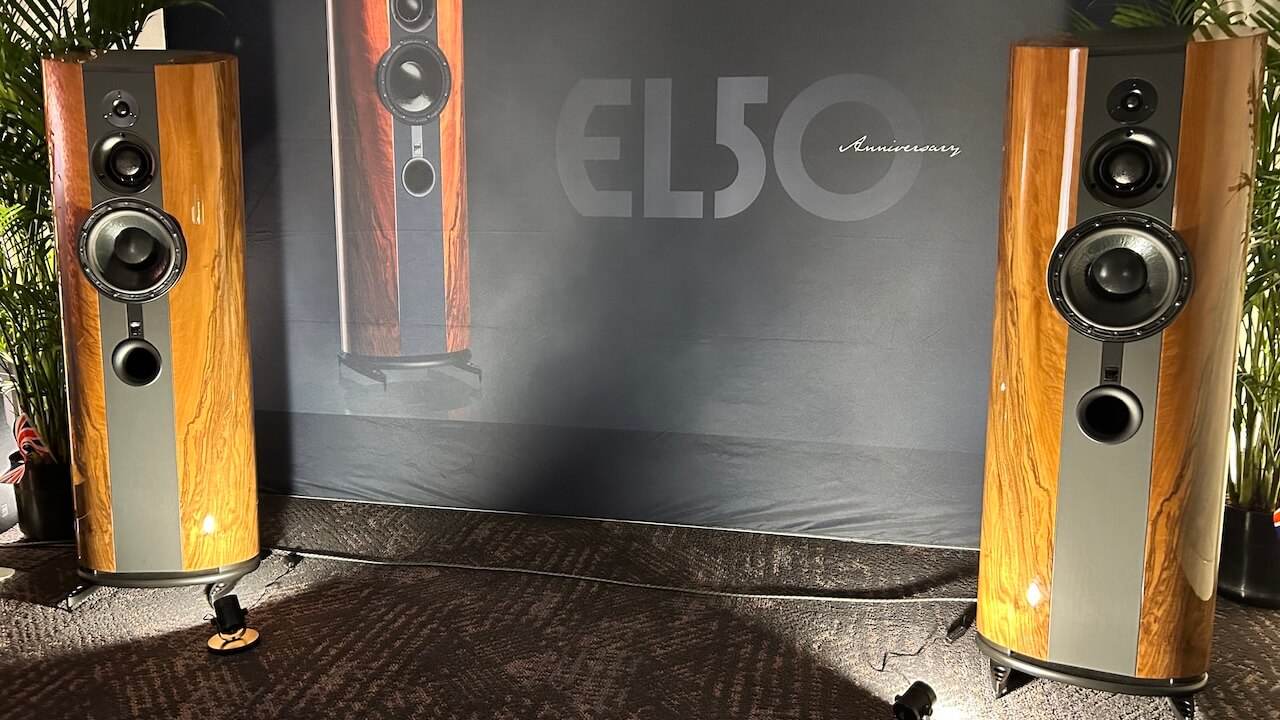
The CX-90 Limited? That’s your ATC EL50 Anniversary moment. Big, commanding, unapologetic. It tells you exactly what it is within the first 30 seconds and dares you to keep up. The CX-50 Turbo plays it a little cooler, more composed. Think Quad ESL 2912X—still very serious, still capable of emptying your wallet, but with just enough restraint to convince you that living on ramen for the next year is a perfectly reasonable trade-off.

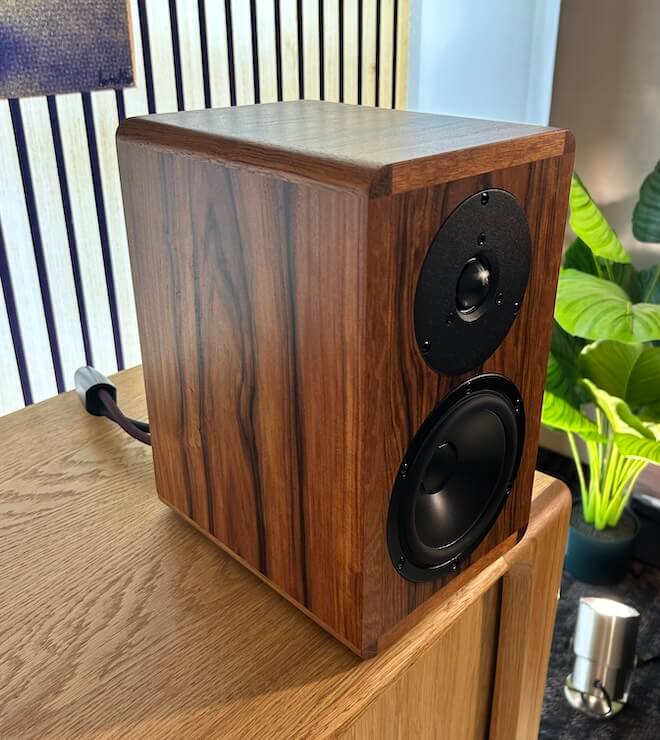
And then there’s the CX-5 Premium. $39,494. Glass moonroof. And yes, a Bose system with CarPlay support because even in compromise, we cling to something resembling joy. This is your Dynaudio Legend or DeVore O/baby moment. Not cheap, not entry-level, but attainable if you squint hard enough and avoid opening too many credit card statements. It’s what you end up with after reality taps you on the shoulder and asks if you’ve completely lost your mind.
That’s capitalism. The test drives are intoxicating. You push the limits a little, imagine a different version of yourself, and then you shut the engine off. Silence. Followed by the kind of stare from the backseat that suggests your financial decisions have already been decided for you. In that moment, you realize you’re lucky you’re getting anything at all.
And sure, I’ll say it—I work hard. Probably harder than most. But effort doesn’t rewrite the price sheet. It just makes the compromise sting a little less.
Still, I didn’t leave empty-handed. A new pair of Vans, Flint & Tinder shorts, and a chore coat ordered from Huckberry on my iPhone while pretending to go to the bathroom at First Watch. Call it a consolation prize. Or, if we’re being honest, the kind of small, controlled indulgence that keeps you from doing something truly stupid like going back tomorrow and convincing yourself the CX-90 might be a very smart “investment.”
Hoarding the Culture: Music, Books, Movies… and Now We Have a Problem
So can we have a short conversation about hoarding?
I’ve been collecting for 50 years. It started with books; Hebrew books, a pocket-sized Torah (not the fancy one Rabbi Friedberg handed me at my Bar Mitzvah at Beth Tzedec Synagogue on March 19th, 1983…that one is still sitting on the shelf behind me). From there it spiraled — books, records, CDs, movies in every format imaginable. VHS, LaserDisc, DVD, Blu-ray. If it spins or flips open, I’ve probably got it.
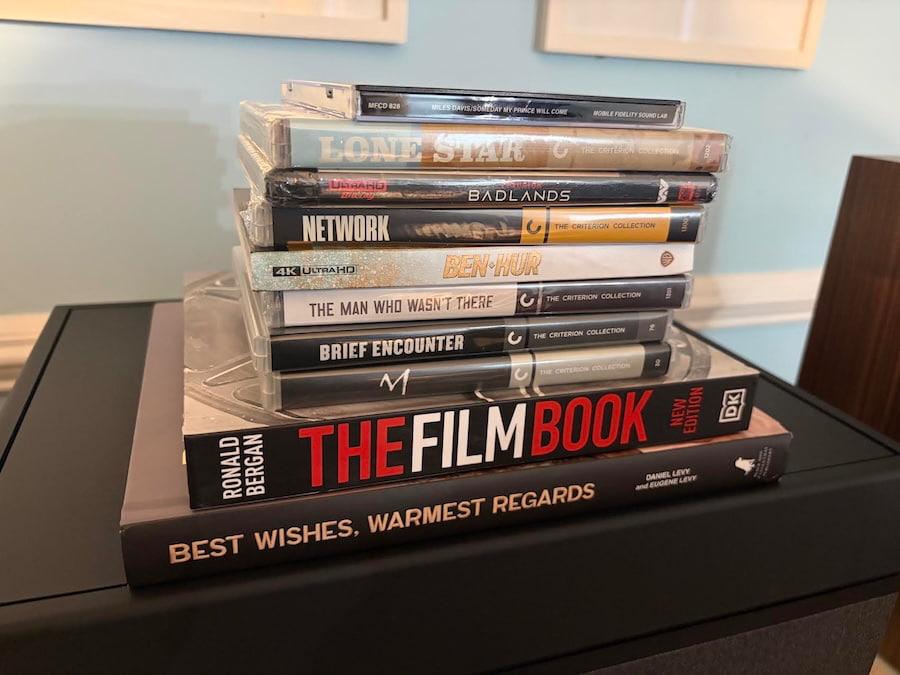
Here’s the difference. I’ve opened every single one. Read them. Watched them. Listened to them. Some more than once. Some have receipts, notes, and things I probably shouldn’t admit to still tucked inside pages, jewel cases, or album sleeves.
If anyone ever wanted to solve a mystery like who killed Kennedy, or what I had for dinner on February 10th, 2017, copies of a certain film from Dallas might even surface. And of course… nothing ever happened in Dallas.
So when I got jumped this week in a Facebook physical media group for pointing out that a guy’s “film collection” was still sealed; never opened, never watched, I might have gotten a little…direct. Because I don’t get it. Collecting isn’t preservation if you’re not engaging with it. It’s just shrink-wrap worship.
Same thing with Record Store Day 2026. Watched people line up, drop $50 per record, and you just know some of those albums are going straight onto a shelf like museum artifacts. Never cleaned. Never played.
That’s not collecting. That’s retail therapy with better packaging.
As we all know, I’m not a saint. Been places most of you couldn’t survive. And that was before they brought me the kosher meal. I’ve got more media than I’ll ever realistically revisit. But every piece earned its place. It got used. It meant something. If you’re not opening it, not playing it, not reading it—then what exactly are you collecting? The object? Or the idea of being the kind of person who owns it?
Because those are two very different things. And only one of them makes any sense.
Picnic and The Bad Sleep Well: Two Very Different Kinds of Trouble
If a film features William Holden or Toshiro Mifune, I’m already satisfied before the lights go down. Two very different actors, two very different energies, but both operating on a level that most of Hollywood hasn’t sniffed in decades. Holden as Sefton in Stalag 17? Cold, calculating, and somehow still the smartest guy in the barracks. Mifune in anything he did with Akira Kurosawa? Pure force of nature, whether he’s a ronin, a cop, or a man quietly unraveling, you feel it.

Holden gave us Sunset Boulevard, The Wild Bunch, Network, Stalag 17—men who knew exactly what they were doing, even when it went sideways. Mifune with Akira Kurosawa? That’s Seven Samurai, High and Low, Rashomon, Yojimbo. Not a weak link in sight. You don’t watch those films; you get dragged through them and come out the other side a little different.
And I’ll say it: you could drop either one of them into an Arby’s commercial and it would still have more presence than most of the past decade of Best Picture winners. Amanda Peet would probably break free of her chains from Saving Silverman just to grab a sandwich, lock eyes with Holden like she’s seen God, and then wander over to Mifune to admire the beard and manbun like she’s just met the sexiest and most dangerous man ever put on film. Judith would have converted on the spot.
Which brings us to the quieter corners of their catalogs, Picnic and The Bad Sleep Well. Not the ones people name first. Fine. Their loss. These are not films that beg for attention.
Desire, Desperation and Fracture
Picnic isn’t subtle about what it’s doing. It drops a match into a small Kansas town over Labor Day and lets it burn for 24 hours. The match is Hal Carter, played by William Holden, a drifter with just enough charm and just enough damage to unsettle everyone he meets. He shows up with nothing, talks like he deserves everything, and exposes the fault lines in people who thought their lives were already mapped out.
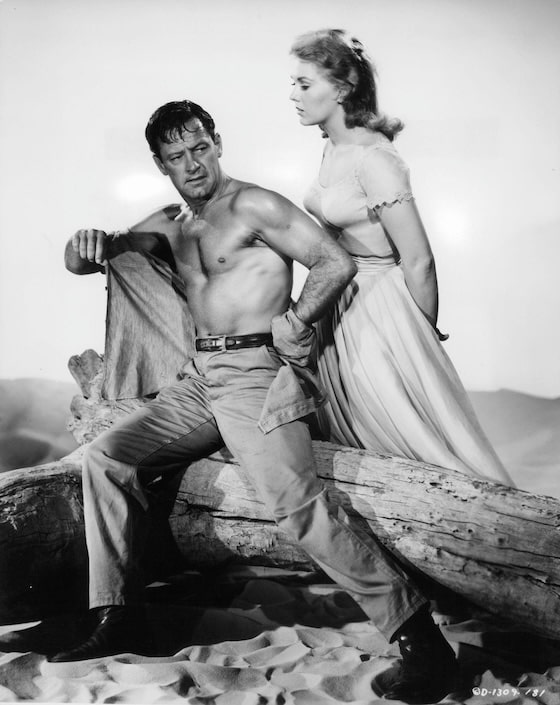
Holden is the engine. He plays Hal as a man caught between who he thinks he should be and who he actually is, and it’s not pretty. There’s arrogance there, but also insecurity, and he lets both sit on the surface. You understand why people are drawn to him and why they should probably run in the opposite direction.
Kim Novak as Madge is the opposite kind of tension. She’s been told her entire life that her value is her looks, and Novak plays that like a quiet burden. There’s a moment to moment awareness in her performance, like she knows the role she’s expected to play and is already tired of it. When Hal enters the picture, it doesn’t feel romantic so much as inevitable. Two people looking for a way out, even if it’s the wrong one.
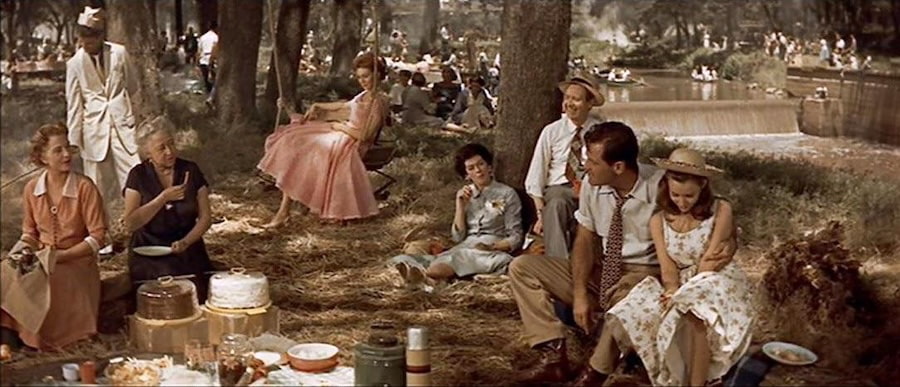
And then there’s Rosalind Russell as Rosemary, which is where the film really tightens the screws. She doesn’t glide through scenes. She attacks them. Russell was never marketed as a conventional Hollywood beauty in the way Novak was, but watch this and try to argue she doesn’t command the screen just as much.
Her scenes with Holden are raw, uncomfortable, and honest in a way most films wouldn’t dare now, because screenwriters don’t attack this kind of material anymore. Frustration, rejection, anger, desperation—it’s all there, and none of it is softened. When she tears into him, you feel it yourself. To feel all of that is as human as it gets.
That’s what makes Picnic land. It’s not just about a drifter disrupting a town. It’s about people confronting versions of themselves they’ve been avoiding.
Corruption, Revenge, and Mifune at Full Power
The Bad Sleep Well opens with a wedding and lets you know immediately that something is rotten. Not subtle. Not hidden. The press is circling, the smiles are forced, and the whole thing has that same uneasy pageantry you feel in The Godfather where everyone looks dressed for celebration but is really there for something else. Kurosawa uses that opening like a warning shot. Pay attention. This isn’t going to end well.
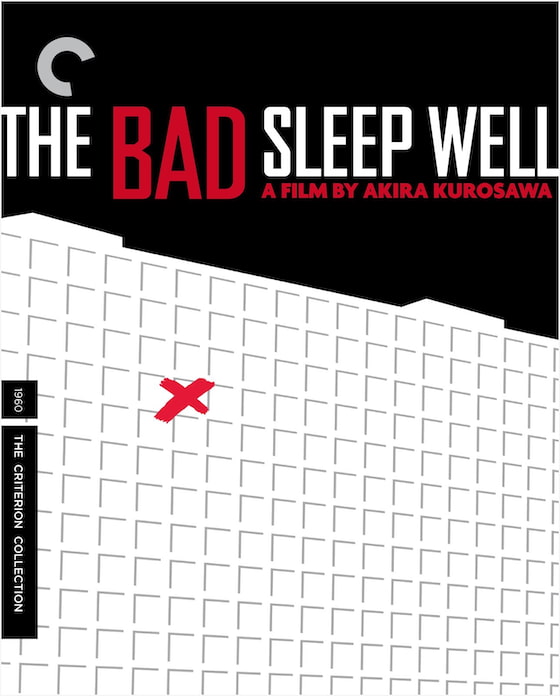
At the center is Toshiro Mifune as Koichi Nishi, a man who embeds himself inside a corrupt postwar corporation to expose the people responsible for his father’s death. Yes, there are shades of Hamlet here, but Kurosawa isn’t interested in theater. He’s interested in rot. Corporate rot. Moral rot. The kind that gets buried under paperwork, promotions, and polite conversation. Sound familiar Hollywood?
What makes this film hit is how Kurosawa leans into noir without copying anyone. This isn’t American noir with trench coats and cigarette smoke. This is colder. The corruption isn’t happening in alleys. It’s happening in boardrooms and offices where everyone wears a suit and pretends they don’t see the bodies piling up behind the curtain. It feels specific to post-war Japan, but you could swap in almost any major corporation in America and the story still holds.
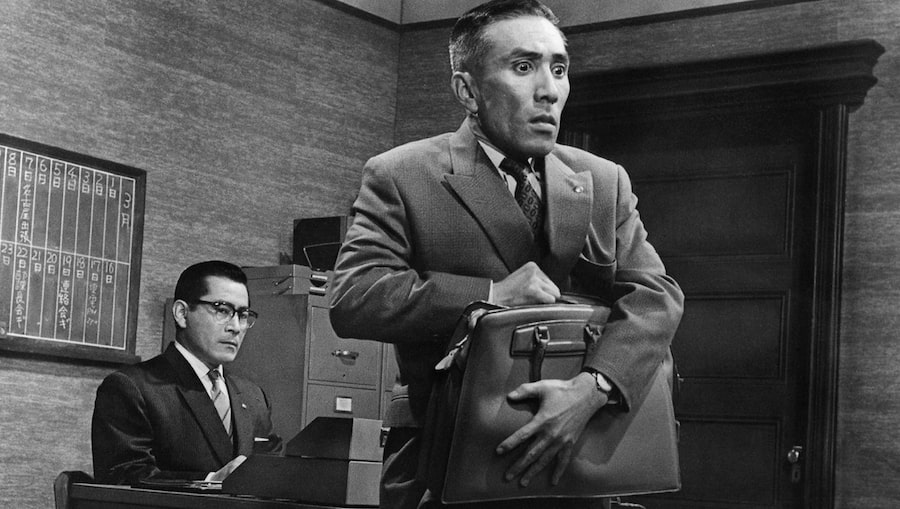
And Mifune? This is where he stretches. People remember the wild energy, the sword swinging, crazy screaming and the physical presence from the samurai films. He plays Nishi like a man holding everything just below the surface, and when it cracks, you feel it. It’s some of his best work because he doesn’t rely on force. He lets the tension of the moment carry the story.
Kurosawa circled noir with Drunken Angel, Stray Dog, The Bad Sleep Well, and High and Low. All four matter. But this and High and Low are the real gems. It’s not a comfortable watch. It’s not supposed to be. It just lays it out, clean and cold, showing how power protects itself and what it costs to push back.
Related Reading:
- AXPONA Storms Chicago, Spotify Still Chasing Lossless, Moses Returns For Passover, And A Brief Encounter: Editor’s Round-Up
- Record Store Day, AXPONA 2026, And The Americanization Of Emily: Editor’s Round-Up
- Best In Show At AXPONA 2026: Must Hear High-End Audio

















Dandy Andy
April 24, 2026 at 9:49 am
Should have gone with the CX-90 but the point is well made. Picnic was an annual staple in my home growing up. I think my mum just liked seeing an older William Holden without his shirt on.
Your brain and fingers must hurt after all of that AXPONA coverage. The team did a fine job.
Ian White
April 24, 2026 at 11:25 am
Andy,
The CX-90 was a more luxurious ride but the rear end doesn’t handle corners well with my driving style. I also didn’t want to spend almost $850/month for it. The CX-5 Premium is already $540. Solid second car. Picnic was a risqué film for its time. Holden was 37 or 38 and considered rather old to be showing off his chest. He was actually unhappy with the scene because he felt it was ridiculous. Russell was so strong in her role. Should have won an Oscar.
We still have 4-5 more articles, 6 more podcasts, and a selection of videos that the team shot. It was a hard show to cover. Had we been given two more days – over coverage would have been closer to 70 articles/videos/podcasts. The most of any publication.
Very proud of the the entire team.
IW
Andy
April 24, 2026 at 4:28 pm
I think what has made you guys (the collective team) so relevant and important right now is that the legacy publications are basically a collection of old men, writing the same flowing bullshit about products that 99% of the population will never be able to afford. Looking at the photos from the show, I see a lot of old men, and very few young people, and almost no women.
I went back and reread your previous four round ups. I think what separates you from the rest at other publications is your level of openness and honesty about the industry and yourself.
I may not agree with all of your takes when it comes to specific pieces of equipment, but you always give us something to think about.
Ian White
April 27, 2026 at 11:22 am
Andy,
I think the industry has a few issues on the media side. The legacy press is old. The eCoustics team is younger but we’re not kids. 5 of us are over 50. I stopped reading Stereophile almost 10 years ago because their team are generally the old guard and I stopped caring after Art Dudley passed away. Boring magazine. TAS is basically rehashed Stereophile writers and some very old men with zero personality covering gear that 1% of the population can afford. YouTube has clearly changed the game, but I have to ask — what happens to a channel with 200,000+ subscribers if the single person running it gets sick or passes away. The channel vanishes. Are you putting all of your eggs into that basket?
eCoustics and SoundStage have deep benches. Brian and Doug invested in talent.
IW