
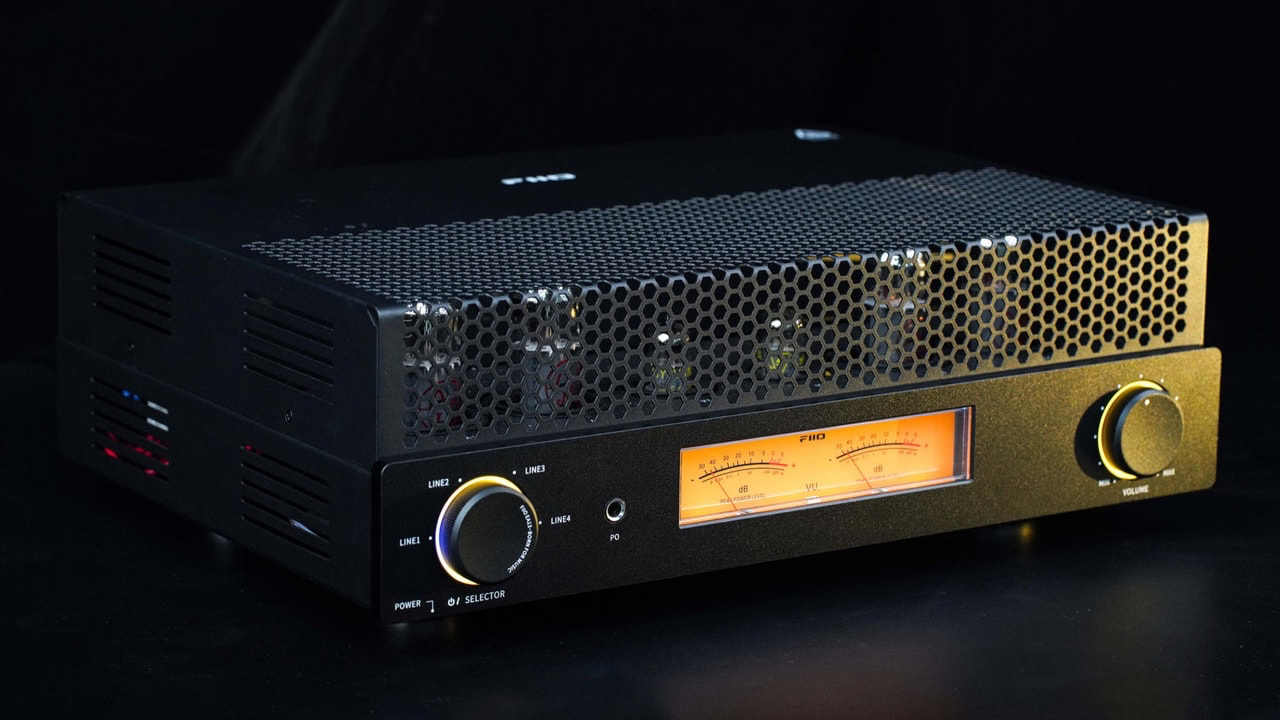
FiiO has spent years convincing headphone listeners that affordable audio does not have to mean disposable audio. Now the company is wandering much deeper into traditional two-channel territory with the EA13, a 39-pound tube amplifier using four EL34 output tubes, two NOS Sylvania input tubes, mechanical VU meters and custom output transformers.
And this thing costs $769.99 at Apos Audio in the U.S. That is the part that immediately made us suspicious, because anyone who has spent time around tube amplifiers knows that the glowing glass is only part of the expense. The iron matters, and good output transformers are neither trivial nor inexpensive.
So what exactly has FiiO built, and where did it save the money?
Related Reading:
- FiiO K17 DAC/Amplifier Review: The Desktop Tank That Wants To Retire Your Dongles (And Maybe Your Amp, Too)
- FiiO K11 R2R Review: Is This The Budget King Of R2R DAC/Headphone Amps?
- FiiO Teases K17 R2R Pro DAC And Headphone Amplifier With Wi-Fi
A Very Different FiiO Amplifier
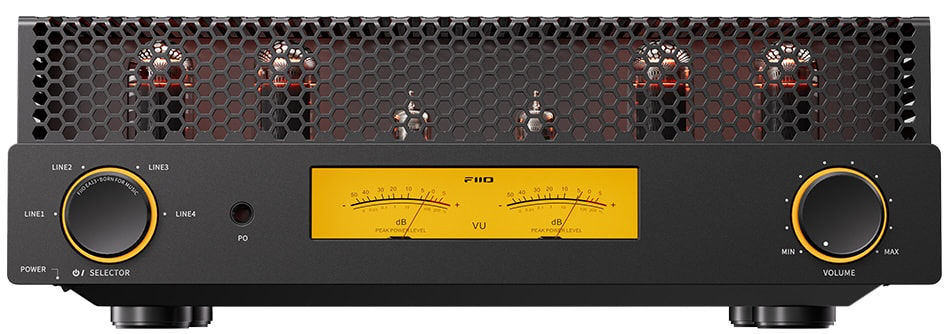
The EA13 is FiiO’s first pure tube stereo amplifier and represents a significant departure from the DACs, headphone amplifiers, DAPs and compact desktop components that established the company with audiophiles. FiiO says the EA13 took three years to develop.
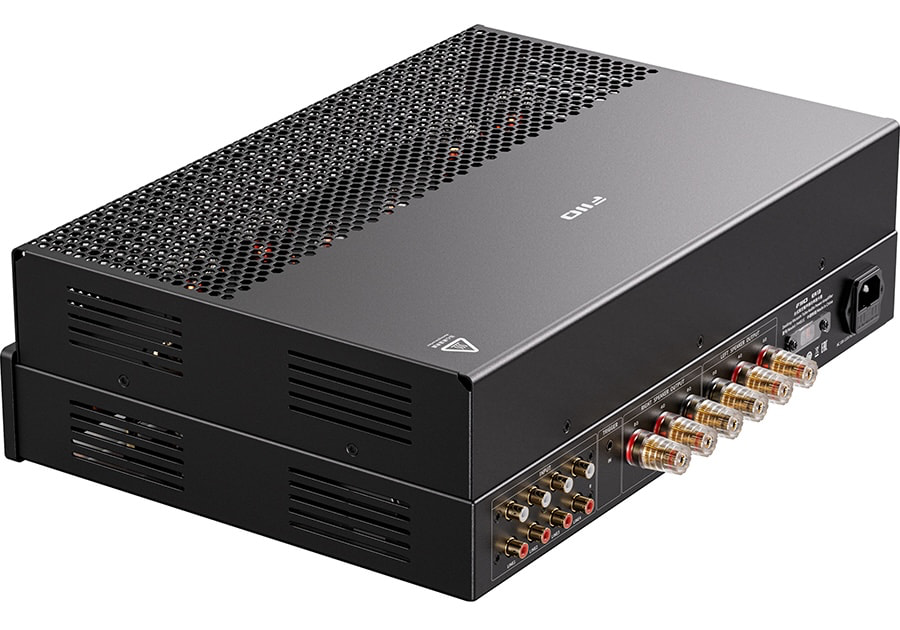
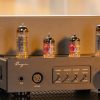
FiiO calls it a “Full-Size Vacuum Tube Audio Power Amplifier,” although four RCA line inputs and an onboard volume control make it functionally an integrated amplifier. There is no internal DAC, Bluetooth receiver, network streamer or phono stage. This is an old-school analog amplifier, albeit one wearing considerably more RGB lighting than anything your grandfather plugged into his AR-3a loudspeakers.
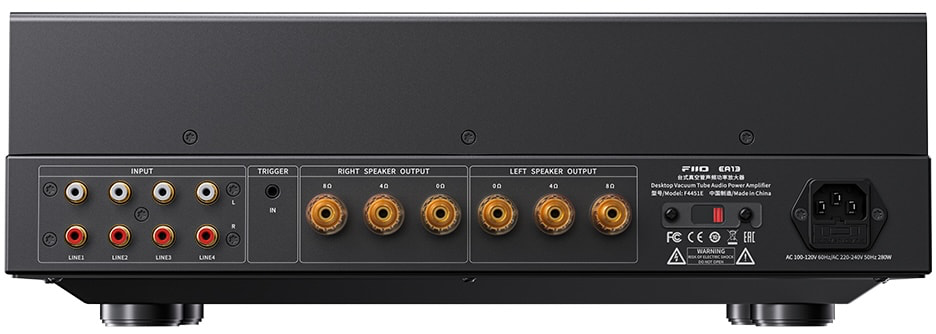
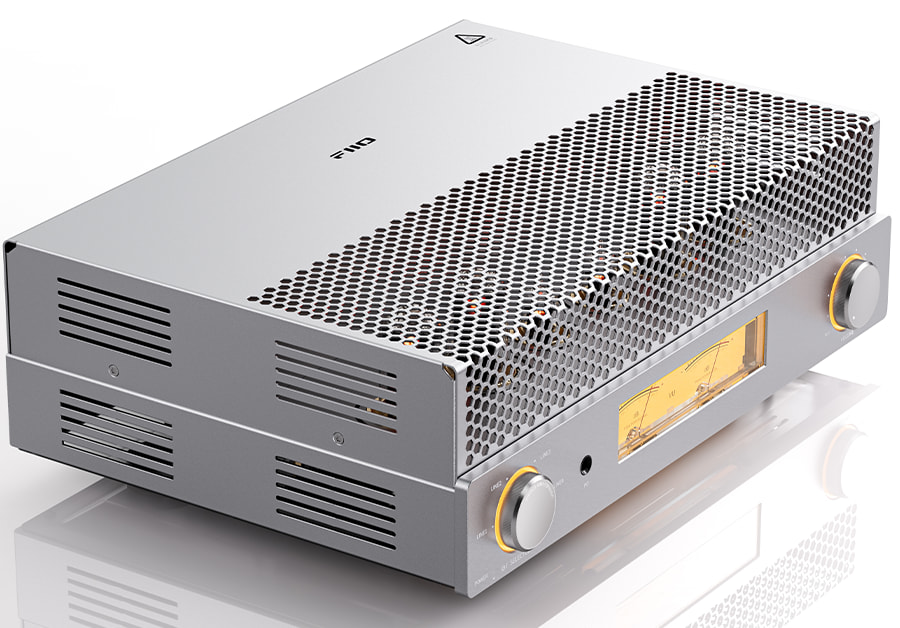
The voltage amplification stage uses two NOS Sylvania PCF80 tubes, while four Czech-made JJ Electronic EL34 tubes handle power amplification. FiiO runs the EL34s in pentode mode using a pure Class A push-pull circuit and provides separate 4-ohm and 8-ohm speaker outputs.
There is also a 6.35mm headphone output, four analog inputs, a 40-step analog volume control, 12-volt trigger input, automatic standby and a pair of actual mechanical VU meters. The CNC-machined aluminum front panel and substantial chassis do not make it look or feel like a $300 experiment either; the EA13 weighs approximately 39 pounds.
About Those 28 Watts
There is an important footnote to FiiO’s headline power specification.
The EA13 can produce at least 28 watts per channel into 4 or 8 ohms at less than 5% THD+N. At the considerably more useful threshold of less than 1% THD+N, FiiO rates output at at least 18 watts per channel.
That does not make the EA13 underpowered. Eighteen clean watts from an EL34 Class A amplifier can be plenty with a reasonably sensitive bookshelf or floorstanding loudspeaker, especially in a smaller or medium-sized room.
But consumers should understand the numbers before assuming they are getting 28 squeaky-clean watts per channel. Tube amplifier manufacturers have always played a somewhat different game with distortion specifications, and FiiO is at least publishing both figures.
Did FiiO Cheap Out on the Output Transformers?
That is the $770 question.
Output transformers are among the most critical components in a traditional tube amplifier because they have to match the high impedance of the output tubes to the much lower impedance of the loudspeaker without compromising frequency response, increasing distortion or wasting power. Hammond Manufacturing, a longtime Canadian supplier of transformers for tube hi-fi and guitar amplifiers, sells a 25-watt push-pull output transformer designed for tubes including the EL34 that weighs roughly four pounds by itself.
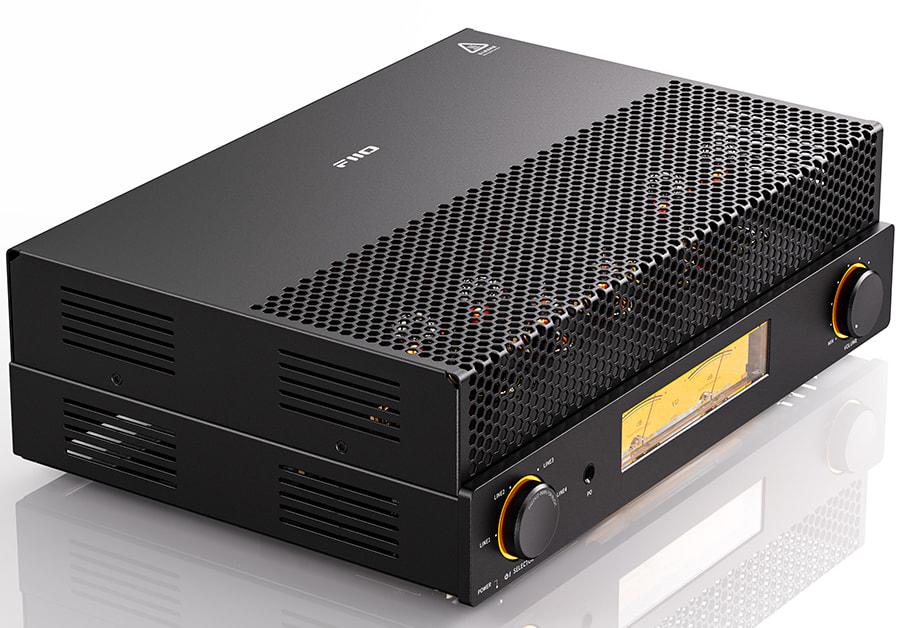
FiiO has not installed some tiny anonymous transformers and hidden them beneath attractive metal covers. The EA13 uses custom EI silicon steel laminate output transformers that are filled with epoxy resin and fine sand and then sealed inside metal enclosures. FiiO says the construction reduces vibration while improving electromagnetic shielding, moisture resistance and long-term stability.
FiiO does not publish detailed information about the transformer winding geometry, core grade, primary impedance, insertion loss or transformer-specific bandwidth at full rated output. The company does publish an overall speaker frequency response of 20Hz to 60kHz with attenuation below 2.9dB, but that is a specification for the complete amplifier, not an independent measurement of the output transformers.
So did FiiO compromise on the transformers? There is currently no evidence that it did. There is also not enough independent testing yet to declare these transformers giant killers.
The more likely explanation for the price is less dramatic. FiiO manufactures electronics at substantially greater scale than most boutique tube amplifier companies, has designed its own transformer rather than purchasing expensive boutique iron at retail prices, and has kept the EA13 unusually focused. That is an inference based on the product design, not something FiiO has publicly detailed about its cost structure.
Notice what is missing: no streaming platform, no DAC, no phono stage, no Bluetooth, no remote control and no selectable triode/ultralinear modes. FiiO is spending the parts budget on six tubes, transformers, the power supply, chassis and analog circuitry rather than trying to make the EA13 operate your toaster through an app.
There may also be manufacturing savings compared with competitors that explicitly promote labor-intensive point-to-point wiring. Cayin’s new Jazz 70 and Willsenton’s competing EL34 amplifiers both advertise hand-built or manually soldered construction; FiiO makes no comparable point-to-point wiring claim for the EA13.
Where Does the EA13 Fit Into FiiO’s Lineup?
This is where the amplifier becomes more interesting than another inexpensive tube amp from China.
FiiO is building an actual two-channel ecosystem.
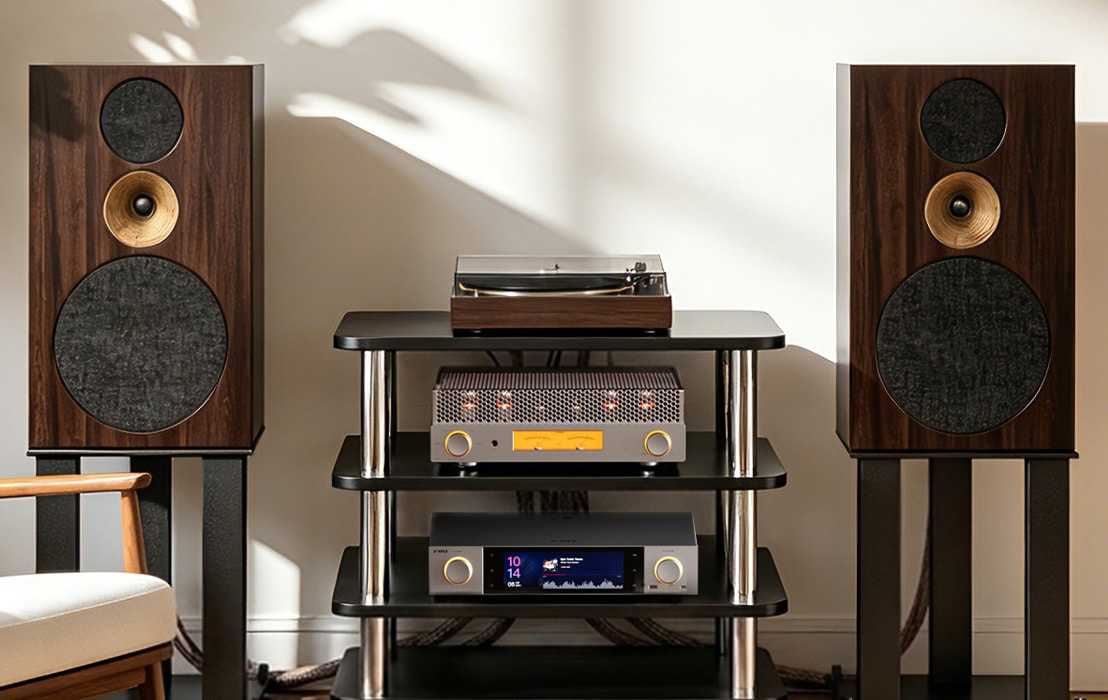
The company’s current desktop lineup now includes the EA13 alongside the tiny LEVEL 1 solid-state power amplifier, which uses a Texas Instruments TPA3255 Class D platform and can produce vastly more output power. FiiO’s own EA13 system examples show the amplifier partnered with its S15 network streamer, TT13 turntable and forthcoming SV13 passive loudspeakers.
That means FiiO no longer wants to live exclusively on your desktop or inside your backpack. The company wants into the listening room.
The EA13 is the deliberately traditional option in that strategy: tubes, analog inputs, passive speakers and enough glowing glass to heat a small corner of New Jersey in January.
Who Are the Competitors?
The most obvious competitors come from companies that have been making tube amplifiers for considerably longer.
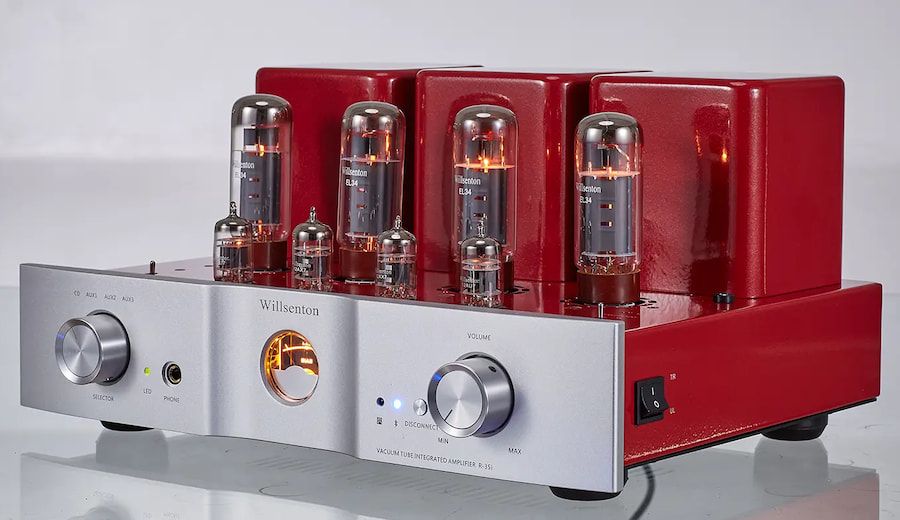
Willsenton’s R-35i ($896 at Amazon) also uses four EL34 output tubes in a push-pull configuration, produces up to 35 watts per channel, weighs almost exactly 40 pounds and adds Bluetooth, bias adjustment and selectable operating modes. The larger Willsenton R8 can use EL34, KT88 or 6550 tubes and produces 40 watts per channel with EL34s, while adding remote control, triode/ultralinear switching and point-to-point construction.
Cayin’s new Jazz 70 might be an even more revealing comparison. It uses four EL34 tubes in Class AB1 push-pull operation and offers 17 watts per channel in triode mode or 35 watts in ultralinear mode. It also includes Bluetooth, a DAC, remote control, point-to-point wiring and custom transformers. Cayin has not yet published a confirmed U.S. price for the Jazz 70, although the more powerful Jazz 80 currently sells for $2,099 in the United States.
Line Magnetic’s LM-34IA uses four EL34 output tubes and delivers 40 watts per channel in Class AB. U.S. dealer Don Better Audio currently lists it for $1,995, although the retailer cautions that tariff fluctuations may affect that price. The older LM-211IA delivers 32 watts per channel in ultralinear mode from four EL34 output tubes, but it no longer appears to have a readily verifiable current U.S. retail price.
And then there is PrimaLuna, whose entry-level EVO 100 Tube Integrated currently sells for $3,295 in the United States. That is obviously a different price category, but it also illustrates just how aggressive FiiO’s pricing really is.
FiiO EA13 Specifications:
- Type: Pure tube stereo integrated amplifier
- Amplifier topology: Pure Class A, push-pull, pentode mode
- Input tubes: 2 x Sylvania NOS PCF80
- Output tubes: 4 x JJ Electronic EL34
- Maximum speaker output: ≥28W + 28W into 4Ω or 8Ω at THD+N below 5%
- Speaker output below 1% THD+N: ≥18W + 18W into 4Ω or 8Ω
- Output transformers: Custom EI silicon steel laminate, epoxy and sand filled, sealed construction
- Speaker frequency response: 20Hz – 60kHz, attenuation below 2.9dB
- Speaker SNR: ≥97dB, A-weighted
- Speaker dynamic range: ≥97dB, A-weighted
- Speaker noise floor: <150μV, A-weighted
- Analog inputs: 4 x stereo RCA
- Speaker outputs: Dedicated 4Ω and 8Ω binding posts
- Headphone output: 6.35mm single-ended
- Recommended headphone impedance: 16Ω–300Ω
- Headphone output at 300Ω: ≥185mW + 185mW at THD+N below 1%
- Headphone output at 32Ω: ≥60mW + 60mW at THD+N below 1%
- Volume control: 40-step high-precision analog control
- Meters: Dual mechanical VU meters with LED backlighting
- Standby: Automatic after 30 minutes without signal
- Lighting: Adjustable RGB knob illumination
- Dimensions: 16.9 x 13.3 x 5.7 inches
- Weight: 39 lbs
The Bottom Line
The FiiO EA13 is interesting because it does not look like a half-hearted attempt to cash in on renewed interest in tube amplification. Six real tubes, nearly 40 pounds of hardware, pure Class A push-pull operation, custom potted output transformers and proper 4-ohm and 8-ohm speaker taps represent a surprising amount of amplifier for less than $800.
The unanswered question is whether FiiO can deliver transformer quality, low-frequency control, channel consistency, long-term reliability and the kind of tonal color and dimensionality that make people tolerate the heat, maintenance and relatively low output power of tube amplifiers in the first place.
We need to hear one before answering that.
But FiiO has already accomplished something important. At a time when established tube amplifier manufacturers routinely charge $1,500 to more than $3,000 for EL34 integrated amplifiers, the EA13 makes real tube amplification accessible at a price that might persuade a lot of solid-state owners to see what all the glowing fuss is about.
And if those output transformers are actually as good as FiiO claims, some established brands might want to start checking the rearview mirror.
Where to buy: $769.99 at Apos Audio
Related Reading:
















ORT
August 13, 2026 at 2:37 am
Ah, damn them! Buddha damn them all to HELL!!!! (I refuse to take the name of the Lord in vain and don’t really care about Buddha as he’s just a little fat lawn gnome. To…me.
I don’t need this but I damn sure want this. This is not going to end easily for me. I do NOT need this in the least. But…And everyone I know has a big butt so it’s time to talk about this huuuuuge butt. But I want it. Now to figure out how to pay for it. I don’t need this…
’nuff said!
ORTson Welles
ORT
August 13, 2026 at 2:47 am
Vuuuuuuuuu Meters…Tubesesssss, precious…Tubesesssss…And those speakers, FiiO SV13s?
Thanks, Ian.
ORTson Welles is in Hell…
Ian White
August 13, 2026 at 11:22 am
ORT,
Ditto. 🙂
The Provincial Putz
ORT
August 13, 2026 at 2:57 am
Now is the Winter of our Disc-content made glorious Summer by this son of FiiO. O frabjous day! Callooh! Callay!
Be still my heart, thou hast know worse than this but never as affordable to both heart and soul…
ORTson Welles
ORT
August 21, 2026 at 12:02 am
I am still resisting. No sub out makes it a bit easier but the looks continue to appeal to this Shallow Hal…
ORTnofon T. Able
Ian White
August 21, 2026 at 2:02 am
ORT,
You and me both. I stare at it daily. Apos needs to send me one to review.
IW