

My first real exposure to Allen Toussaint was Southern Nights, which is probably not the worst place to start. But it was American Tunes in 2016 that really pulled me in. The album opens with “Delores’ Boyfriend,” and within the first minute, I was hooked by the piano playing; part jazz, part ragtime, and very much New Orleans without trying to sell you the Bourbon Street beads, bad decisions, and hurricane-glass evidence.
It had that same humid, late-night Big Easy feeling that made the city feel mythic in the movies, right down to memories of Dennis Quaid, Ellen Barkin, and a film that probably did more for New Orleans heat than most weather reports. Barkin was almost illegally attractive in that movie, but the music was the thing that stayed with me.
Craft Recordings has now released an expanded edition of Allen Toussaint’s Songbook, giving the Grammy-nominated live album its first-ever vinyl pressing. Available as a 2-LP set, 2-CD release, and digitally, the new edition adds 20 previously unreleased performances and interview recordings to the original program.
Recorded during two solo piano performances in New York in 2009, Songbook puts Toussaint in the room without a band, without production gloss, and without anyone else standing between the listener and the songs. “Lipstick Traces (On a Cigarette),” “Holy Cow,” “Get Out of My Life, Woman,” and the rest are delivered by the man who wrote, arranged, produced, or helped shape more American music than far too many listeners realize.
That is the best reason this reissue matters. Toussaint was not just a New Orleans figure, even if that city was central to everything he did. He was an American songwriter, producer, arranger, pianist, and bandleader whose fingerprints are all over R&B, soul, pop, funk, and rock. Songbook does not need to inflate that legacy. It lets him sit at the piano and make the case himself.
From Katrina Displacement to Joe’s Pub: The Story Behind Songbook
Born in 1938, Allen Toussaint helped define the sound of New Orleans from the writing room, the studio, and the piano bench. Hurricane Katrina changed that trajectory. After the storm forced him out of the city, Toussaint relocated to New York, where he began performing regularly at Joe’s Pub in Manhattan’s East Village.
That move could have turned into a footnote, or another sad post-Katrina chapter. Instead, it opened a different door. Toussaint, who had spent decades shaping records for others and letting the songs travel under other names, was suddenly in front of audiences with only a piano between him and the room. That is why Songbook is special. These performances bring the songs back to the person who built them. Hearing Toussaint alone at the piano changes the scale without reducing the impact. The familiar hooks are still there, but so are the details that can get buried in bigger arrangements.
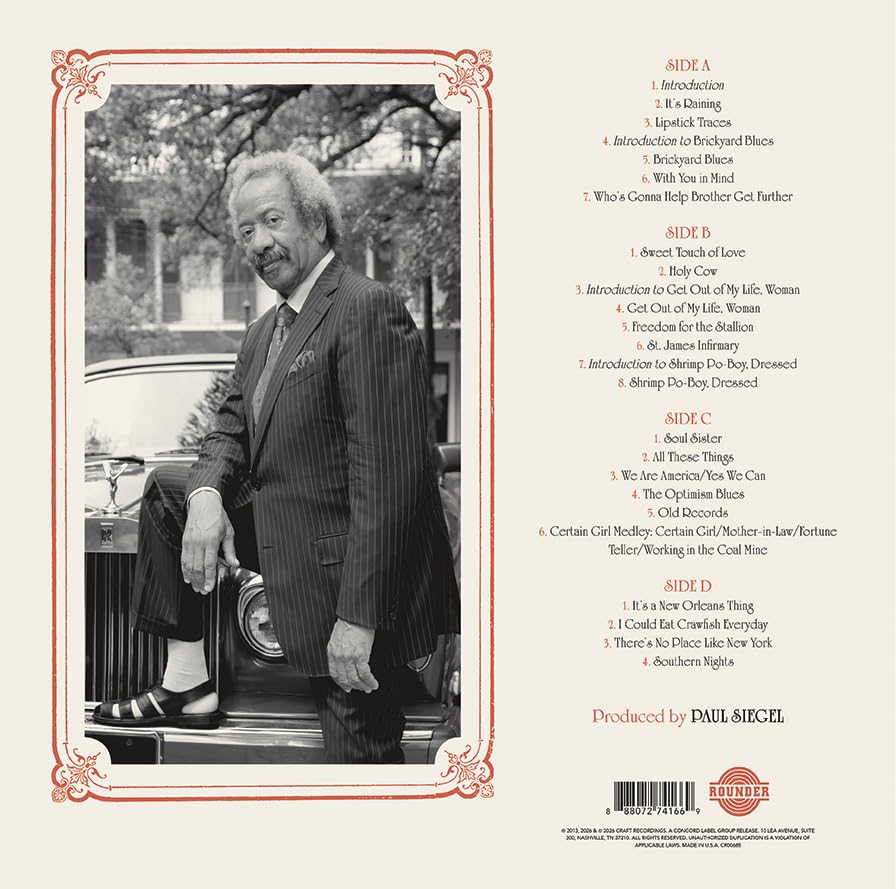
2 LPs, Expanded Tracklist, and Craft’s Usual Attention to Packaging
At $38, this 2-LP set is fairly priced for 2026, especially compared to a number of recent reissues. Craft did not skimp on the package. The jacket is heavyweight, the records were clean out of the sleeves, and both center holes were properly aligned.
That last detail matters. I have purchased a few records recently with off-center pressings, including some from Acoustic Sounds, which surprised me after 25 years of mostly excellent results from them. It happens, but it is still disappointing when it does.
No such issues here. Craft has done a nice job with the Songbook vinyl package, and the price feels reasonable for what is included.
So how does it sound?
After a proper clean, and yes, new vinyl still needs one, the first thing that stood out was the weight of the piano. It sounds warm and full, but not thick or soft around the edges. Toussaint sits just in front of the loudspeakers, not halfway across the coffee table asking for your number after two bourbons and a plate of boudin.
Not like I’d say no to that.
What stands out across both records is not just the quality of the songs, but the breadth of Toussaint’s music. The flow is remarkable. R&B, soul, jazz, blues, pop, and New Orleans piano language all move through the set without calling attention to the seams. He does not need a band behind him to make the songs feel complete. The structure is already there. The rhythm is already there. The authority is in the writing and in the hands.
His vocals work the same way. Toussaint is not trying to blow the roof off the room, and the album is better for it. The power comes from the phrasing, the restraint, the lyricism, and the stories inside the songs. There is a lot of humanity in these performances. He lets the songs breathe, and after a few sides, it becomes very clear why so many other artists built careers around material that started with him.
Where to buy: $37.99 at Amazon
Related Reading:
- Sonny Rollins Remembered, Peter Sellers Brings Beautiful Disaster To The Party, And Maybe Pedro Should Have Kept The Helmet On: Editor’s RoundUp
- Songs My Mother Gave Me: Editor’s Round-Up
- Craft Recordings Announces Miles Davis Miles ’56: The Prestige Recordings Box Set In Celebration Of 1956 Sessions
- Craft Recordings Adds 4 New Original Jazz Classics Series Reissues In 2024






















Ragin Cajun
May 31, 2026 at 8:52 pm
Saw him play once and he was so impressive that the crowd didn’t want to leave. He was so engaging and fluid with his playing.
I looked it up after reading this and it’s utterly ridiculous how many hits he composed.