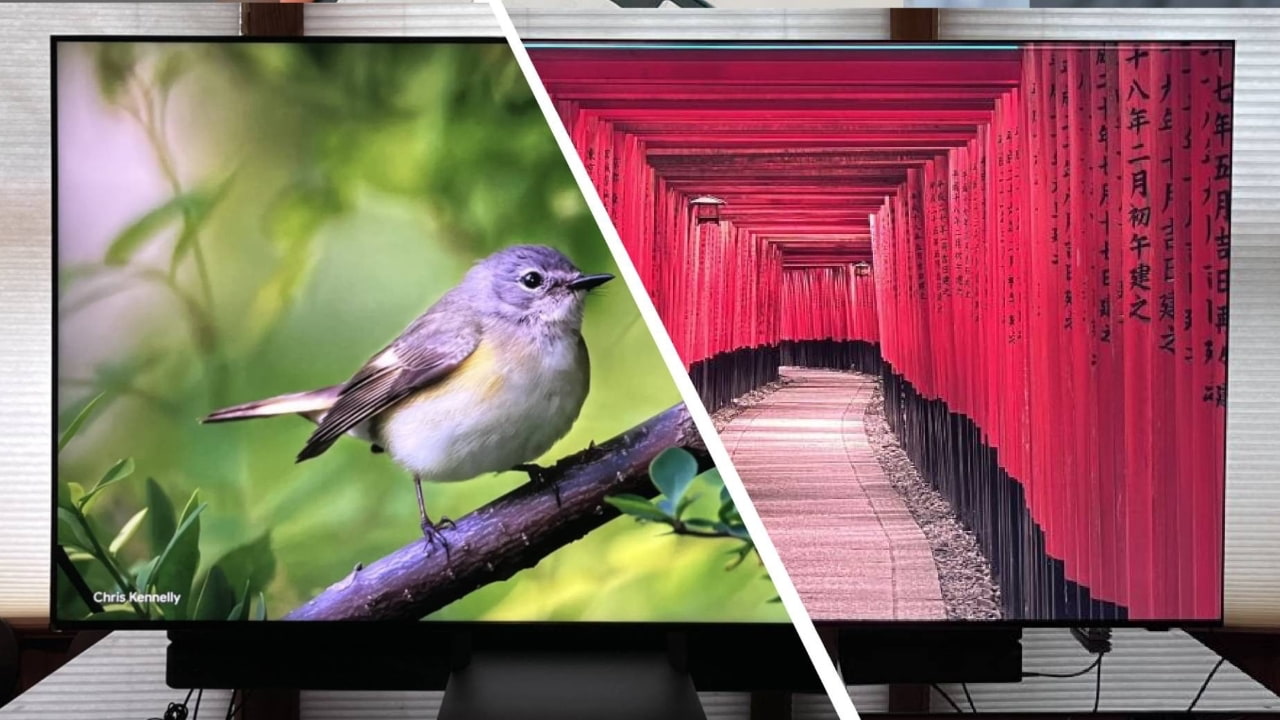
RGB LED-backlit LCD TVs (aka “RGB LED TVs”) have hit the market in full force this year. Samsung, Sony, Hisense, LG and TCL have all released new models that promise improved performance over standard mini-LED TVs, particularly when it comes to color reproduction. So far, eCoustics has reviewed two of the leading RGB models: the Samsung R95H Micro RGB TV and the Sony Bravia 7 II True RGB TV. Both are great sets, earning high ratings across the board. But you’re likely interested in buying only one if you’re shopping for a new TV, so which should you choose – Samsung or Sony?
We should note that the models are in slightly different positions in their respective line-ups, but they are priced closely enough that prospective buyers may be looking at both models.
Micro RGB vs. True RGB – What’s the Difference?
Samsung refers to their RGB LED-lit sets as “Micro RGB” while Sony calls theirs “True RGB.” Ultimately these are just different marketing terms referring to the same technology. Unlike traditional LCD TVs which use white or blue LED backlight units, RGB-backlit units use individual red, green and blue backlight modules. Both types of TVs use LCD (Liquid Crystal Display) panels to create the final image that we see on the TV screen. But RGB-lit LCD TVs can be more efficient than Mini LED units, can reach higher peak brightness levels, and can reproduce a wider overall color gamut, which means they can (at least theoretically) reproduce more colors more accurately.
The Samsung R95H is the company’s top of the line flagship Micro RGB TV, followed by the step-down model Samsung R85H. The R95H is available in 65, 75, and 85-inch screen sizes priced at $2,999.99, $4,299.99 and $5,999.99, respectively. Prices are MSRP (manufacturer’s suggested retail price) at the time of publication. Links to retailers are included at the bottom of this article where you can check actual sale price.
The Sony Bravia 7 II is the step-down series in Sony’s True RGB TV lineup, slotting in under the flagship Sony Bravia 9 II series. It is available in 50-, 55-, 65-, 75-, 85- and 98-inch screen sizes priced at $1,599.99, $2,099.99, $2,299.99, $2,999.99, $3,999.99, and $8,999.99, respectively. Like the Samsung prices, Sony’s prices are all MSRP. Street pricing may vary.
In our reviews, we tested the 65-inch model of each. Looking at current prices, there is a $700 gap between the Samsung R95H and the Sony Bravia 7 II, with the Samsung being the more expensive option. Does Samsung’s flagship Micro RGB justify its extra cost over the Sony? Let’s break down the differences between each TV to determine which one is the better buy.
Samsung R95H vs Sony Bravia 7 II: Features
Along with its Micro RGB backlight, the Samsung R95H features the company’s Micro RGB AI Engine Pro processor, which uses AI to enhance color, 4K upscaling, local dimming and motion handling. It also provides an AI Customization Mode that can be used to optimize the TV’s picture settings based on the content being viewed. The TV has impressive off-axis picture uniformity, and its Glare Free screen is very effective at reducing reflections when viewing in bright rooms.
The Sony Bravia 7 II uses the same RGB Backlight Master Drive Pro backlight as the company’s flagship Bravia 9 II and features Sony’s top XR Processor for 4K upscaling, contrast and motion enhancement. An X-Wide Angle Pro feature also maintains picture uniformity when viewing from off-center seats. The Bravia 7 II’s anti-reflection screen is reasonably effective at reducing glare in bright rooms, though you’ll need to pony up for the more expensive Bravia 9 II to benefit from that model’s Immersive Black Screen Pro glare-free screen, which is a proper rival for Samsung’s Glare Free screen.
Samsung R95H vs Sony Bravia 7 II: Design
The Samsung R95H has a sleek design, with a Space Graphite-colored Infinity Air stand and a four-side bezel-less screen. It’s a compelling look, and in my opinion a step above the controversial picture frame design of the new Samsung S95H OLED TV. A built-in 4.2.2-channel speaker array powered by 70 Watts of amplification delivers powerful Dolby Atmos audio with good dialogue clarity, and features such as Object Tracking Sound+ and Active Voice Amplifier Pro help to flesh out sound effects and maintain dialogue clarity. The Samsung R95H’s stacked port selection includes four HDMI 2.1 inputs plus an antenna input for the TV’s ATSC 3.0 tuner. It’s also Wireless One Connect Ready, providing wireless 165Hz connection capability using Samsung’s optional Wireless One Connect Box.
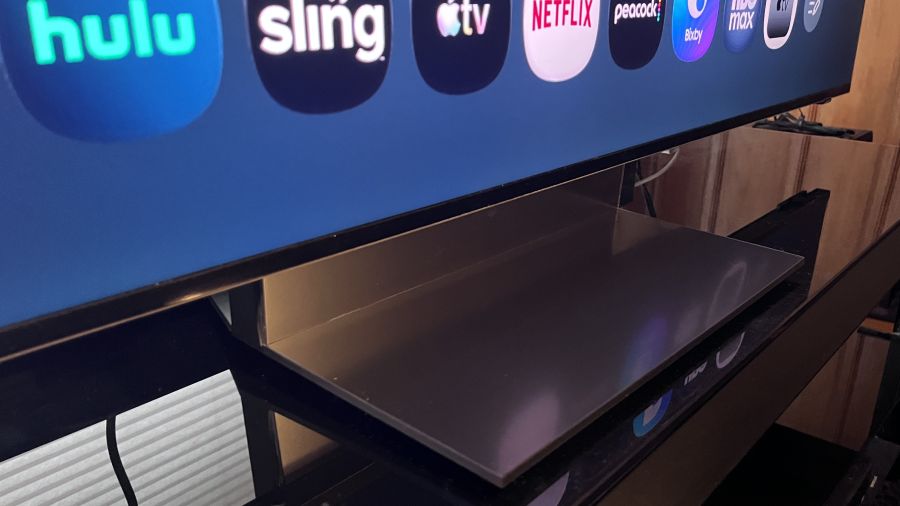
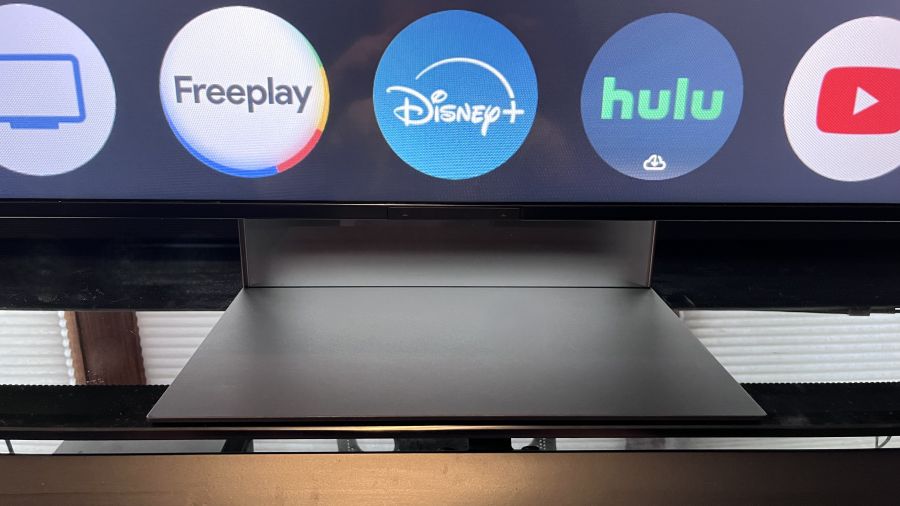
Not to be outdone by Samsung on the design front, the Sony Bravia 7 II is equally compelling, with a slim bezel and a Mirage Stand with a semi-transparent front panel that provides a floating–on-air effect. The TV’s built-in Acoustic Multi-Audio+ speaker array uses dual side-firing midrange drivers with separate integrated woofers and a Voice Zoom 3 feature uses AI to recognize and enhance dialogue in TV and movie soundtracks. Four HDMI inputs are provided, but only two are version 2.1 with 4K/120Hz support. The Bravia 7 II also features an antenna input for its ATSC 3.0 digital TV tuner.
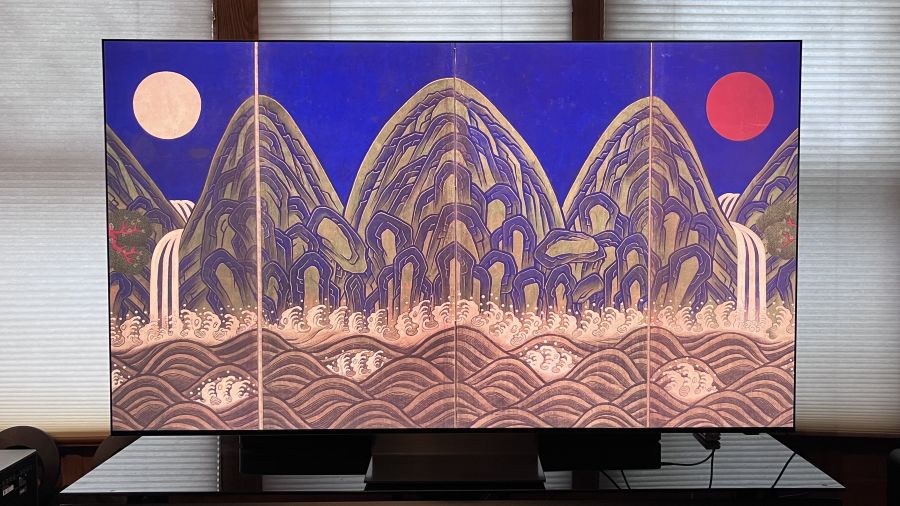
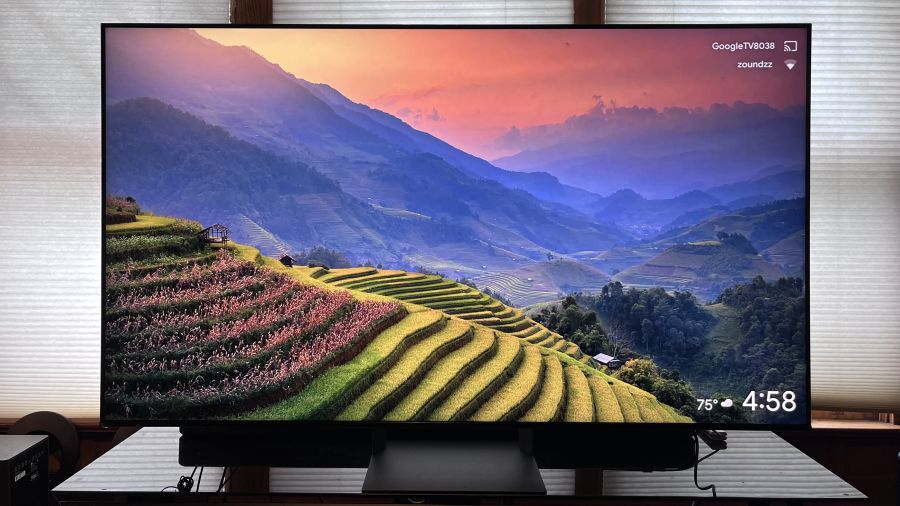
Samsung R95H vs Sony Bravia 7 II: Picture Quality
We measured both TVs using CalMan from Portrait Displays and found that they performed fairly similarly, with some variations. The Samsung R95H handily delivers on Micro RGB’s promise of extended color with a measured 93.3% BT.2020 gamut coverage in Filmmaker Mode. It’s impressively bright, with a measured peak HDR brightness of 2,039 nits in Filmmaker Mode and 1,908 nits in Standard mode. Those results translate to visually punchy images with strong contrast and bold color, along with refined shadows from the TV’s AI-enhanced local dimming. Its 4K upconversion of HD and lower-resolution programs is crisp and clean, although SDR-HDR conversion could be better. Motion handling is uniformly excellent for movies, games and sports.
The Sony BRAVIA 7 II also delivers extended color gamut coverage, measuring 88.5% of BT.2020. Peak HDR brightness is just a bit below the Samsung at 1,971 nits in the most accurate Professional preset (10% window), and 1,554 nits in the Standard preset.
Similar to the Samsung, the Sony’s picture looked punchy, with strong contrast and bold color when I tested it, and its 4K upconversion and HDR tone mapping was excellent. Motion handling was also very good, though below what I noted on the Samsung. The Sony’s anti-reflection screen does a good job of fighting screen glare in bright rooms, though it’s no match for the Samsung’s Glare Free (literally) screen.
While both the Samsung and Sony have impressive off-axis picture uniformity, I did note a degree of backlight blooming on the Sony when viewing at far off-center seats that I didn’t see on the Samsung. That’s something that won’t create a problem with most everyday viewing, however, and it also becomes less of an issue at larger screen sizes.
Samsung R95H vs Sony Bravia 7 II: Smart TV
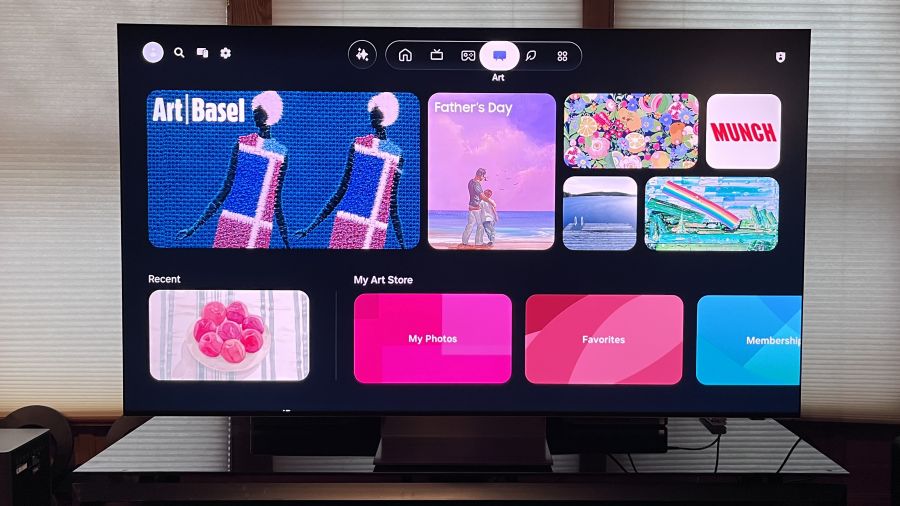
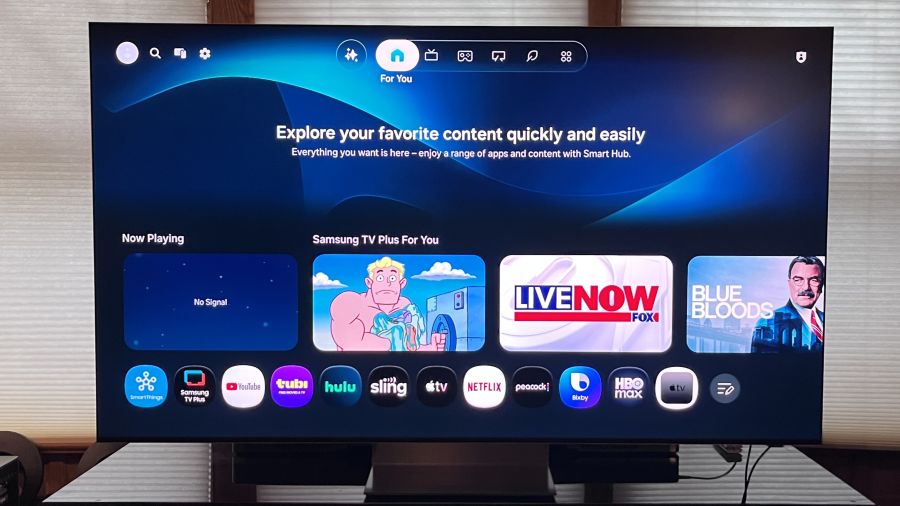
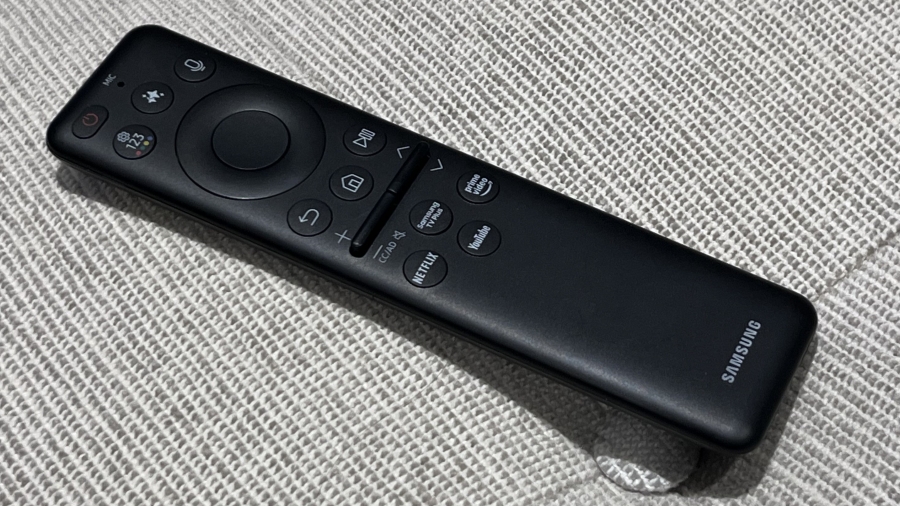
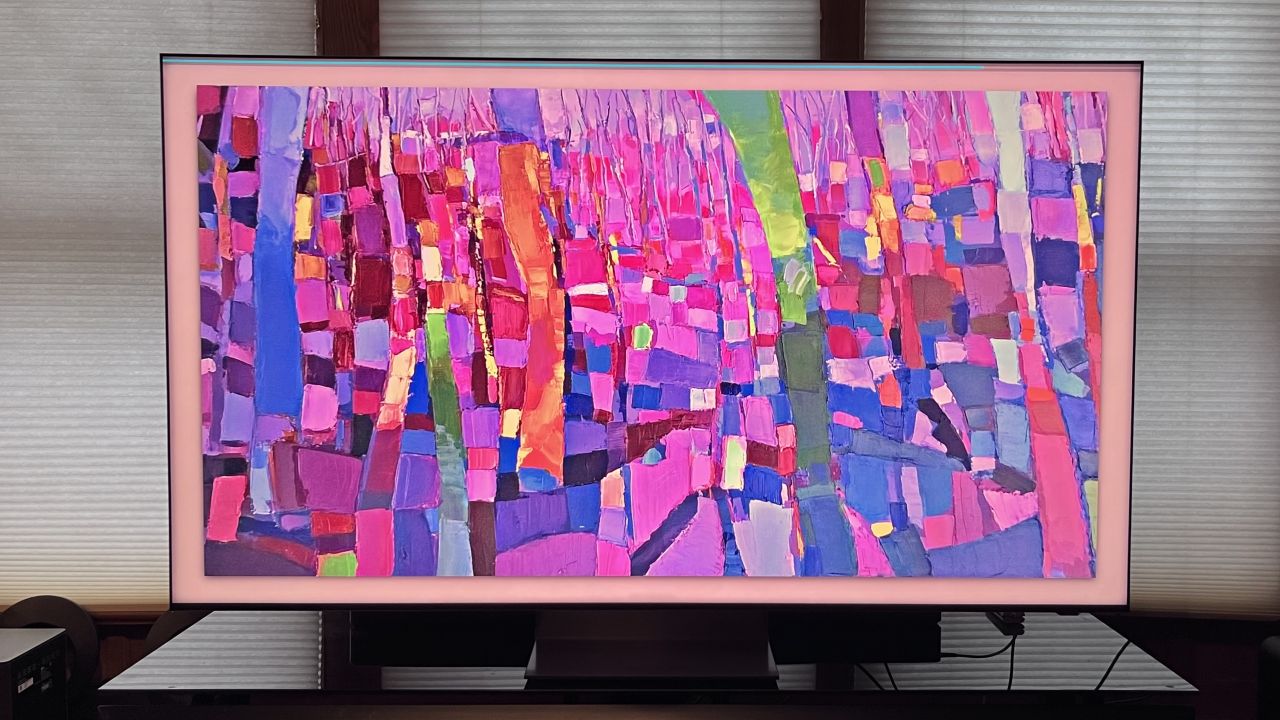
The Samsung R95H uses Samsung’s own Tizen smart TV platform, which has received a number of positive tweaks for 2026. The main one is a more streamlined layout that places tabs at the top of the screen. Those tabs include Samsung’s Vision AI Companion, which lets you search for programming, along with basically anything else you want to learn about, using the Co-pilot and Perplexity AI assistants. Much of the Tizen platform is geared toward voice control, though you can also use Samsung’s Solar Cell Bluetooth remote to navigate if you’re not up for opening your mouth. There’s plenty to explore on the Tizen platform, including the Samsung Gaming Hub and the Samsung Art Store for displaying over curated 5,000 works of art, and it’s also a great smart home control hub.
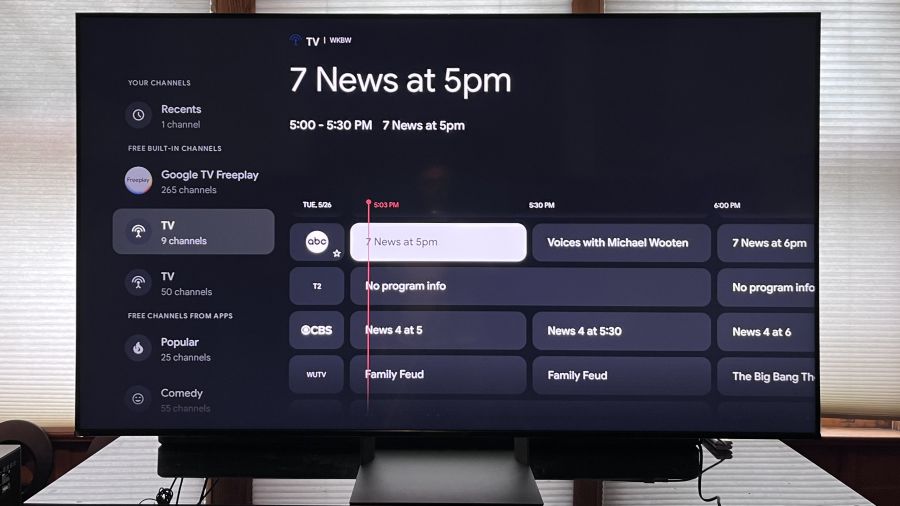
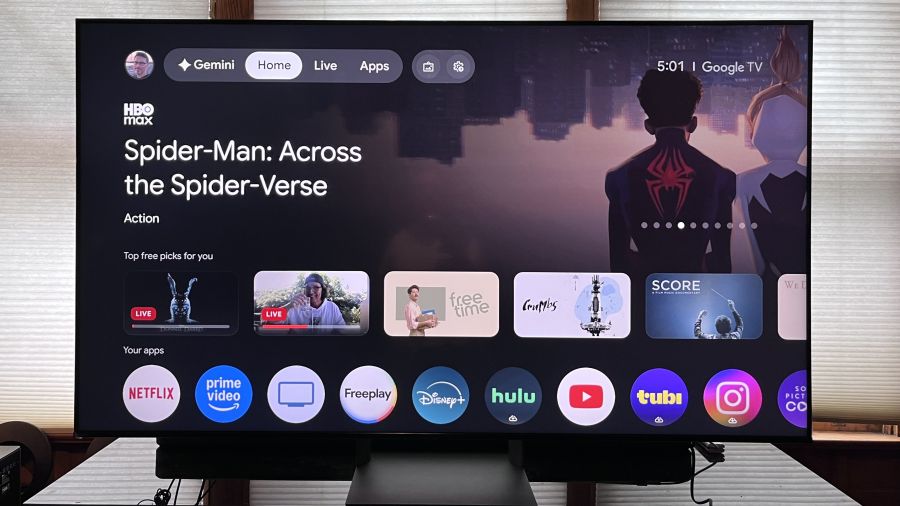
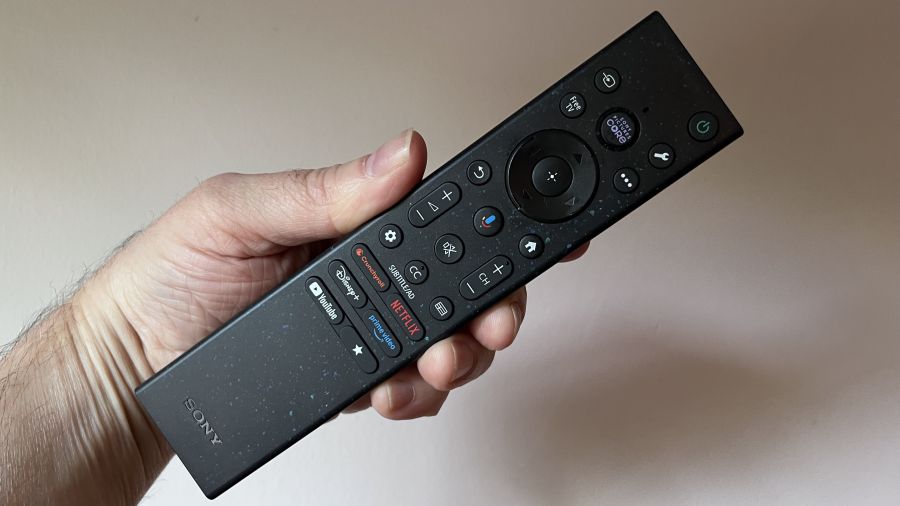
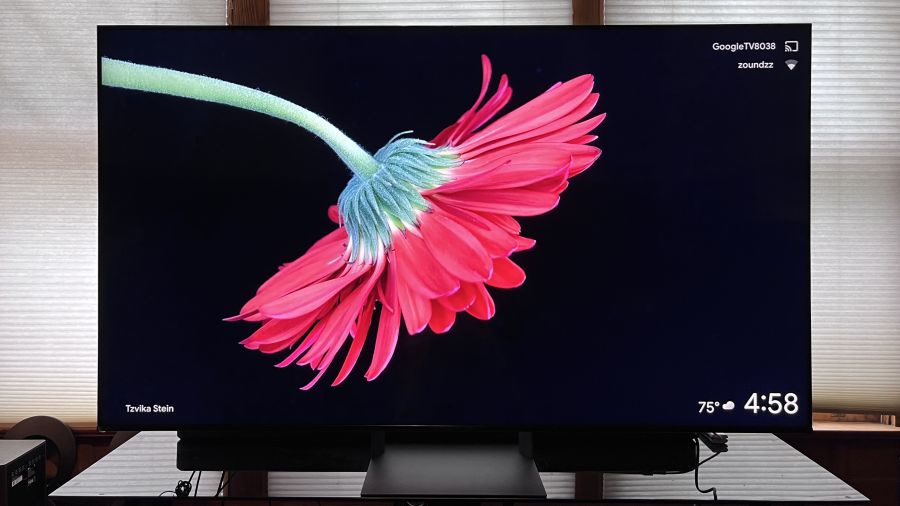
Sony TVs use Google TV, which is a perfectly serviceable smart TV platform, though more inundated with ads. Similar to Tizen, Google TV provides smart home control, and the Bravia 7 II also features the Gemini AI assistant with voice control options and an AI screensaver generator.
Samsung R95H vs Sony Bravia 7 II: Gaming
Samsung TVs are traditionally top choices for gaming, and the R95H provides a full suite of advanced gaming features including 4K/165Hz support on all four of its HDMI 2.1 inputs, Freesync Premium Pro and HDR10+ gaming. The R95H’s measured input lag was an impressively low 10.7ms when I tested it. A visit to the Tizen interface’s Samsung Gaming Hub portal turns up Xbox, NVIDIA, GeForce Now, Luna, Blacknut, Antstream, Boosteroid and other cloud-based gaming apps. Also new for 2026: personalized gaming recommendations based on your playing history.
Perfect for PlayStation5 is the Sony Bravia 7 II’s headline gaming feature, or rather suite of features. With this, when the TV detects a connected PS5 console, it will enable ALLM, Auto HDR Tone Mapping and Auto Genre Picture Mode to improve the look and performance of games. Input lag was an impressive 9.7ms when I tested it. Compared to the Samsung, however, the Sony is a less flexible all-around gaming TV – it only has two HDMI 2.1 ports for connecting consoles of gaming PCs, and high frame rate support maxes out at 120Hz.
Samsung R95H vs Sony Bravia 7 II: Value
Both the Samsung R95H and Sony Bravia 7 II are undoubtedly pricey, which is something to be expected for TVs that incorporate new, advanced technology. In my testing, I found that both provided excellent picture quality, good built-in sound, and a solid set of features. Both also have a sleek, appealing design. These are high-end TVs, and it’s not surprising that both command a high-end price.
In my reviews, I awarded the Samsung R95H four stars for value and 3.5 stars to the Sony Bravia 7 II, even though the Samsung is actually the more expensive option. During testing I found the Samsung to have a more sophisticated smart TV interface and superior gaming features. I also found that the Samsung had slightly better overall picture quality, with its better measured performance helping to account for its five-star picture quality rating versus the Sony’s 4.5 stars. Each of these factors was considered when determining the value score for both TVs, and the Samsung R95H ultimately comes out on top.
We should mention that we also recently got Sony’s flagship BRAVIA 9 II in for review. In addition to offering a more advanced anti-glare screen coating, the BRAVIA 9 II features three times as many backlighting zones compared to the BRAVIA 7 II, which may tip the scales in its favor in ultimate picture quality. However this performance comes at a price – the 65-inch BRAVIA 9 II price is currently $1,300 higher than the BRAVIA 7 II and $600 higher than the Samsung R95H. Whether the BRAVIA 9 II’s picture quality improvements over the BRAVIA 7 II (and potentially over the R95H) justify its higher price remains to be seen.
The Bottom Line
Should you buy the Samsung R95H or the Sony Bravia 7 II? If picture quality is the most important factor, you will be almost equally well served by both TVs, and the Sony TV’s lower price in this case makes it a more compelling option.
If the TV’s smart interface is just as important as picture quality, the Samsung takes the edge, in my opinion, with its clean layout, Samsung Art Store and extensive smart home configurability. If you’re a serious gamer, the Samsung has a strong advantage over the Sony with its 4K/165Hz support (on four HDMI 2.1 ports), Freesync Premium Pro VRR and Samsung Gaming Hub for cloud-based gaming. The Samsung is also a better overall option for bright room viewing with its Glare Free screen.
As someone who mainly watches movies, and occasionally sports, I’d be perfectly happy with either TV. But while it’s always nice to save money, the Samsung R95H offers some key advantages over the Sony that are hard to overlook. It will be interesting to see how things compare with Sony’s flagship BRAVIA 9 II so stay tuned.
Pricing Compared
| Samsung R95H | Sony Bravia 7 II | |
| 65″ | $2,999 Best Buy | Crutchfield | $2,299 Best Buy | Crutchfield | Audio Advice |
| 75″ | $4,299 Best Buy | Crutchfield | $2,999 Best Buy | Crutchfield | Audio Advice |
| 85″ | $5,999 Best Buy | Crutchfield | $3,999 Best Buy | Crutchfield | Audio Advice |
Note: Sony Bravia 7 II is available in more sizes from 50″ to 98“.
Related Reading