Samsung used Galaxy Unpacked on July 22 to reveal more about its first AI smart glasses, developed with Google, Gentle Monster and Warby Parker. The companies first previewed the eyewear at Google I/O on May 19, so this is not an entirely new product launch; the latest showing adds more design and battery information ahead of a planned fall 2026 release.
The most important part of the product is not the camera or even Gemini. It is the audio.
These glasses do not include an in-lens display. Directions, translations, messages, music and AI responses must therefore reach the wearer through speakers embedded in the frames, while the microphones need to capture commands clearly in traffic, wind, restaurants and other places where people might actually use them.
If the audio does not work, the rest becomes an expensive camera mounted beside your eyebrows.
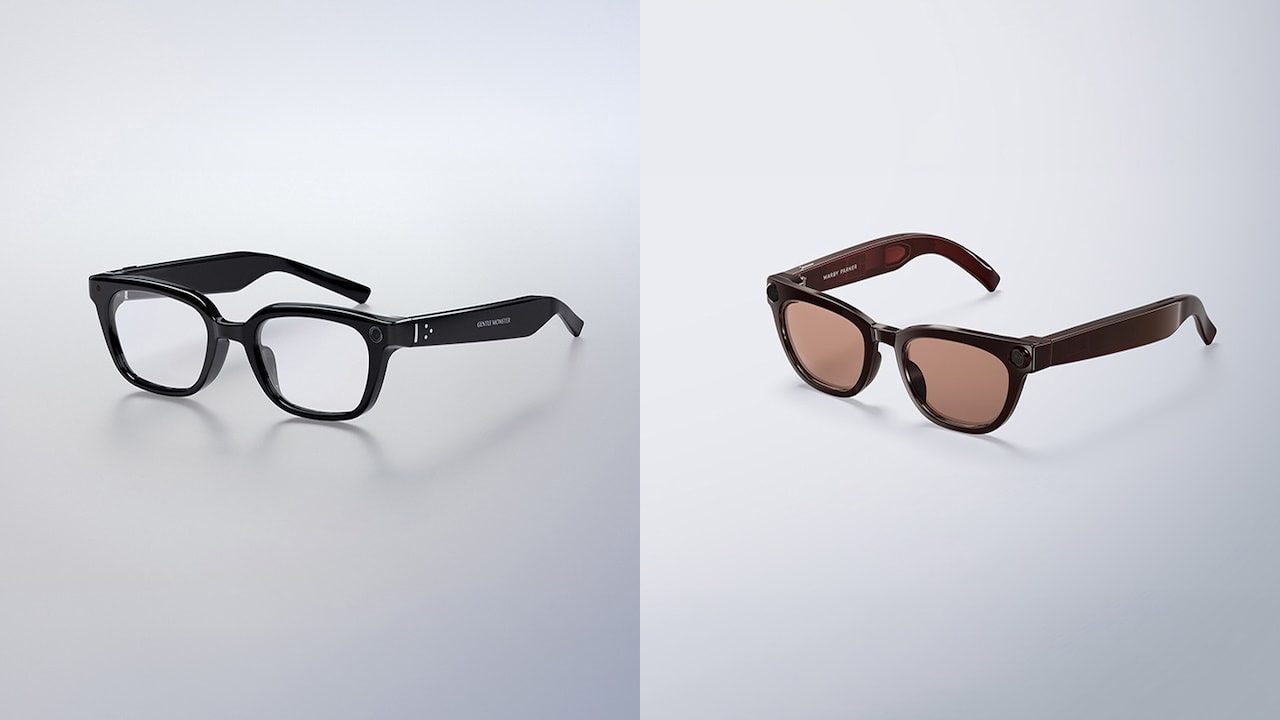
Audio Is the Interface
Google describes the system as using private speakers positioned near the ears, allowing wearers to listen to music, take calls and hear Gemini without blocking surrounding sound. The design is effectively open ear: nothing seals the ear canal, which preserves awareness of cars, cyclists, coworkers and people asking why your glasses have a camera.
That approach makes sense for navigation, safety, spoken notifications and short AI responses. It is also more practical for all-day wear than inserting earbuds every time Gemini wants to explain a parking sign.
Music playback will be more complicated.
Open ear audio can sound spacious and natural in a quiet room, but it generally gives up bass extension, isolation and maximum output compared with conventional earbuds. Performance can also change significantly depending on head shape, frame fit and how closely the speakers align with the ears.
Samsung and Google have not disclosed:
- The number or size of the speakers
- The microphone configuration
- Bluetooth version
- Audio codecs
- Spatial audio or head tracking
- Frequency response
- Call-noise reduction
- Wind suppression
- Sound-leakage performance
Those omissions matter more than another demonstration involving live translation. Smart glasses live or die by speech intelligibility, call quality and whether the person beside you can hear every word of your podcast.
Google calls the speakers “crisp, clear and private,” but those are promises rather than actual real world performance.

Gemini Has to Hear You First
Users can activate Gemini by saying “Hey Google” or tapping the side of the frame. The glasses can answer questions about objects and places seen by the camera, provide turn-by-turn directions, summarize messages, make calls, play music and translate speech or written text. They will work with both Android and iOS phones, although Samsung is clearly positioning deeper Galaxy integration as part of the appeal.
All of that depends on microphone performance.
A five-microphone array has helped Ray-Ban Meta become useful for calls, voice commands and recording in real environments. Samsung has not said how many microphones its glasses use or whether beamforming, wind filtering and AI noise reduction are built into the system.
That is not a small missing specification. Gemini cannot identify what you are asking about if it hears a delivery truck, two conversations, and a leaf blower instead of your voice.
Battery Life
Samsung claims up to nine hours of mixed use, with the charging case providing as many as seven additional charges. The mixed-use estimate reportedly includes limited music playback, calls, notifications, AI conversations and occasional camera use rather than nine continuous hours of streaming audio.
That is still competitive for the category, but continuous music playback will almost certainly produce a shorter result. Ray-Ban Meta Gen 2, for example, is rated for eight hours of moderate use but only about five hours with continuous audio streaming and voice assistance.
Samsung has not disclosed charging time, battery capacity or whether the case supports wireless charging.
Samsung vs. Ray-Ban Meta Gen 2
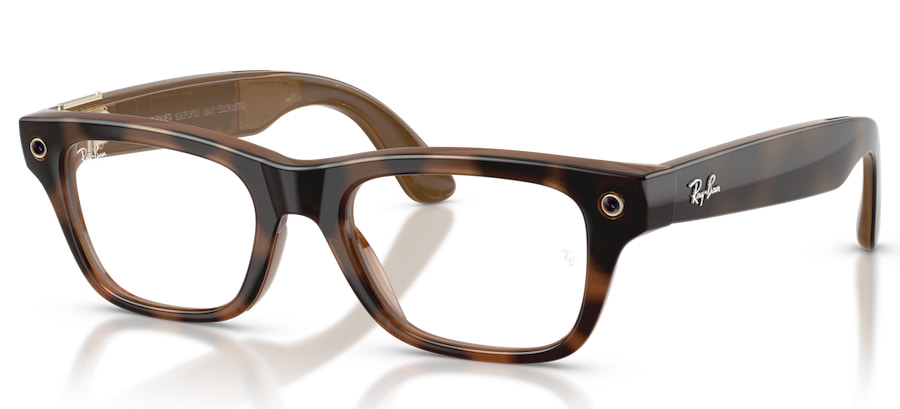
The Ray-Ban Meta Gen 2, priced from $379, is the competitor Samsung has to beat.
It already offers open ear speakers, five microphones, Meta AI, music playback, calls, live translation and camera capture in frames that can be purchased with prescription lenses through a large optical and retail network. Battery life is rated at up to eight hours for moderate use, or around five hours with continuous audio and voice assistance.
Meta also has several years of real-world audio development behind it. Its glasses are not a replacement for good earbuds, but the speakers are competent for calls, podcasts and casual music, while the microphone system has proven that voice-operated glasses can work outside a quiet demonstration room.
Samsung’s advantages could be Gemini, longer claimed battery life and tighter integration with Galaxy phones and services. Warby Parker and Gentle Monster also give Samsung legitimate optical and fashion partners rather than leaving the frames to a mobile-hardware team that might otherwise make them look like safety equipment from a semiconductor plant.
The unresolved question is whether Samsung can match Meta’s audio and microphone performance on its first attempt.
Samsung vs. Solos AirGo V2
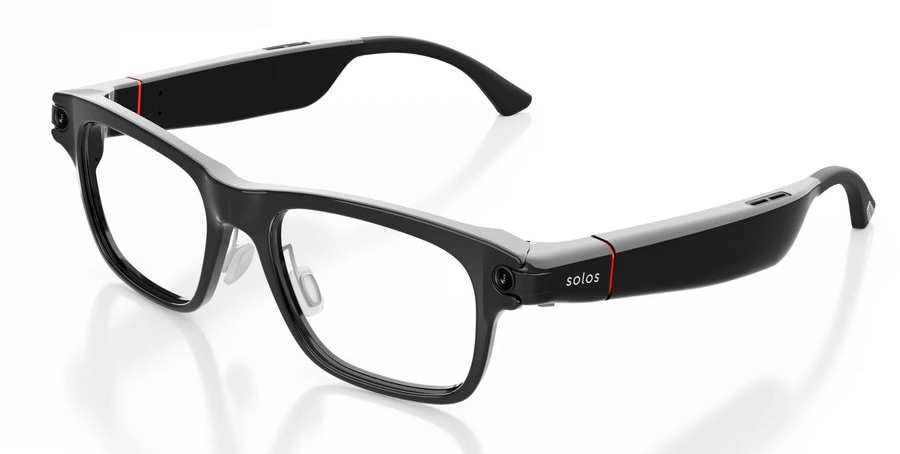
The $299 Solos AirGo V2 is the more audio-focused alternative.
Solos has spent several generations developing directional open ear speakers and its Whisper audio technology, which is designed to improve speech pickup and reduce the effect of ambient noise. The AirGo V2 also supports multiple AI platforms, including Gemini, ChatGPT, Claude and DeepSeek, rather than locking the wearer into one assistant.
Its modular design allows the camera-equipped front frame to be replaced, providing more flexibility for users who do not always want a camera on their face.
Samsung has far greater scale, stronger retail partnerships and a much larger device ecosystem. Solos counters with a longer history in audio glasses and more freedom over which AI service handles the conversation.
For listeners, that experience matters. Solos understands that the speaker and microphone system is not an accessory to the AI platform; it is the part connecting the AI platform to the user.
Privacy Remains Part of the Package
Samsung’s glasses include a visible recording indicator, and reports from Galaxy Unpacked indicate that recording stops if the light is blocked. That is better than relying entirely on the wearer’s judgment, which has not always proven to be a robust privacy standard.
A light does not solve every concern. Camera-equipped glasses will still create problems in offices, schools, restaurants, medical settings and private homes, especially when they can record conversations, read documents and send information to cloud-based AI systems. The NSA and CIA will be getting the first 2,000 units — which is speculation on my part. My Mossad handler already messaged me on WhatsApp this morning confirming that I’m getting a pair.
Samsung has not yet provided detailed information about local processing, data retention, audio recordings or whether captured material may be used to improve Gemini or other AI services.
Who Are They For?

Samsung’s smart glasses appear best suited to Galaxy users who want calls, navigation, translation, podcasts, music and voice assistance without wearing earbuds or constantly checking a phone.
The open ear design should work well for walking, commuting and travel because it allows environmental sound to remain audible. It may also appeal to people who dislike the pressure or fit of conventional earbuds.
Anyone expecting deep bass, isolation or meaningful noise cancellation should look elsewhere. These are audio glasses, not invisible Galaxy Buds.
They also make little sense for buyers who want visual directions or messages projected inside the lens. Samsung and Google say display glasses are coming later; this first generation communicates through sound.
The Bottom Line
Samsung is not introducing glasses that happen to play music. It is introducing an audio wearable with cameras and Gemini attached.
That distinction matters because the speakers and microphones will determine whether the glasses are useful after the novelty fades. Navigation must be understandable near traffic, calls must remain clear in wind, music must sound acceptable without excessive leakage and Gemini must hear the wearer without requiring repeated shouting into the right temple.
Ray-Ban Meta already offers a polished audio and microphone system backed by a major eyewear network. Solos offers more AI choice and years of experience with directional open ear sound. Samsung has the Galaxy ecosystem, Google’s AI and two strong fashion partners, but it has not yet disclosed enough about the audio hardware to declare victory.
The glasses look promising. Until Samsung explains what is inside the temples and lets people listen to them outside a controlled demonstration, the most important part of the product remains the least understood.
Related Reading: