THIEAUDIO has built much of its reputation in the IEM world, where lines such as the Monarch and Hype have earned the brand a loyal following among listeners chasing serious technical performance without immediately selling a kidney.
Full-size headphones have been a less convincing side quest. The Ghost, Wraith, and Phantom all arrived with suitably spectral names, but none made much of an impression in a crowded market already full of established favorites.

The $399 Cypher is THIEAUDIO’s fourth full-size headphone and its most serious attempt yet to change that. Built around a new 50mm dynamic driver, the open-back Cypher enters one of the most competitive corners of the wired headphone market, where stalwarts such as the Sennheiser HD600 and a small army of HiFiMAN planars have set a very high bar.
After launching through Kickstarter in March, the Cypher is now available directly from THIEAUDIO and Linsoul for $399. That removes some of the crowdfunding fog and leaves one rather important question: can THIEAUDIO finally build a full-size open-back headphone worth taking seriously?
Related Reading:
- HEDDphone D1: German-Made Dynamic Open-Back Headphones Take Direct Aim At Sennheiser
- Austrian Audio The Arranger Open-Back Headphones Review: Reference Or Preference?
Technology & Specifications
The THIEAUDIO Cypher is built around a 50mm dynamic driver using what the company describes as a semi-crystalline polymer-and-rubber composite diaphragm. THIEAUDIO says the material is intended to balance rigidity, damping, and excursion control in pursuit of low distortion, extended bass, and a natural tonal balance.
That diaphragm is paired with a 20-core N45 magnetic array and a high-tension copper-aluminum composite voice coil. On paper, the design is intended to improve driver control and responsiveness, with the potential for cleaner transients, sharper detail retrieval, and more stable imaging. As always, the proof is in the listening rather than the magnet count.
The Cypher is rated at 32 ohms with a sensitivity of 96dB ±3dB. Those figures suggest it should be easier to drive than some higher-impedance reference headphones, though its real-world amplifier demands deserve a closer look later in the review.
Build Quality & Design
The Cypher makes an excellent first impression with its overall build quality.
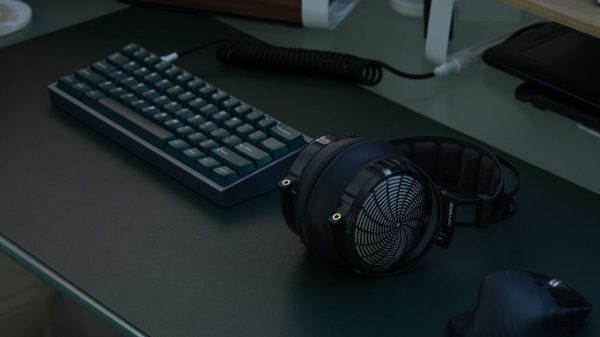
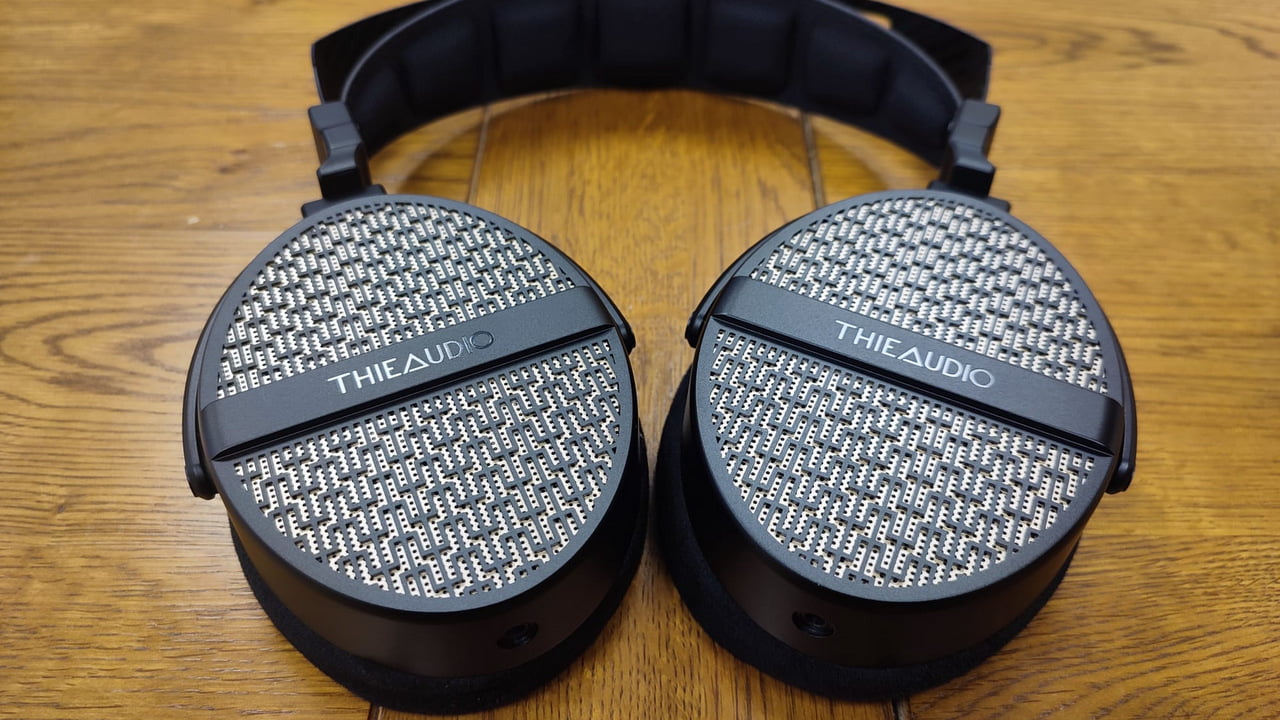
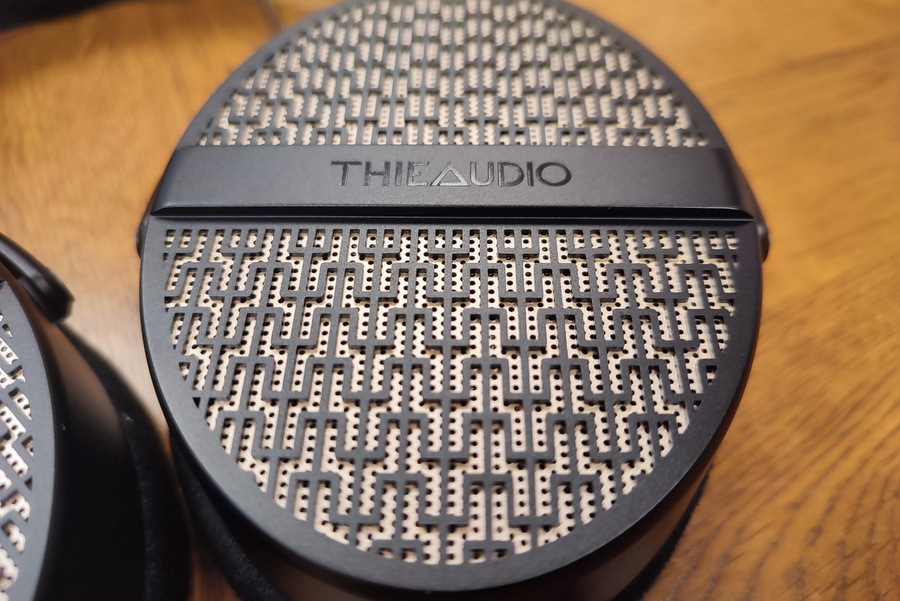
Its earcups are machined from aerospace-grade aluminum, giving the headphone a reassuringly solid feel without pushing the design into industrial-looking territory. THIEAUDIO has paid close attention to the visual details, and the result is a headphone that looks more expensive than its $399 price tag suggests.
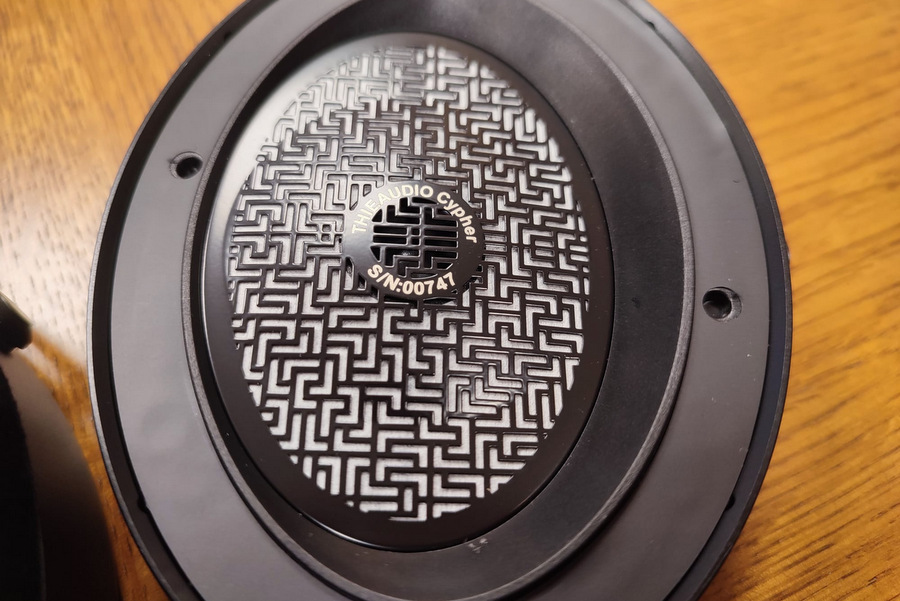
The geometric tessellation pattern on both the outer grille and the driver baffle beneath the earpads is one of the Cypher’s most appealing design choices. It is a subtle flourish, but it gives the headphone a distinct identity in a category full of familiar black-and-gray circles.
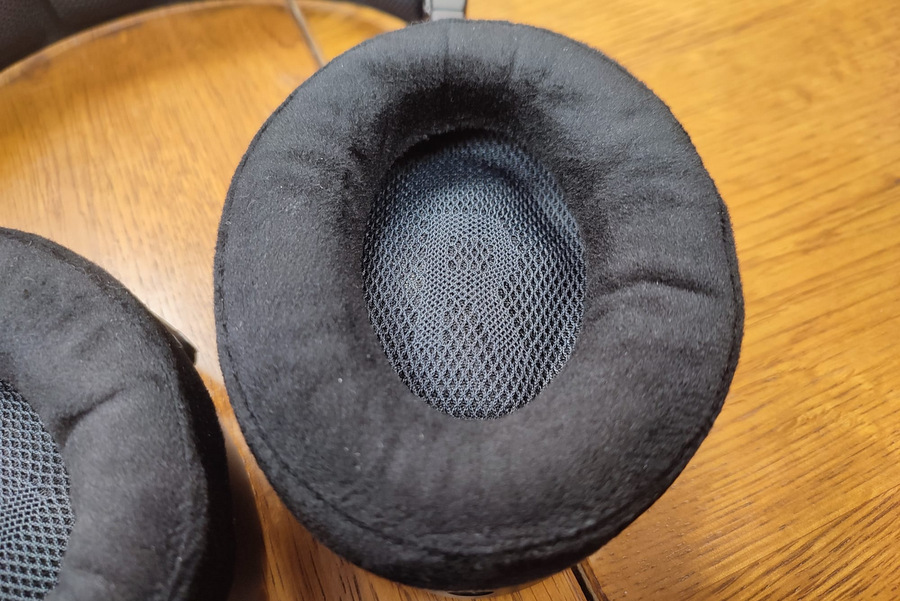
The magnetically attached earpads are another welcome touch. Swapping pads is quick and painless, while the mounting system feels more refined than the usual plastic clips. The trade-off is that the pads are proprietary, which could make replacements harder to source once the originals eventually wear out.
Overall, the Cypher’s build quality is among its strongest attributes. It feels well made, looks properly premium, and avoids the cheap shortcuts that still plague too many headphones at this price.
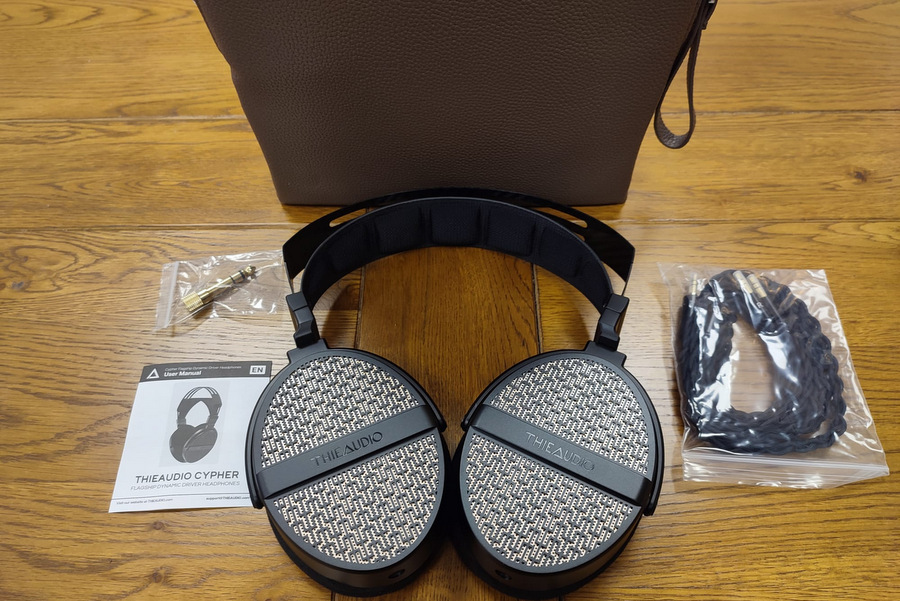
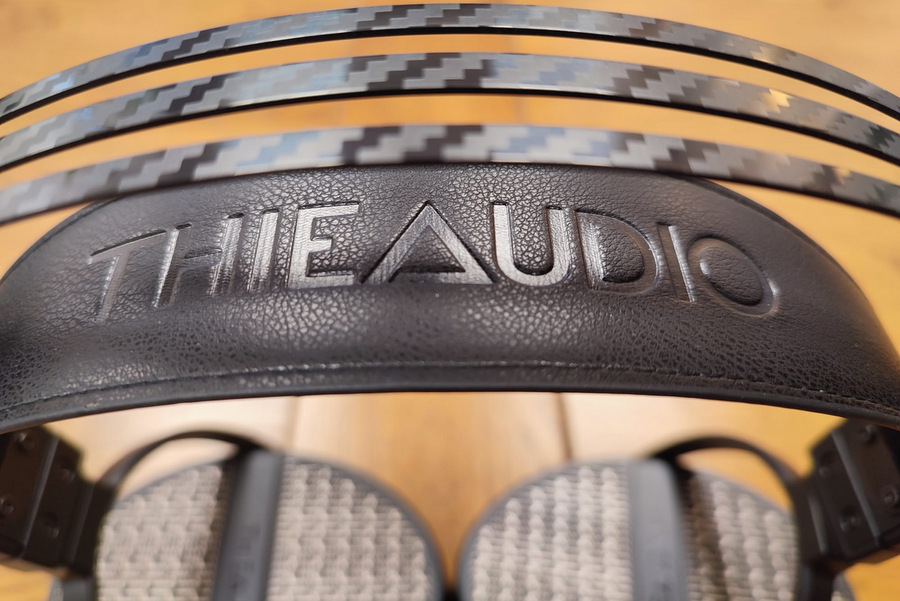
Comfort, on the other hand, is more of a mixed bag. At first glance, the generously padded headband looks as though it should be well suited to long listening sessions. In practice, I found the opposite. Its concentrated padding creates pressure hotspots that become increasingly noticeable over time, and after roughly two hours of continuous use, they can become genuinely uncomfortable.
Ironically, a simple suspension-strap design might have worked better by distributing the Cypher’s weight more evenly across the head.
The velour earpads are soft and breathable, and clamping force is generally reasonable. Still, despite a manageable 411-gram weight, the Cypher never quite disappears on the head the way the best long-session headphones can.
The yoke swivel mechanism is another issue. While the earcups provide sufficient range of movement, the yokes themselves are surprisingly stiff. Adjusting cup angle requires more force than expected, and they do not naturally conform to the sides of the head as readily as many competing designs.
One final observation: THIEAUDIO describes the Cypher as open-back, but it attenuates outside noise more effectively than expected. It is not a major issue either way, but “semi-open” may better describe its real-world behavior.
Listening
I’ll cut right to the chase: the Cypher’s tuning is exceptional.
It is one of the headphone’s most immediately impressive qualities and, arguably, its greatest strength. The comparison that kept coming to mind was the Sennheiser HD600. Like that long-standing reference, the Cypher favors neutrality, tonal accuracy, and natural timbre over artificial excitement.
Where THIEAUDIO’s headphone separates itself is in its ability to preserve many of those strengths while improving on several of the HD600’s familiar compromises, including bass extension, imaging, perceived soundstage width, and low-level detail retrieval.
As with all of our reviews, the Cypher was tested with a range of amplifiers and DACs to assess how it performed across sources of differing quality and output power. Listening included both Spotify streams and hi-res FLAC files, with the conclusions below drawn from tens of hours of use.
Bass
Bass extension is noticeably stronger than that of the Sennheiser HD600, a headphone long known for rolling off in the lowest audible octave.
The Cypher reaches deeper into the sub-bass with greater authority, yet it does so without upsetting its overall tonal balance. There is no obvious mid-bass lift or added warmth masquerading as impact; the extra extension simply gives recordings a more complete and convincing foundation.
Electronic music benefits from that added low-frequency reach, but the improvement is just as apparent with acoustic material, where the body, resonance, and scale of instruments come through more naturally. Hans Zimmer and James Newton Howard’s “Why So Serious?” was a particularly effective test. From roughly the 3:27 mark, its near-subsonic rumble was reproduced with convincing weight and control, without overwhelming the rest of the mix.
Midrange
The midrange is where the Cypher truly shines. Vocals, in particular, sound remarkably natural and believable, with impressive tonal density, presence, and realism.
Male and female voices emerge without obvious coloration, a quality that remains surprisingly difficult to find in headphones at any price. The Cypher may not grab attention on first listen with oversized bass or aggressively bright treble, but spend time with it and the quality of its midrange becomes increasingly difficult to ignore.
That even-handed presentation also pays dividends with instrumental timbre. Pianos carry convincing weight and harmonic complexity, while guitars have the kind of organic texture that makes strings, wood, and resonance feel properly connected rather than merely outlined.
There is an effortless quality to acoustic instruments that makes the Cypher deeply engaging over long listening sessions without becoming fatiguing.
Treble
The THIEAUDIO Cypher strikes a fine balance with its treble presentation. There is enough energy and extension to preserve detail and air without introducing fatigue or harshness. It never sounds artificially bright, but it also avoids the muted or overly relaxed character that can rob a headphone of life.
The result is a highly resolving presentation with excellent long-term listenability. On L’Impératrice’s “La lune,” the Cypher reproduced the faint triangle hits woven through the track with impressive clarity and delicacy, bringing them forward without allowing the treble to turn sharp or piercing.
Soundstaging & Imaging
The Cypher’s tuning may be its headline act, but good tonal balance does not automatically guarantee equally convincing technical performance. The Sennheiser HD600 remains a useful comparison: its midrange is rightly celebrated, yet its relatively intimate soundstage and center-focused imaging can make more complex recordings feel somewhat constrained.
The Cypher addresses both shortcomings. Its soundstage is appreciably wider, and its imaging is more precise, giving densely layered material such as TOOL’s “Chocolate Chip Trip” more room to breathe and making individual effects easier to follow.
I would not call it class-leading in this regard. Headphones such as the HiFiMAN Ananda series still create a more expansive and open-sounding presentation. But at $399, the Cypher delivers a notably more spacious and organized image than the HD600 while retaining much of that headphone’s tonal appeal.
Drivability
As noted earlier, the THIEAUDIO Cypher is rated at 32 ohms with a sensitivity of 96dB/mW.
That sensitivity figure is worth noting. It is neither especially demanding nor particularly efficient for an open-back wired headphone, and while the Cypher will play from a laptop or smartphone, I would not recommend relying on either if you want to hear what it can really do.
The good news is that it does not require an extravagant amplifier chain. Moving to pricier DACs and more powerful amplification did not produce a meaningful improvement in overall sound quality, so a capable dongle DAC, such as the Campfire Audio Relay we reviewed last year, should be more than sufficient.
For example, switching from the LAiV Crescendo VERSE DAC/amp to the considerably more powerful Aune S18 EVO and S17 Pro stack resulted in only a barely perceptible tightening of bass notes. It was not enough to justify the substantial price difference, or the additional real estate consumed on the desk.

The Bottom Line
The THIEAUDIO Cypher succeeds because it gets the fundamentals right. Its tuning is unusually accomplished for $399, combining the tonal accuracy and natural timbre that have kept the Sennheiser HD600 relevant for decades with deeper bass, stronger image placement, a wider soundstage, and more apparent low-level detail.
That combination is the Cypher’s real trick. Plenty of headphones in this price range can deliver bigger bass, more treble sparkle, or a wider presentation. Few manage to do so without sacrificing midrange realism in the process. The Cypher does not reinvent the neutral open-back headphone; it makes a strong case for updating the formula.
It is not without compromises. The stiff yokes are unnecessarily frustrating, the magnetically attached pads are proprietary, and the headband creates pressure hotspots during longer sessions. Build quality looks and feels premium, but comfort and long-term serviceability are not at the same level. That matters, especially when the HiFiMAN Sundara is lighter, and the beyerdynamic DT 900 Pro X offers a more practical, repair-friendly studio-oriented alternative.
But once the music starts, the Cypher’s shortcomings become easier to forgive. It does not need a costly amplifier chain, it handles a broad range of music with poise, and its midrange performance is good enough to make many more expensive headphones sound like they are trying a bit too hard.
The HD600 remains the safer choice for buyers who value proven long-term parts support and near-universal comfort. The Sundara remains compelling for listeners who want planar speed and a more expansive presentation. But for someone who wants a neutral, reference-oriented dynamic headphone with more sub-bass reach, better spatial performance, and very little tonal baggage, the Cypher is absolutely worth the money.
THIEAUDIO has made better IEMs than full-size headphones in the past. The Cypher is the first one that feels like a serious correction to that record.
Pros:
- Outstanding reference-oriented tuning
- Superb timbre and tonal realism
- Excellent imaging and detail retrieval
- Better bass extension than the HD600
- Premium metal construction
- Attractive industrial design
- Convenient magnetic earpad system
Cons:
- Headband creates pressure hotspots
- Stiff yoke articulation
- Proprietary earpads may be difficult to replace long-term
- Comfort lags behind the best competitors
Our Ratings
★★★★★★★★★★ Sound Quality
★★★★★★★★★★ Comfort
★★★★★★★★★★ Usability
★★★★★★★★★★ Build Quality
★★★★★★★★★★ Value
Where to buy:
Related Reading:
- Grell OAE2 Open-Back Headphones Review: Can Axel Grell Deliver Speaker-Like Imaging For $599?
- Are Wired Headphones Hot Again? Grado Signature S550 Launch At CanJam NYC 2026 Says Yes
- Meze Audio STRADA Review: Closed-Back Contender Or An EQ Dependent Gamble?
- Read More Wired Audiophile Headphone Reviews