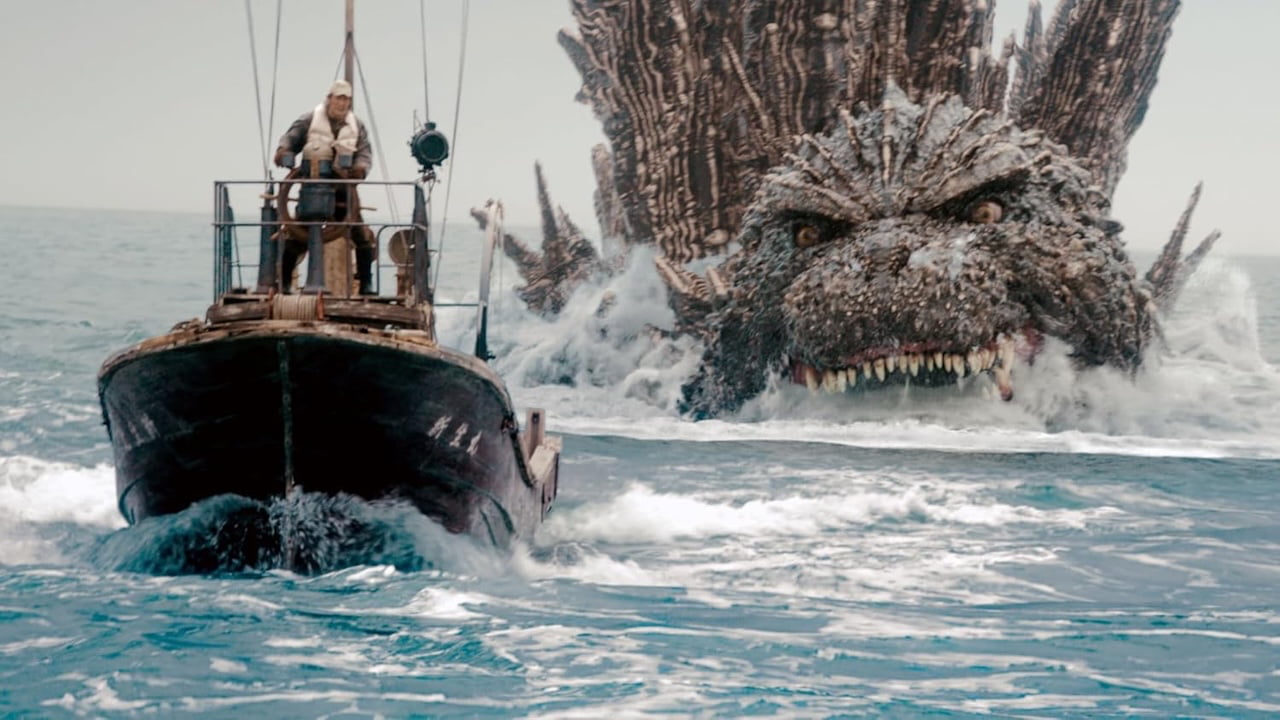
Sitting down for Godzilla Minus One, I expected another monster movie. Cities flattened. People screaming. Atomic breath doing what atomic breath does best. I could not have been more wrong. And shame on Hollywood for not recognising this film for its messaging and technical brilliance.
Takashi Yamazaki’s film is not interested in spectacle for the sake of spectacle. Set in the final days of World War II and the fragile, ruined years that follow, Godzilla Minus One strips the franchise back to its original wound: postwar trauma, nuclear fear, survivor’s guilt, and the ugly business of trying to rebuild when everyone would rather pretend the worst is over. It isn’t.
At the center is Kōichi Shikishima, a failed kamikaze pilot who chooses to live and then has to carry the weight of that decision. When he lands his Mitsubishi Zero on Odo Island claiming mechanical failure, the lie is obvious. When Godzilla attacks that night and Shikishima freezes, he survives again. Others do not. That failure becomes the film’s real monster long before Godzilla rises from the water.
Back in Tokyo, there is no heroic return waiting for him. His parents are dead. The city is broken. What he builds with Noriko and the orphaned Akiko is not some clean new beginning, but a fragile pocket of life stitched together from loss, hunger, and necessity. His work on a minesweeper is almost too perfect: he spends his days clearing the literal leftovers of war while still dragging the emotional wreckage behind him.
Then Godzilla returns.
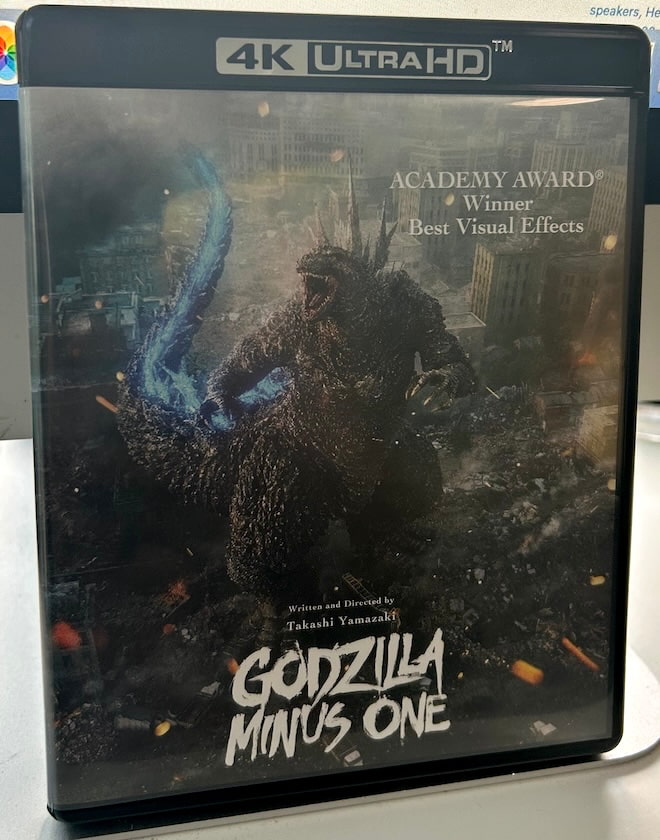
Not as a mascot. Not as a theme park attraction with better dental work. This Godzilla is consequence. Mutated and supercharged by American nuclear testing at Bikini Atoll, he is the war changing shape after the official speeches say it has ended. The U.S. steps back because of geopolitical tension. The Japanese government stays quiet to avoid panic. So the people already left with nothing are forced to deal with the thing everyone else would rather not face.
That is why Godzilla Minus One works. The destruction matters because the people matter first. The Ginza sequence lands not because buildings fall, but because lives do. Noriko’s apparent death does not feel like a plot mechanism. It feels like the last thread holding Shikishima to a future being cut in front of him.
Made for a reported fraction of what Hollywood spends on giant digital noise machines, Godzilla Minus One earned $113,820,494 worldwide, with roughly 90% of its overall gross outside America coming from Japan. That matters because this is not just another international franchise entry cashing in on a famous monster. It is a Japanese film about Japan’s postwar grief, shame, resilience, and refusal to disappear under the rubble.
Seventy years into the franchise, Godzilla Minus One circles back to what Godzilla was always supposed to represent. Not destruction for fun. Not a collectible lizard with a marketing plan. A national wound with teeth, rage, and atomic breath.
Digital Capture, Analog Wounds, Atomic Precision
Released on 4K Ultra HD Blu-ray Disc by Toho, Godzilla Minus One is presented in 2160p HEVC / H.265 in its original 2.39:1 widescreen aspect ratio, with Dolby Vision and HDR10. The film was captured digitally using Sony CineAlta VENICE cameras, including VENICE 2 6K, with Zeiss Supreme Prime and Angenieux Optimo Ultra lenses, and finished from a 4K digital intermediate.
The result is a superb native 4K presentation that looks sharp without feeling sterile. Postwar Tokyo has texture, grime, smoke, rubble, and depth, while faces and uniforms reveal plenty of fine detail without obvious overprocessing. The muted color palette is preserved well, giving the film its worn, wounded look rather than turning it into shiny blockbuster wallpaper.
I saw Godzilla Minus One theatrically at my local AMC, most likely in Dolby Cinema, and the 4K UHD disc holds up beautifully at home. The HDR is especially effective during Godzilla’s attacks, with strong black levels, controlled highlights, and atomic breath that lands with real visual force. The 100GB disc and high- 69.80mbps bitrate encode give the image more breathing room than streaming, with cleaner motion, stronger compression handling, and better stability in smoke, water, darkness, and effects-heavy sequences.
This is a reference-quality 4K disc because it serves the movie, not because it shows off. The image is clean, detailed, and cinematic, but still grimy enough to feel like a film about people crawling out of the wreckage rather than a digital demo reel with a giant radioactive dragon stomping through it.
Lossless Atmos, Devastating Impact, and Silence With a Purpose
The 4K UHD release of Godzilla Minus One includes a Japanese Dolby Atmos track, with additional Japanese Dolby TrueHD options depending on the edition. On disc, that matters. This is not the thinner, compressed Atmos experience many viewers get from streaming. The lossless presentation gives the film more weight, cleaner dynamics, and better control when the soundtrack shifts from silence to destruction.
What stands out is the restraint. The dramatic scenes are not pushed forward like a modern blockbuster afraid of dead air. Dialogue, room tone, rain, machinery, and the quieter moments of grief are allowed to breathe. That makes the action hit harder when Godzilla arrives and the mix opens up.
The Atmos track delivers real scale during the Odo Island attack, the Ginza sequence, and the ocean finale. Godzilla’s roar has size without turning into noise, the low end has authority, and the surround field is active without feeling gimmicky. The score comes through with clarity and force, but it never buries the human drama underneath it.
This is exactly where physical media still earns its keep. Streaming services love waving the Dolby Atmos flag, but disc-based Atmos gives you the bitrate and lossless foundation to hear the difference on a capable system. Godzilla Minus One benefits from that extra headroom. The mix is cleaner, deeper, and more immersive without losing the film’s emotional center.
The English subtitles are also clean, readable, and well integrated. That sounds like a small thing until streaming subtitles show up looking like someone taped a spreadsheet over the movie. Why do studios continue to do that?
Good Extras, Limited by the Version You Buy
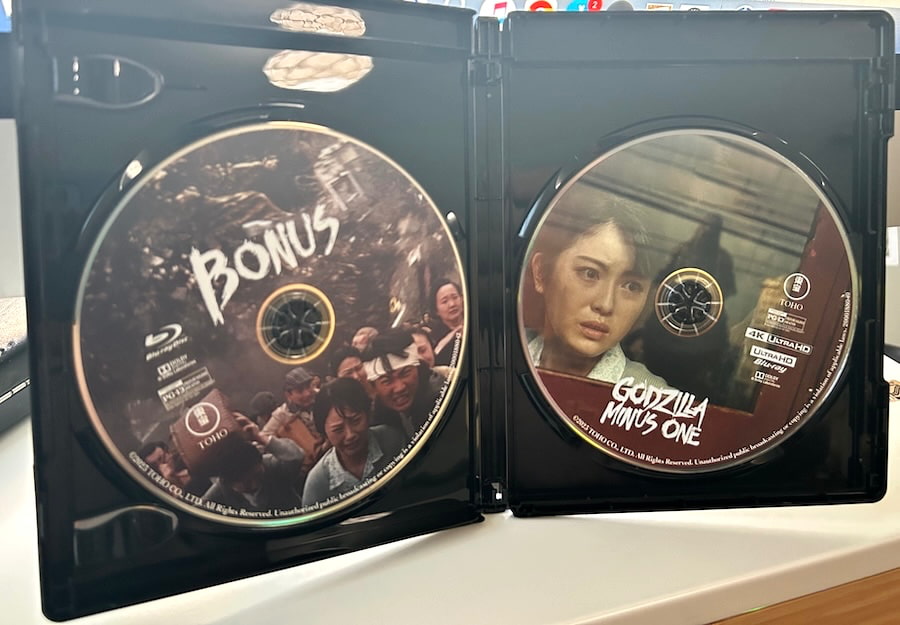
The 4K UHD Blu-ray release includes a solid collection of promotional material, including trailers, TV spots, 6-second character bumpers, IMAX and ScreenX promo clips, and other short Toho marketing pieces. There is also a bonus featurette on select editions, but this is where things get messy.
The extras are useful, but they are not all-inclusive. Toho spread supplemental material across different domestic and international releases, so what you get depends heavily on which version you buy. Some editions include different bonus content, different subtitle support, or additional material not found on the standard U.S. 4K release.
The biggest omission here is Godzilla Minus One/Minus Color, the black-and-white version of the film. That cut is available elsewhere, including deluxe editions, but it is not included with this standard 4K UHD release. For a movie that leans this hard into postwar dread, that feels like a missed opportunity, and not a small one.
So yes, the supplemental package is respectable. Just don’t assume this edition gives you everything. With Godzilla Minus One on disc, the monster is not the only thing divided into multiple versions.
Movie Details
- STUDIO: Toho
- FORMAT: Ultra HD 4K Blu-ray (November 19, 2024)
- THEATRICAL RELEASE YEAR: 2023
- ASPECT RATIO: 2.39:1
- HDR FORMAT: Dolby Vision, HDR10
- AUDIO FORMAT: Japanese Dolby Atmos, Japanese Dolby TrueHD 7.1, English Dolby TrueHD 5.1
- LENGTH: 125 mins.
- MPAA RATING: PG-13
- DIRECTOR: Takashi Yamazaki
- WRITER: Takashi Yamazaki
- PRODUCER: Kenji Yamada
- STARRING: Ryunosuke Kamiki, Minami Hamabe, Munetaka Aoki, Hidetaka Yoshioka, Sakura Andô, Kuranosuke Sasaki
Our Ratings
★★★★★★★★★★ Movie
★★★★★★★★★★ Picture
★★★★★★★★★★ Sound
★★★★★★★★★★ Extras
Where to buy:
Related Reading:
- Avatar: Fire And Ash 4K UHD And Blu-Ray 3D Review: Pandora Burns Bright, But Is The Magic Fading?
- Speed Racer 4K UHD Review: Go Speed Racer Go, The Wachowskis’ Cult Classic Finally Gets Its Victory Lap
- Fight Club 4K UHD Review: Jack’s High Dynamic Range Hits Like A Soap-Wrapped Brick
- 28 Years Later: The Bone Temple 4K UHD Review: Still Infected Or Just Going Through The Motions?