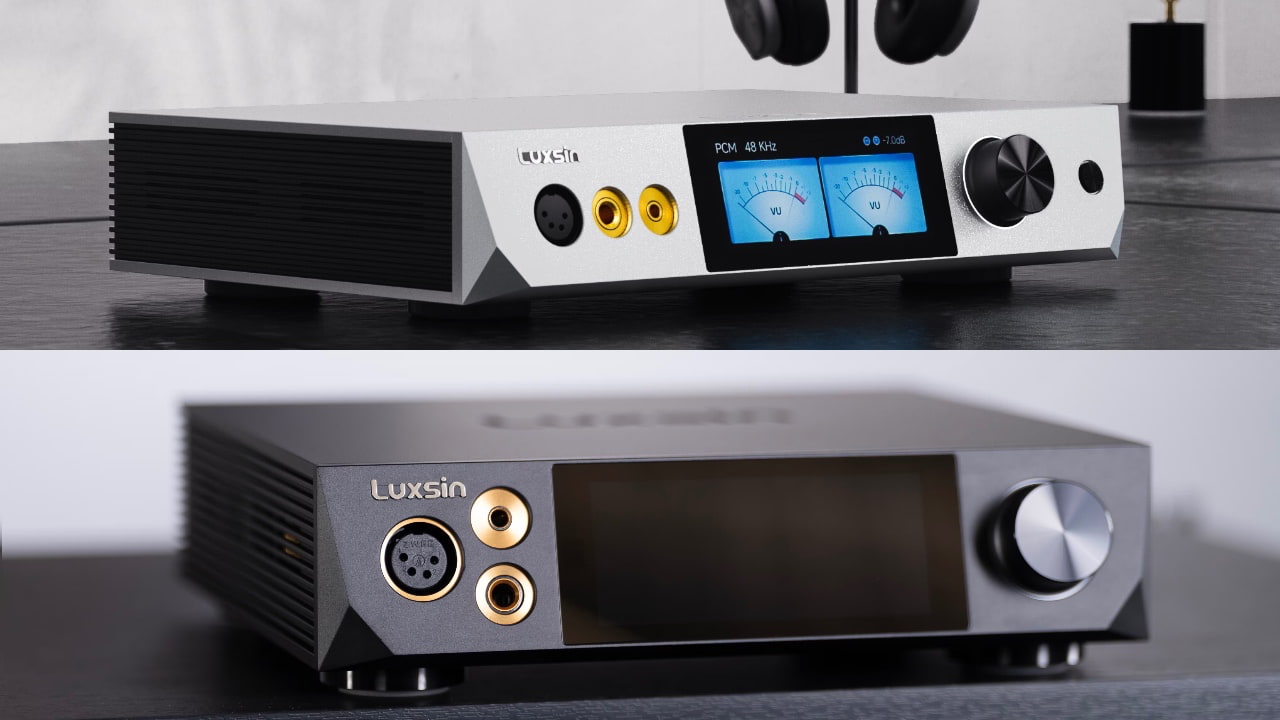
Luxsin Audio is not exactly a household name yet, but that may change quickly if headphone listeners and desktop audio users start paying attention to what the X8 and X9 are offering for the money. The brand sits inside the broader Zidoo Group orbit, with Forté Distribution describing Luxsin as the high-end sibling to Eversolo, inheriting some of that parent company’s software know-how while pushing harder into DACs, headphone amplification, DSP, and desktop control.
That matters because enthusiasts already know Eversolo rather well, and most of them understand that software stability, firmware support, and usable interfaces are not exactly optional anymore unless you enjoy yelling at aluminum boxes.
The bigger news is that both Luxsin models are now available in North America through Forté Distribution. The Luxsin X8 sells for $699, while the Luxsin X9 sells for $1,099.
Related Reviews:
- FiiO K17 DAC/Amplifier Review: The Desktop Tank That Wants To Retire Your Dongles (And Maybe Your Amp, Too)
- Fosi Audio K7 DAC/Amp Review: Can A $199 All-In-One Really Satisfy Headphone Listeners?
- Topping DX1 II Review: Does Schiit Have A $119 DAC And Headphone Amp Problem?
Who is Luxsin?
The desktop DAC/headphone amp category is no longer just about stuffing a DAC chip, a volume knob, and three headphone jacks into a small metal box and calling it a day. Topping, Schiit, FiiO, RME, iFi, SMSL, Burson, Questyle, and others have turned this space into a feature war, with PEQ, Bluetooth, balanced outputs, touchscreens, app control, HDMI ARC, crossfeed, preamp functionality, and enough output power to make difficult planar headphones reconsider heading to the Shore for the summer.
Luxsin is walking into that fight with two different approaches. The X8 is the more affordable, AI-assisted, headphone-first model. The X9 is the more ambitious system hub, with AKM flagship conversion, balanced R2R volume control, HDMI ARC, preamp outputs, and subwoofer integration.
That split is useful because these are not just two versions of the same product with one extra chip and a higher asking price. The X8 is aimed at listeners who want advanced headphone correction and power for less money. The X9 is aimed at people who want one desktop component to serve as DAC, headphone amp, preamp, and small-system control center.
Luxsin X8: The AI EQ Model
The Luxsin X8 is the more affordable of the two at $699, but it is not positioned like an entry-level desktop DAC/amp. It uses eight Cirrus Logic CS43198 DAC chips in a dual-mono parallel configuration, with four DAC chips assigned to each channel. Forté says the design is intended to lower the noise floor through analog summation while improving dynamic range and low-level resolution.
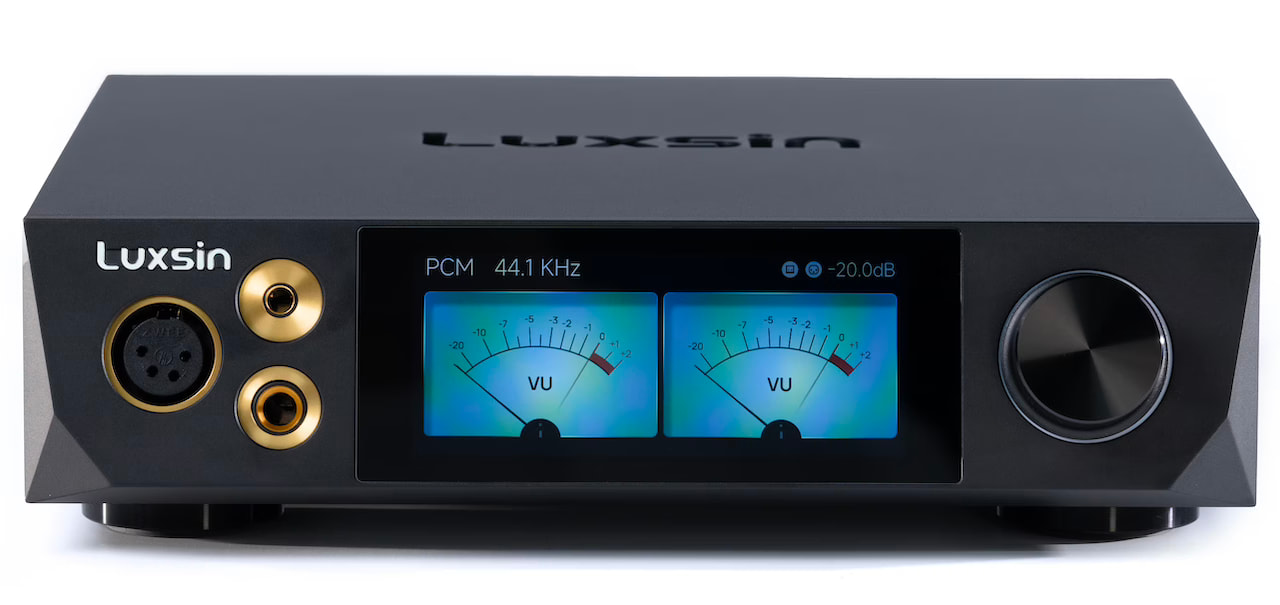
The headline feature is AI-assisted parametric EQ. Luxsin says users can adjust the sound through voice or text commands using a mobile app or web interface. That is either genuinely useful or the beginning of your DAC developing opinions about your treble preferences, depending on your tolerance for AI in audio. The more concrete feature is HP-EQ, Luxsin’s headphone correction system, which uses a database of more than 2,500 headphone profiles to apply model-specific correction.
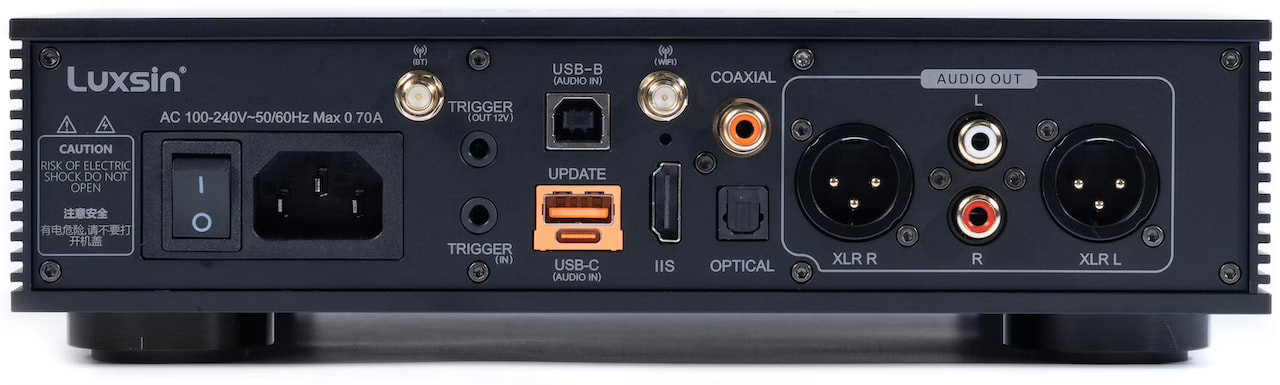
The X8 also includes impedance detection, multiple headphone outputs, USB-B, USB-C, optical, coaxial, and IIS over HDMI digital inputs, plus balanced XLR and single-ended RCA preamp outputs. Wireless support includes Bluetooth 5.1 with AAC and SBC, while Wi-Fi is used for app control and updates.
Where does it fit? The X8 is for headphone users who want more than a basic USB DAC/amp but do not want to spend over $1,000. It competes most directly with products such as the FiiO K17, Topping DX5 II, SMSL DO400, and other feature-heavy desktop DAC/headphone amp combinations. The FiiO K17 sits closer to $989.99 at some U.S. retailers and brings its own PEQ, touchscreen, AKM-based platform, and serious power; the Topping DX5 II attacks the lower price tier with a very aggressive feature set.
Luxsin X9: The System Hub
The Luxsin X9 is the more expensive and more ambitious model at $1,099. Forté lists it as a balanced DAC, headphone amplifier, and preamplifier built around AKM’s AK4191 and AK4499EX DAC platform. It also includes a balanced R2R resistor ladder volume control with 0.5 dB steps and 0.1 dB channel matching.
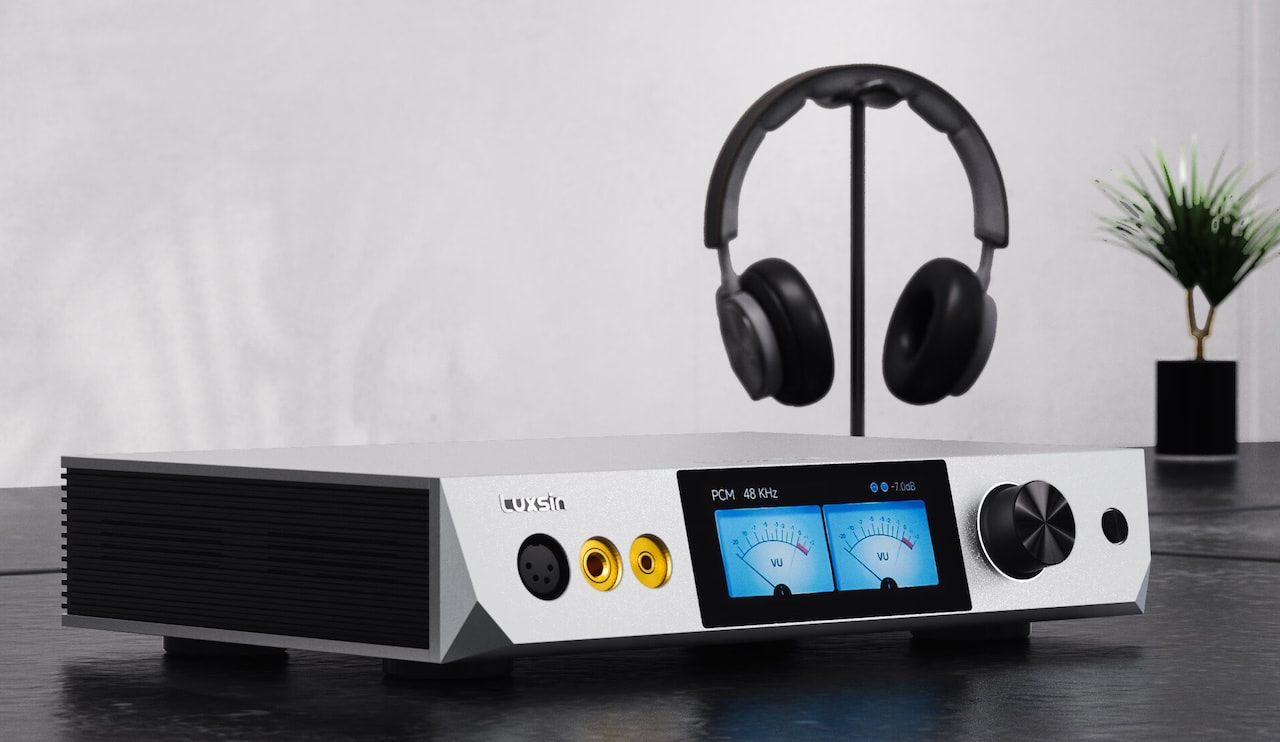
The X9 also supports HP-EQ with more than 2,500 headphone profiles, impedance auto-detection, digital crossfeed, adjustable soundstage width and depth, and a 4-inch touchscreen. This is not a purist’s black box with one LED and a smug manual printed in 6-point type. Luxsin clearly wants users to interact with the X9 and tune it. Some audiophiles will recoil from that. Others will quietly use the EQ every night and pretend they are still purists at dinner parties.
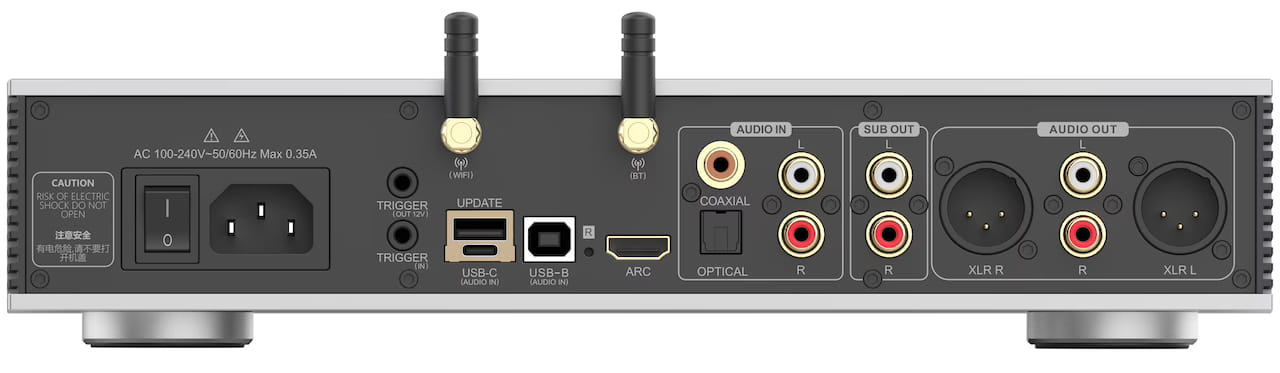
The X9’s biggest advantage over the X8 is system integration. It adds HDMI ARC, RCA analog input, XLR and RCA analog outputs, subwoofer output, and stronger preamp functionality. Luxsin’s own page also references HDMI ARC support up to PCM 192 kHz / 24-bit, optical/coaxial support up to PCM 192 kHz / 24-bit and DoP64, and USB support up to PCM 768 kHz / 32-bit and DSD512.
Where does it fit? The X9 competes with more expensive desktop control centers such as the FiiO K19, Topping DX9 Discrete, and Burson Conductor Stellar among other higher-end desktop DAC/amp/preamp units. FiiO’s K19 is a $1,299 flagship desktop DAC/amp with SHARC DSP and 31-band PEQ, while the Topping DX9 Discrete sits around $1,299 through U.S. retailers and leans into very high output power and discrete DAC architecture.
The Luxsin argument is not just raw output. It is the combination of AKM conversion, headphone correction, touchscreen control, impedance detection, HDMI ARC, preamp outputs, and subwoofer integration at $1,099. That makes it more interesting for someone building a desktop headphone and small speaker system than for someone who only wants a DAC with balanced outputs and zero personality.
Specifications Compared: Luxsin X8 vs X9
| Spec | Luxsin X8 | Luxsin X9 |
|---|---|---|
| Price | $699 | $1,099 |
| Type | DAC + headphone amplifier | Balanced DAC + headphone amp + preamp |
| DAC | 8 x Cirrus Logic CS43198 | AKM AK4191EQ + AK4499EX |
| Audio processor / DSP | Dual-core HiFi-5 DSP + ARM processor | AKM 7739 DSP |
| Op-amp | OPA1612 | OPA1612 |
| Volume control | – | Balanced R2R resistor ladder |
| Volume steps | – | 0.5 dB steps (0.1 dB channel matching) |
| Headphone EQ | HP-EQ (2,500+ profiles) | HP-EQ (2,500+ profiles) |
| AI/assisted EQ | Voice/text assisted parametric EQ (app/web) | Not specified |
| Impedance detection | Yes | Yes |
| PCM support | Up to 768 kHz / 32-bit (USB + IIS) | Up to 768 kHz / 32-bit |
| DSD support | Native DSD512 (USB + IIS) | Native DSD512; DoP64 |
| IIS over HDMI | Yes | – |
| RCA / HDMI ARC In | – | Yes |
| Optical/coaxial | Up to 192 kHz / 24-bit | Up to 192 kHz / 24-bit; DoP64 |
| Bluetooth | 5.1 (SBC/AAC) | 5.0 (SBC/AAC) |
| Inputs | USB-B USB-C optical coaxial IIS (over HDMI) | USB-B USB-C optical coaxial HDMI ARC RCA analog |
| Outputs | XLR balanced RCA 4-pin XLR 4.4 mm 6.35 mm headphone | XLR balanced RCA SE subwoofer out 4.4 mm balanced 6.35 mm SE headphone |
| Trigger | 12V input/output | 12V input/output |
| Headphone outputs | 6.35mm SE, 4.4mm balanced, 4-pin XLR balanced | 6.35mm SE, 4.4mm balanced, 4-pin XLR balanced |
| Balanced headphone power | ≥4,840 mW + 4,840 mW @ 16Ω | ≥2,650 mW x2 @ 16Ω |
| Single-ended headphone power | ≥2,900 mW + 2,900 mW @ 16Ω | ≥2,100 mW |
| XLR THD+N | <-121.8dB @unweighted | <0.000096% (-120.3dB) @ unweighted |
| XLR SNR | ≥129.5dB | > 128dB |
| XLR Crosstalk | ≥133dB (1kHz@200kΩ) | >-117dB |
| Display | 4-inch touchscreen (960×480) | 4-inch touchscreen (960×400) |
| Dimensions (LxWxH) | 236 x 236.8 x 64 mm | 206 x 300 x 65 mm |
| Weight | 2.75 kg / 6 lb | 3.72 kg / 8.2 lb |
Which Luxsin Makes More Sense?
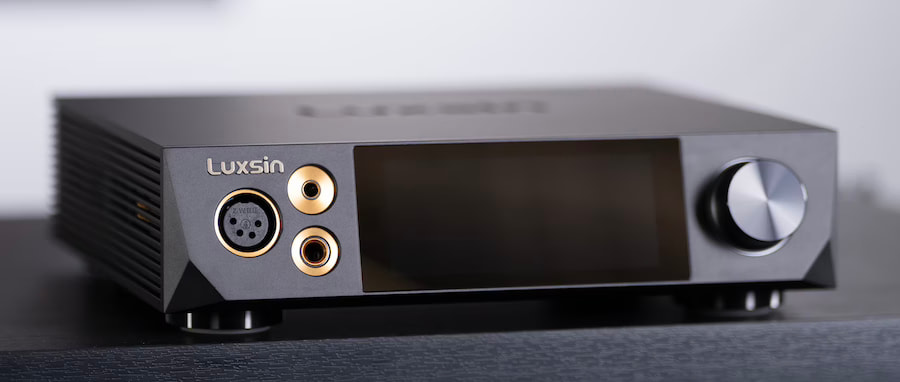
The X8 looks like the better pick for listeners who primarily use headphones and want maximum flexibility under $700. It has the more novel AI-assisted EQ system, plenty of output power, HP-EQ, balanced headphone outputs, XLR/RCA preamp outputs, and a desktop-friendly touchscreen. It does not appear to include HDMI ARC or subwoofer output, so it is less compelling as a TV-connected desktop or small-room hub.
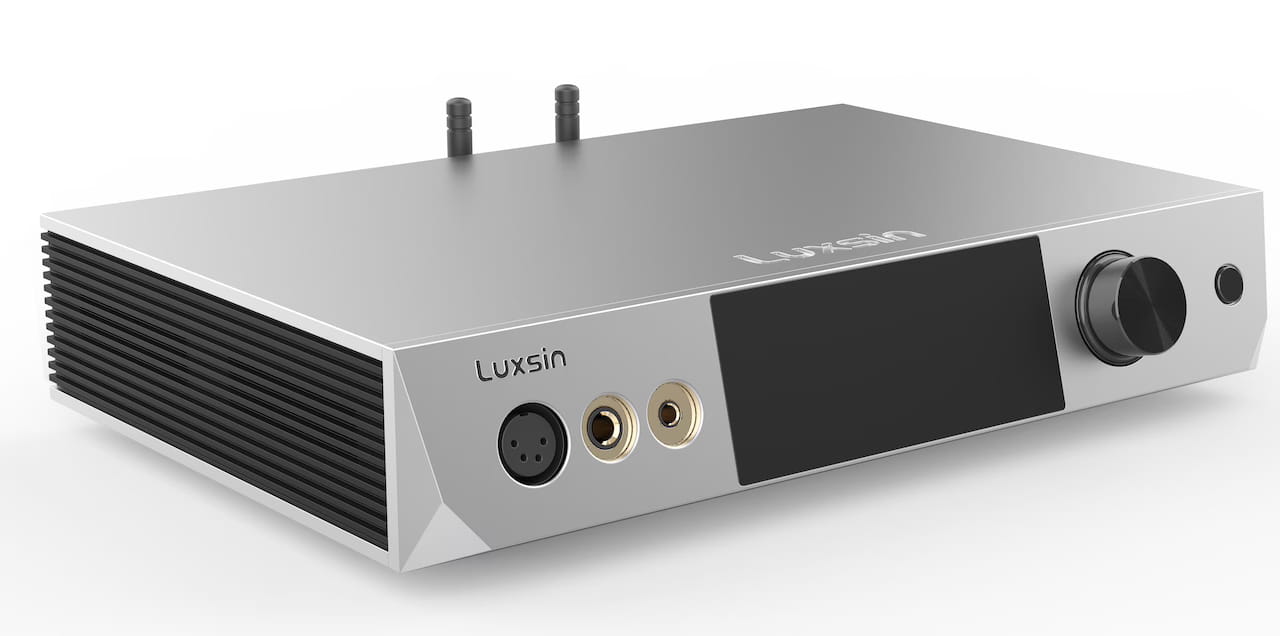
The X9 is the more complete system product. HDMI ARC, analog input, XLR/RCA outputs, subwoofer output, balanced R2R volume control, crossfeed, soundstage adjustment, and HP-EQ make it the more flexible control center. If the X8 is the “headphone desk rig” option, the X9 is the “headphones plus powered speakers plus subwoofer plus TV” option.
That matters because a lot of listeners are not building traditional racks anymore. They are building desktop systems, apartment systems, gaming/listening systems, bedroom systems, or headphone-first systems that also need to feed powered speakers. The X9 seems designed for that reality. The X8 is aimed at users who want the tuning and power without paying for the broader system integration.
The Bottom Line
Luxsin is entering a brutally competitive category, but the X8 and X9 are not empty spec-sheet theater. The X8 is packed with technology for $699, including eight Cirrus Logic DAC chips, AI-assisted PEQ, HP-EQ, balanced output, and mobile app control. The X9 steps up to $1,099 with AKM flagship conversion, balanced R2R volume control, HDMI ARC, subwoofer output, and preamp functionality.
Neither product should be treated as a simple DAC/headphone amp. These are desktop control centers for listeners who want to adjust, correct, integrate, and experiment. That will annoy the “one button and vibes” crowd, but they still think tone controls are a gateway drug.
For listeners who already understand Eversolo’s rise and want to see what that ecosystem looks like when pointed at headphone and desktop audio, Luxsin is worth watching. The X8 looks like the value play. The X9 looks like the one that could replace several boxes if its software, EQ system, and preamp section perform as promised.
Related Reading:
- FiiO Teases K17 R2R Pro DAC And Headphone Amplifier With Wi-Fi
- LAiV Crescendo VERSE Review: Chapter And Verse On This All-In-One DAC, Preamp, And Headphone Amplifier
- Schiit LYR 5 Lands With Forkbeard And Fusion: Serious Headphone Amp Or More Schiit For Your Rack?