

Dolby Vision 2 may not require you to replace your current 4K Blu-ray player, which is welcome news for anyone who has already spent hundreds or even thousands of dollars on a good disc spinner. The complication is that technical compatibility and actual manufacturer support are two very different things, and the companies still making dedicated 4K Blu-ray players will ultimately decide whether existing hardware gets the firmware needed to take advantage of the new format.
Dolby has confirmed that existing Ultra HD Blu-ray players can potentially work with Dolby Vision 2 without requiring an entirely new optical drive or player architecture. Most of the new image processing takes place inside a compatible television, while the player is responsible for correctly recognizing, formatting and transmitting the necessary video information over HDMI.
That sounds straightforward until firmware support enters the conversation.
Sony has already told TechRadar that it does not currently plan to provide a Dolby Vision 2 update for its existing Blu-ray player lineup, which means consumers could own hardware that is technically capable of participating in the new format but never receives the software required to do so.
Related Reading:
- Podcast: Dolby Vision 2 Max Is Coming To Hisense TVs. What Will Viewers Actually Gain?
- Hisense Adds Dolby Vision 2 Max to Select 2026 TVs With Software Update
- Dolby Vision 2 Has Been Announced: Here’s What We Know So Far
Existing Hardware May Be Capable, But That Is Only Half the Story
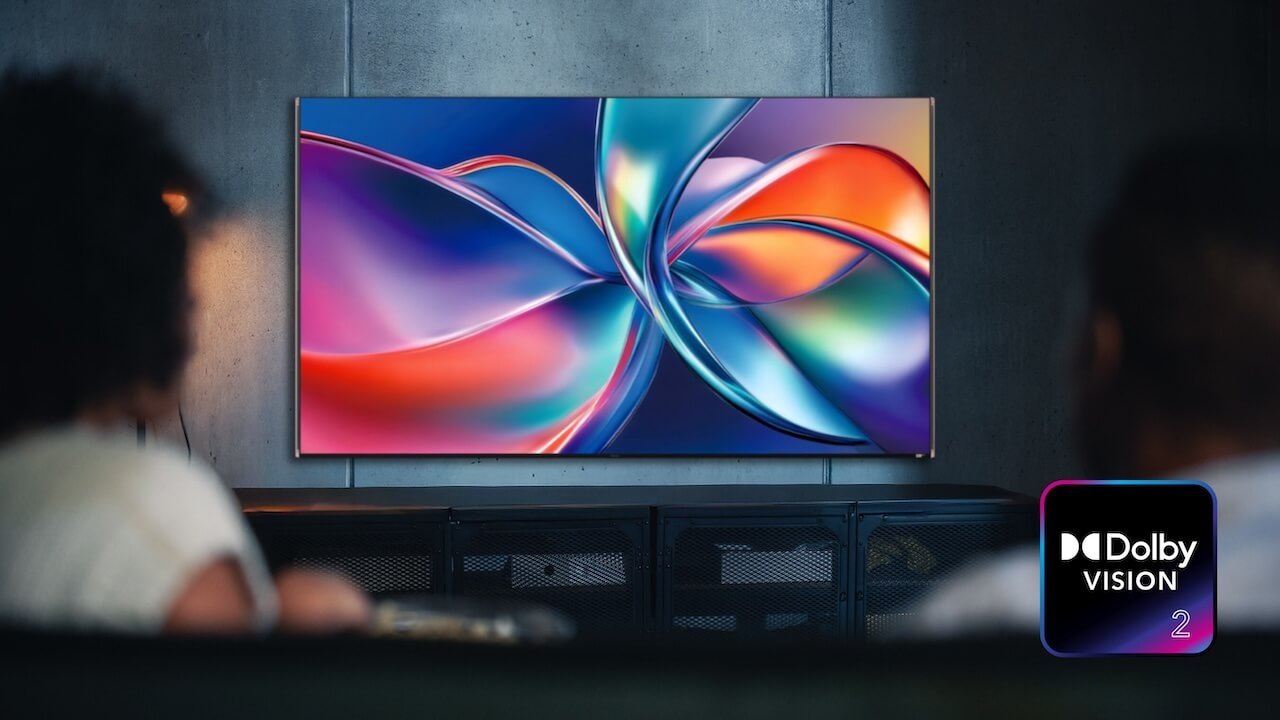
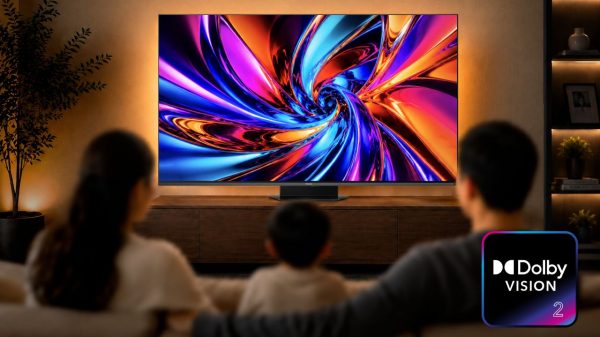
When Dolby introduced Dolby Vision 2 in 2025, most of the attention naturally focused on televisions because that is where the new processing engine resides. Dolby Vision 2 expands on the current format with what Dolby calls Content Intelligence, using additional processing and metadata to optimize the picture based on the content, capabilities of the display and viewing environment.
A Blu-ray player has a somewhat different job. It does not necessarily need to perform all of that processing itself, but it does need to correctly identify and transmit the appropriate signal and metadata to the television.
Dolby has acknowledged that adding that capability still requires engineering work, HDMI validation and firmware development, which means manufacturers have to decide whether supporting older hardware is worth the time and expense. That is the part of this story that matters most to consumers, because a player being physically capable of supporting Dolby Vision 2 does not guarantee that its manufacturer will ever enable it.
Sony has already demonstrated that distinction. The company has said that its current lineup is not scheduled to receive Dolby Vision 2 support.

Would Manufacturers Really Refuse to Update Existing Players?
Absolutely, and Sony’s position shows why consumers should not assume otherwise.
The economics of the dedicated 4K Blu-ray player market are very different from those of televisions, streaming devices or smartphones. Oppo stopped making disc players in 2018, Samsung exited the category in 2019, LG stopped producing Blu-ray players in 2024, and brands including Pioneer and Reavon are no longer significant players in the current U.S. market.
With fewer manufacturers and a much smaller installed base, every firmware project has to compete for engineering resources. Supporting Dolby Vision 2 may be technically possible, but manufacturers still have to test HDMI behavior, validate compatibility across televisions and receivers, maintain software and provide customer support afterward.
For a mass-market product selling in huge numbers, that work can be easy to justify. For a mature disc-player category with relatively modest sales, the calculation becomes considerably less attractive.
That is why consumers should start thinking about long-term firmware support as part of the buying decision rather than assuming that every feature a player could theoretically support will eventually arrive.
Who Still Makes 4K Blu-ray Players?
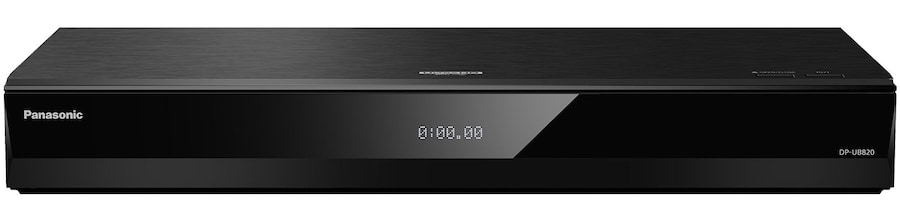
For U.S. buyers, the dedicated market has essentially consolidated around Panasonic, Sony and Magnetar, with each serving a different part of the category.
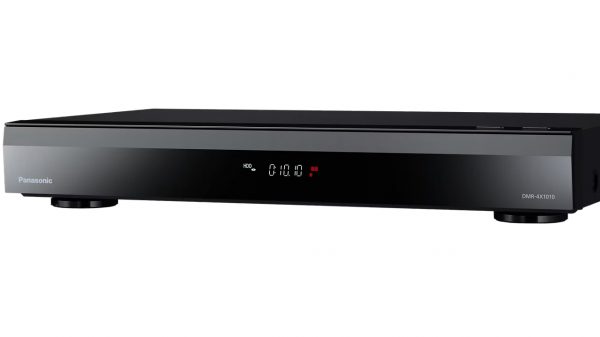
Panasonic remains the most important mainstream option and continues to offer several Ultra HD Blu-ray players, including the popular DP-UB820 ($549) and flagship DP-UB9000. Dolby Vision is supported on select Panasonic models, although the company has not yet committed to providing Dolby Vision 2 support for its existing lineup.
Sony has discontinued its 4K UHD player line, except for the UBP-X700U ($328), which does support the current Dolby Vision format. However, Sony’s decision not to update players for Dolby Vision 2 therefore carries more weight than it might appear, because there are not many mainstream alternatives left.
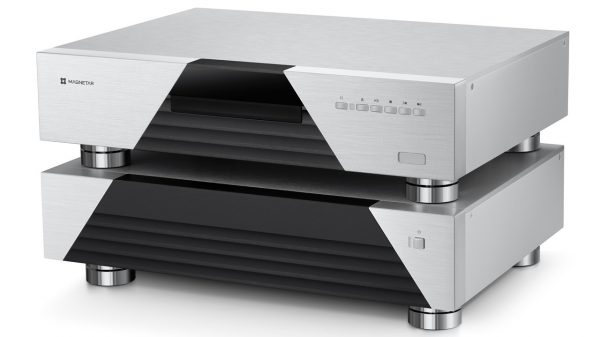
Magnetar serves the premium end of the market with the UDP800 MKII and UDP900 MKII universal players, both of which support 4K UHD Blu-ray, Dolby Vision, HDR10+ and numerous audio-disc formats. Magnetar has also continued releasing firmware for its current products, which at least demonstrates active software development, but that should not be interpreted as a promise of Dolby Vision 2 support. No such commitment has been made.
Game consoles do not provide an obvious workaround either. The PlayStation 5 and Xbox Series X can play Ultra HD Blu-ray discs when equipped with optical drives, but neither currently supports Dolby Vision from UHD Blu-ray discs, so buyers specifically interested in Dolby Vision remain dependent on dedicated hardware.
Will Your Existing 4K Blu-rays Become Obsolete?

No, and this distinction is important because Dolby Vision 2 does not suddenly make the discs already sitting on your shelves outdated.
A Dolby Vision disc you own today will not somehow acquire Dolby Vision 2 specific metadata because you purchased a newer television. The disc contains the mastering information it was authored with, and a firmware update cannot rewrite that information.
A Dolby Vision 2 television can, however, use its newer image processing with existing Dolby Vision content. That means owners should still benefit from improvements inside a compatible television while playing today’s Dolby Vision discs, even if the player itself never receives a Dolby Vision 2 update.
Future Ultra HD Blu-ray releases could potentially include Dolby Vision 2 specific information, which is where player compatibility may eventually become more significant, but there is currently no reason to replace a quality 4K Blu-ray player solely because Dolby Vision 2 exists.
There is no meaningful catalog of Dolby Vision 2 discs waiting to make your current player obsolete, and manufacturers have not yet established a clear support roadmap for existing hardware. Buying another player today because of a feature someone might enable later would be premature.
Why This Matters to Consumers
The larger issue here is not really Dolby Vision 2. It is the growing importance of software support in a product category that many consumers still think of as traditional hardware.
Physical media remains attractive because the consumer retains control of the disc. A streaming service cannot remove your copy because a licensing agreement expires, a studio changes distribution partners or somebody decides that the title no longer belongs in your digital library.
Owning the disc, however, does not guarantee indefinite support for the hardware used to play it.
Dolby Vision 2 illustrates that problem particularly well because an existing player might remain mechanically sound, continue producing excellent 4K HDR pictures and still have the underlying hardware required to work with the newer format, yet never receive access to it because the manufacturer decides that supporting the installed customer base is no longer commercially worthwhile.
That does not make your current player obsolete, nor does it diminish the value of the discs you already own. What it does change is the way consumers should evaluate future purchases, especially when premium players can cost anywhere from several hundred dollars to several thousand.
Firmware support, manufacturer longevity and willingness to maintain existing products are becoming part of the value proposition whether buyers like it or not.
The Bottom Line
Dolby’s confirmation is ultimately encouraging for physical media enthusiasts because Dolby Vision 2 does not automatically require an entirely new generation of 4K Blu-ray players, and existing Dolby Vision discs are not suddenly headed for the technological landfill.
The uncertainty lies with the manufacturers.
Sony has already shown that hardware capability does not necessarily lead to software support, while Panasonic and Magnetar have not yet made firm commitments regarding their existing players. That means consumers should resist the temptation to replace perfectly good equipment until there is a compelling reason to do so.
If you already own a Panasonic DP-UB820, Sony UBP-X800M2, Magnetar UDP800 or another quality Dolby Vision player, keep using it. There is currently no convincing reason to replace it because of Dolby Vision 2 alone.
Because in 2026, “the hardware can probably do it” and “the manufacturer will actually let you use it” are clearly no longer the same thing.
Related Reading:
- Podcast: Dolby Vision 2 and Dolby Vision 2 Max Explained
- Hisense Adds Dolby Vision 2 Max To Select 2026 TVs With Software Update
- Best Digital Media Players And Blu-Ray Players: Editors’ Choice
- DVD vs. Blu-ray vs. 4K Ultra HD Blu-Ray Explained












ORT
August 15, 2026 at 8:55 pm
They’ve already upset me by somehow making the majority of my DVDs, BluRays and even a few UHD discs inoperative in my Sony and Panasonic players.
I want hard copies of films that I enjoy. I don’t desire to “stream” everything.
ORT
Ian White
August 15, 2026 at 10:54 pm
ORT,
The physical player thing for movies is becoming more complicated. It might be a situation where only a few high-end manufacturers offer new players in the future. Magnetar makes good machines. I have 2 Panasonic 4K players, 1 Toshiba HD-DVD player, and a Magnetar I purchased used from a dealer.
IW
David
August 15, 2026 at 11:36 pm
Ian,
My son’s DVD drive in his PlayStation has given up the ghost. Like you, he has a sizeable movie collection. The cost of the Magnetar models is prohibitive. I tried the Sony x700 last year and experienced insurmountable lip sync issues. It seems Panasonic will be his only choice.
David
Ian White
August 15, 2026 at 11:58 pm
David,
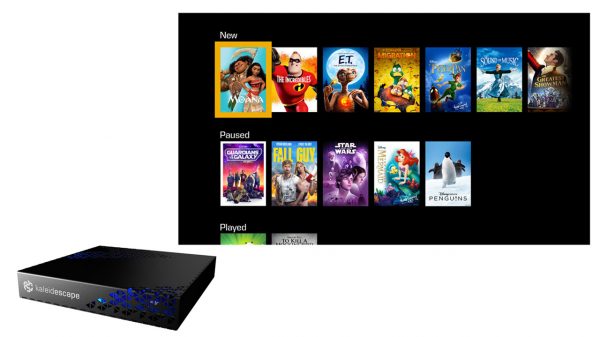
It’s almost unbelievable to me that Sony/Panasonic have not planned better for this. Robert has been working on a great article for Monday or Tuesday about how 8K players are not coming and that UHD 4K will be the end of the line. 8K players/servers from brands like Kaleidescape are already available (or will be after CEDIA) but that’s not the same thing. I have over 3,700 movies at this point. I’m not getting rid of them. I’ll likely add a Kaleidescape player/server at some point but my 4K BD players need to last another decade or more.
IW