A new turntable arriving this week sent me down an unexpected Audio-Technica rabbit hole.
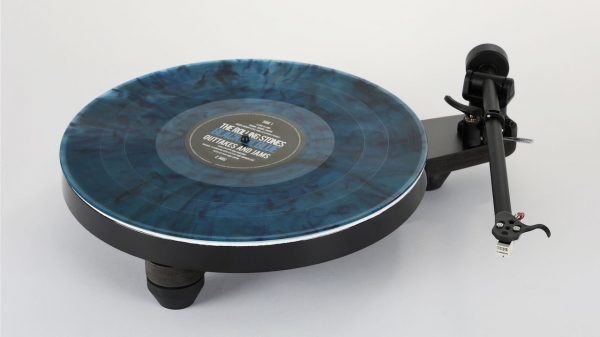
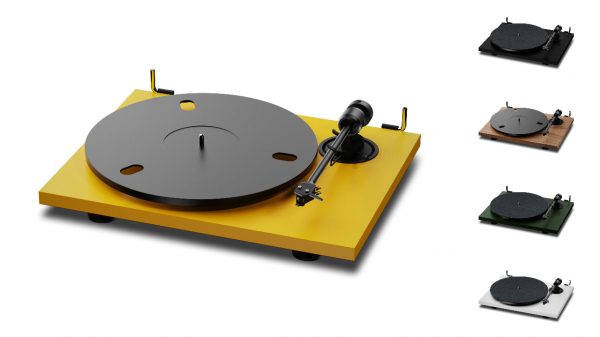
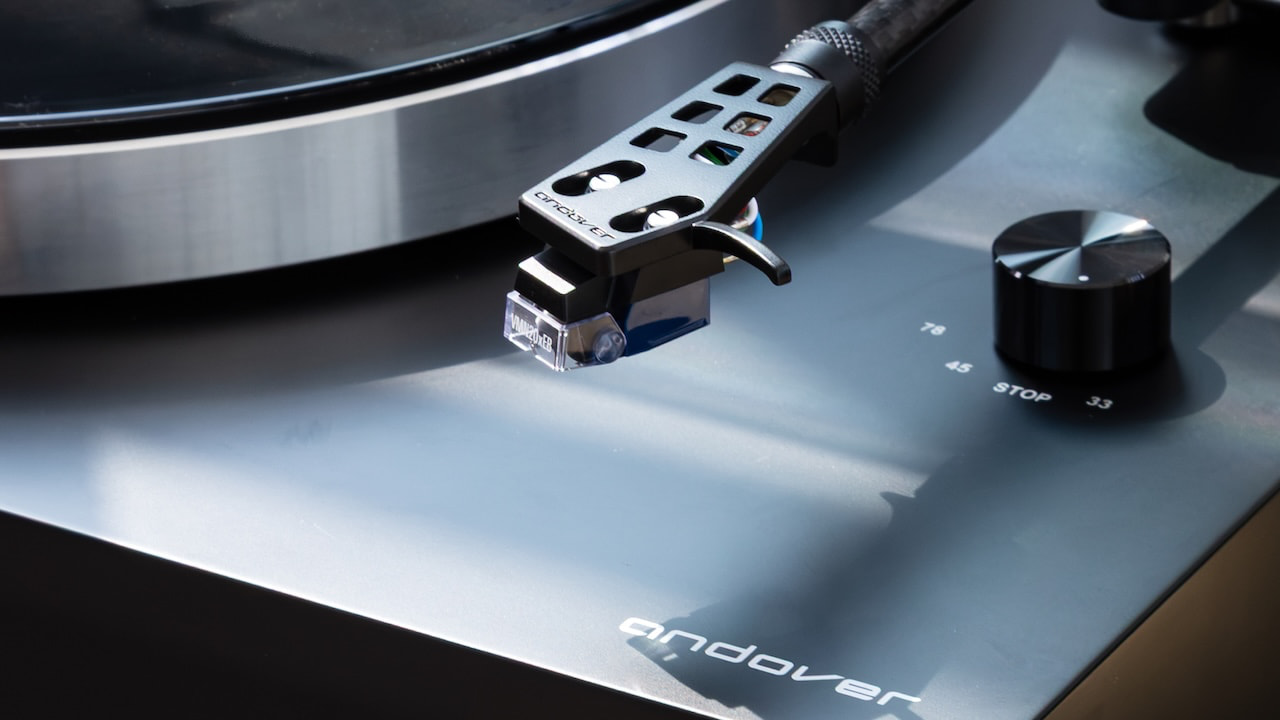
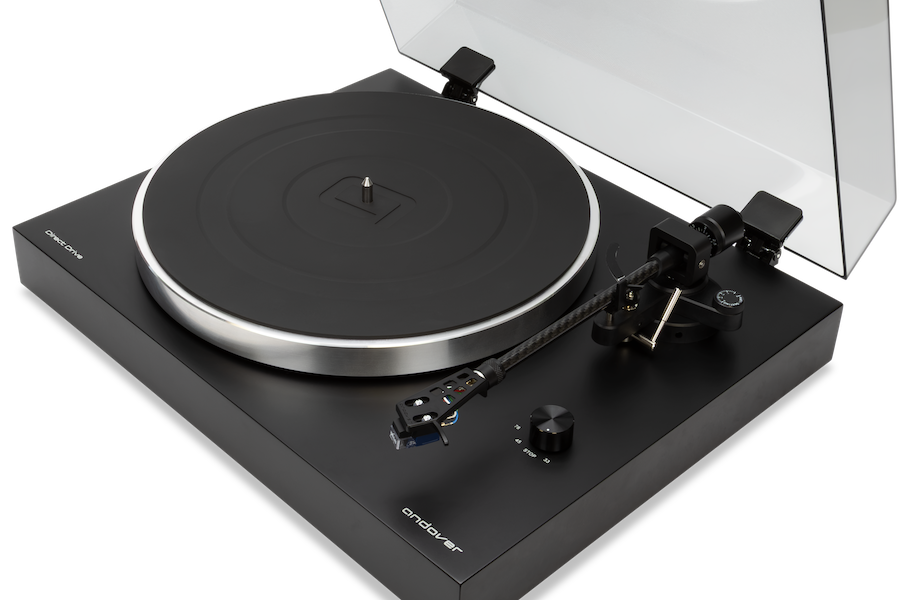
The Andover-One DD, which we recently covered and will be reviewing later this month, is Andover Audio’s new $999 direct-drive turntable. It uses an 8.8-inch carbon-fiber tonearm with adjustable VTA, a removable SME-style headshell and a factory-installed Audio-Technica AT-VM520xEB moving-magnet cartridge.
Nothing particularly strange there. Audio-Technica cartridges appear on an enormous number of turntables, including Andover’s own SpinPlay, which I use almost every day in my home office.
Except the AT-VM520xEB was not a model I recognized.
I currently have several of Audio-Technica’s new AT33x moving-coil cartridges here for another review coming this month, and I’m certainly familiar with the affordable AT-VM95 family that has become almost ubiquitous on entry-level and mid-priced turntables. But what exactly was this VMx lineup that Andover had selected for its new flagship component turntable?
As it turns out, Audio-Technica introduced the revised VMx range in 2025, including new versions of its established dual-moving-magnet cartridges with changes to the generator, coil wire, housings, mounting system and styli. Audio-Technica announced several of the models around HIGH END Munich 2025, with the Japanese release following on May 23.
And somehow, I had completely missed them.
I wasn’t entirely alone. The VMx range has received some coverage — AVForums reviewed four members of the family in July 2025, and What Hi-Fi? subsequently reviewed the AT-VM740xML, but this has hardly been one of the most discussed cartridge launches of the past 18 months. That seems rather odd considering Audio-Technica’s position in the phono cartridge market and the breadth of this particular range.
So what did we miss?
Quite a bit, actually.
Related Reading:
- Andover-One DD Direct Drive Turntable Has More Tech Than Your Average $999 Deck
- Audio-Technica Targets Better Vinyl Playback With New Turntable and Record Care Accessories
This Is Not the AT-VM95 Series
The first thing to understand is where the VMx cartridges fit.
Audio-Technica’s AT-VM95 series remains its enormously popular affordable moving-magnet range. Those cartridges start very inexpensively and allow buyers to move from conical and elliptical styli through MicroLinear and Shibata versions without replacing the cartridge body.
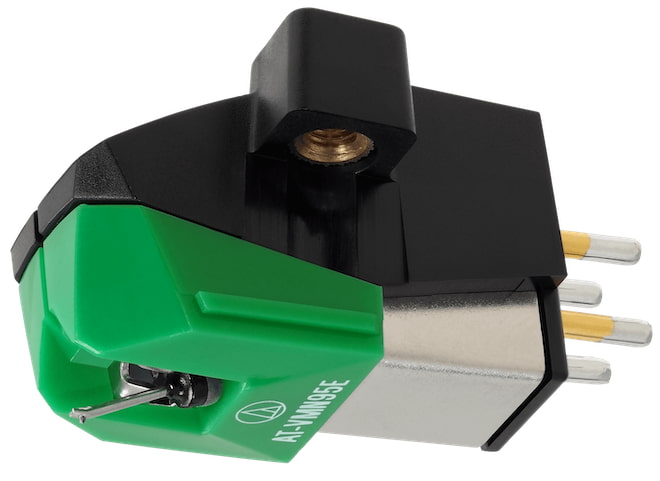
The VMx family sits above that range. It is Audio-Technica’s premium dual moving magnet line, and while the concept isn’t new, the current VMx models incorporate several meaningful changes from their predecessors.
Audio-Technica’s VM design uses two magnets positioned to correspond with the left and right channels of a stereo record groove, an arrangement intended to more closely resemble the geometry of the cutter head used to create the record. The VMx generator uses paratoroidal coils, with two coils per channel, along with a center shield plate designed to reduce electrical crosstalk between the channels.
The revised cartridges also use PCUHD — Pure Copper Ultra High Drawability — coil wire, with fewer coil turns than the previous generation. Audio-Technica says the changes improve transient response while preserving channel separation and stereo imaging.
There is another change that anyone who has spent 20 minutes crawling around beneath a turntable looking for a microscopic cartridge nut will appreciate: the VMx bodies are threaded.
You insert the screws from above and tighten them directly into the cartridge body. No tiny nuts. No tweezers. No vocabulary that would get you thrown out of Sunday school.
Audio-Technica also redesigned the flip-up stylus guard with a V-shaped opening that makes the stylus easier to see when lowering it onto a record.
More important, however, is that there are really two stereo VMx platforms hiding inside the same range.
Two Bodies and a Lot of Styli
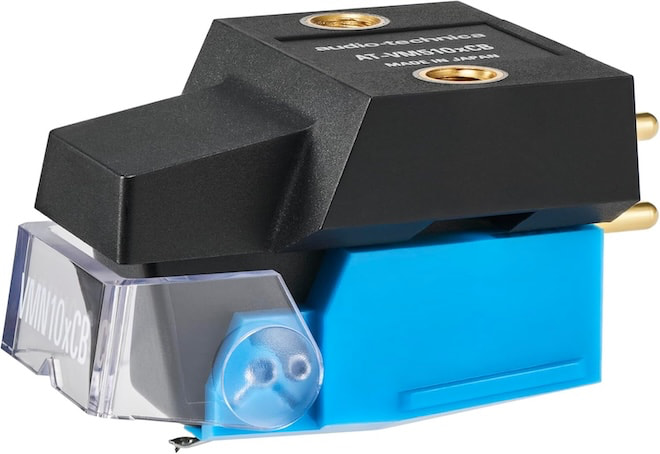
The AT-VM510xCB, AT-VM520xEB and AT-VM530xEN use Audio-Technica’s lightweight polymer body and weigh 7.2 grams.
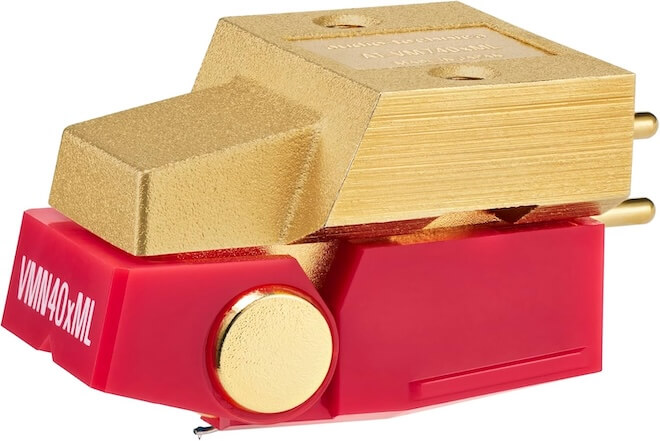
Move into the AT-VM740xML, AT-VM745xML, AT-VM750xSH and AT-VM760xSL, and Audio-Technica switches to a die-cast aluminum body designed to reduce vibration and resonance. Those models weigh 8.8 grams.
The stylus options are even more interesting.
Across the stereo VMx range, Audio-Technica offers bonded conical, bonded elliptical, nude elliptical, nude MicroLinear, nude MicroLinear with a boron cantilever, nude Shibata with a boron cantilever, and Special Line Contact with a boron cantilever.
And the replacement styli are interchangeable across the stereo VMx bodies. Audio-Technica’s compatibility chart specifically allows owners to install the more advanced VMx styli on the less expensive stereo bodies, although the resulting combination is not necessarily equivalent to buying one of the aluminum-bodied models from the start.
That makes the $109 cartridge supplied with the Andover-One DD more interesting than its price might initially suggest.
Audio-Technica AT-VM510xCB — $99
The AT-VM510xCB is the starting point. It uses a 0.6 mil bonded conical stylus, aluminum cantilever and polymer body, with a 5.0 mV output and 2.0-gram recommended tracking force.
At $99, it competes with the Ortofon 2M Red, currently $109.99, although the Ortofon uses an elliptical rather than conical stylus.
The 510xCB makes the most sense for someone who wants access to the VMx generator and upgrade path at the lowest possible cost. Personally, I would find the extra ten dollars for the next model before somebody spent it on another reissue they already own three copies of.
Audio-Technica AT-VM520xEB — $109
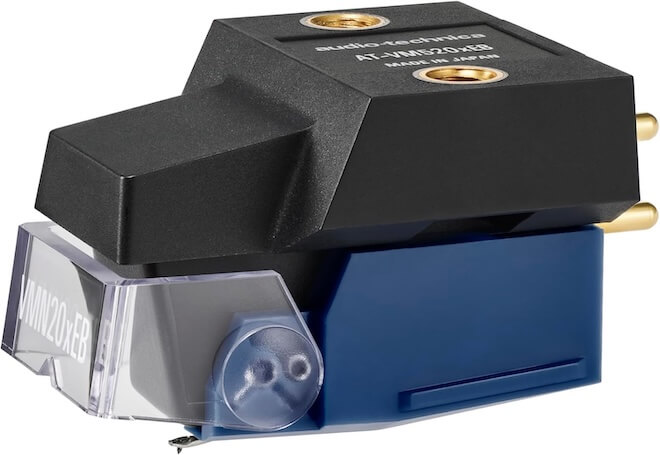
This is the cartridge Andover Audio selected for the Andover-One DD.
The AT-VM520xEB swaps the conical stylus for a 0.3 x 0.7 mil bonded elliptical, while retaining the polymer housing and aluminum cantilever. Output is 5.0 mV, channel separation is rated at 24 dB at 1 kHz, recommended tracking force is 2.0 grams, and Audio-Technica specifies a conventional 47-kohm load with 150 to 250 pF capacitance.
For $109, this might be the model that makes the most sense for manufacturers such as Andover. It is inexpensive enough to include on a $999 turntable without consuming a disproportionate amount of the parts budget, but it is also part of a platform that gives the owner somewhere to go.
That distinction is important.
Buy the Andover-One DD and you are not necessarily throwing away the entire cartridge when the upgrade itch starts. A nude elliptical, MicroLinear, Shibata or Special Line Contact VMx stylus can be installed later. Audio-Technica even sells the AT-VM520xEB pre-mounted to its AT-LT10 headshell for $169.
The established competition in this price range includes the Ortofon 2M Red at $109.99 and Nagaoka MP-110 at $149. Whether the VM520xEB can beat either one sonically is something we’re going to find out when the Andover arrives.
Audio-Technica AT-VM530xEN — $199
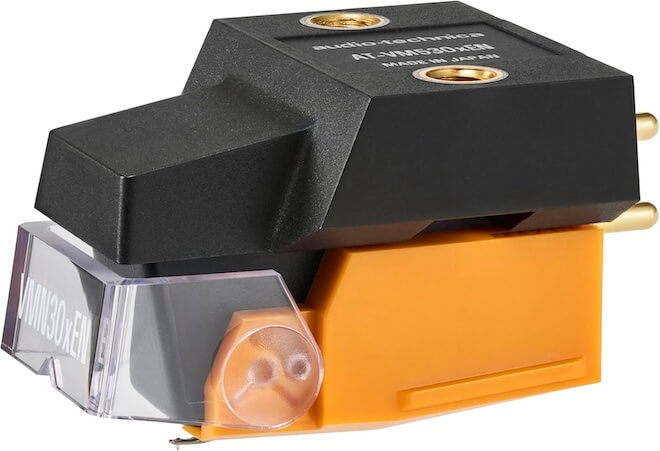
The AT-VM530xEN retains the polymer body but upgrades to a nude 0.3 x 0.7 mil elliptical stylus on an aluminum cantilever. Output drops to 3.2 mV, frequency response extends to 25kHz, and channel separation increases to 25 dB.
The important word here is nude. Instead of bonding a diamond tip to another material that is then attached to the cantilever, the stylus uses a single diamond element, reducing moving mass and potentially improving the stylus’ ability to follow rapid changes in the groove.
At $199, this model runs directly into the Ortofon 2M Blue, another nude elliptical design and one of the most familiar cartridge upgrades in the category.
This might be the VMx cartridge for buyers who want a meaningful step beyond the entry models but don’t want to become amateur surveyors every time they align a more demanding line-contact stylus.
Audio-Technica AT-VM740xML — $249
Things become considerably more serious with the AT-VM740xML.
The 740xML moves to the 8.8-gram die-cast aluminum body and uses Audio-Technica’s nude MicroLinear stylus with a tapered aluminum cantilever. Frequency response is rated from 20Hz to 25kHz, output is 3.2 mV, and channel separation is 25 dB.
MicroLinear styli are designed to maintain a much larger and more precise contact area with the groove than conventional conical or elliptical profiles. They can retrieve more information, particularly toward the inner grooves of a record, but alignment becomes more critical.
In other words, “looks straight enough” is no longer an alignment methodology.
At $249, the 740xML sits just above the Ortofon 2M Blue and well below the Nagaoka MP-150.
This is probably where the VMx range starts becoming particularly interesting for owners of better $750 to $2,000 turntables who want serious groove-tracing ability without crossing into moving-coil territory.
Audio-Technica AT-VM745xML — $329
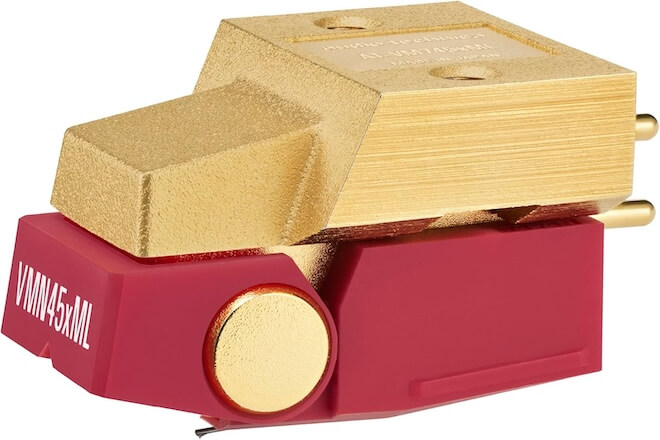
The AT-VM745xML looks very similar to the 740xML because it uses the same nude MicroLinear stylus profile and aluminum body.
The change is underneath it: a solid boron cantilever replaces aluminum.
Audio-Technica claims the lower-mass, stiffer boron cantilever can transmit mechanical information substantially faster than the aluminum version. The 745xML is rated from 20Hz to 27kHz, produces 3.7 mV, and increases channel separation to 26 dB.
The price moves to $329, making this one of the more intriguing cartridges in the range on paper. Boron cantilevers are generally associated with considerably more expensive cartridges, including many moving-coil designs.
The obvious question is whether the extra $80 over the 740xML produces an audible improvement in a real system or merely gives audiophiles another technical specification to discuss while ignoring the stack of records next to the turntable.
We intend to find out.
Audio-Technica AT-VM750xSH — $369
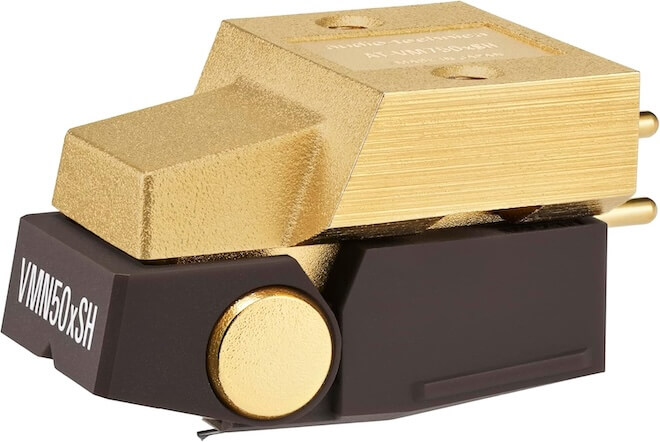
The AT-VM750xSH retains the aluminum body and solid boron cantilever but changes the stylus profile to a nude Shibata.
Shibata styli were originally developed for extended-frequency quadraphonic records, but their large groove-contact area has made them a popular high-end option for conventional stereo playback as well. Properly aligned, they can retrieve substantial amounts of information while reducing pressure at any single contact point.
This is also where something interesting happens competitively.
Nagaoka’s MP-150 is also $369, putting the two Japanese cartridges head-to-head on price, although their designs and stylus profiles are quite different. The Ortofon 2M Bronze also enters the conversation as buyers move toward the upper end of moving-magnet territory.
For listeners with large, clean record collections and turntables capable of precise cartridge alignment, this is the point where spending more on the transducer can make rather more sense than buying another platter mat made from an endangered tree.
Audio-Technica AT-VM760xSL — $599
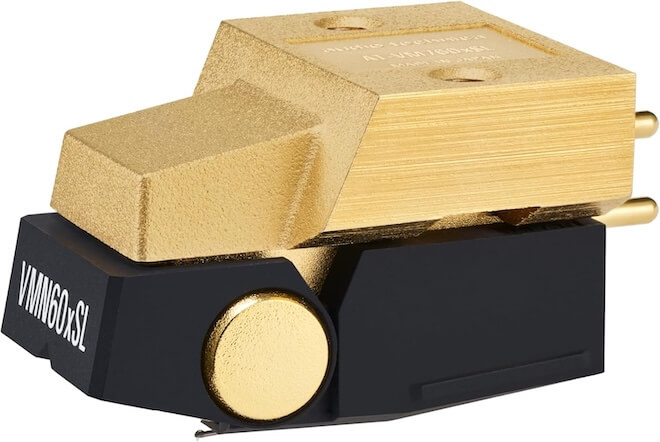
At the top sits the AT-VM760xSL, and Audio-Technica isn’t messing around anymore.
The 760xSL combines the aluminum VMx body with a solid boron cantilever and nude Special Line Contact stylus. Output is 3.7 mV and recommended tracking force remains 2.0 grams.
At that price, moving magnet is no longer automatically the inexpensive option.
The Ortofon 2M Black, for example, currently sells for $749.99 and uses a nude Shibata stylus on an aluminum cantilever. Nagaoka’s MP-200 sits around $509, while a number of entry-level moving-coil cartridges also begin appearing in this territory.
Audio-Technica’s advantage is that the 760xSL does not require a moving-coil phono stage, step-up transformer or cartridge exchange program when the stylus eventually wears out. The stylus assembly is replaceable, just like the rest of the VMx stereo family.
What About Mono and 78 RPM Records?
Audio-Technica also offers two specialized VMx models.

The AT-VM610xMONO ($129) uses a 0.6 mil bonded conical stylus and a dedicated mono configuration in which the magnets are electrically connected to deliver the same signal to both channels. Output is 5.0 mV and tracking force is 2.0 grams.
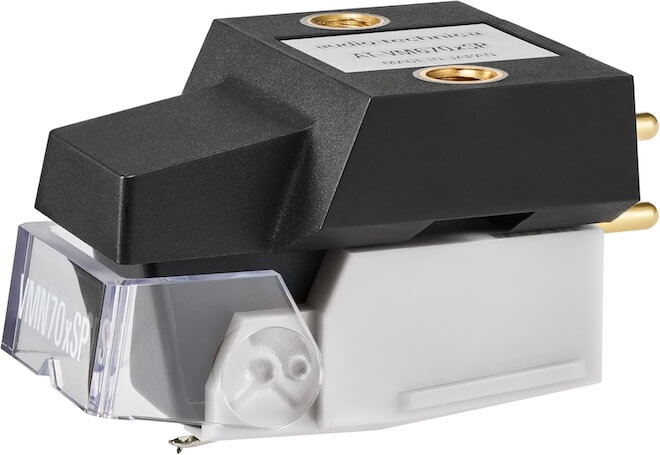
The AT-VM670xSP ($139) is intended specifically for 78 RPM records and uses a much larger 3.0 mil bonded conical stylus. It produces 4.7 mV and tracks at 5.0 grams. Do not buy one and put it on your copy of Kind of Blue unless you enjoy making expensive mistakes.
Both use the polymer body rather than the aluminum housing found on the upper stereo models.
Why Did Andover Choose the AT-VM520xEB?
This is where the entire exercise comes back to the new turntable sitting on its way to my listening room.
For a $999 turntable, the AT-VM520xEB is a logical factory cartridge. It has enough output to work with virtually any conventional MM phono stage, uses a proper elliptical stylus, tracks at an uncomplicated 2 grams and doesn’t require an experienced cartridge installer to make it behave.
That’s smarter than including an expensive cartridge that inflates the price of the turntable and may not suit the buyer’s system or musical priorities.
Andover has also chosen something slightly less obvious than the usual suspects. We see Audio-Technica’s AT-VM95 cartridges everywhere because they are inexpensive, reliable and very easy to recommend. The VMx family is intended to move beyond that entry-level role while preserving much of the same practical flexibility.
The Bottom Line
Audio-Technica did not suddenly invent a new type of phono cartridge with the VMx series. This is an evolution of its long-running dual-moving-magnet platform, and anyone expecting analog witchcraft or a diamond harvested during a lunar eclipse is going to be disappointed.
What Audio-Technica did was more useful.
The company improved the generator with PCUHD copper and revised coil construction, added threaded mounting holes, expanded the stylus and cantilever choices, created a more substantial aluminum body for the upper models, and maintained an upgrade path that allows owners to replace the stylus rather than throw away the entire cartridge.
The range also covers a surprisingly wide territory: $99 to $599 for the stereo cartridges, with conical, elliptical, MicroLinear, Shibata and Special Line Contact options, plus aluminum and boron cantilevers.
The Andover-One DD arrives this week. The AT33x cartridges are already here. And I now know rather more about the VMx family than I did 24 hours ago.
October is apparently going to involve a lot of very small diamonds.
Where to Buy:
- AT-VM510xCB: $99 at Amazon
- AT-VM520xEB: $109 at Amazon
- AT-VM530xEN: $199 at Amazon
- AT-VM740xML: $249 at Amazon
- AT-VM745xML: $329 at Amazon
- AT-VM750xSH: $369 at Amazon
- AT-VM760xSL: $599 at Amazon
- AT-VM610xMONO: $129 at Amazon
- AT-VM670xSP: $139 at Amazon
Related Reading: