Oriveti is a Hong Kong based personal audio brand that has built a steady presence in the in-ear monitor market with models that focus on balanced tuning and solid build quality at competitive prices. Its products typically sit in the midrange segment, where it competes with brands such as Moondrop, FiiO, and DUNU, all of which target listeners looking for strong performance without moving into flagship pricing.
Against that backdrop, Oriveti has introduced a new sub-brand called bleqk, short for “Basic Line Exquisite Quality Kept,” as part of its expanding IEM lineup. The first model under this label is the Purecaster, an all-metal in-ear monitor that includes interchangeable tuning filters, a single dynamic driver, and a detachable modular cable system. Positioned as a more refined entry point within the company’s range, the Purecaster reflects Oriveti’s effort to balance build quality, tuning flexibility, and everyday usability, without moving into its higher-priced offerings.

About My Preferences: This review is a subjective assessment and reflects my personal listening preferences. I do my best to stay consistent and fair in how I evaluate gear, but bias is part of the process and not something that can be completely removed. With that in mind:
My preferred sound signature includes solid sub bass extension, controlled and textured mid bass, a slightly warm midrange, and a clean, extended treble response.
I have mild sensitivity to treble, especially in the upper regions.
Testing equipment and standards can be found here.
Oriveti Purecaster Specifications:
- Cable: Detachable modular cable with 3.5 mm and 4.4 mm terminations
- Driver: Single 12.2mm dynamic driver
- Impedance: 32 ohms
- Sensitivity: 112.5 dB/mW at 1 kHz (±3 dB)
- Frequency Response: 20 Hz to 20 kHz
- Total Harmonic Distortion: Less than 0.08%
- Shell Material: CNC machined aluminum
- Connector Type: 0.78 mm 2 pin
Build
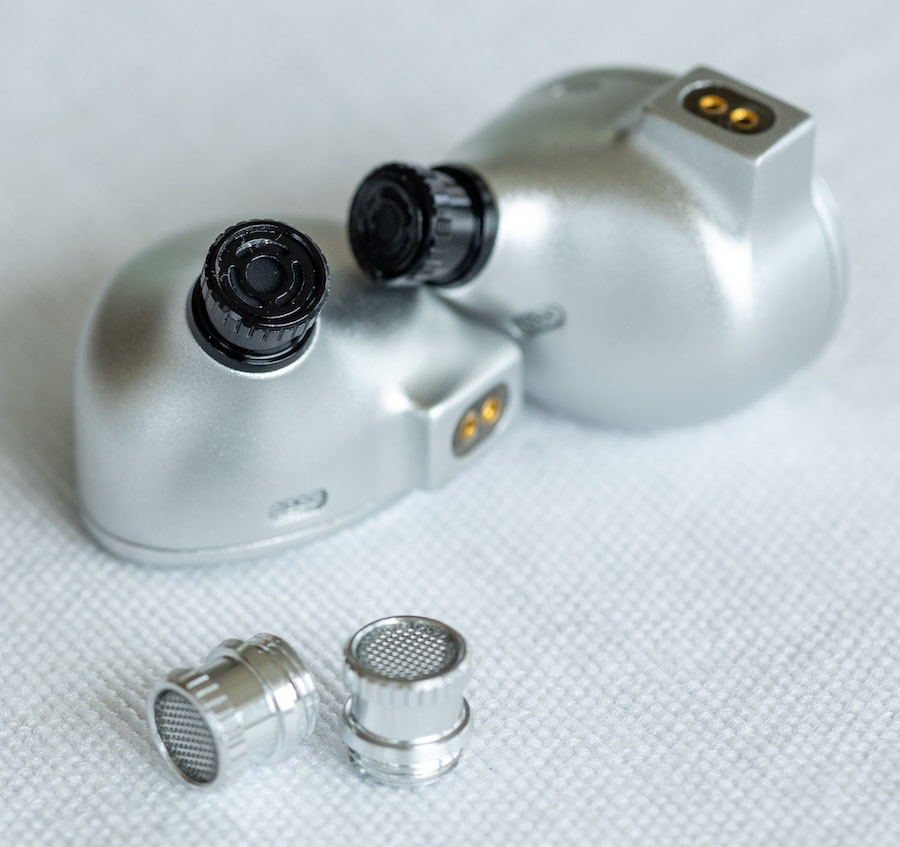
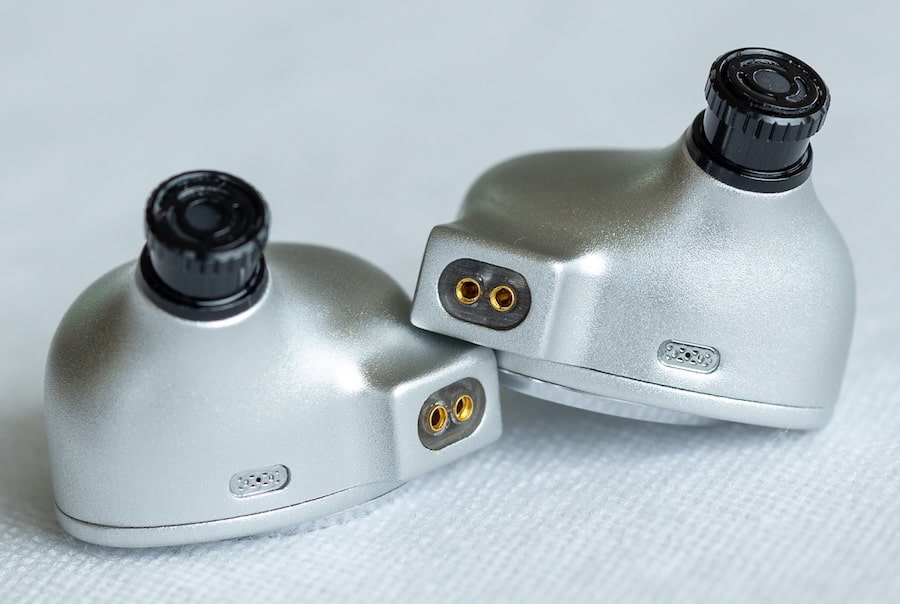
If there’s one thing that Oriveti knows how to do, it’s work with metal. This IEM is put together quite well, and its CNC’d aluminum shells look great. The solidity of the Purecaster also gives it an excellent hand-feel.
The top of the Purecaster’s shells host its 0.78mm 2-pin sockets. The sockets set in plastic blocks, which in turn are glued flush with the aluminum shell.
The Purecaster’s nozzles are also metal, and secure nicely to the threads cut into the main chassis.
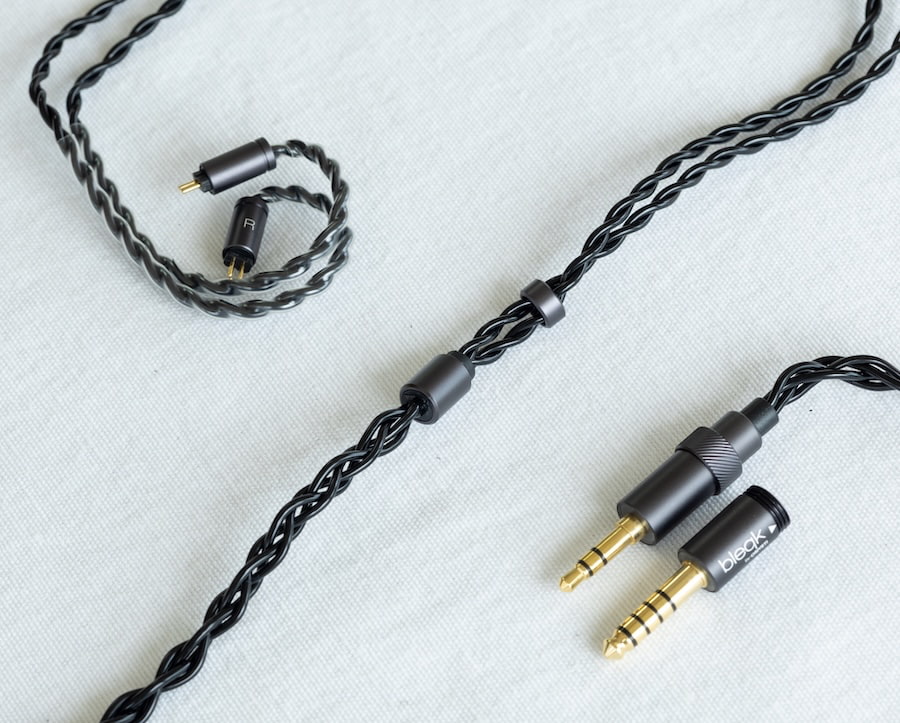
Oriveti went with a well-constructed modular cable for the Purecaster. It features a simple 4-core chain braid and generous strain-relief. It includes metal finishing bits for the termination, Y-splitter, and chin-cinch, which again feel nice in the hand.
Comfort
Comfort is a metric that relies heavily on factors influenced by your individual ear anatomy. Mileage will vary.
I had no comfort issues with the Purecaster. It is fairly small and light, and its shell geometry matches up well with my ear. The included cable is likewise quite comfortable. It is reasonably soft while not transmitting very much in the way of microphonics. The Purecaster’s stock eartips are pretty comfortable, but produce an average seal for me.
Accessories
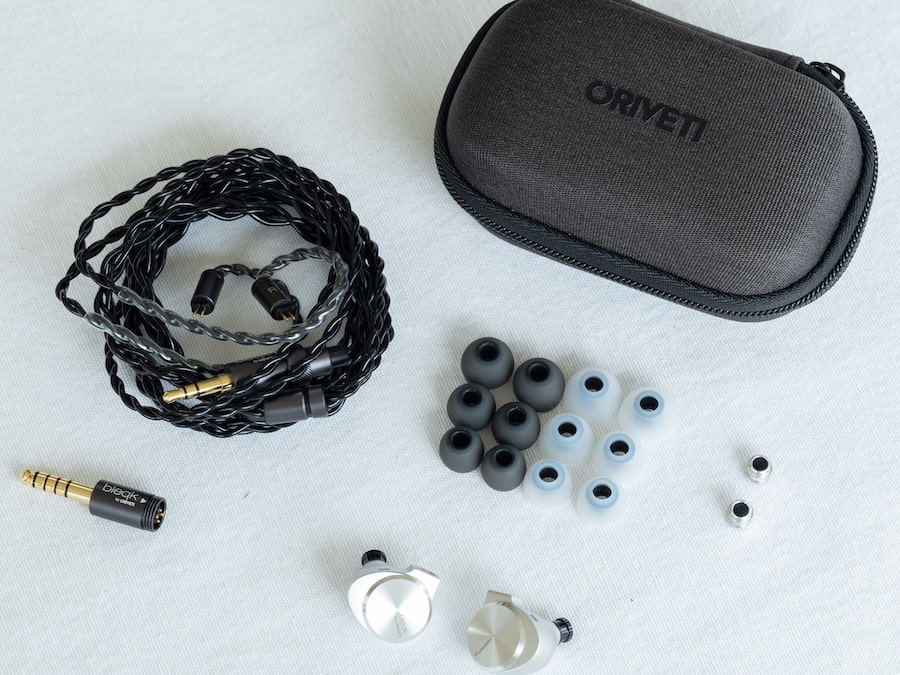
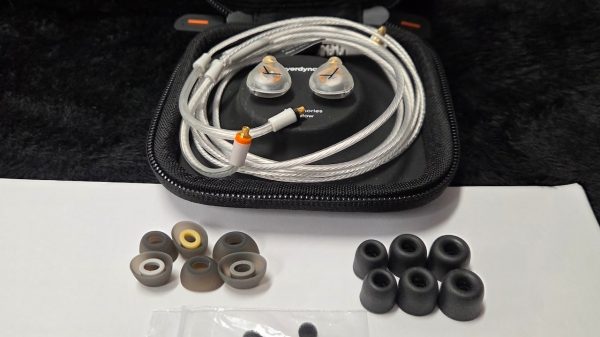
What’s in the Box
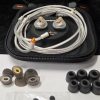
- Semi hard carrying case
- Detachable modular cable (0.78 mm 2 pin)
- 3.5 mm termination
- 4.4 mm termination
- Six pairs of silicone ear tips
- Two pairs of tuning filters
The accessory package is well thought out and covers the essentials. The included silicone tips provide a good seal and remain comfortable during longer listening sessions. The carrying case strikes a practical balance it is compact enough for a pocket, but still has room for the IEM, an extra termination, spare tips, and even a small USB-C DAC.
The only omission is foam ear tips. Given how dependent the tuning is on achieving a proper seal, including at least one set would have made more sense.
Listening
The Purecaster includes two sets of tuning nozzles: black and silver. The black nozzles shift the tuning toward a brighter presentation, with more energy in the upper frequencies. In practice, that can come across as stiff and sharp, especially on poorly recorded material or at higher volumes. They may appeal to listeners with reduced treble sensitivity or those who prefer a more forward top end, but in my case, the presentation pushed past my comfort threshold.
I spent the majority of my listening time with the silver nozzles, which offer a more balanced and manageable treble response.
With the silver nozzles installed, the Purecaster still leans bright, but the presentation shifts from sharp to more open and airy. There’s a sense of lightness and space rather than outright aggression. The upper treble is reasonably well controlled, with a gradual roll off past 12 kHz that helps avoid an overly metallic or artificial edge.
The midrange tilts toward the upper region, with a noticeable emphasis centered around the 2 to 3 kHz range, which brings vocals and presence forward in the mix.
By contrast, the Purecaster’s lower mids are slightly recessed, which pulls warmth out of the mix. The bass follows a similar approach. Even with the silver nozzles, it is not forward or particularly punchy. Instead, you get a “HiFi-styled” presentation of “look-don’t-touch” bass. It is there, but only in the academic sense.
Fast, Controlled, and Organic Treble
The Purecaster’s lower-treble captures the edges of hi hats and cymbals well, modeling their decay organically. This is indicative of strong technical abilities, which lines up with the Purecaster’s overall strong layering abilities. It did a great job capturing the metallic edge and fine texture of the guitar and percussion in the intro of “Give Me Novacaine” by Green Day, then maintained strong separation as the track moved into its more chaotic chorus.
Tracks with a big, open sense of space like “Midnight City” by M83 take full advantage of the Purecaster’s spacious upper register, projecting a sense of scale that isn’t all that common among single dynamic driver IEMs. The Purecaster also does a good job resolving the layered textures of the track’s synths, keeping things clear without drifting into sharpness or sibilance.
A Little Too Cleanroom
I can see what Oriveti is aiming for with this midrange: a more neutral presentation that avoids added warmth in favor of a cleaner, HiFi-style tuning. For some listeners, that approach will make a lot of sense. But I tend to prefer a bit more presence in the lower mids, especially with vocal-heavy material. On the Purecaster, male vocals can come across slightly thin due to the upper-midrange emphasis. That tilt pulls some weight out of the lower registers, which can leave tracks like “Get Stoned” by Hinder sounding a bit dry.
Brighter vocals, especially on atmosphere-heavy tracks, tend to fare much better. The lo fi textures of “back to friends” by sombr come through with a clean, well-defined clarity that stands out given the Purecaster’s price point.
Albums with warmer mastering also pair well with the Purecaster’s “cleanroom” midrange. “Simple Math” by Manchester Orchestra is a good example, where the added warmth in the mix helps restore some depth and body to the presentation. On “Pale Black Eye,” the muted guitars and measured drum hits come through with a convincing sense of balance and harmonic completeness, reinforcing how dependent the Purecaster can be on track synergy.
The Tight-Pursed Accountant of Bass
The Purecaster has a pretty restrained bass region. It’s tilted towards the sub-bass, leaving the mid-bass fairly flat. This means that the Purecaster is capable of the occasional rumble, but doesn’t punch much. The bass heavy mix of “Derezzed (The Glitch Mob Remix)” by The Glitch Mob manages to pull out a respectable amount of sub bass rumble, but it stops short of delivering real tactility on drum hits. Rock and alternative tracks follow a similar pattern, coming across as fairly neutral and rarely producing a sense of physical impact from the drums.
That said, its not impossible to come across a strongly-synergistic track, or at least one that lines up well with the Purecaster’s frequency response curve. “It’s Nice to Know You Work Alone” by Silversun Pickups delivers a relatively full presentation of bass guitar and drums on the Purecaster, which helps create a more immersive and deeper sense of soundstage.
Comparisons
Comparisons are selected solely based on what I think is interesting. If you would like me to add more comparisons, feel free to make a request in the comments below.
EarAcoustic Audio Genesis G318s
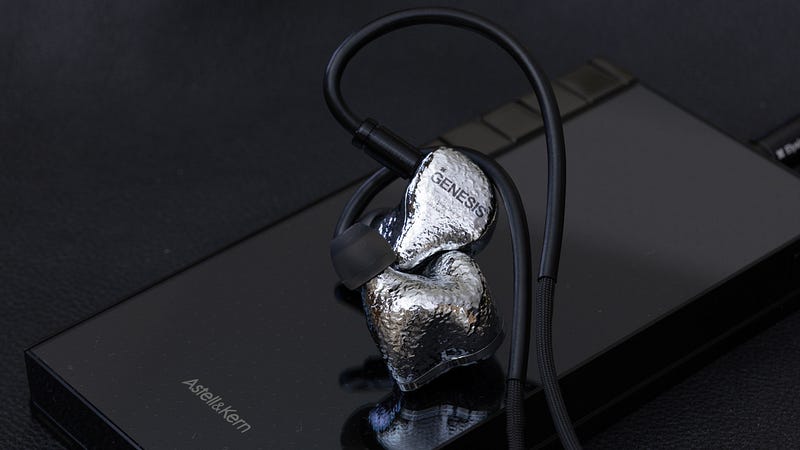
The Genesis G318s is a single-dynamic IEM from EarAcoustic Audio. The G318s costs $100 more than the Purecaster, coming it at $249. It features solid aluminum shells and a detachable 2-pin cable. The Purecaster has a braided plastic-coated cable with a modular termination, while the G318s features a cloth-coated cable with a fixed 4.4mm termination. I like the Purecaster’s cable and eartips more than the G318s’s, though the G318s has a more-spacious carrying case.
The G318s is a warmer, bassier IEM. Its focus is squarely on delivering comfort and energy without sounding too thick — essentially the inverse of the Purecaster. It delivers an elevated mid and sub-bass region, allowing it to kick and rumble with greater intent and depth than the Purecaster. While the Purecaster can rumble, it does so only on a select few tracks, making it less consistent with electronic genres. The G318s has a flatter lower-midrange and less-emphasized upper-midrange, setting its vocals more towards the center of the stage. The Purecaster has a brighter, more forward upper-register on the whole, allowing it to separate and articulate certain subtle treble-bound textures more-easily than the G318s. The G318s is no slouch in terms of upper-register performance, but the nature of its tuning makes it less likely to bring something subtle far enough in forward to catch a casual-listener’s attention.
Between the two IEMs, I’m choosing the G318s. Its tuning lines up better for my music library and tuning preferences. The extra $100 bump in price, while significant, is one I’m willing to pay to get extra flexibility and tonal completeness. If you’re focusing on price-to-performance, however, you’ll likely want to stick with the Purecaster’s cleaner and brighter tuning style.
NFAcous NM25

The NM25 is an aluminum-shelled IEM featuring a single dynamic driver per-side. It costs $199, making it $50 pricier than the Purecaster. Both IEMs use detachable cables, though the Purecaster’s is thicker and uses a flush connector rather than an extruded one. The Purecaster’s cable is also modular, giving you the option to utilize a 4.4mm termination, should you feel the need. The NM25’s cable is a fixed 3.5mm, but does offer a bit more comfort and ergonomics while on the move. The Purecaster includes a more-usable case that has space for a DAC, while also packing a better selection of stock eartips.
Both the Purecaster and NM25 are bright sounding IEMs, but the NM25 is a bit brighter than the Purecaster, even with its black “treble” nozzles installed. The Purecaster has a similarly-forward upper-midrange, but has a lesser lower-midrange valley. The NM25’s bass is less emphasized than the Purecaster’s bass, and it doesn’t rumble with even a similar level of intensity to the Purecaster. The Purecaster’s mid-bass is likewise a little more-elevated than the NM25’s, delivering a bit more weight in deep string instrumentation and solo-piano performances.
Between the two, I’m selecting the Purecaster. For $50 less, you get better-balanced sound, similar performance, and improved accessories across the board. The NM25’s crucial lack of lower-register emphasis makes it less genre-flexible than the Purecaster, impacting its ability to render atmospheric weight in a variety of tracks that the Purecaster nails.
Melody Wings Venus

The Venus is one of my favorite IEMs. It packs a four-driver hybrid configuration in resin shells and costs $168. It also includes a detachable modular cable and comes with a USB-C termination that the Purecaster lacks. The Venus’s stock eartips aren’t anything too special, and are similar in quality to the Purecaster’s eartips. The Purecaster comes with a more-practical and better-protecting case than the Venus does, though the Venus’s case is easier to fit into a tight pocket than the Purecaster’s is.
The Venus is a warmer, more V-shaped IEM than the Purecaster. It features a slightly more-lifted sub-bass and more-substantial mid-bass. The Venus’s lower-mids are thicker and less-recessed than the Purecaster’s are, and it has a similar level of upper-midrange emphasis. The Purecaster has a less-forward lower-treble than the Venus, but picks up a lot of upper-treble energy that the Venus does not have.
Both IEMs are quite performant, but the Venus manages to arranges cascading and contrasting layers of instrumentation with a level of care and precision that the Purecaster sometimes does not match. Beyond basic separation and articulation, the Venus also brings out more texture and tonal nuance than the Purecaster, and does so more consistently.
If I had to choose between these two IEMs, I’d go with the Venus. Its included USB- -C termination, stronger bass response, and closer alignment with my preferences make for a more immersive listening experience overall. That said, I do not have much sensitivity to 5 kHz or 8 kHz emphasis. If you prefer a leaner presentation or are sensitive to energy in those regions, the Purecaster may be the better fit.

The Bottom Line
The Oriveti bleqk Purecaster is a well built, value focused IEM with excellent aluminum shells, a comfortable modular cable, strong layering, clear vocals, and impressive midrange and treble texture. There is a lot here that feels more premium than the price suggests.
The problem is not quality. It is tuning. The Purecaster leans clean, bright, and controlled, with solid sub bass extension but not enough bass weight or lower midrange warmth to make it feel fully grounded. The result is an IEM that sounds detailed and precise, but sometimes too sterile for its own good. The black tuning filter only pushes that brightness further, when a bass focused option would have made far more sense.
This is a good fit for treble focused listeners, fans of clean dynamic driver IEMs, and anyone who wants a cooler, more detail oriented Hi-Fi presentation with premium build quality. It is not the right choice for bassheads, warmth seekers, or listeners who want a fuller, more relaxed, traditionally fun sound.
Oriveti’s idea behind bleqk makes sense: simple, better built IEMs at accessible pricing. The Purecaster gets the hardware right and comes close on performance. It just needs a little more body, warmth, and mischief in the tuning.
Pros:
- All metal shells with a clean, durable finish
- Soft, ergonomic cable that is easy to handle
- Solid sub bass extension with good reach
- Above average layering and instrument separation
- Clear, intelligible vocal presentation
- Strong midrange and treble texturing
- Natural, organic bass tonality
Cons:
- Bass lacks emphasis for listeners who prefer a fuller low end
- Upper register can sound thin at times
- Black filter tuning leans too bright and can become sharp
- No foam eartips included in the package
Where to buy:
Related Reading:
- Oriveti Dynabird IEM Review: Premium Build at $99
- Meze Astru Review: $899 Titanium Flagship IEM Takes On The Best Under $1000
- DUNU DN142 Review: An Electrifying IEM That Delivers Big Energy For The Price
- SIVGA Nightingale Pro Review: Premium Planar IEM Craftsmanship Or A Surprising Miss?
- Best IEMs: Editors’ Choice