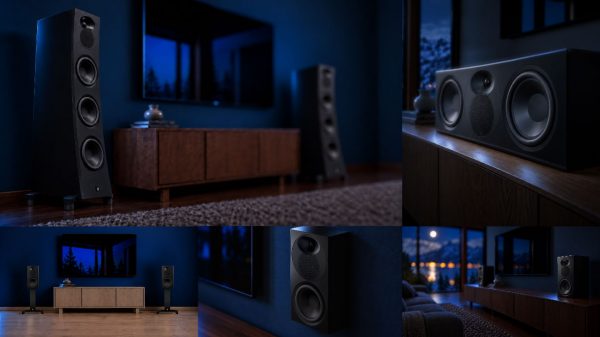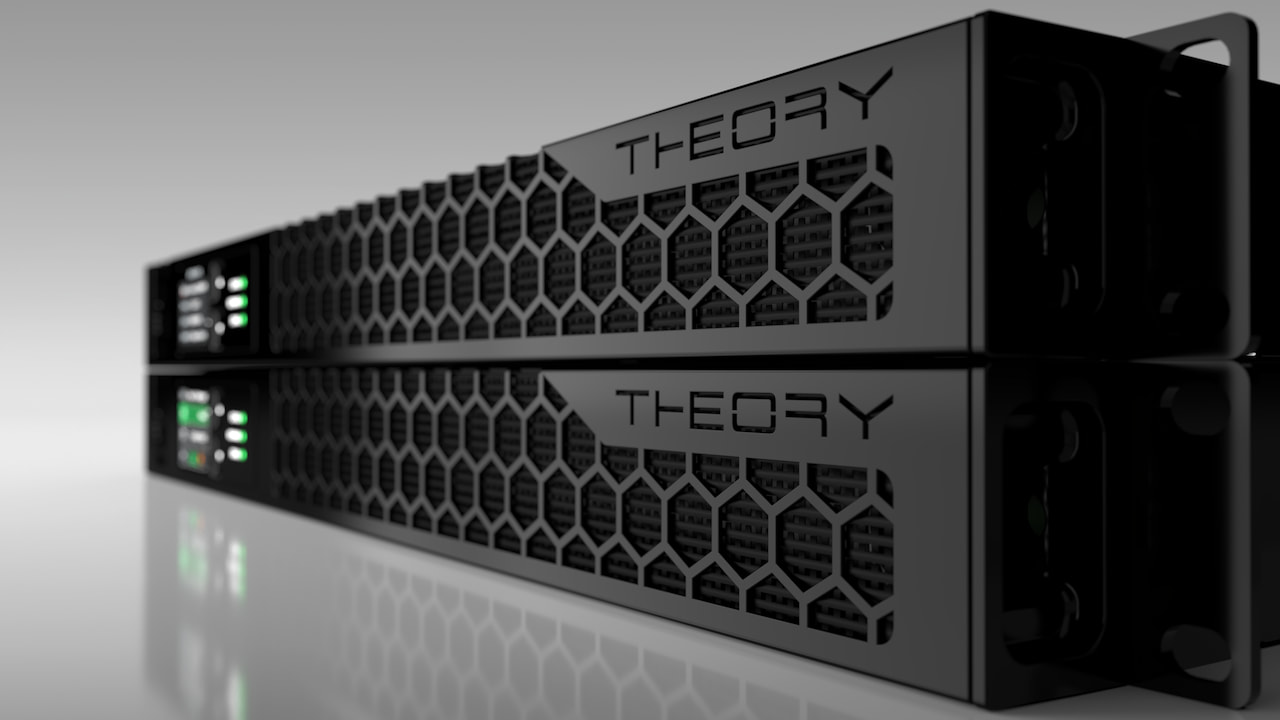
Paul Hales does not do subtle. Fortunately, the Theory Audio Design founder is equally obsessive about sound quality, robust construction, long-term reliability, and making system integration less painful than the kidney stone currently trying to kill me. I have installed one of Theory’s systems in my own home, so I know the difference.
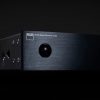
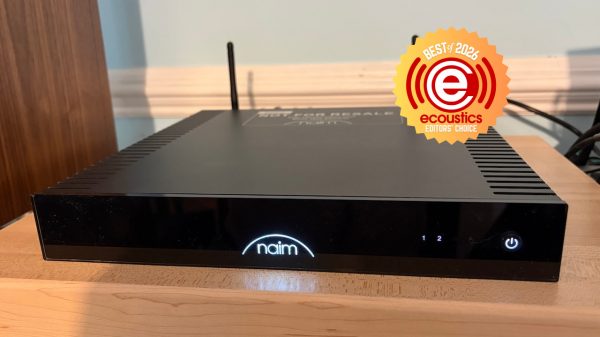
The new Theory Audio Design DLC-1500.8d and four-model PLC Series loudspeaker controllers add more channels, greater power density, Dante and AES67 networking, and advanced DSP for demanding residential, commercial, and professional audio installations.
Pricing has not been announced, but Theory Audio Design is now shipping five new amplified loudspeaker controllers: the eight-channel DLC-1500.8d and four models in its new Powersoft-based PLC Series.
The expansion gives Theory considerably more horsepower for large home theaters, distributed audio systems, outdoor installations, commercial venues, marine projects, and live sound applications. More watts will not rescue a poorly designed system, but the networking, DSP, power sharing, and deployment tools are arguably the more important parts of this announcement.
Related Reviews: Theory Audio Design 5.2.2 Surround Sound System Review
DLC-1500.8d Doubles Down Without Consuming More Rack Space
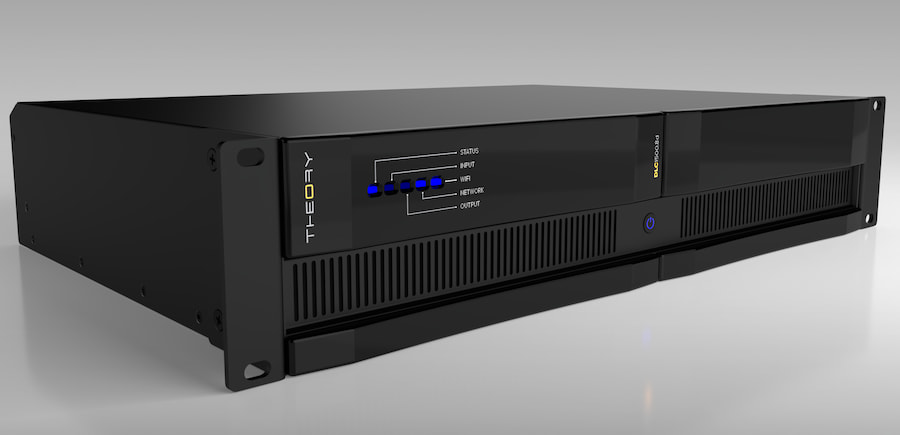
The new DLC-1500.8d is the larger sibling to the four-channel DLC-1500.4d introduced in 2024. The earlier model delivered a claimed 3,000 watts from a 2U chassis; the new version doubles both the channel count and total rated output while retaining the same 2U footprint.
Theory rates the DLC-1500.8d at 6,000 watts, with up to 1,500 watts into 4 or 8 ohms available from any channel pair. It is also specified to deliver 800 watts into 2 or 4 ohms with all channels driven.
High-current Euroblock outputs accept speaker cables up to 10-gauge, while four channels of Dante and AES67 audio-over-IP digital I/O simplify deployment in larger networked systems.
Theory says one DLC-1500.8d can power up to 32 of its 16-ohm loudspeakers in low-impedance mode or more than 300 loudspeakers directly in high-impedance mode without requiring an internal transformer. That is less about building an unnecessarily loud living room and more about reducing amplifier count in large estates, hospitality spaces, outdoor systems, and commercial installations.
Configuration is handled through an onboard web interface using wired Ethernet or the controller’s integrated Wi-Fi access point. DSP tools include:
- Matrix mixing
- Priority routing and ducking
- Parametric EQ
- Delay and gain adjustment
- Output limiting
Control modules are available for AMX, Control4, Crestron, Crestron Home, ELAN, Josh.ai, Q-SYS, RTI, and Symetrix.
PLC Series Brings Powersoft Inside the Rack
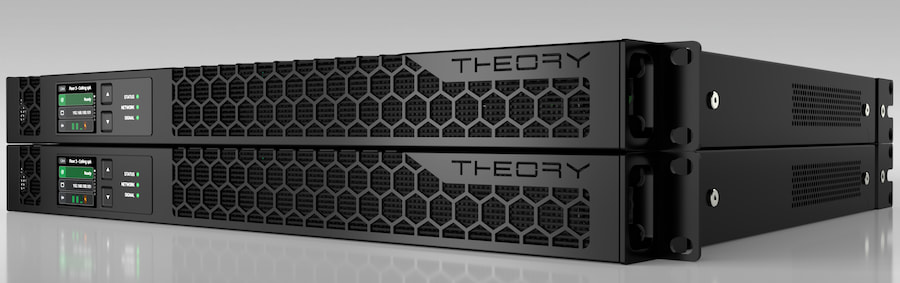
The PLC Series was first previewed at CEDIA Expo 2025, but Theory had not released complete model specifications or pricing at the time. The company has now confirmed four models built around Powersoft amplification and signal-processing technology.
Model Channels Rated Output PLC-4K8 8 500 watts per channel PLC-8K8 8 1,000 watts per channel PLC-9K4 4 2,250 watts per channel PLC-16K4 4 4,000 watts per channel
Theory did not specify the load conditions used for those PLC power ratings in its announcement, so installers should consult the complete technical documentation before designing a system around the headline numbers.
All four models fit into a 1RU chassis and incorporate Powersoft’s Class D amplification, SmartRail energy-management power supplies, Power Factor Correction, advanced DSP, linear-phase FIR filtering, and Active Damping Control.
The PLC platform also includes proprietary Theory loudspeaker presets, native Dante and AES67 networking, all-channel power sharing, three configurable Gigabit Ethernet ports with one PoE connection, USB-based amplifier configuration restoration, and maritime compliance.
Why This Matters for Theory Owners
Theory Audio Design does not treat amplification and DSP as accessories to be selected after the speakers. Its loudspeakers are designed as part of a complete system using Theory’s dedicated amplified controllers and optimized DSP presets.
That approach has already produced some rather convincing results.
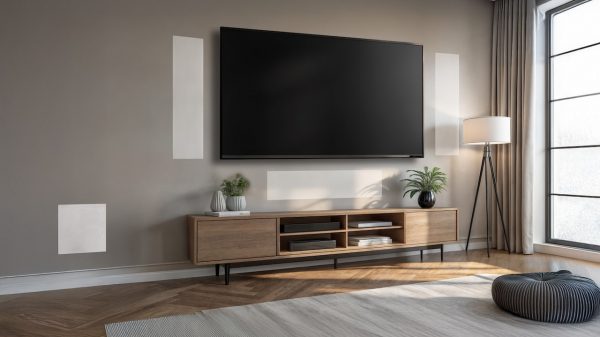
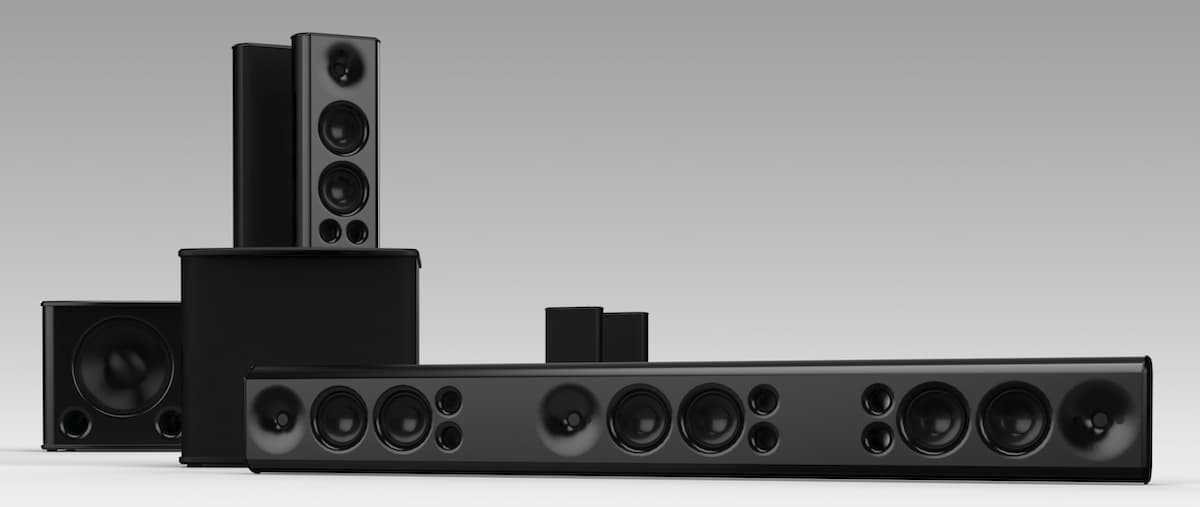
When I reviewed the Theory Audio Design 5.2.2 surround system, it completely reset my expectations for what a soundbar-based home theater could deliver. Its combination of dynamics, scale, dialogue clarity, and control made it unmatched below $20,000 at the time.
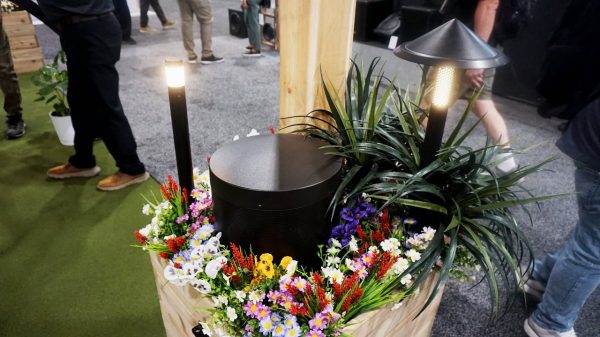
Theory continued to impress during our CEDIA Expo 2025 coverage, earning eCoustics Best in Show recognition for both the compact ic5 architectural loudspeaker and the ic6 deployed in its outdoor bollard enclosure. Its 9.2.4 system was also selected for Best Home Theater Sound at AXPONA 2026.
The common thread has been high efficiency, controlled dispersion, strong dynamic performance, and consistent voicing across different installation formats. The new controllers allow integrators to apply that same system-based approach to substantially larger and more complicated projects.
CEDIA Expo 2026
Theory Audio Design will demonstrate the DLC-1500.8d and PLC Series in Booth 1300 at CEDIA Expo 2026, which runs September 1 through 4 at the Colorado Convention Center in Denver. eCoustics will be there, and we will have the opportunity to try the new controllers inside a complete Theory system rather than merely admiring the power ratings on a rack sheet.
The Bottom Line
The DLC-1500.8d looks like a logical and useful evolution of Theory’s existing controller platform, doubling the channels and claimed total output of the DLC-1500.4d without demanding additional rack space.
The PLC Series is the larger strategic move. Powersoft technology, substantially greater power density, Dante and AES67 networking, and more scalable system management could make Theory a viable option well beyond dedicated home theaters.
Sixteen thousand watts in a 1RU chassis certainly gets attention. Pricing, thermal management, network reliability, noise levels, and ease of deployment will determine whether integrators keep ordering them after the demonstrations are over.
For more information: theoryprofessional.com
Related Reading:
- Theory Audio Design Launches PLC Series Loudspeaker Controllers At CEDIA 2025 With New 8-Channel And 4-Channel Models
- Theory Professional Unveils P9 Pendant Speaker At InfoComm 2026 With 9-Inch Coaxial Driver
- Theory Audio Design Wows Crowds At CEDIA Expo With Exceptional Sound In A Compact, Affordable Package
- Best Architectural (In-Wall and On-Wall) Speakers: Editors’ Choice