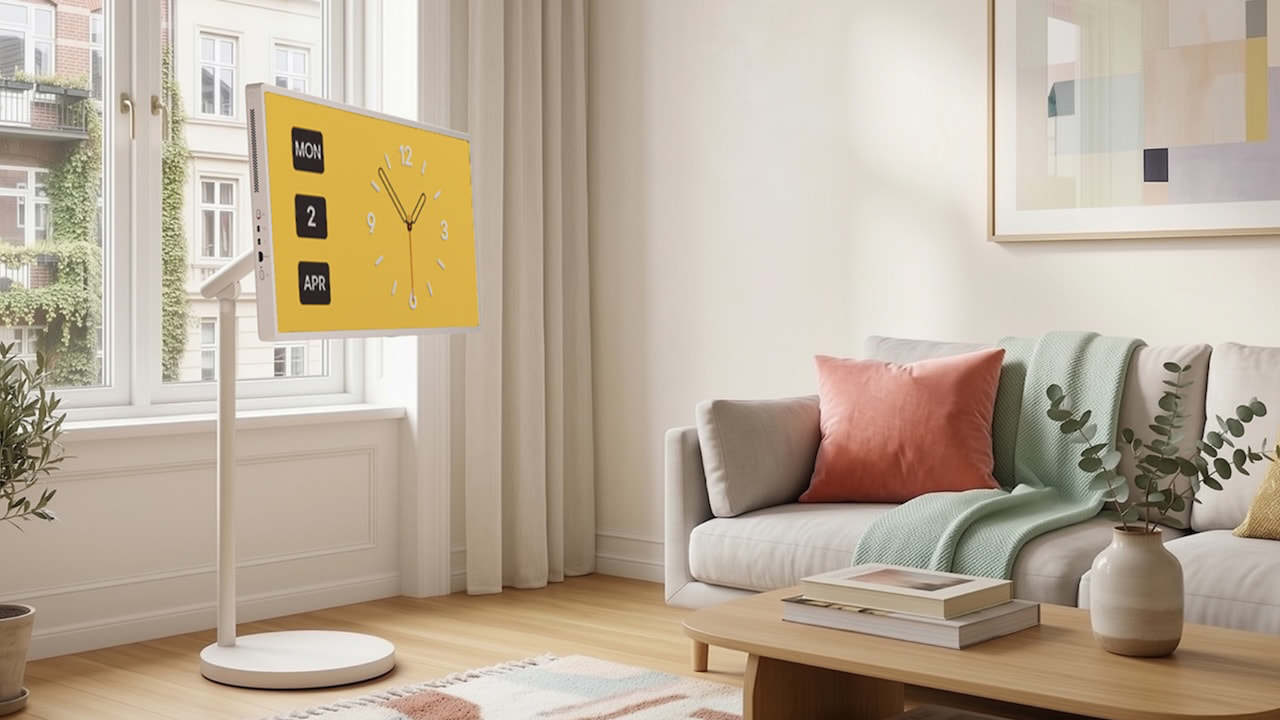
Televisions spent decades getting larger, thinner and increasingly difficult to move without a second person, a furniture dolly and a brief argument about who scratched the wall.
LG took a different approach with StanbyME: put the display on wheels, add a battery and let it follow you between rooms without requiring an electrician or a marriage counselor.
The original idea was clever, but the 27-inch StanbyME 2 still felt more like an oversized tablet than a television. LG’s new StanbyME 2 Max moves the concept considerably closer to being a legitimate secondary TV with a 32-inch 4K touchscreen, improved wireless connectivity and the same $1,299.99 launch price as its smaller predecessor.
That is still a lot of money for 32 inches of LCD real estate, but conventional televisions cannot follow you into the kitchen, rotate into portrait mode for a workout or detach from their stands when you need the screen on a desk.
Bigger Screen, Sharper Picture
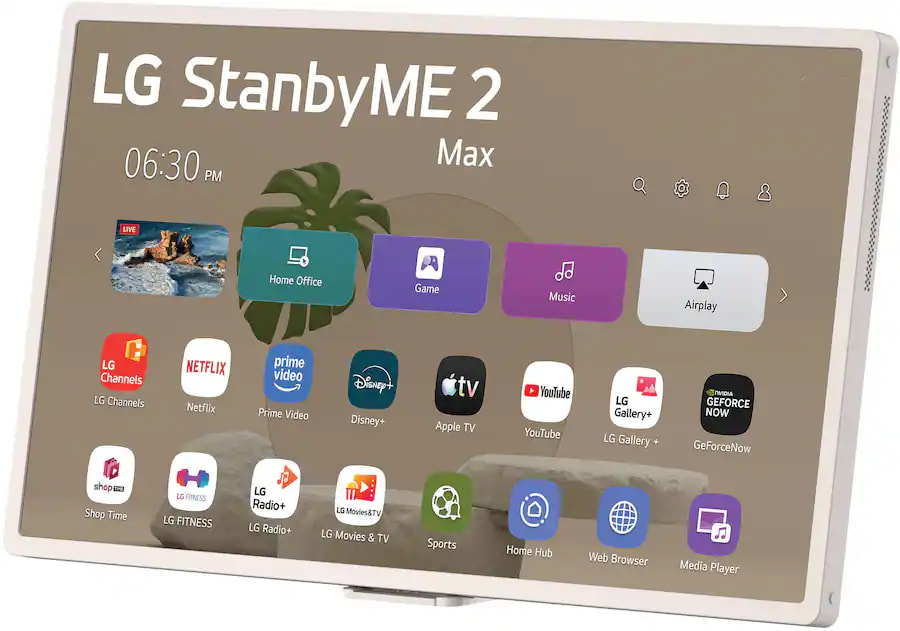
The most important upgrade is the display itself. StanbyME 2 Max increases the screen size from 27 to 32 inches while jumping from QHD resolution to full 4K UHD at 3840 x 2160 pixels. It remains an edge-lit LCD panel with a native 60Hz refresh rate, so nobody should confuse it with one of LG’s premium OLED TVs. Mobility, not reference-level black performance, is the reason this exists.
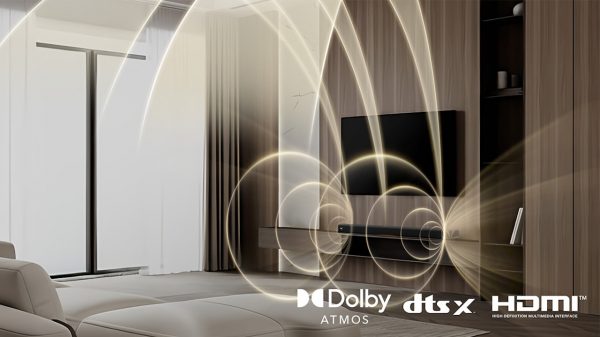
LG has equipped the new model with its Alpha 8 AI Processor Gen3, including AI Picture Pro, AI Super Upscaling and Dynamic Tone Mapping Pro. Dolby Vision HDR is supported, while Dolby Atmos and LG’s AI Sound Pro processing can create a virtual 11.1.2-channel presentation through the built-in side-firing 2.0-channel speaker system.
A 32-inch television is never going to replace a proper home theater system, but that is not really the assignment. StanbyME 2 Max is intended for recipes, exercise videos, casual streaming, gaming, video calls and those moments when somebody else has taken control of the main television and refuses to surrender the remote.
More Tablet Without Becoming an Actual Tablet
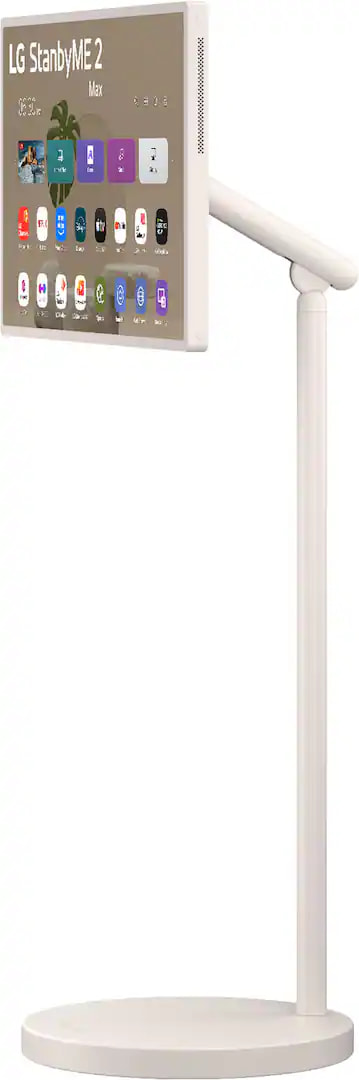
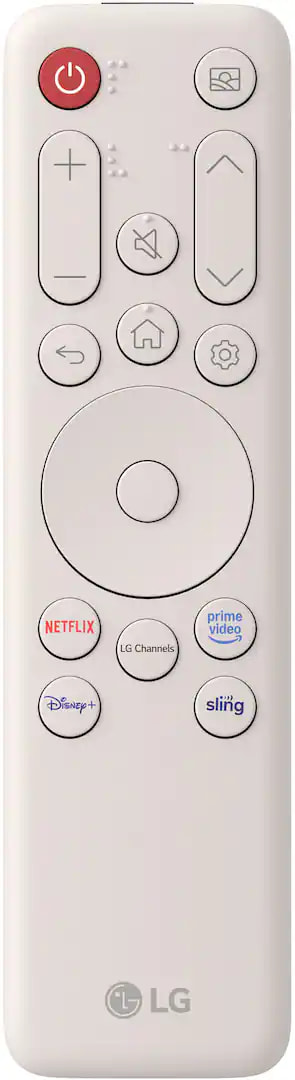
The touchscreen can rotate 90 degrees in either direction for landscape or portrait viewing, tilt up to 25 degrees and swivel as much as 90 degrees. The display also detaches from the rolling stand and can be placed on a table using the included one-click tabletop stand. A small magnetic remote clips directly to the enclosure, which should reduce the likelihood of it disappearing into the sofa cushions within the first 48 hours.
The screen weighs approximately 12.3 pounds on its own, while the complete display and rolling stand weigh 44.8 pounds. In other words, roll the complete unit between rooms and save the lifting for when the display is detached.
Battery life has increased slightly from four to a claimed 4.5 hours, which should cover two average-length films or approximately one modern streaming drama whose director was never told that editing exists. The screen can also be powered or charged over USB-C, including through a compatible external battery.
Connectivity represents another meaningful improvement. The previous StanbyME 2 was saddled with Wi-Fi 5, which felt dated on a premium wireless display. The Max moves to Wi-Fi 6 and Bluetooth 5.3, while supporting Apple AirPlay, Google Cast and mobile-device screen mirroring. LG also includes HDMI, USB and dual USB-C connectivity, with USB-C DisplayPort Alt Mode supported for compatible computers and mobile devices.
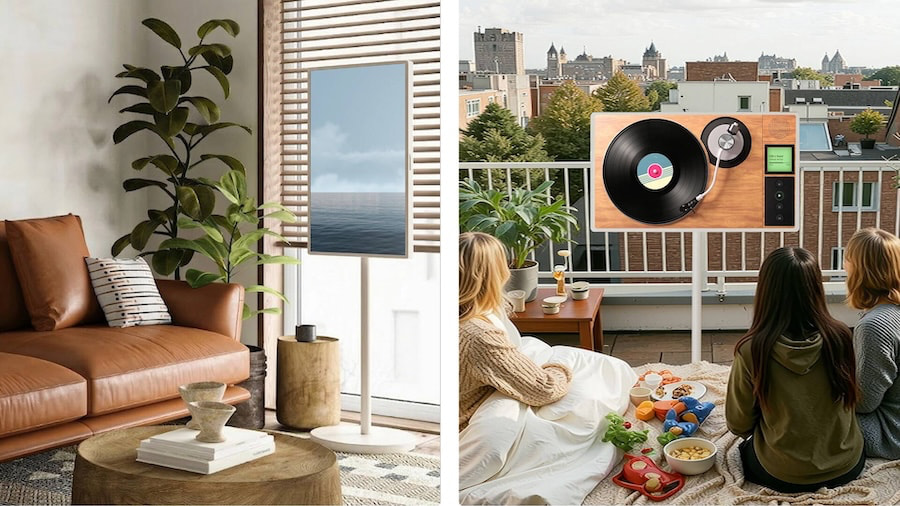
LG’s webOS platform provides access to streaming applications and more than 400 free LG Channels in the United States. Gallery+ can turn the display into a mobile digital-art frame, while Mood Maker, touchscreen board games and the generative AI-powered Let’s Draw application provide something to do when another season of television about wealthy people behaving badly begins to feel repetitive.
There is an important distinction, however: StanbyME 2 Max runs a television operating system rather than iPadOS, Android or Windows. It offers touch controls and tablet-like flexibility, but it is not a general-purpose tablet capable of running every mobile productivity or creative application.
LG Is No Longer Rolling Alone
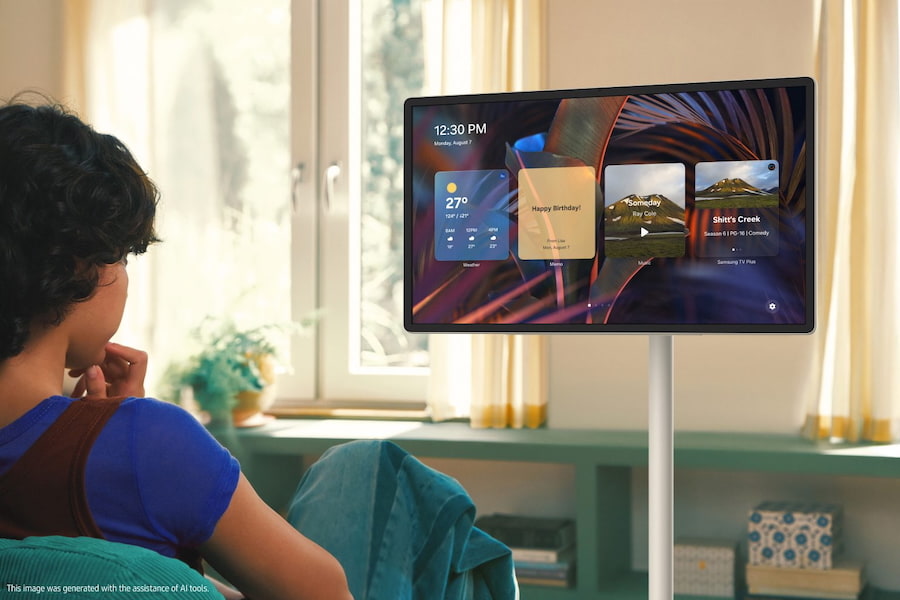
Samsung’s closest rival is the 27-inch Movingstyle, which offers a QHD touchscreen, 120Hz refresh rate, HDR10+, Dolby Atmos, a detachable display and approximately three hours of battery life for a $1,199.99 MSRP. Samsung has the advantage for gaming and faster motion, but LG provides a larger 4K screen, longer battery life and Dolby Vision for an additional $100.
Samsung also sells the 32-inch Movingstyle M7 for $699.99. It provides a 4K display and rolling stand at nearly half the price of the LG, but it requires continuous AC power and lacks both touchscreen operation and the ability to detach the display for portable use. It is closer to a smart monitor on wheels than a battery-powered personal screen.
The more serious threat might be the Hisense S6 FollowMe, which combines a 32-inch 4K touchscreen with an anti-glare panel, Wi-Fi 6, an integrated camera and a claimed battery life of up to 10 hours. Hisense announced U.S. availability for May 2026, but its official launch materials still did not provide pricing, which is an effective way to win a specifications comparison without asking anyone to open their wallet.
What makes the StanbyME 2 Max different is not any single feature. It is the combination of a 32-inch 4K touchscreen, detachable battery operation, a mature smart TV platform, Dolby Vision and Atmos support, extensive wired and wireless connectivity and confirmed U.S. pricing in one relatively polished product.
The Bottom Line
At $1,299.99, the LG StanbyME 2 Max will never win a dollars-per-inch contest. The same money can purchase a substantially larger conventional 4K TV with better picture quality, greater brightness and possibly enough left over for a soundbar.
That television will not roll next to a treadmill, rotate vertically for a recipe, detach for use on a desk or operate for more than four hours without an electrical outlet.
LG has addressed the two most obvious limitations of the previous model by increasing the screen size and resolution, while Wi-Fi 6 fixes a networking specification that should never have been missing from a premium wireless display.
The edge-lit panel, 60Hz refresh rate and high price still require some perspective. This is not the television for someone building a dedicated home theater or chasing premium HDR performance. It makes far more sense for apartments, bedrooms, kitchens, home offices, workout spaces and households where a flexible secondary screen would actually move throughout the day.
The StanbyME concept is no longer unique, but the 2 Max may be its most convincing execution so far. LG did not reinvent television. It simply gave one better resolution, a battery and permission to leave the living room.
Price & Availability
The LG StanbyME 2 Max, model 32LX6BWGA, is priced at $1,299.99 in the United States. LG opened preorders on June 29, 2026, with initial shipments expected to begin during the week of July 26, 2026.
Where to buy:
Related Reading:
- The LG StanbyME 2 Portable TV Wants To Be By Your Side
- Hisense Unveils S6 FollowMe At CES 2026, A Mobile Smart Screen That Moves With You
- Samsung Unveils Movingstyle Lifestyle Displays—Because Stationary Screens Are So Last Decade