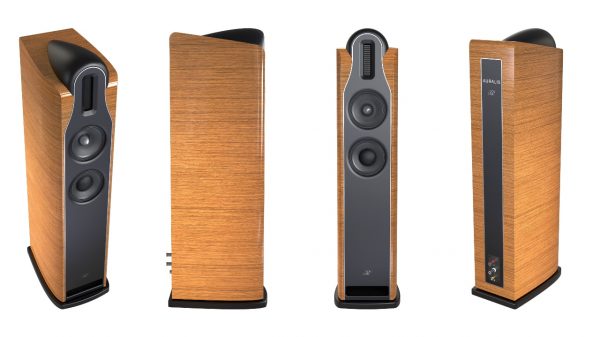
Jamo is officially back and the timing is hard to ignore. After being dropped by Voxx International in 2024, just ahead of Voxx’s acquisition by Gentex, the storied Danish speaker brand is reentering a crowded high-end audio market that already feels oversaturated. Now under the ownership of Cinemaster and Rayleigh Lab, Jamo is rebuilding with a new team and a clearly defined strategy that aims to balance its Scandinavian design heritage with modern performance expectations.
The relaunch raises an obvious question: does the industry need another brand right now? Probably not. But Jamo is not just another name; it is a legacy player with decades of credibility, and its return adds yet another prestigious Danish voice to a category already dominated by heavy hitters. Whether that history translates into relevance with a new generation of listeners will depend entirely on execution, not nostalgia.
Cinemaster, the largest audio distribution company in China, was founded by Xiaodong Yang, who now plays a central role in Jamo’s revival. Rayleigh Lab, led by founder and CEO Thomas Li, brings engineering and production expertise to the partnership, with operations based in Shenzhen.
Yang’s involvement is more than financial. He previously worked closely with the Jamo brand, giving him a clear understanding of its history, values, and design philosophy. That background offers a practical advantage as the company looks to rebuild, not reinterpret, what made Jamo relevant in the first place.

“Jamo is a legendary brand for good reason. Great sound and clever design never get old, and we have set up development to create speakers that meet the needs of the modern listener, from entry level models to high end systems,” said Xiaodong Yang, CEO of Cinemaster. “Production will be handled in both Denmark and China, and we look forward to sharing more very soon.”
The return of Jamo is more than a familiar name coming back to market. It reflects an effort to reconnect with the principles that originally defined the brand while establishing a direction that fits current expectations. The new ownership is positioning Jamo to build on its design focused heritage without losing sight of practical performance and usability.
The first products from this relaunch are expected to be unveiled at the Vienna High End Show 2026, scheduled for June 4 to 7, 2026.
Jamo’s Beginnings
For those unfamiliar, Jamo was founded in Denmark in 1968 and quickly built a reputation for combining Scandinavian design with solid acoustic performance. From the start, the goal was straightforward: loudspeakers that delivered high quality sound without looking out of place in a modern home.
Over time, Jamo became one of Europe’s more recognizable speaker brands, known for balancing innovation with a clean, restrained design approach.
The current relaunch leans heavily on that foundation. The new team is centering Jamo’s heritage while updating materials, engineering, and design input with a broader European perspective aiming to make the brand relevant again without rewriting what made it work in the first place.
From Denmark with Love
Central to Jamo’s return is a renewed emphasis on its Nordic roots. The brand’s design and engineering approach draws inspiration from the landscapes, materials, and cultural traditions of Scandinavia.
This philosophy celebrates a distinctly Nordic story: one that combines craftsmanship, natural materials, and precision engineering. From the earliest design concepts to the final acoustic tuning, the process reflects a balance between heritage and modernity, ensuring that the spirit of Jamo’s past continues to inform its future into 2026 and beyond.
New Team, Clear Direction
The relaunch of Jamo is being driven by an international team with experience across industrial design and audio engineering. Drawing from work at established creative studios and audio companies, the group is focused on rebuilding the brand with a consistent approach to design and performance.
The objective is straightforward: reestablish Jamo as a brand where design, engineering, and usability align without overcomplicating the product.

Among those guiding the brand’s creative direction are Kim Michel, Founder at KimMichel Design, whose experience spans industrial design and Scandinavian product development. He is joined by Simon Matthews, Creative Director at UK design consultancy Studio ISO, whose background includes work with some of the most respected names in high-fidelity audio (Focal, Bowers & Wilkins, Naim Audio), and Jamie Cobb, founder of Studio ISO and a designer recognised for his work across consumer technology and communications.
In Denmark, award-winning design agency HarritSorensen has also created new Jamo designs. Founded in 1991 by partners Thomas Harrit and Nicolai Sørensen, HarritSorensen ensures that Danish design is at the core of the new models.

The broader teams have spent significant time evaluating new concepts, materials, and acoustic approaches, working together to refine Jamo’s established design language. The focus has been on balancing continuity with practical updates, maintaining what defined the brand while adapting it for current living spaces.
Inspired by Nature
A defining element of Jamo’s next phase is a focus on material selection and design influenced by its Scandinavian roots. Simplicity, functionality, and a connection to natural materials remain part of the company’s design approach.
The team is evaluating materials and acoustic solutions that aim to balance performance with environmental considerations. Drawing on traditional Nordic materials and manufacturing practices, the goal is to create products that are durable, consistent, and aligned with the brand’s established design language.
Broader Vision
As music listening habits continue to shift, Jamo is taking a wider view of how audio fits into daily life. The relaunch will span everything from traditional two channel hi-fi systems to connected wireless platforms and lifestyle products designed for modern living spaces, not just dedicated listening rooms.
Across all of these categories, the core philosophy remains grounded: sound should be immersive, balanced, and emotionally engaging, without losing the clean lines and functional simplicity that define Scandinavian design.
The Bottom Line
The return of Jamo brings some real advantages. The brand still carries recognition, its design identity is clear, and the current leadership understands what made it relevant. The mix of European design with Chinese engineering and manufacturing could also help control costs while maintaining performance and build quality. That gives Jamo a practical path forward if executed properly.
The challenge is the market itself. The categories Jamo once competed in are now crowded with strong options from DALI, Q Acoustics, KEF, and Wharfedale. These brands have refined their products and pricing, leaving little room for a comeback based on reputation alone. Jamo will need a clear point of difference, whether that comes from design, value, or how the speakers actually sound.
If they execute, Jamo could find a place between lifestyle and traditional hi-fi that feels deliberate and competitive. If not, it risks being another legacy name trying to reenter a space that has moved on. Either way, this is a return that will not go unnoticed, and some established brands should be watching closely.
Related Reading: