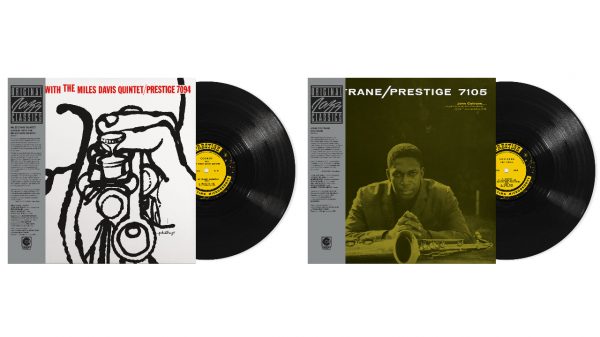
Imagine hearing this in 1957 and asking the obvious question: who the hell is this Coltrane guy?
John Coltrane was not completely unknown. He had already worked with Dizzy Gillespie, Earl Bostic and Johnny Hodges before Miles Davis hired him in 1955, and two years inside Davis’ First Great Quintet had exposed a much larger audience to his increasingly forceful tenor saxophone. But Coltrane, recorded on May 31, 1957, at Rudy Van Gelder’s Hackensack studio, was different. This was his first recording session as a leader, and the energy coming out of the speakers nearly 70 years later is still ridiculous.
This generation gets Taylor Swift and Tate McRae. Music listeners in 1957 were watching Miles Davis, Thelonious Monk, Sonny Rollins, Charles Mingus and a 30-year-old John Coltrane transform modern jazz almost in real time. I know which year I want the DeLorean programmed for.
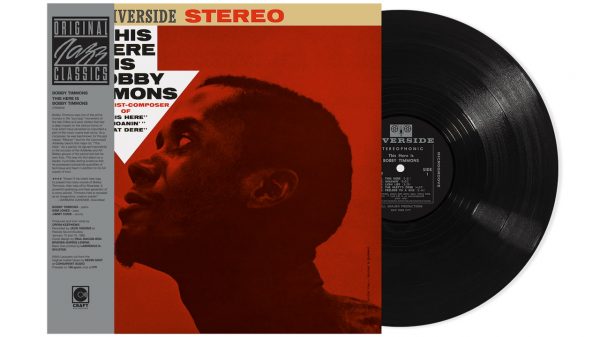
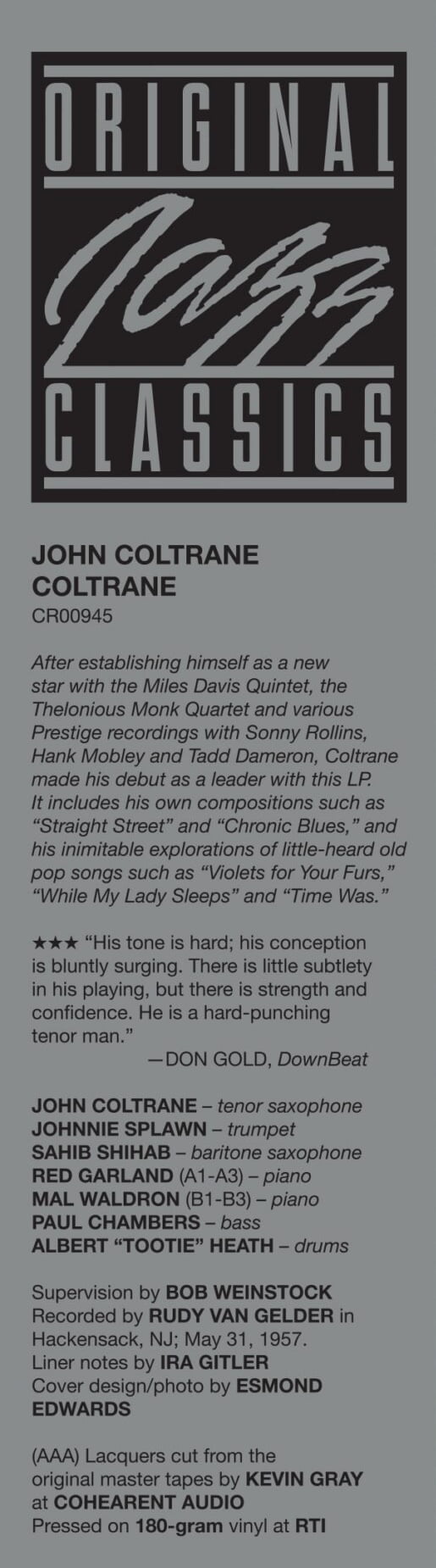
Craft Recordings‘ new $39 Original Jazz Classics edition gives us another opportunity to hear that transformation without chasing an expensive Prestige original. The August 14, 2026 release is the mono edition, mastered all-analog from the original tapes at Cohearent Audio, pressed on 180-gram vinyl at RTI and housed in a Stoughton tip-on jacket.
Related Reviews:
- Review: Here’s Lee Morgan – Craft Recordings’ OJC Reissue Revives A Hard Bop Rarity
- This Here Is Bobby Timmons 180 Gram Vinyl Review: Craft Recordings Revives A Soul Jazz Classic
- John Coltrane’s A Love Supreme Returns In Stunning Mono: New 60th Anniversary Vinyl Reissue Review
1957 Was the Year Coltrane Became Coltrane
The timing of this session is crucial.
Coltrane had spent years as a musical hired gun, moving through R&B groups, big bands and jazz ensembles before Miles Davis gave him the room to develop inside one of the most important groups of the decade. Davis recognized something in Coltrane even before Coltrane appeared entirely convinced of it himself; the contrast between Miles’ economy and Coltrane’s increasingly dense, aggressive phrasing became one of the defining characteristics of the quintet.
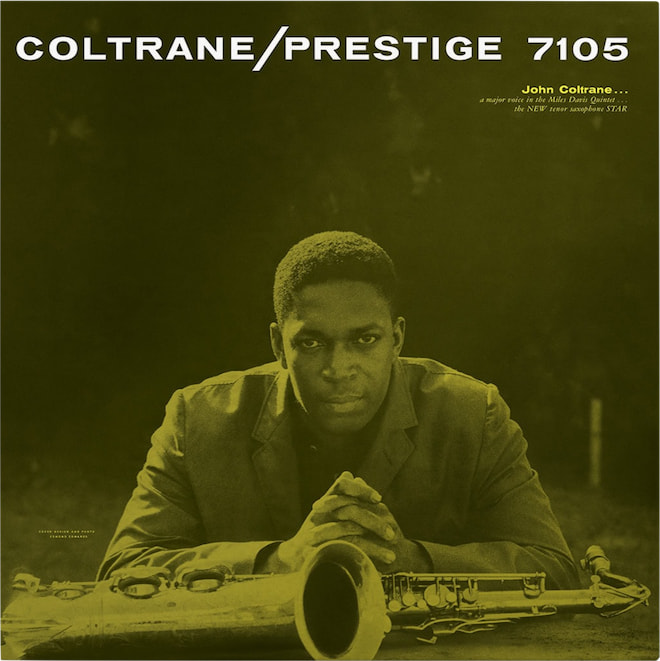
There was also considerable turmoil. Davis fired Coltrane in 1957 as his heroin addiction began interfering with his work. Coltrane returned to Philadelphia, kicked the habit and emerged with a level of focus that would define the remaining decade of his life.
That is not retrospective mythology. Within months of this May 31 session, Coltrane was working intensely with Thelonious Monk, whose compositions forced him to navigate harmonic and rhythmic puzzles very different from Miles’ approach. In September, he recorded Blue Train for Blue Note. He would return to Miles and eventually contribute to Milestones and Kind of Blue, before Giant Steps, My Favorite Things and A Love Supreme pushed him into entirely different territory.
And right in the middle of that explosion sits Coltrane.
Raw for a Reason
Calling the album “raw” feels right, but I would stop short of claiming that Coltrane or Prestige deliberately set out to make a raw-sounding record.
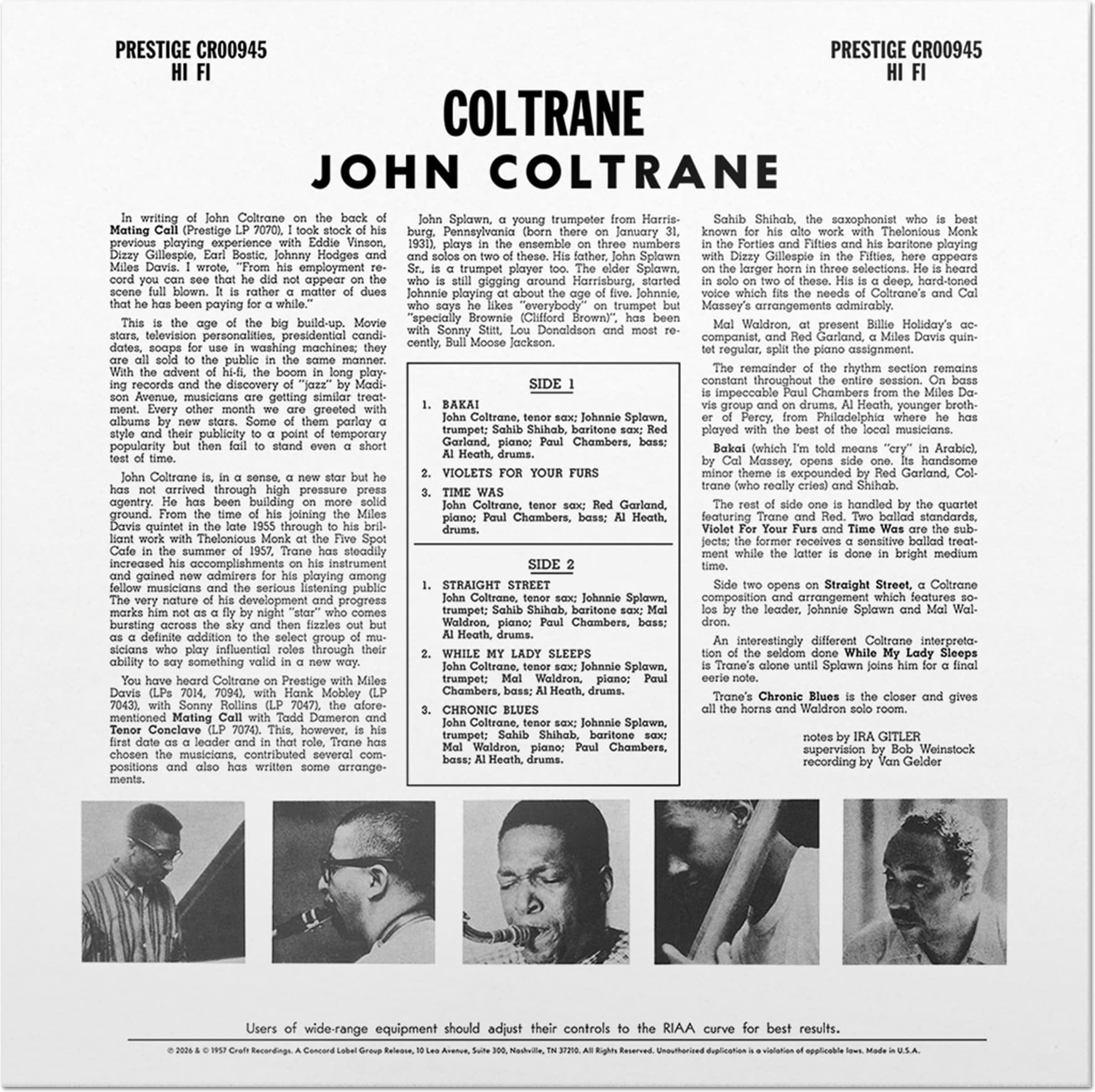
Coltrane’s first session as a leader, featured personnel changing across the program. Red Garland plays piano on the first side, Mal Waldron takes over on the second, while trumpeter Johnnie Splawn and baritone saxophonist Sahib Shihab appear selectively alongside Paul Chambers and Albert “Tootie” Heath.
“Bakai” starts throwing elbows almost immediately, and Coltrane’s presence is impossible to ignore. “Violets for Your Furs” proves that his increasingly intense approach did not prevent him from handling a ballad with genuine sensitivity, while “Straight Street” and “Chronic Blues” offer considerably more evidence of the player who was emerging.
Contemporary listeners heard that quality as well. Reviews from the period described Coltrane’s playing as fiercely propulsive and bluntly direct, with one critic essentially warning anyone looking for attractive background music to keep walking. Nearly seven decades later, that assessment feels remarkably accurate.
Coltrane sounds like a force of nature trying to figure out just how much force he can apply before the structure starts bending.
How Does the New OJC Sound?
The review copy is extremely clean and well centered, and the quiet vinyl gives this rather combustible session room to operate. More importantly, the mastering does not turn Coltrane into some grotesquely oversized audiophile apparition hovering three feet in front of the loudspeakers.
He has enormous presence, but he remains integrated with the musicians around him. Coltrane is not thrust into your lap like some cheap dancing girl at Satin Dolls over in Lodi — and yes, this record was made in North Jersey, at Van Gelder’s Hackensack studio. Satin Dolls can remain somebody else’s sonic reference.
There is excellent instrumental definition throughout the mono presentation, but what keeps pulling my attention back is the tenor saxophone. It has body, bite and considerable energy without becoming abrasive. The recording still sounds like 1957 rather than a modern mastering engineer’s attempt to clean up history and give everyone sharper elbows.
Why Coltrane Matters
There are better sounding Coltrane records. There are more cohesive Coltrane records, more adventurous Coltrane records and certainly more famous ones.
But there is only one first one.
Knowing what came next only makes Coltrane more arresting. You can already hear the impatience, the velocity and the refusal to stay inside boundaries that other musicians were still treating as permanent. This is not the finished architecture of Giant Steps or the spiritual gravity of A Love Supreme. It is the sound of the foundation cracking because something much larger is trying to get out.
That is what makes this record worth owning. You are not simply buying John Coltrane’s first album as a leader; you are hearing the moment before one of the most important musicians of the 20th century became impossible to contain. Nearly 70 years later, that energy has not faded. If anything, it feels more startling now because we already know how far he was about to go.
Our Ratings:
★★★★★★★★★★ Music Quality
★★★★★★★★★★ Sound Quality
★★★★★★★★★★ Pressing Quality
Where to buy:
Related Reading:
- Craft Recordings to Release ‘Another Side of John Coltrane’
- Craft Recordings Relaunches Original Jazz Classics With Miles Davis And John Coltrane Reissues
- Rhino High Fidelity’s Premium Vinyl Series Launches With The Cars & John Coltrane
- Craft Recordings’ OJC Series Reissues Kenny Burrell, Sonny Criss, Coltrane & More