
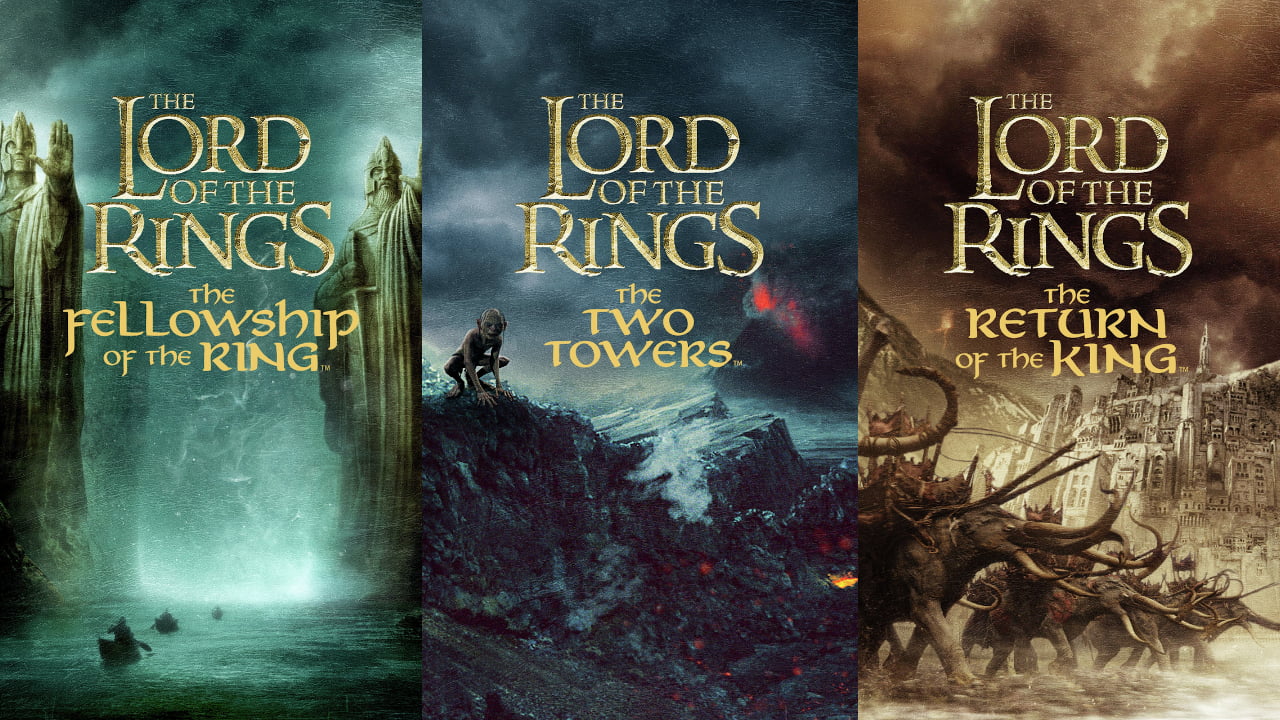
Before anyone starts marching on Google headquarters waving torches and 4K Blu-ray cases, one important fact needs to be established: this happened to one reported customer, not millions. There is no evidence that Google suddenly removed The Lord of the Rings movies from huge numbers of digital libraries or that widespread deletions are occurring.
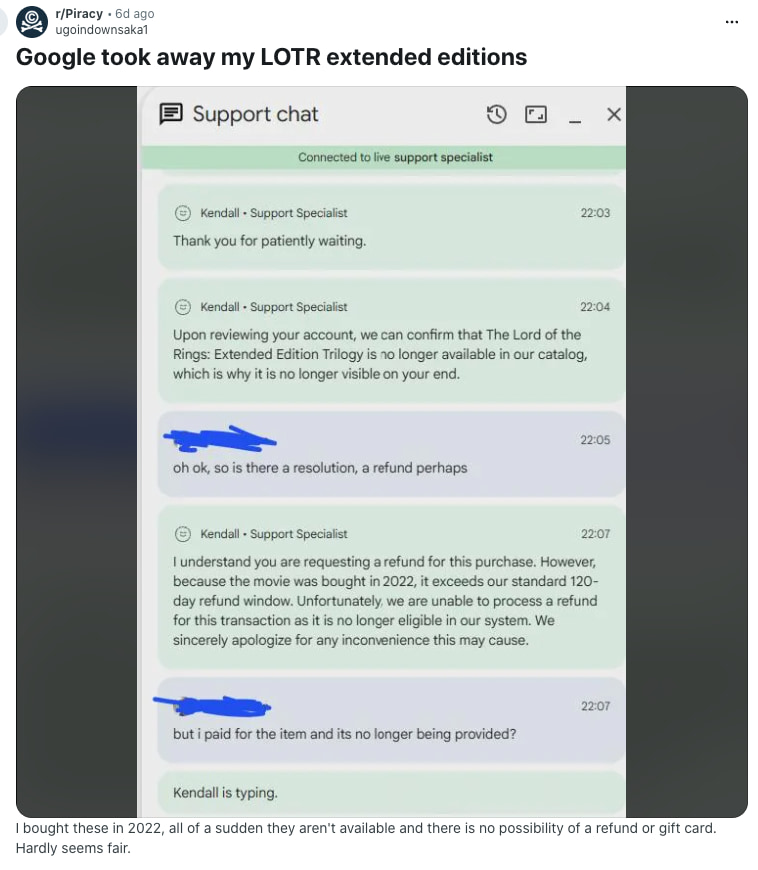
What we do have is a Reddit user who says the Extended Edition Trilogy they purchased through Google Play Store in 2022 disappeared from their library. Screenshots shared by the user appear to show Google Support confirming that the title had been removed from its catalog and that it could neither restore access nor provide a refund.
That distinction matters because this isn’t a mass deletion story. It is, however, a very good example of why the word “Buy” has become increasingly slippery in the digital era.
Related Reading:
- The Best 4K Blu-Ray Discs Of 2026 So Far
- 2025 Guide To 4K Blu-Ray Players: Streaming Can’t Replace Physical Media
You Bought It. Sort Of.
According to the customer, they paid for the films four years ago and reasonably expected them to remain available. Google Support reportedly explained that because the trilogy had been removed from its system and the transaction dated back to 2022, it could not restore the movies or issue a refund.
You can understand why someone might find that response less satisfying than walking barefoot to Mordor.
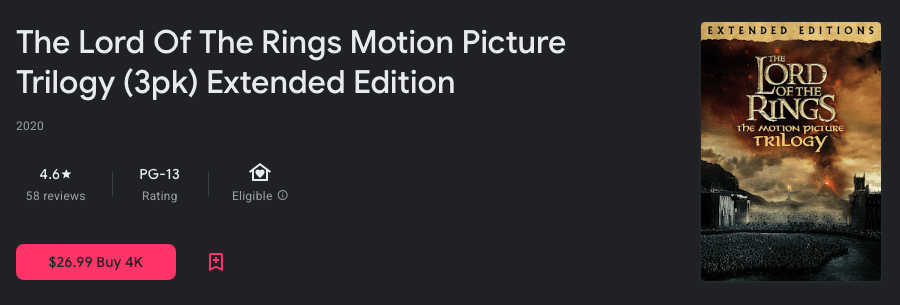
Google’s own current terms make the larger issue fairly clear. After purchasing content, customers receive a non-exclusive right to access and use it. Google also states that purchased content generally remains available only as long as Google retains the right to provide it. If those rights disappear, content or services are discontinued, or certain other conditions arise, Google can stop providing access to something you paid for.
That little “Buy” button suddenly feels considerably less permanent.
This Is the Physical Media Argument
Digital movies are enormously convenient. I buy them and stream them, and most consumers are not going back to walls filled with thousands of discs.
I might not be the best example.
I own more than 3,700 movies on DVD, Blu-ray, 4K UHD Blu-ray and even LaserDisc, and there is a reason I have never viewed that collection as obsolete. If I purchase The Lord of the Rings on disc and put it on my shelf, Warner Bros. cannot remove it because a licensing agreement changes. Google cannot decide my copy is no longer in the catalog, and the internet can disappear for the evening without taking Gandalf with it.
Physical media has limitations. Discs can be damaged or lost, players eventually fail, and 3,700 movies require slightly more storage space than an app icon. But access to them does not depend on someone else’s server continuing to recognize my license.
For home theater enthusiasts, there is also the performance argument. 4K UHD Blu-ray can deliver higher video bitrates and lossless audio without the compression and bandwidth compromises inherent to streaming. Physical media offers excellent performance along with something becoming increasingly unusual in modern entertainment: a copy you can actually keep.
Music Has Exactly the Same Problem
The same argument applies to Spotify, Apple Music, TIDAL, Qobuz and every other subscription music service. You don’t own those 100 million songs. You are paying for access to a catalog, and that catalog can change.
Albums disappear. Different masters replace older ones. Labels change distributors. Licensing agreements expire. The album you played yesterday may not necessarily be there tomorrow.
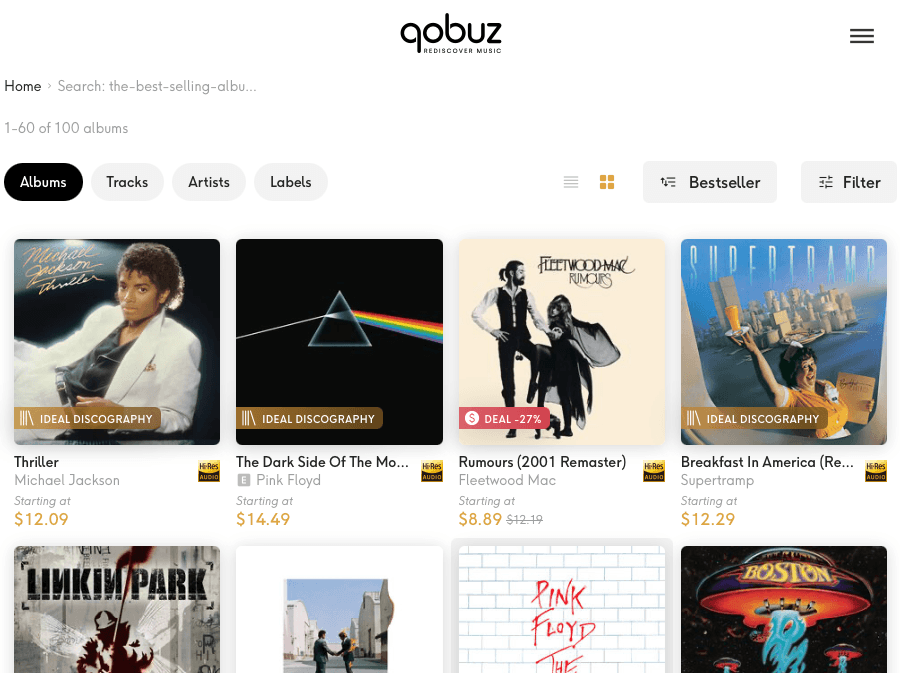
Qobuz offers an important alternative because it operates a download store alongside its streaming service. Customers can purchase albums and download actual music files to local storage. Roon Ready? Permanence sold separately.
But even Qobuz makes the distinction worth understanding. Its support documentation says customers can normally re-download purchases, while explicitly warning that albums may later become unavailable for download and recommending that customers create backups.
That is the key difference. If you bought the download, saved the files and backed them up, a record label removing the album from Qobuz’s streaming catalog doesn’t magically reach into your NAS and delete it. If you only streamed it, you never had anything to begin with.
One Customer Is Enough to Ask the Question
Millions of consumers buy movies digitally without anything disappearing, and this single case is not evidence that everybody’s library is about to evaporate. It would also be naïve to assume this is the only person who has ever lost access to something they purchased digitally. Most of us do not conduct annual inventory checks on libraries containing hundreds of movies, so a missing title could easily go unnoticed for months or even years. What we cannot say is how many customers this has affected because Google does not publish that data.
But the story matters because it demonstrates what can happen when ownership is replaced by licensed access.
The customer clicked “Buy,” paid for the movies and expected them to remain available. Four years later, according to the support exchange they shared, they didn’t.
Perhaps the industry needs a different word than “Buy.”
Until then, I’ll keep my 4K discs, CDs, records and even those LaserDiscs. They take up more room, but none of them vanish because somebody in a licensing department changed a spreadsheet.
Related Reading:



























Anton Primatti
August 13, 2026 at 1:14 am
And he’s not alone.
I’ve also seen quite a few saved albums vanish on TIDAL and Qobuz, which I know happens for time to time.
Your bigger point about physical media still stands. They can’t take it from your shelf.
ORT
August 13, 2026 at 3:12 pm
Tar & Feather these “Native America Givers”. Here’s another “problem” but this one is with hard copies, i.e., DVDs, BluRay and some UHD discs.
My players no longer “recognize” them as playable. They see many of these discs I purchased as “CD-Rom” and therefore unplayable. My 400 Disc Sony BluRay carousel couldn’t recognize over half the discs in it and that number was increasing to the point I got rid of the player as it was useless for anything except storage and it no longer knew what the discs were so it didn’t display them with artwork, title or a damn thing. Even my Sony and Panasonic single disc UHDBluRay players do this on some discs.
As Steve Martin said nearly 50 years ago, “I am PISSED!”. I have cleaned every disc. I have cleaned the laser pickup and yes, I am a competent Electronics Tech, albeit a retired one, LOL! Nothing works and the discs don’t work and I am really upset with Sony, Panasonic and every manufacturer of hard copy film discs. Nothing has changed and still this happens. WTI!
What The Intercourse!
Thus endeth the ORTwellian rant for today.
ORT