
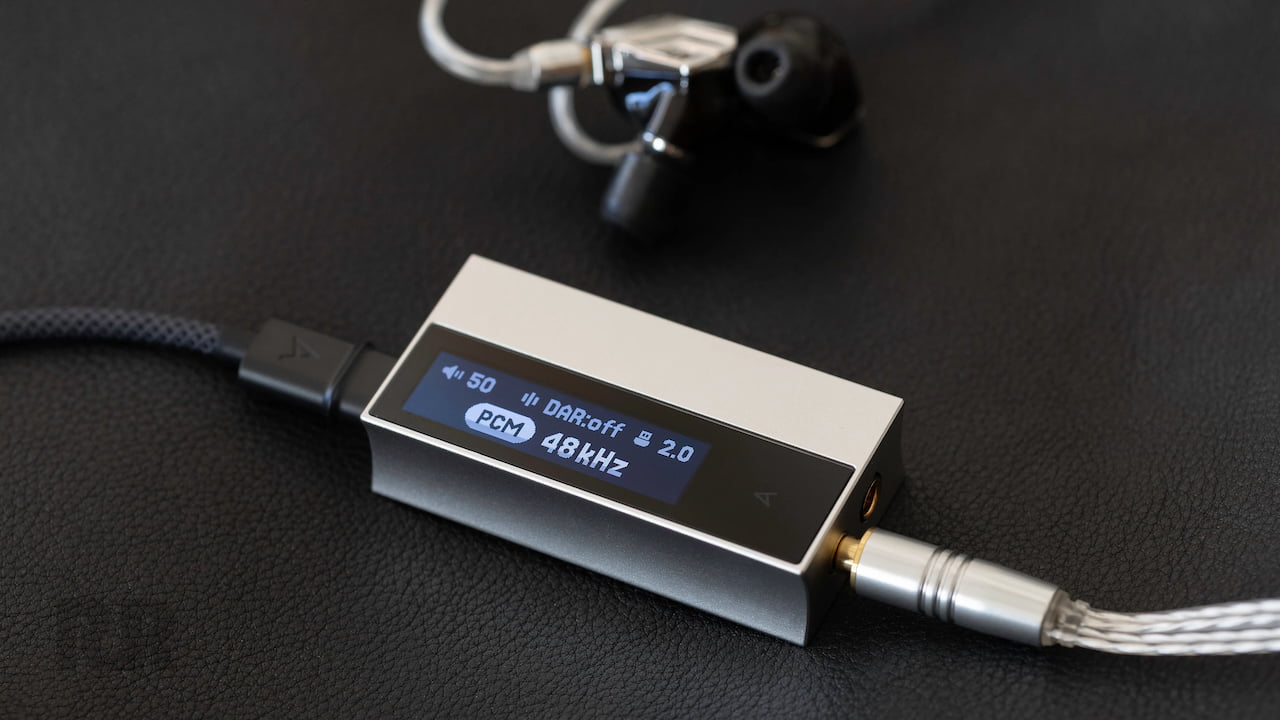
Astell&Kern is best known for building some of the most over-engineered and unapologetically expensive digital audio players on the planet. From established flagships like the SP4000 to more experimental plays like the PD10, the brand has long leaned on premium materials, ambitious engineering, and pricing that assumes you’re already committed. The HC5 takes a different route. It’s a portable USB DAC that promises flagship-grade DNA in a far smaller, supposedly more affordable package. However, at nearly $500, it’s priced squarely in entry-level DAP territory and staring down serious competition.
So, is the HC5 a smart way to get A&K sound without carrying a brick? Or is it an awkward middle ground that costs too much for what it is? Let’s get into it.
Build
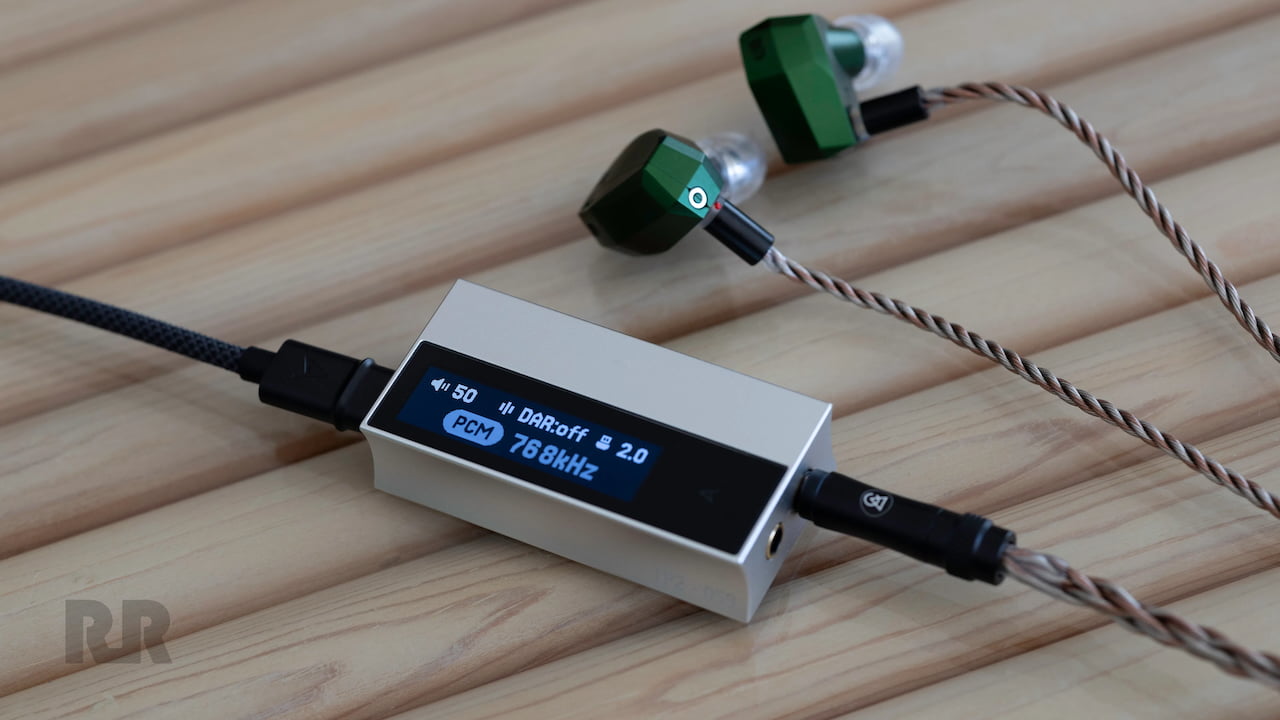
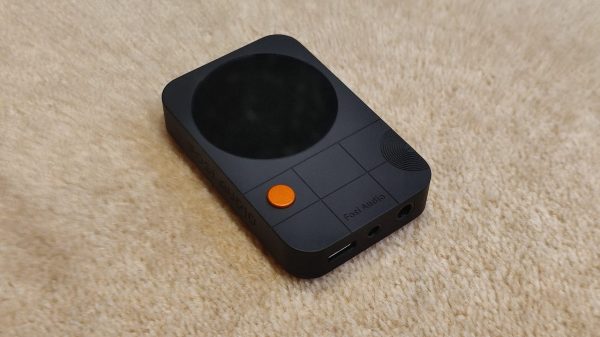
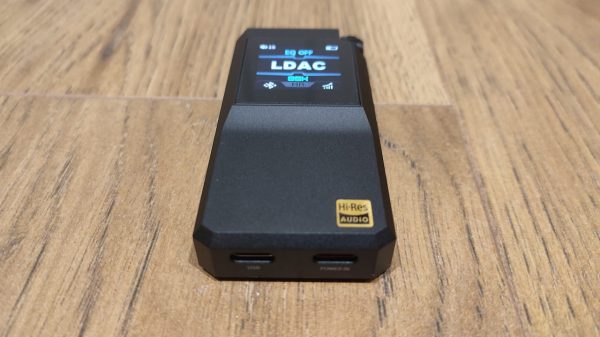
The HC5 features an aluminum chassis with a small OLED screen on its top face. The display shows key details such as volume level, playback rate, and connection info. The sides of the chassis are gently beveled, which aids in ergonomics. The HC5’s screen is bright-enough to be viewed easily in sunlight, but no so bright that it is distracting in a dim room. That’s good, since A&K did not implement any way to adjust screen brightness.
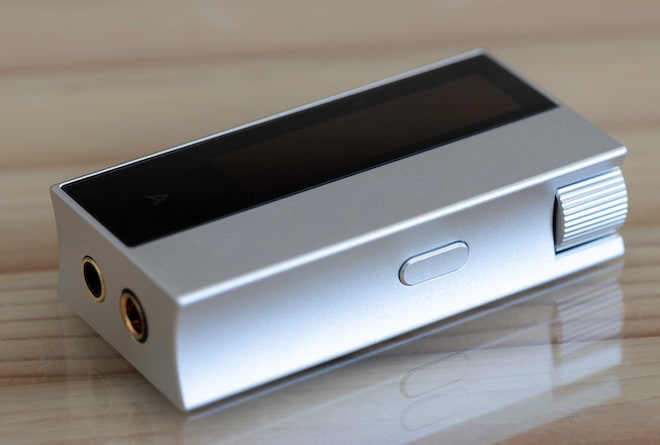
The left side of the chassis features a single button and volume scroll wheel. Both are aluminum, and neither are set very firmly. The scroll wheel has a bit of wiggle, even when not being rotated. The side button is a little better, but isn’t as tactile as you can find on other devices. A little give on a button usually doesn’t bother me much, but a near-$500 USB-C dongle should offer a top-notch physical interface as well.
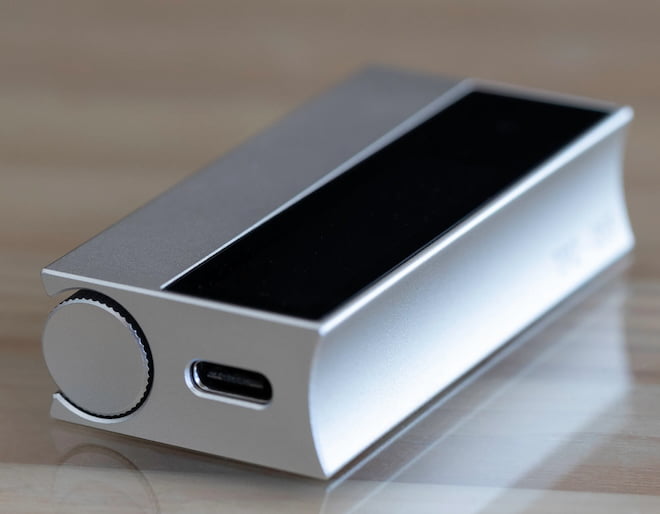
The top of the HC5 houses the USB-C input and the scroll wheel. From this angle, the wheel’s slight slack is visible even when the unit is at rest—noticeable, but not catastrophic. The USB-C port, by contrast, is rock solid. There’s no play or flex when a cable is connected, which is genuinely confidence-inspiring.
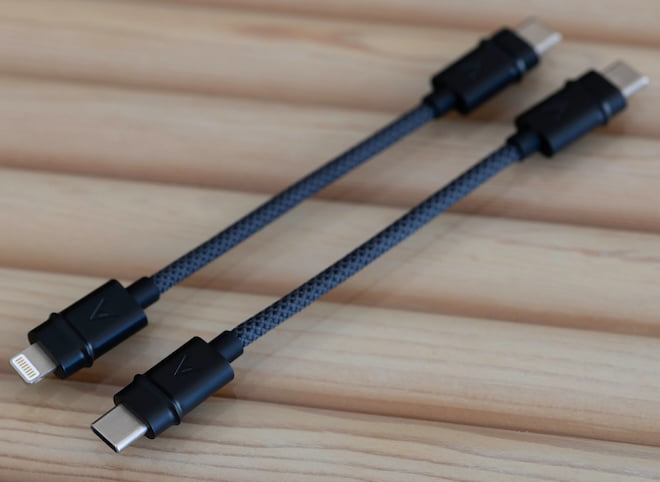
Around back, the HC5 offers both 3.5mm single-ended and 4.4mm balanced outputs. Both sockets are firmly mounted in the chassis and, like the USB-C port, remain completely wiggle-free. Astell&Kern also gets the accessories right: the included USB-C-to-USB-C and USB-C-to-Lightning cables are thick, well-finished, and reassuringly sturdy. They’re double-shielded as well, which should keep signal interference from crashing the party.
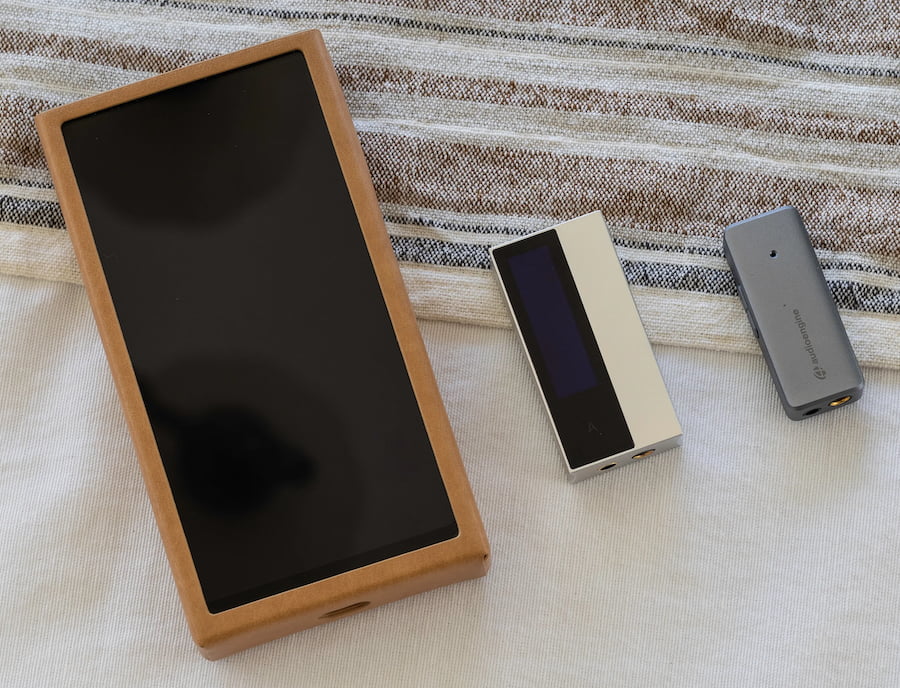
It’s worth noting that the HC5, while considerably more compact than a full-size A&K DAP, is nearly twice the volume of many other high-end, high-performance dongle DACs. Some of that bulk comes from the inclusion of a screen; some of it is down to Astell&Kern’s signature scroll wheel. Fair enough, but a portable DAC still needs to be portable.
The HC5 isn’t enormous, but it’s large enough to be awkward. It doesn’t fit comfortably in some stock IEM cases, and it’s also too big for most common MagSafe DAC holders. That puts it in an uncomfortable middle ground: smaller than a DAP, yet noticeably less convenient than the best compact dongles it’s competing against.
DAC
The A&K HC5 is the very first portable DAC to feature the AKM AK4499EX. This is a high-end chip that Astell&Kern typically reserves for flagship-level products. It’s paired with an AK4191EQ for a proper premium audio experience. A&K integrates this novel application of these chips with their flagship-derived “high-driving mode” tech that allows them to achieve a pretty impressive power-to-size ratio.
Sample Rates
The HC5 offers broad support for high-resolution audio formats, with no obvious limitations for portable use. It handles PCM up to 768 kHz at 32-bit resolution and supports native DSD playback through DSD512 in stereo.
Supported formats:
- PCM: 8 kHz – 768 kHz (8 / 16 / 24 / 32-bit)
- DSD (Native):
- DSD64 (2.8 MHz), stereo
- DSD128 (5.6 MHz), stereo
- DSD256 (11.2 MHz), stereo
- DSD512 (22.4 MHz), stereo
This puts the HC5 in line with other high-end portable DACs in terms of format compatibility, without introducing format-related constraints.
Output Level
Power output in portable USB-C DACs is constrained by several factors, including the power-delivery limits of Android and iOS devices, as well as the USB-C standard itself. Even so, not all portable DACs are created equal.
The HC5 offers stronger output than most, which isn’t surprising given its larger-than-average footprint. Its 3.5mm single-ended output delivers 2.5 Vrms, while the 4.4mm balanced output reaches 5 Vrms—placing it ahead of many competing premium dongle DACs in terms of available voltage.
Output Impedance
Output impedance plays an important role in how a DAC interacts with headphones and IEMs. Higher output impedance can alter frequency response which can be perceived as added warmth particularly with sensitive, multi-driver IEMs that use complex crossovers.
The HC5’s output impedance is low by portable standards. The 4.4mm balanced output measures 1.1 ohms, while the 3.5mm single-ended output is even lower at 0.5 ohms. At these levels, audible effects are minimal, with the 1.1-ohm balanced output only likely to be noticeable on the most sensitive multi-driver IEMs.
Listening
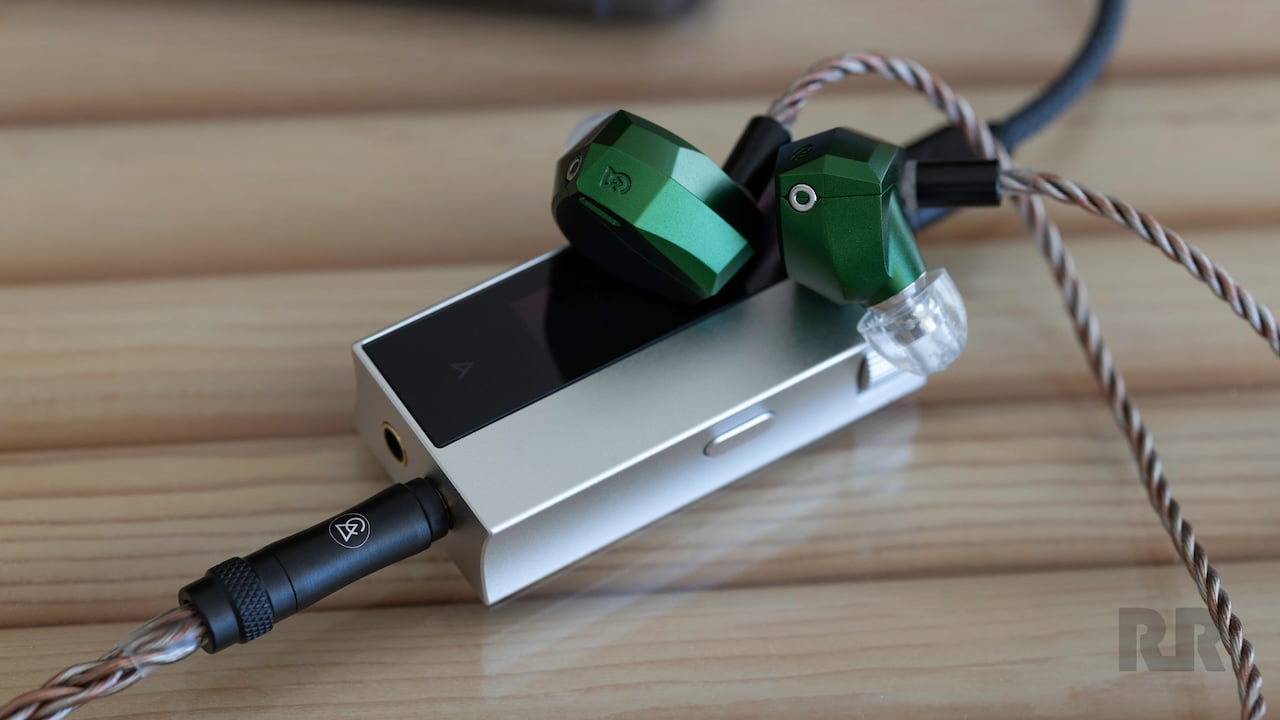
At 5 Vrms, the HC5 has enough output to comfortably drive most common headphones. Even higher-end models like the Meze 109 Pro and Audio-Technica ATH-ADX3000 reach satisfying volume levels with solid dynamic range. Less-demanding planar magnetic headphones also perform well, though listeners who prefer very high listening levels or who use more power-hungry designs may still benefit from a dedicated desktop amplifier.
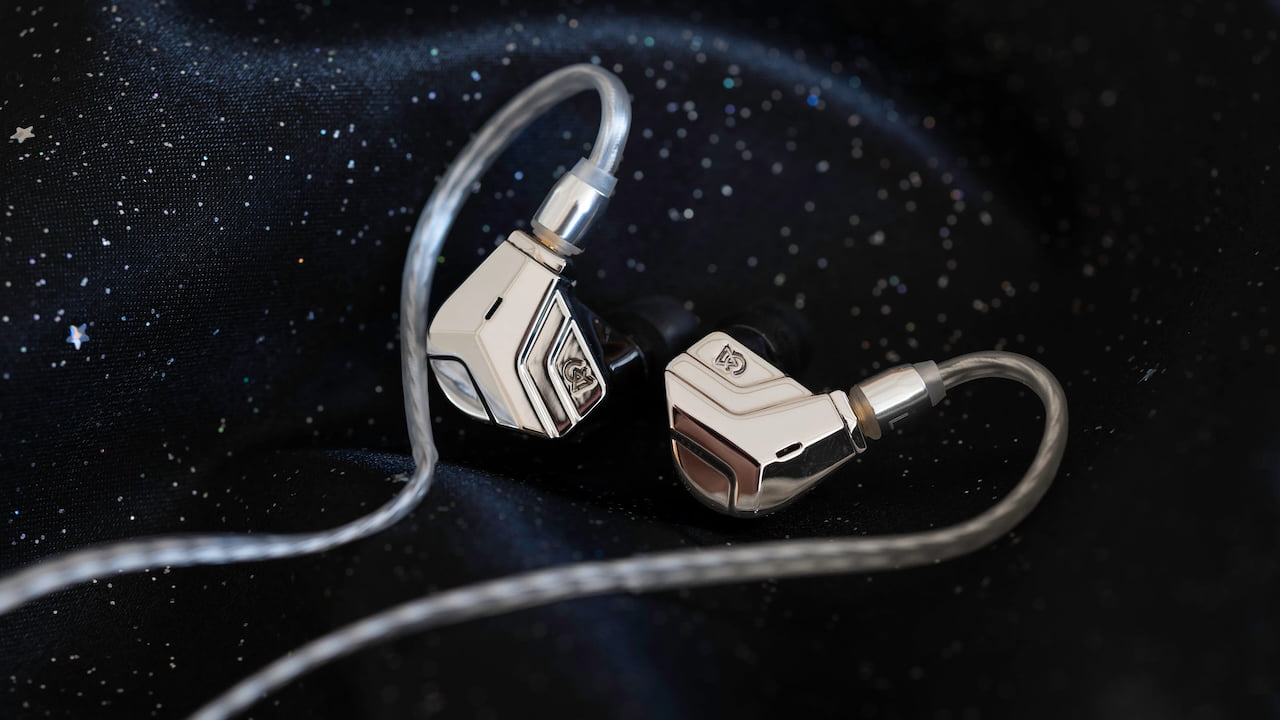
For portable use, the HC5 is clearly capable. Demanding planar IEMs like the Campfire Audio Astrolith reach high listening levels without strain, allowing the drivers to perform as intended. The HC5’s low, but not zero output impedance doesn’t meaningfully alter the sound. Sensitive IEMs such as the Campfire Audio Andromeda 2019 remain stable and consistent, with no obvious tonal shifts when switching between the 3.5mm single ended and 4.4mm balanced outputs.
More importantly, that consistency was not limited to ultra sensitive earphones. Regardless of the IEM or full size headphone used, the overall tonal balance remained intact. There was no sense of the balanced output adding artificial weight, nor the single ended output sounding comparatively thinner or softer.
There is no such thing as a completely neutral source or amplifier. Every design leaves a fingerprint, whether subtle or obvious. That said, this one comes very close. It avoids editorializing the signal, preserves timbre with discipline, and lets the transducer do the talking.
The Bottom Line
The Astell&Kern HC5 is a truly-premium portable DAC. Buyers that want to experience Astell&Kern’s flagship audio hardware can finally do so without having to drop many thousands on their top-tier DAPs, like the SP4000. That said, A&K needs to improve their manufacturing tolerances to reduce slack on both the volume wheel and the side-button. A nearly $500 device should be as premium to physically interact with as it is to listen-to. Buyers that treat audio as a price-no-object experience have a lot to like about the HC5 . However, those that are looking to maximize price-to-performance will want to check out cheaper, similarly-powerful dongles like the Audioengine HXL or Campfire Audio Relay.
Pros
- Impeccable sound quality
- True flagship performance
- Lightweight and ergonomic
- Runs cool
Cons
- Expensive
- Scroll wheel and button lack firmness
- Too large for common MagSafe setups
Where to buy:
You can find the HC5 for sale at Bloom Audio and Moon Audio for $489.
Related Reading:

















Robertwrari
February 27, 2026 at 3:55 pm
Hola, quería saber tu precio..
Ian White
February 27, 2026 at 4:12 pm
$489 USD. Puedes seguir el enlace al final.
IW