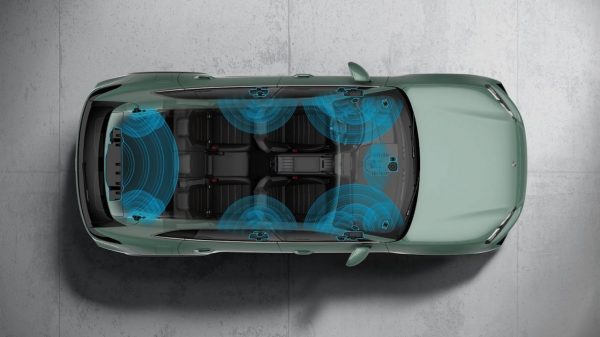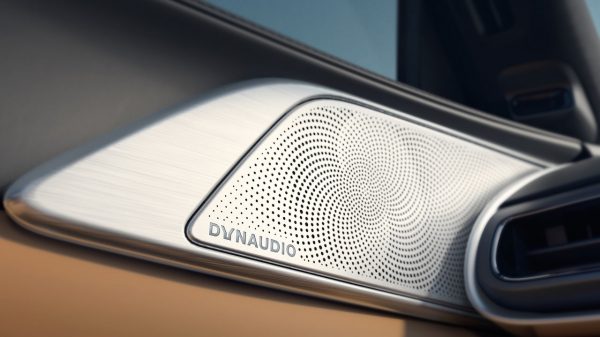
High-end audio brands have spent the past five years pushing deeper into the luxury car market, usually leaning on bigger speaker counts and brand-name partnerships. Dirac is taking a different route. In partnership with NIO, it has launched Dirac Spaces, a new software platform designed to model and reproduce the acoustic characteristics of real-world environments inside a vehicle. The system debuts in the NIO ES9 alongside the Lyra sound system, marking a shift toward software-defined acoustics rather than hardware-led upgrades.
From there, the through line becomes clearer. Dirac has been working this angle for a while. Its automotive push builds on earlier technologies like Reference Room Mode and Dirac Dimensions in the ES8, and traces back to the introduction of its Virtuo platform in 2022. The focus hasn’t changed: control the acoustics of the space, don’t just decorate it with DSP.
Some car audio systems still try to fake spaciousness by layering on reverb and calling it a day. Dirac’s approach is more precise. By modeling how sound reflects and decays in both the vehicle and a target environment, it uses the full speaker system to create a more coherent three-dimensional sound field.
Timing on this one was almost too convenient. The press release landed while I was out this morning driving the 2026 Mazda CX-50 Turbo and the 2026 Mazda CX-5 Premium—ended up ordering the CX-5. Both come with “premium” Bose systems. They’re competent, and the cabins are quiet enough, but spatial audio isn’t part of the equation.
Apple CarPlay integration matters more day-to-day anyway, especially in a house full of iPhones where Qobuz is non-negotiable and nobody else is touching the car stereo. But even in a well-insulated cabin, you can hear the limits. The sense of space is mostly surface-level.
That’s the gap Dirac is trying to close; less about adding features, more about fixing how sound actually behaves inside the car.
BMW also announced its first vehicle this week with Dolby Atmos, which is firmly in the “nice to hear about, not buying anytime soon” category — but it’s another sign of where this is headed in the luxury automobile segment.
Dirac Spaces and NIO Lyra: Software-Defined Acoustics Inside the Cabin

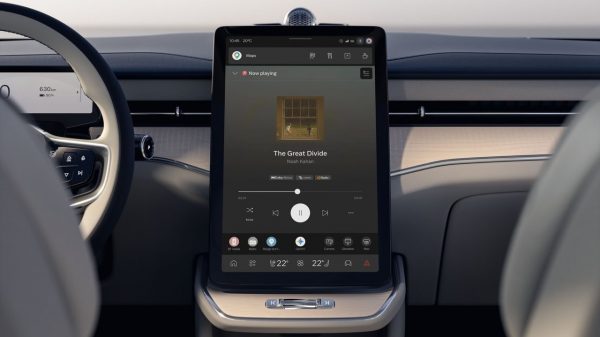
Working alongside the NIO Lyra sound system, Dirac is taking a system-level approach to in-car audio that goes beyond hardware tuning. The goal here is straightforward: control how sound behaves inside the cabin rather than simply pushing more of it through more speakers. That means combining the vehicle’s audio system, the physical space, and the source material into something that behaves in a more predictable and consistent way.
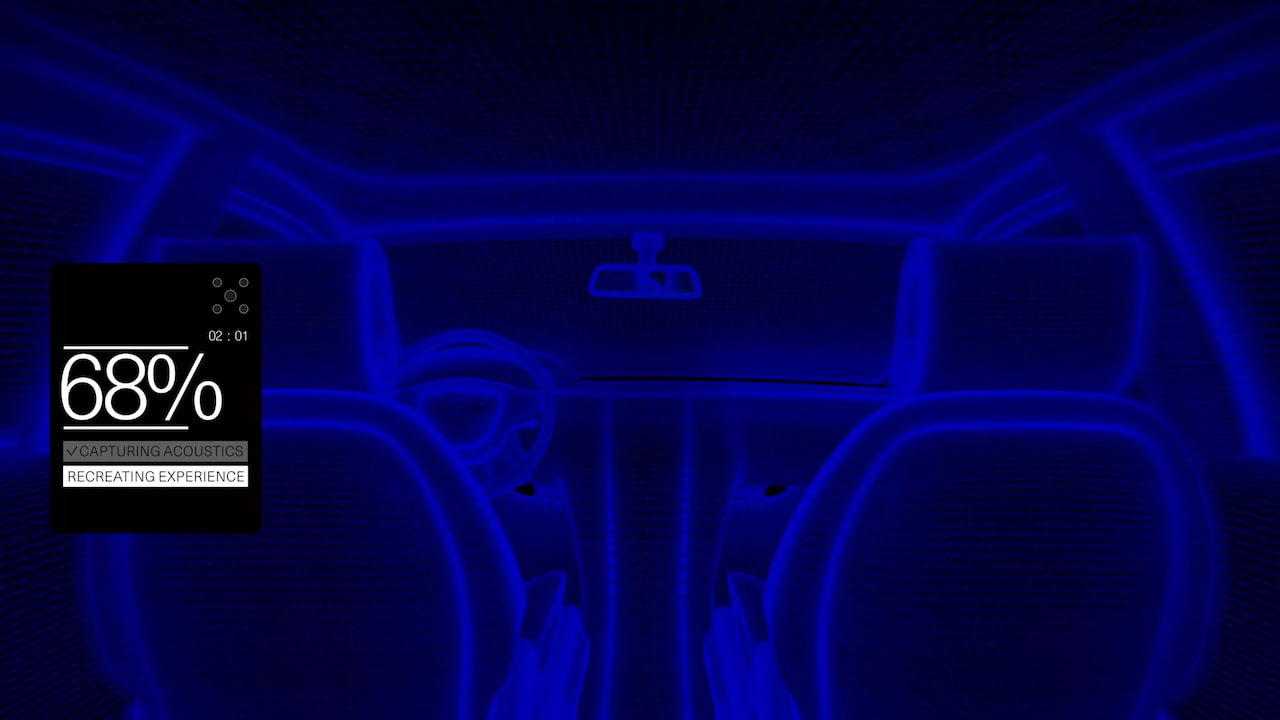
Dirac Spaces is the next step in that process. Instead of treating the car as a fixed listening environment, it uses acoustic modeling and real-time signal processing to reshape how sound is perceived inside the cabin. The system measures both the vehicle and a target acoustic space, then applies Dirac’s MIMO sound field control to approximate how that space would actually sound. The idea is not to layer on effects, but to replicate the acoustic behavior of different environments with a higher degree of accuracy than traditional DSP approaches.
“Today, cars are one of the most important listening environments, but they’ve traditionally been limited by the physical constraints of the cabin,” said Anders Storm. “With Dirac Spaces, we are redefining the in-car listening experience by recreating the acoustic signature of real-world environments inside the vehicle.”
Dirac is also giving automakers some flexibility in how this is deployed. “Signature Spaces” allows OEM partners like NIO to create branded environments tied to specific venues or experiences. “Designed Spaces” are Dirac’s own presets, based on measured real-world environments, with options like Balanced Room, Warm Stage, and Grand Hall that adjust both spatial cues and tonal balance.
The distinction from typical sound modes is important. This isn’t just reverb layered on top of the signal. Dirac Spaces maps how reflections and spatial cues should behave based on the car’s speaker layout and acoustic characteristics, which results in a more coherent sound field. In practice, that should translate into better depth, clearer imaging, and fewer of the phase and timing issues that tend to show up in complex cabin environments.
Implementation is also relatively clean. Dirac Spaces runs on top of an already optimized Dirac system, so it doesn’t require additional measurement beyond what’s used to tune the vehicle in the first place. It supports both stereo and multichannel content, which keeps things consistent regardless of source.
In the context of modern EV platforms, this is really about software. By integrating Dirac Spaces into vehicles like the ES9, NIO is using audio as another layer of differentiation—one that can be updated, refined, and potentially monetized over time without changing the underlying hardware.
“At NIO, we’re focused on creating a more immersive in-car experience that goes beyond traditional expectations,” said Ted Li. “With Dirac Spaces, the goal is to move the vehicle beyond a standard listening environment and closer to a space where sound behaves more like it would in the real world.”
Dirac will demonstrate Dirac Spaces publicly for the first time at Auto China 2026, running April 24 through May 3, in collaboration with NIO. The demonstrations will take place inside production vehicles, showing how the system adapts across different cabin designs and audio system configurations.
The Bottom Line
Dirac is attacking the real problem in car audio: the cabin itself. Dirac Spaces isn’t another sound mode—it’s an attempt to model and control how audio behaves in that space, which is a fundamentally different approach from the DSP presets and upmixing most systems rely on today.
North American availability is still an open question. With NIO as the launch partner and no U.S. presence, this rollout is likely tied to future OEM deals rather than anything immediate.
The rivalry is more complicated than a simple “they don’t need Dirac” narrative. NIO is leaning into Dirac as a core technology partner, while Tesla and Rivian continue to prioritize in-house control.
Meanwhile, Dirac is driving innovation. At CES 2025, Dirac and Denon showcased a prototype 22-speaker sound system in Tesla Model Y with height channels, headrest and headliner exciters, and Dirac’s spatial processing to create a far more coherent sound field than the stock system.
It wasn’t just louder or wider. It delivered noticeably better clarity, more stable imaging, and more natural bass response, while generating immersive spatial audio from standard stereo sources without relying on Atmos mixes.
It also exposed the core difference in approach. Tesla’s system, like Rivian’s evolving in-house platform relies on upmixing and DSP layered on top of the cabin. Dirac’s approach focuses on getting all the speakers to work together, correcting timing, phase, and interaction so the cabin itself stops fighting the sound.
That puts NIO in a different lane. By integrating Dirac at a deeper level with Spaces, it’s betting that software-defined acoustics can outperform even well-executed in-house systems. Tesla and Rivian are betting they can get there on their own.
Right now, both approaches work. But based on what we heard in that Model Y, Dirac has already shown it can raise the bar—if an automaker is willing to give it the keys.
For more information: https://www.dirac.com/b2b/automotive/spaces
Related Reading: