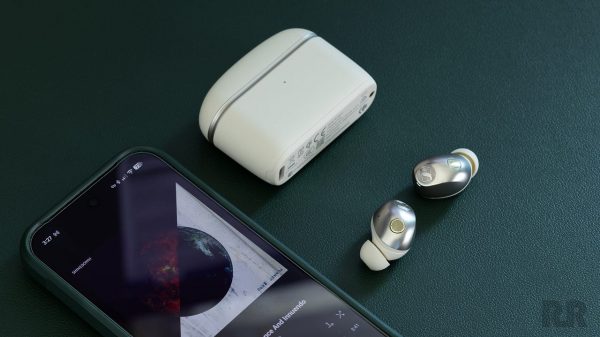
Nothing has officially launched the Ear (3a), and while the name sounds like someone at the company lost a fight with their accountant, the product itself is a lot more interesting than another pair of inexpensive wireless earbuds with ANC and a transparent case.
At $99, the new Nothing Ear (3a) sits directly in the crowded budget ANC category, but the hook is not just price. Nothing has added built-in audio capture, call recording, and something it calls Audio Snapshot, which lets users capture short clips of what they are hearing and sync them to the Nothing X app for playback, editing, sharing, and transcription. The NSA would like a word.
That matters because most $99 wireless earbuds are fighting the same battle: stronger ANC, longer battery life, better bass, more colors, and an app that claims to understand your soul but mostly just lets you move sliders. The Ear (3a) still checks many of those boxes, but the recording feature gives Nothing a real point of difference.
For a company called Nothing, that is not nothing.
Related Reviews:
- Noble Audio Osprey Review: $199 Audiophile Earbuds Put Sound Quality First
- Sony WF-1000XM6 Wireless Earbuds Review: Best Buds?
- Review: Bose QuietComfort Ultra Earbuds Gen 2 — Still The Best In Noise Cancelling With Bluetooth 5.4 And LE Audio?
- AirPods Pro 3 Review: Better Features, Worse Sound — Apple’s Backward Step In Audio
Audio Snapshot Is the Feature to Watch
The headline feature is Audio Snapshot. Instead of reaching for your phone when you want to save a clip from a podcast, video, audiobook, meeting, lecture, or other media, the Ear (3a) can capture audio directly from the earbuds and move it into the Nothing X app.
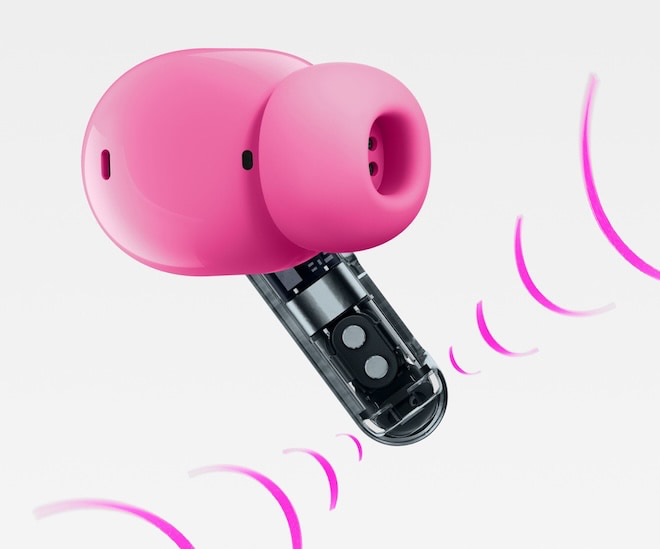
The earbuds include 32MB of total internal storage, split across the two earbuds, which allows the Ear (3a) to store short Audio Snapshot clips as well as call recordings before syncing them back to the phone. That is megabytes, not gigabytes, which is either delightfully old school or a reminder that nobody under 30 remembers how much work we used to squeeze out of 32MB.
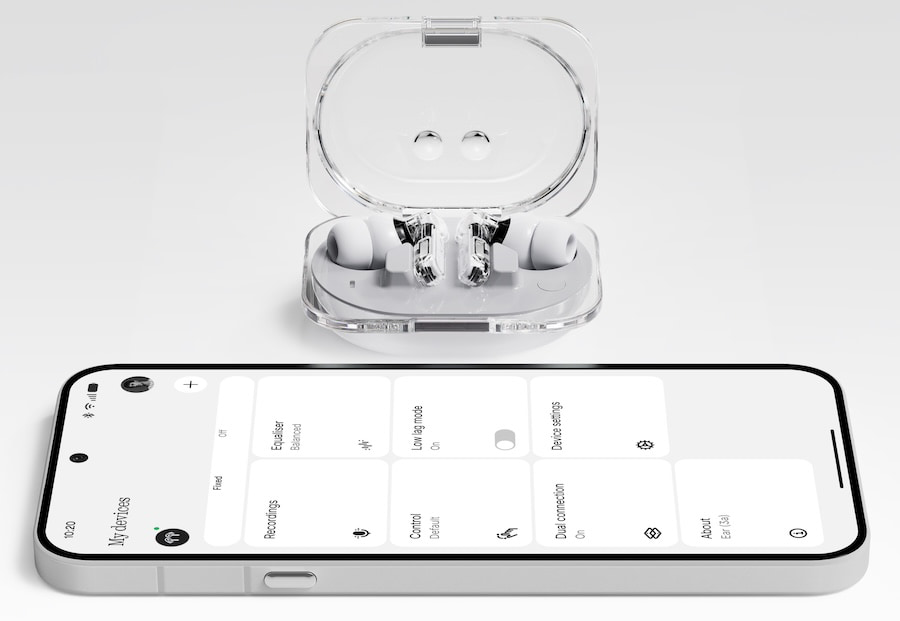
Nothing’s implementation is split into two parts. Audio Snapshot is designed for capturing short media clips, while call recording is designed for phone calls and meetings. The recordings can then be accessed through the Nothing X app, where Nothing supports playback, editing, sharing, and transcription.
That does not turn the Ear (3a) into a field recorder, and Nobody should be pretending this replaces a dedicated interview mic or proper recording rig. But for students, commuters, journalists, creators, and anyone trapped in meetings that should have been three emails and a strongly worded glance, the idea is useful.
The important detail is that Nothing is moving the recording function into the earbuds themselves rather than relying only on the phone. That makes the Ear (3a) feel less like a cheaper version of the flagship Ear (3) and more like a product with its own identity.
Call Recording Is Useful But Complicated
The Ear (3a) can also record calls and meetings, with around two hours of recording capacity before files need to be synced. Nothing has also added a privacy alert that lets participants know when recording starts.
That is not just a nice touch. It is necessary.
Call recording laws vary by country and, in the United States, by state. Some states require only one party to consent, while others require all parties to be notified or give consent. In other words, the feature is convenient, but it is not a legal invisibility cloak. Users should know the rules where they live before they start archiving every awkward call with their contractor, boss, ex, or cable company.
Still, as a practical feature, this could be very useful. Apple, Google, Samsung, and others already live in the world of AI summaries, transcripts, and voice capture. Nothing is bringing part of that behavior to a $99 pair of earbuds, and that is more interesting than pretending another half millimeter of case curvature changes civilization.
Bigger Drivers and Hi-Res Audio
The Ear (3a) uses a 12mm dynamic driver, which is larger than the 11mm driver used in the older Nothing Ear (a). Nothing claims stronger bass and greater detail, along with Hi-Res Audio Wireless support and LDAC for higher bitrate Bluetooth playback on compatible Android devices.
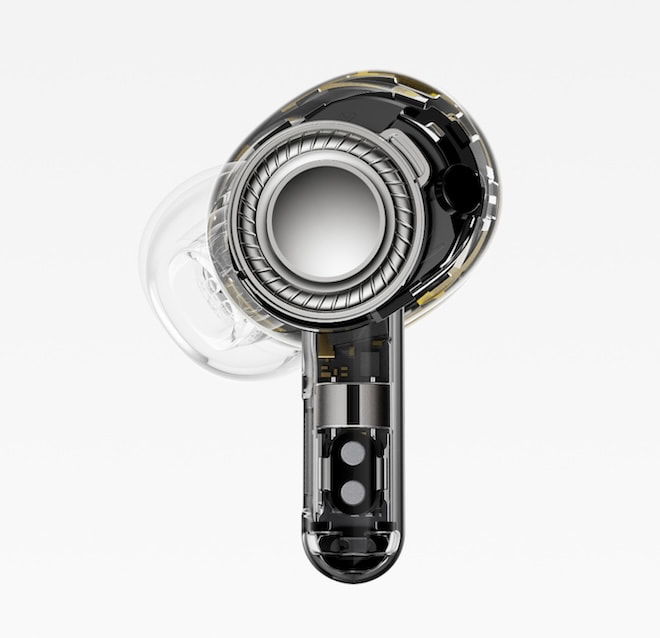
That sounds good on paper, but the usual warning applies: LDAC is not fairy dust. A good codec can help, but it cannot rescue poor tuning, bad driver behavior, or a lousy seal. The ear tip fit will matter, and Nothing has added an extra small tip size, which is a smart move. A better seal improves bass, ANC, and perceived clarity. A bad seal makes even good earbuds sound like they were tuned inside a recycling bin.
Nothing is also including an advanced 8-band EQ through the Nothing X app, which gives users more control than the usual bass, mids, treble adjustments that are often quite coarse. For listeners who want to tune around brighter recordings, bass heavy pop, podcasts, or gym use, that could be more valuable than another vague “immersive mode” buried in an app menu.
ANC and Everyday Use
Nothing rates the Ear (3a) for up to 45 dB of active noise cancellation, with improvements across a broader frequency range. The earbuds also include transparency mode and multiple microphones for voice calls.
At $99, expectations need to remain sane. The Ear (3a) is not likely to embarrass the best ANC models from Bose, Sony, Apple, or Samsung. Those brands charge more for a reason.
But the more relevant question is whether the Ear (3a) can provide effective commuter and office noise reduction. If the ANC can take the edge off train rumble, HVAC noise, street chatter, and the guy two tables over explaining crypto to someone who clearly wants to leave, it has done its job.
The call recording feature may ultimately be more important than the ANC spec. A lot of companies can deliver acceptable ANC for under $100 now. Far fewer are offering native recording and audio capture in this price class.
Battery Life Looks Competitive
Battery life is another strong point. Nothing rates the Ear (3a) at up to 10 hours from the earbuds with ANC off and up to 42 hours total with the charging case. With ANC on, playback drops to up to 6 hours from the earbuds and up to 25 hours total with the case.
Those are very good numbers for a $99 ANC earbud, although real world use will depend on volume level, codec, ANC, multipoint, and how often users rely on recording and transcription features. LDAC usually consumes more power than SBC or AAC, and ANC always takes its cut. Bluetooth giveth, Bluetooth taketh away.
The case charges over USB-C. Unlike the more expensive Ear (3), the Ear (3a) case is not the star of the show. It is there to charge and store the earbuds, not to act like a tiny broadcast studio in your pocket; which has always felt like a feature that nobody will ever use.
Design and Colors
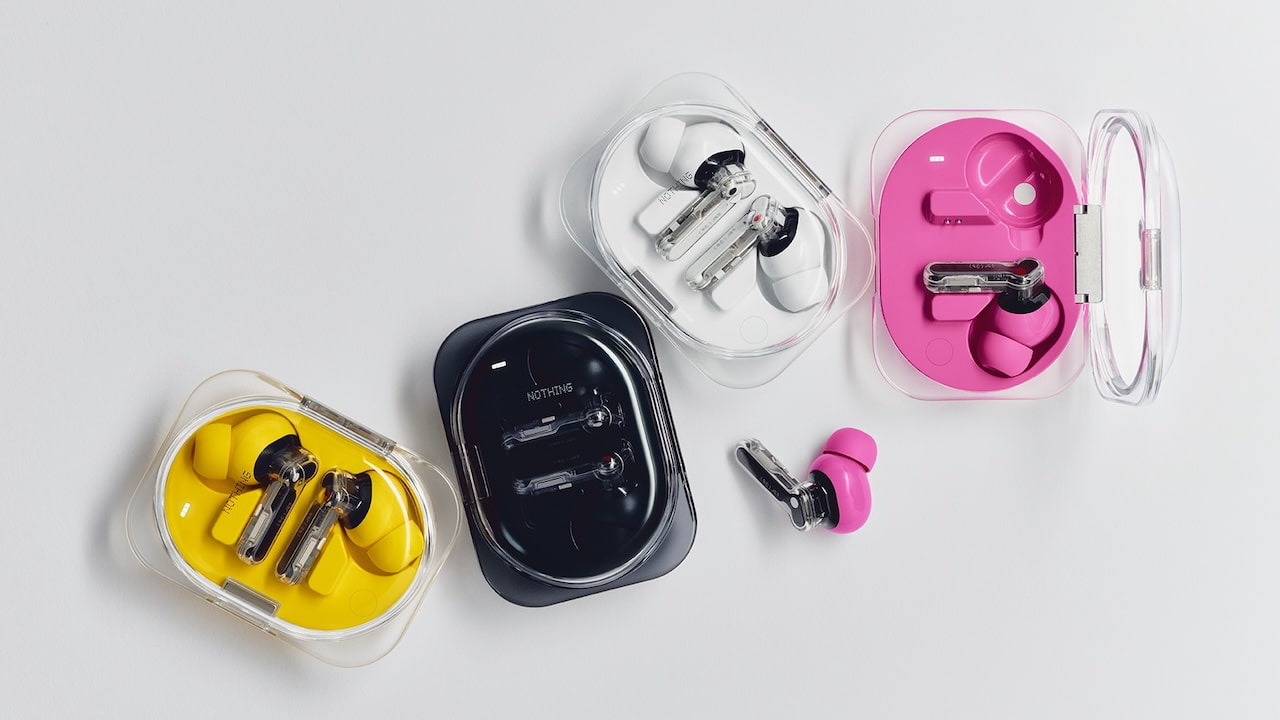
Nothing has not abandoned its visual identity. The Ear (3a) keeps the transparent design language that helped the brand stand out in a market full of glossy white plastic clones. The case has been rounded off compared to the previous model, and Nothing has added a small LED status matrix for battery and pairing information.
Color options include Black, White, Yellow, and Pink. The Pink finish is new, and whether that is brilliant or dangerous depends entirely on how many people in your house think earbuds are communal property.
The earbuds and case carry an IP54 rating for dust and water resistance, making them suitable for workouts, commuting, and general abuse. That does not mean you should swim with them, shower with them, or test them against the Atlantic Ocean because you once read a spec sheet too quickly.
Where the Ear (3a) Fits
The Ear (3a) lands in a slightly awkward but potentially smart place in Nothing’s lineup.
The older Nothing Ear (a) launched as the affordable option, while the Ear (3) moved into a more premium space with its Super Mic case, stronger design language, and higher price. The Ear (3a) now brings some of the recording concept down to $99, but does it through the earbuds themselves instead of relying on the case.
That makes the Ear (3a) more than just a refreshed Ear (a). It also makes the Ear (3) harder to justify for some buyers unless they specifically want the Super Mic case, more premium materials, or the higher end design treatment.
The real competition, however, is not only from Apple, Sony, Samsung, Soundcore, EarFun, and Nothing’s own CMF line. It is from consumer fatigue. Most people already own wireless earbuds. To make them upgrade, a company needs something more compelling than “now with slightly more bass and a color called Whatever Yellow.”
Audio Snapshot and call recording are at least different. That alone gives the Ear (3a) a stronger story than most budget earbud launches.
Nothing Ear (3a) Specifications:
- Colors: Black, White, Yellow, Pink
- Driver: 12mm dynamic driver
- Hi Res Audio: Yes
- Bluetooth Codec Support: LDAC, AAC, SBC
- Active Noise Cancellation: Up to 45 dB
- Transparency Mode: Yes
- Microphones: Three per earbud
- Internal Storage: 32MB total
- Audio Capture: Audio Snapshot for short media clips
- Call Recording: Supported, with approximately two hours of recording storage
- App: Nothing X
- EQ: Advanced 8 band EQ
- Bluetooth: Bluetooth 6.0
- Multipoint: Dual connection support
- Fast Pair: Supported
- Low Latency Mode: Supported
- Battery Life With ANC Off: Up to 10 hours from earbuds, up to 42 hours total with case
- Battery Life With ANC On: Up to 6 hours from earbuds, up to 25 hours total with case
- Charging: USB-C
- Water and Dust Resistance: IP54
- Ear Tip Sizes: Includes XS size
The Bottom Line
The Nothing Ear (3a) looks like one of the more interesting $99 wireless earbud launches of 2026 because it does not rely only on the usual budget ANC checklist.
The 12mm driver, LDAC, 45 dB ANC, long battery life, IP54 rating, and advanced EQ make it competitive. The Audio Snapshot and call recording features make it newsworthy.
That distinction matters.
This is not an audiophile product until someone actually listens to it properly, and nobody should confuse built-in recording with professional capture quality. But as a daily pair of affordable ANC earbuds with a useful trick that competitors will probably start copying, the Ear (3a) deserves attention.
Nothing did not reinvent wireless audio here. But it did make the $99 earbud category less boring, which is more than most of its competitors managed this week.
Where to buy: $99 at Amazon
Related Reading:
- Nothing Taps Dirac To Boost CMF Buds 2 Sound With Real-Time Audio Optimization
- Nothing And KEF Launch The Headphone 1: A High-End Audio Collaboration
- Cambridge Audio Joins Spotify Lossless Push, JLab Expands With JBuds Open & Epic Pods, And Nothing Launches Ear (3): Editor’s Round-Up
- Nothing Announces Ear (2) True Wireless Earbuds