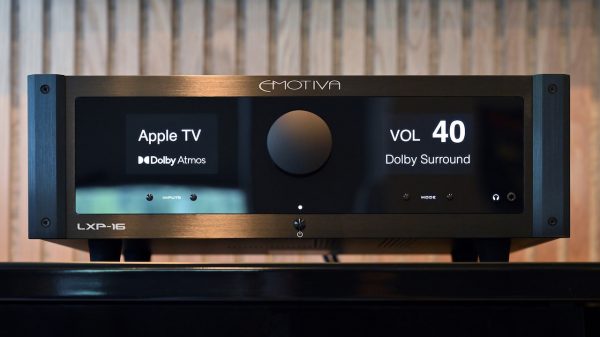
As a tech journalist and gear reviewer, something that has frustrated me from time to time is weird performance anomalies in review gear. Sometimes lossless audio wouldn’t be passed from a TV to a soundbar or the 4K/HDR/Dolby Vision flag wouldn’t be delivered to a TV from a UHD Blu-ray Disc player or 4K media player. In some cases, it’s just a matter of adjusting some settings, but in other cases, unreliable HDMI cables have prevented the full bandwidth signal from being delivered from source to display or sound system. And with the constant disconnecting/reconnecting we do when reviewing A/V gear, cheap HDMI connectors don’t always hold up over time.
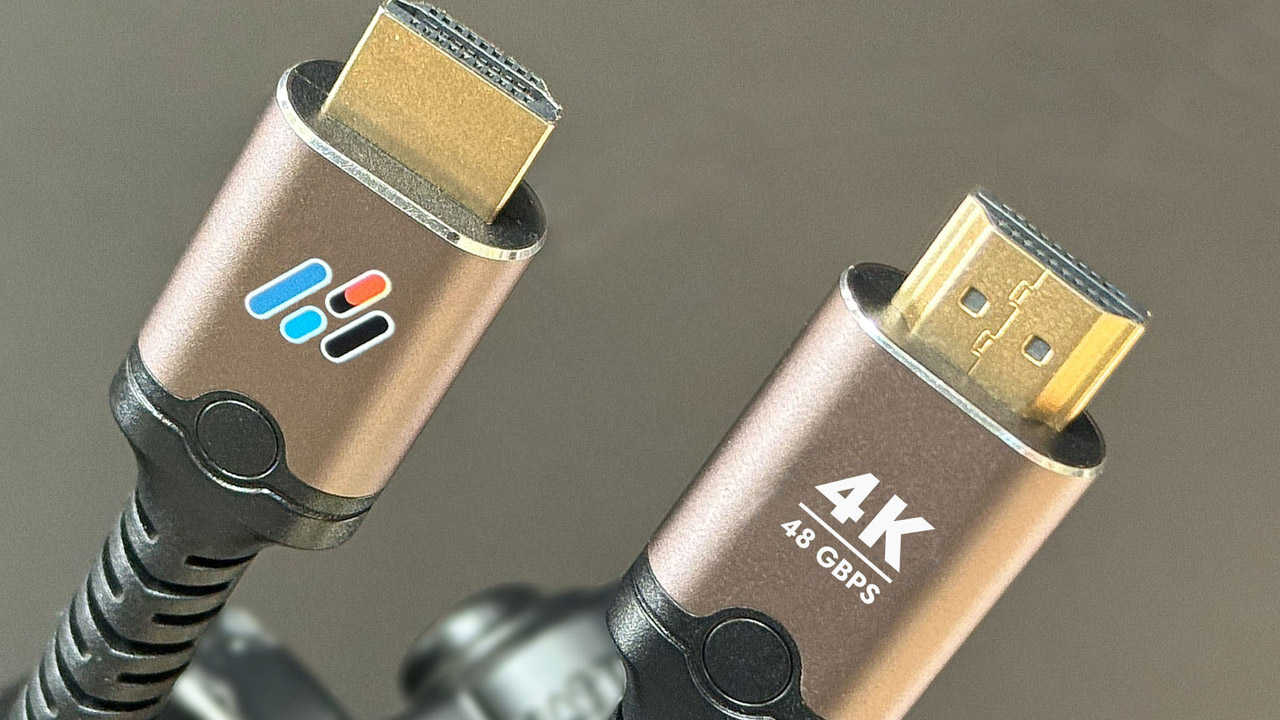
But this is not to say that you need to drop a C-note (or more) on an HDMI cable. As in the high-end audio world, snake oil runs rampant in the TV and video market as well. As long as you are using an ultra high-speed rated cable (48 GBPS) with solid construction and beefy connectors, you should be good to go with 4K or even 8K video and fully lossless audio streams like multichannel PCM, Dolby Atmos, Dolby True HD, DTS:X and DTS-HD Master Audio.
But how can you tell if your HDMI cable is “good enough?” You could take your chances with a no-name cable brand on Amazon or eBay, or pay a little extra (or a lot extra) for a premium brand for “peace of mind.” But neither solution is ideal.

Fellow tech reviewer Caleb Denison (a.k.a. “Mr. CalebRated”) has also been frustrated by unreliable cables and obscenely overpriced ones. But he decided to take matters into his own hands by designing his own ultra high speed HDMI cable. Caleb partnered up with Dipin Sehdev (CE Critic) and Alex Pasco to develop a new line of HDMI cables called “CableRated.” And when I say “line,” it’s basically just one HDMI cable (for now) available in three different lengths.
Starting at $29.99 for a 1-meter cable, CableRated HDMI cables are HDCP 2.3-compatible and HDMI 2.1-capable but fully backward compatible with HDMI 1.4 and HDMI 2.0 for existing gear. They’re ultra high speed certified (up to 48 Gbps) and rated for 3D, 4K and 8K video signals including all flavors of HDR, both static and dynamic, such as Dolby Vision and HDMI 10+. Variable Refresh Rate (VRR) support eliminates screen tearing and stuttering, while Auto Low Latency Mode (ALLM) and Quick Frame Transport (QFT) ensure responsive, fluid gaming.
Quick Media Switching (QMS) support removes black screen delays when switching among devices. ARC (Audio Return Channel) and eARC (extended Audio Return Channel) support means your cable is ready for any type of sound, from basic 2-channel PCM to fully lossless multi-channel PCM, Dolby True HD, Dolby Atmos, DTS-HD Master Audio, DTS:X, MPEG-H, Eclipsa Audio, 360 Reality Audio and Auro-3D.
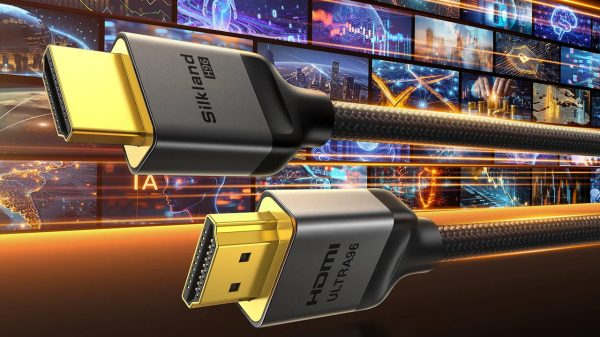
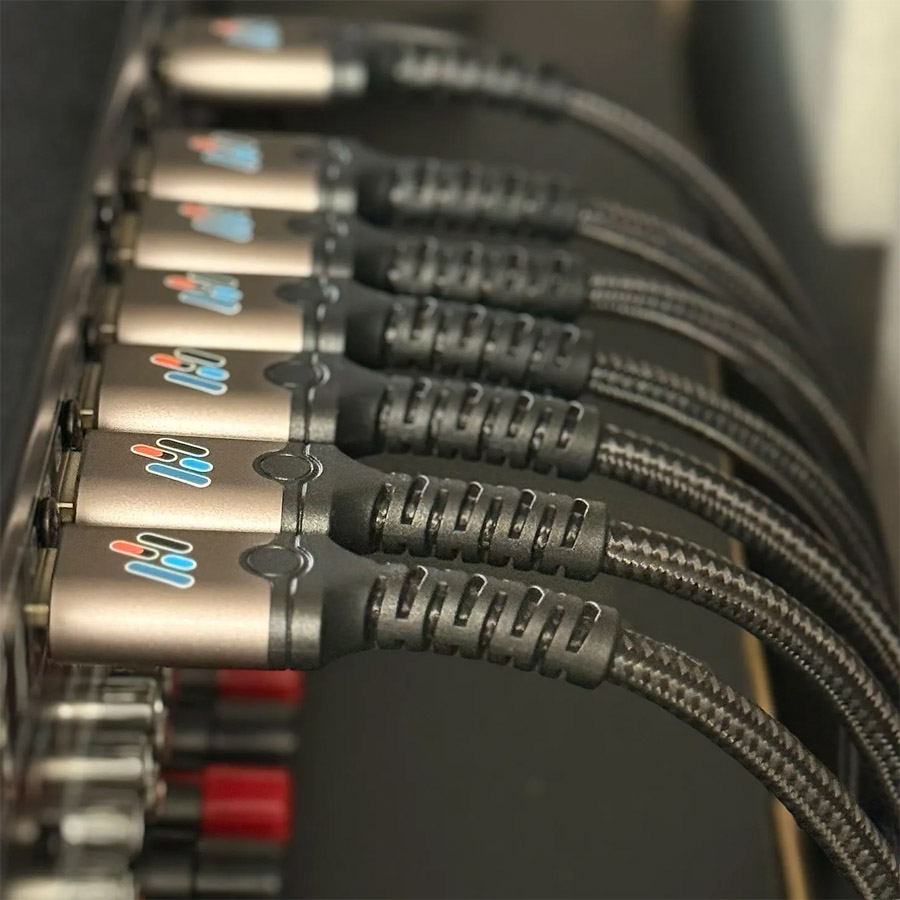
CableRated HDMI cables include gold-plated connectors encased in durable aluminum housings, a soft-touch aluminum-magnesium braided jacket, triple-layer shielding, and a low-EMI design to ensure long-term reliability.
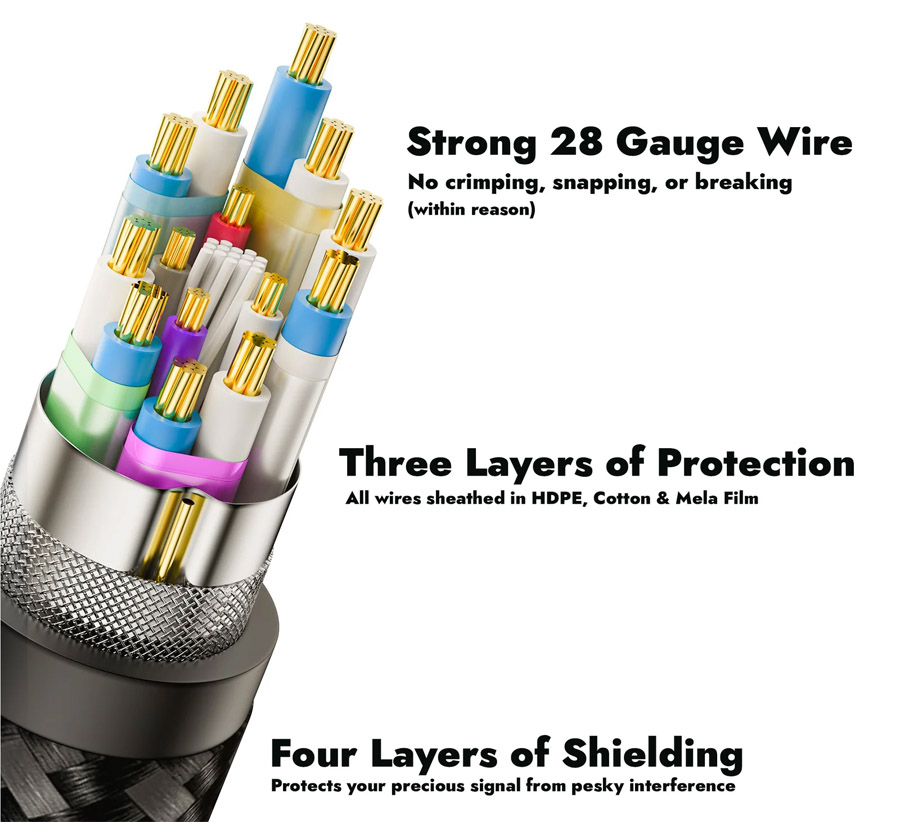
According to Caleb, “We partnered with multiple manufacturers, ordered what felt like a sea of sample cables, and put them through the wringer — testing, routing, stressing, and even surgically dissecting them to separate meaningful engineering from empty promises. Signal integrity, construction quality, durability, connector design, flexibility, and long-term reliability were all part of our checklist.”
After months of testing, the final design and manufacturing partner were chosen and the cables were launched this week to consumers on the company’s web store. Caleb tells us he is exploring additional retail opportunities to help get the cables out to a wider audience. But for now, you can buy one (or three) for yourself at the company’s web site:
Note: eCoustics has no relationship to CableRated and earns no commission on sales through the above link.
The Bottom Line
In the early days of High Definition video, HDMI cables were all pretty much the same, but with the advent of 4K UHD video, VRR gaming, 8K video, HDR and lossless audio, all HDMI cables are no longer created equal. Today, the actual bandwidth of a cable can limit its performance and the construction of an HDMI cable actually matters, not only to its initial performance, but to its ability to hold up over time. But separating overpriced snake oil from solid, affordable high bandwidth cables can be tricky. With Caleb Denison’s track record for tech savviness and obvious commitment to quality and value, we’re optimistic that this new cable line will offer a solid value proposition and reliable performance. We plan on checking them out ourselves and will report back on our experience.
Related Reading:
Tech Reviewer Caleb Denison Says Goodbye to Digital Trends, Hello CalebRated
Best TVs of 2025? Podcast with Special Guest Caleb Denison of CalebRated
CalebRated Announces CableRated HDMI Cables (Substack)