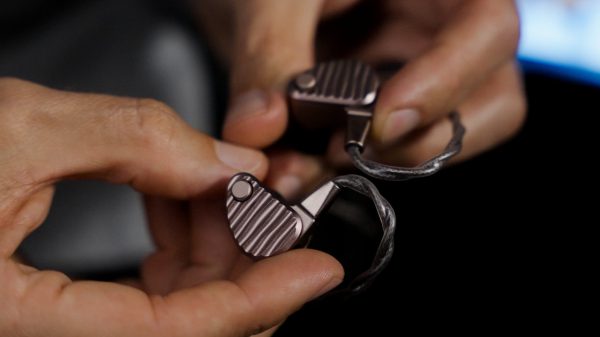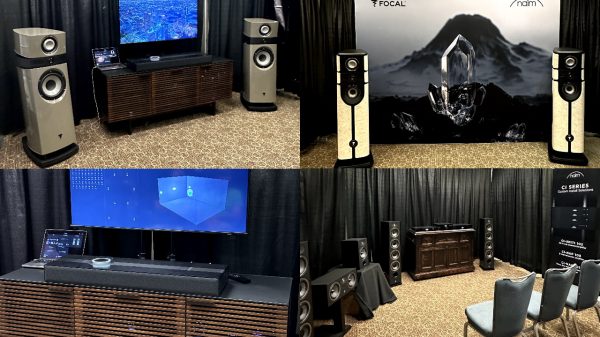
Ahead of AXPONA 2026, I landed in Chicago early and managed to catch a pre-show event that proved far more substantive than the usual industry warm-up. Hosted at Perry’s and organized by Damon von Schweikert and Gary Leeds, Global Sales and Marketing Director for Von Schweikert Audio and managing partner of HearThis, the gathering brought together a small group of roughly 30 dealers and members of the press.
Framed as an informal pre-conference session, the event featured a series of short presentations from Von Schweikert and key partners, followed by open Q&A. While I missed the opening segment due to my arrival time, the sessions I attended offered a clear look at the thinking behind the company’s upcoming loudspeakers and the broader ecosystem of amplification, digital sources, and setup tools that will define their systems heading into AXPONA 2026.
Von Schweikert Mercury 2 Loudspeakers Signal Design Shift
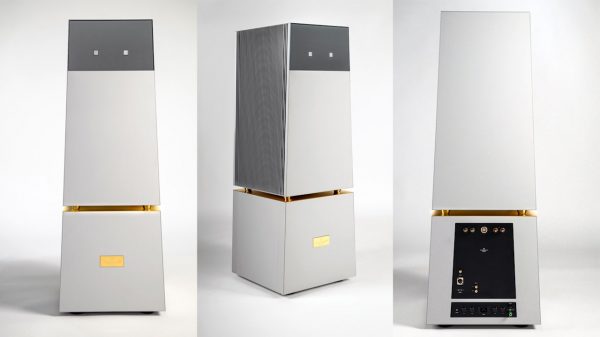
At the pre show event ahead of AXPONA 2026, Damon von Schweikert outlined the thinking behind the upcoming Mercury 2 loudspeakers, a model that draws both from the company’s past and a more flexible approach to system design. The name itself references the 1936 Mercury Train and reflects a clear Art Deco influence, a fitting nod given the Chicago setting and its architectural history.
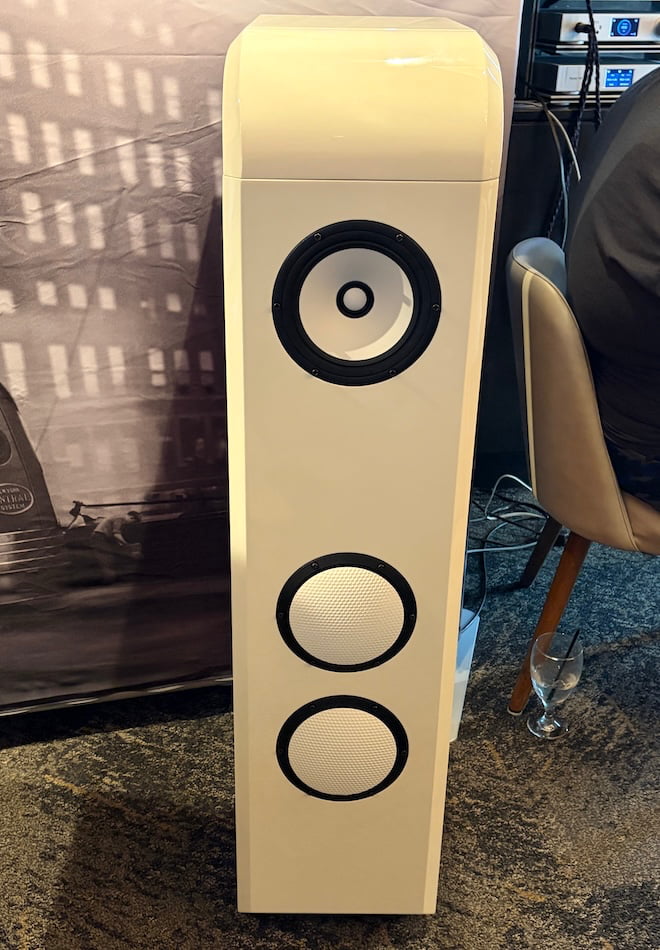
The Mercury 2 is expected to arrive at dealers later this year and introduces a new coaxial midrange driver developed by SEAS, paired with the Accuton woofers that have defined higher-end Von Schweikert designs like the VR.thirty. The goal here is not reinvention, but refinement—building on an established platform while addressing how and where people actually listen today.
One of the more practical updates is the availability of 108 color options, allowing the speaker to integrate into a wider range of living spaces. Combined with Von Schweikert’s bass adjustment system, which provides more flexibility in placement, the Mercury 2 is clearly aimed at listeners dealing with real-world rooms rather than dedicated environments. It is designed to function in multi purpose spaces without giving up the performance expectations associated with the brand.
Pricing is expected to land in the high $40,000 range, putting it close to the VR.thirty. According to Von Schweikert, this is intentional—the Mercury 2 is positioned as a complementary model rather than a step down. There was also mention of a smaller floorstanding sibling likely arriving next year in the mid $20,000 range, which would reintroduce the brand to a segment it has not addressed in some time and potentially broaden its appeal with a new generation of buyers.
Westminster Labs Amplification & Rockna Digital Front End
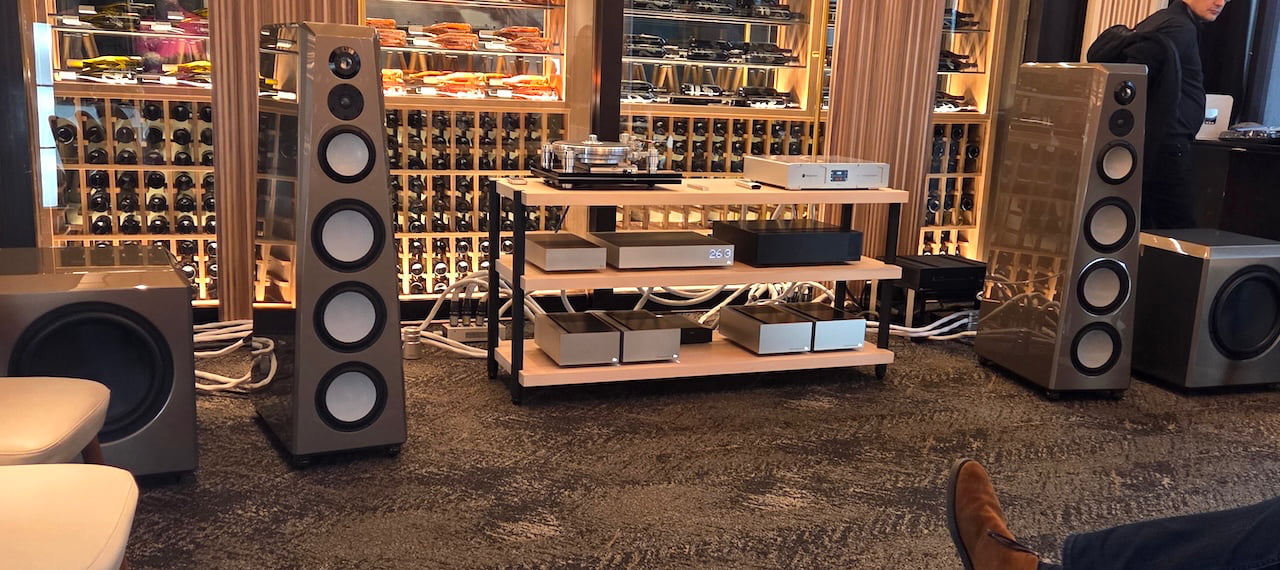
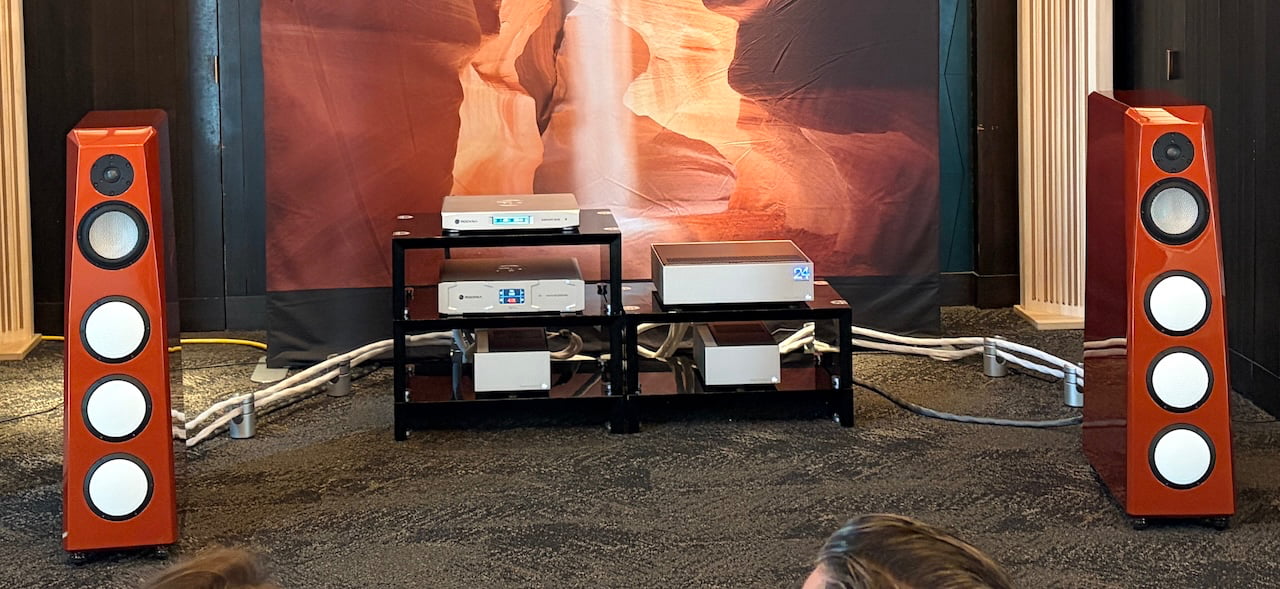
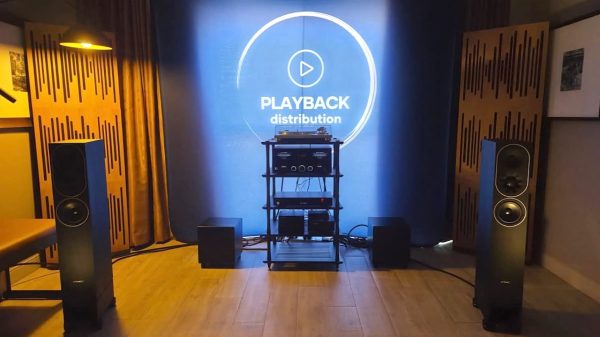
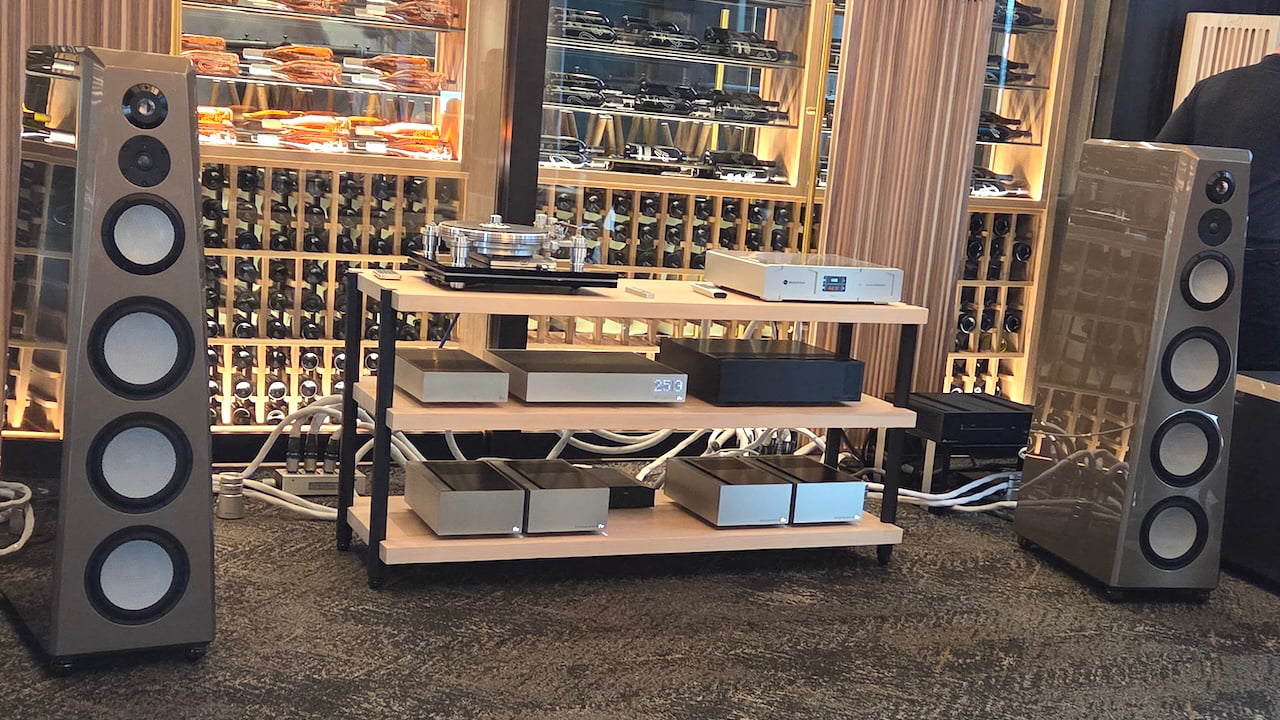
Following the loudspeaker discussion, the focus shifted to the electronics driving the system, starting with Angus Leung of Westminster Labs. The VR.thirty and Ultra 7 systems in the room were powered by Westminster’s Rei, Quest, and Omni components, all designed around what the company describes as a subtractive approach; reducing component count, shortening signal paths, and minimizing potential sources of noise.
The Omni in particular reflects how far they are willing to go with that philosophy. Beyond separating power supplies for control and display functions, the unit disables its display to reduce PWM-related noise and even slows the processor when the display is off to further limit interference. It is a level of attention that feels obsessive until you hear what it does in practice.
Amplification duties for the Ultra 7 system were handled by a bridged quad of Rei amplifiers, delivering a claimed 72-volt swing and up to 21 amps of output. The intent is clear, these are built to control difficult loads without hesitation. As Angus noted during the session, Apogee speakers were used during development, and with this configuration, they were not considered a challenge to drive.
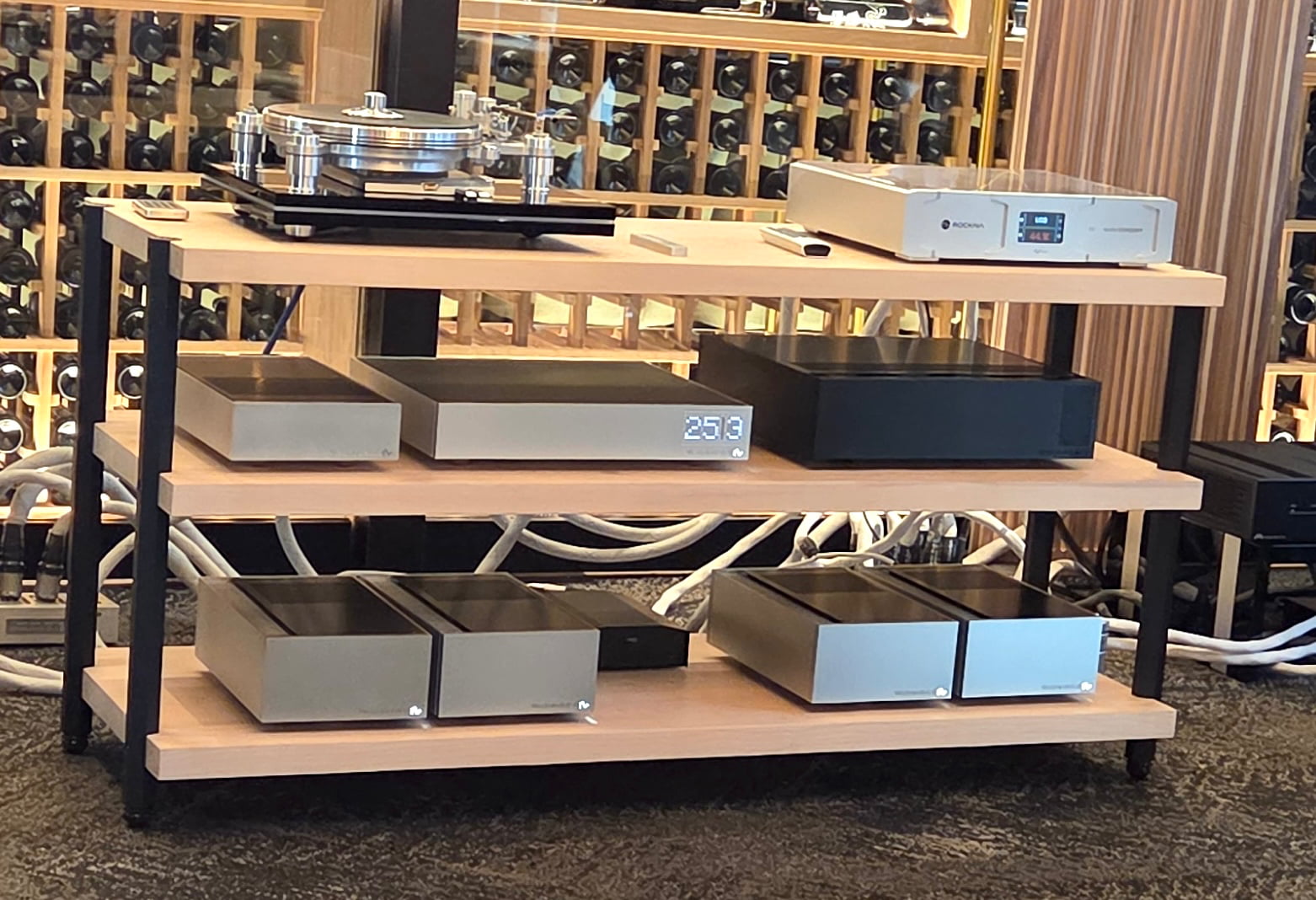
The digital side of the system was covered by Nicolae Jitaru of Rockna Audio and Radu from Audiobyte. Nicolae detailed the evolution of the Wavedream Signature DAC, a model that builds on more than a decade of development. Rather than a complete redesign, the Signature incorporates a series of incremental improvements, including updates to FPGA architecture and other core design elements.
The original Wavedream will remain in production alongside it. There was also a brief mention of a possible transport in development, though no specifics were provided.
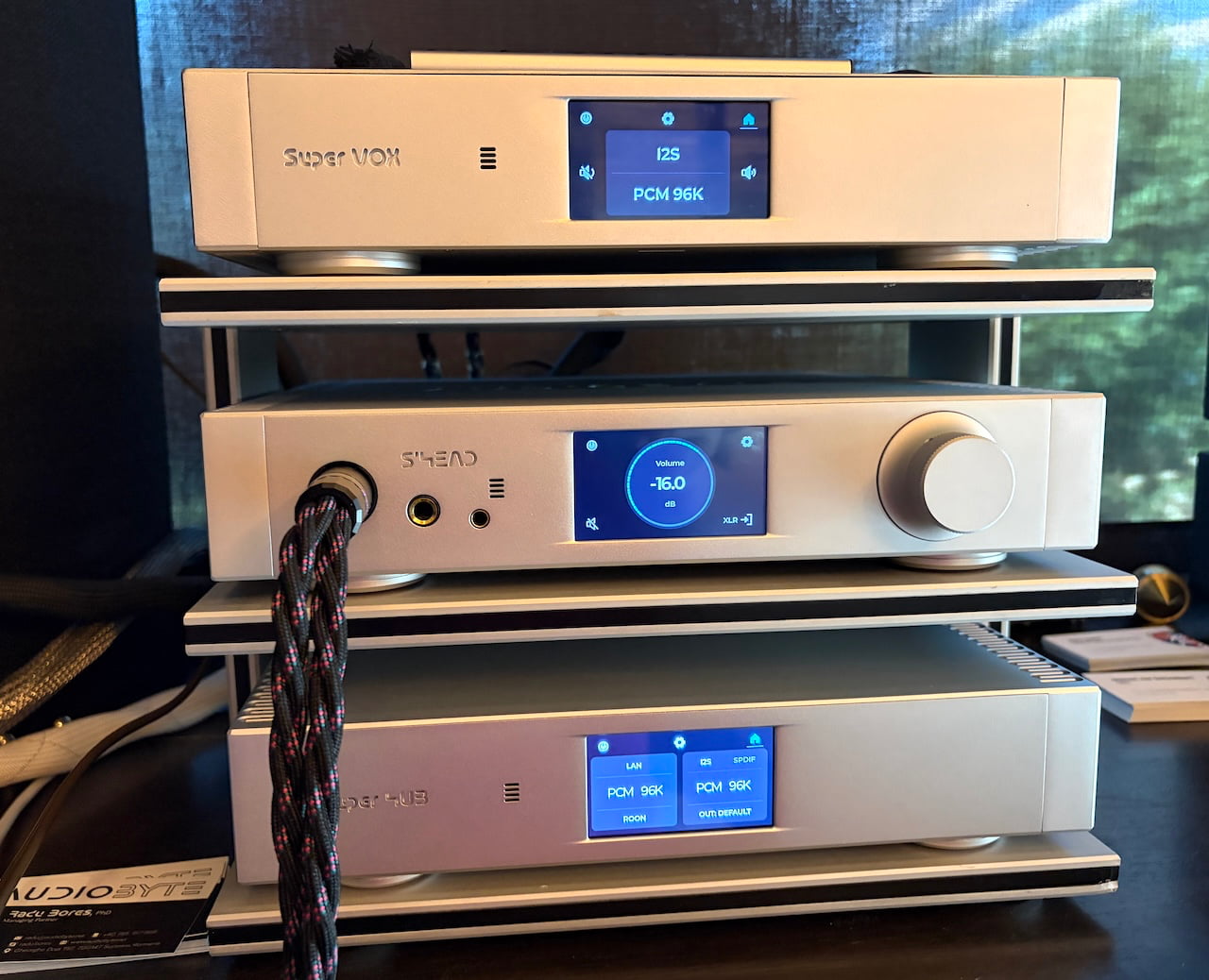
Audiobyte takes a different approach, focusing on making more customized digital audio accessible at lower price points, and its system demonstration reflected that with a streamer, DAC built on a 6-bit delta-sigma architecture rather than the R2R ladder used by Rockna, and a new headphone amplifier; I was able to spend a short amount of time listening with the Nur Harmonia, enough to get a sense of the pairing despite less than ideal room conditions.
Nur What?
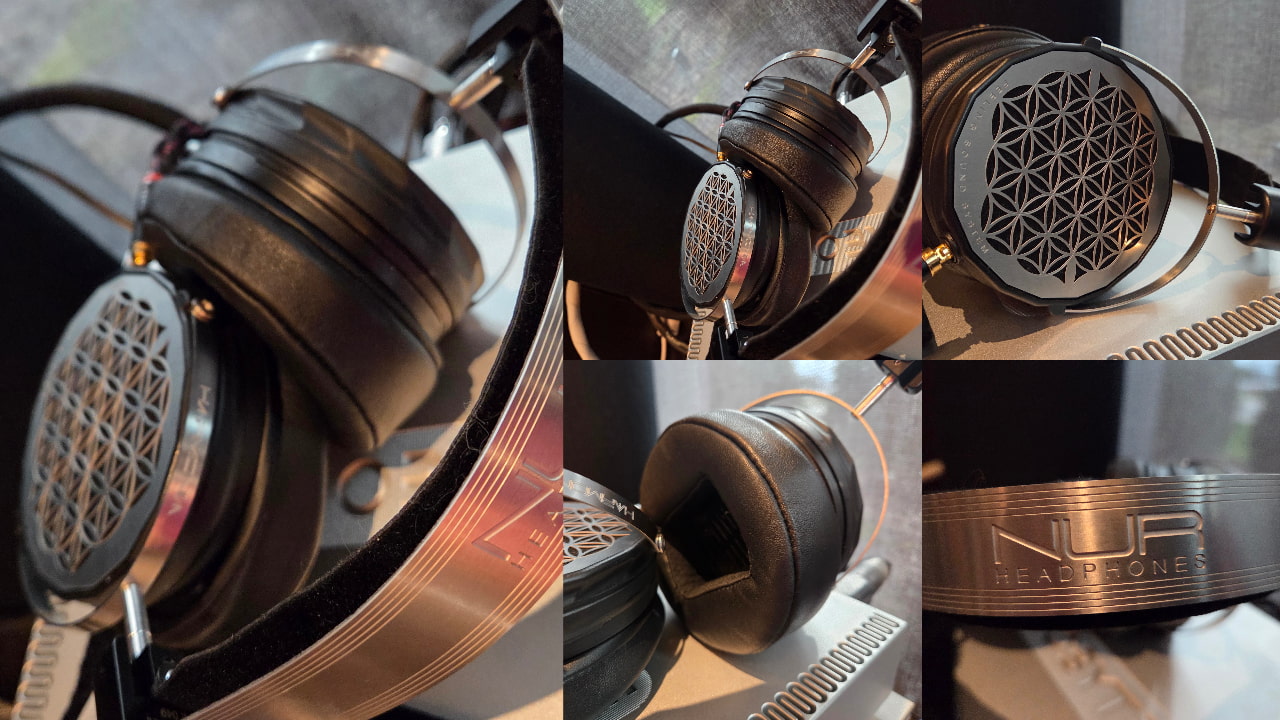
The Nur Harmonia is a flagship open-back planar magnetic headphone built around a large 105 mm driver with a dual-sided N52 magnet array and ultra-thin PEEK diaphragm, designed for low distortion, fast transient response, and extended bandwidth (roughly 8 Hz to 50 kHz). It uses a “Sound Expansion Chamber” to enhance spatial presentation and imaging, creating a wider and more precise soundstage, while its impedance of 48 ohms and sensitivity around 107 dB make it relatively manageable to drive for a planar, though it clearly benefits from high-quality amplification.
What separates it from most designs in this category is its tunability and construction. The “Feeling Sound System” allows users to adjust the sound using interchangeable felt filters that modify airflow and pressure inside the chamber, offering meaningful changes to the presentation. The chassis combines carbon-loaded nylon, steel, and aluminum to control resonance and reflections, with a suspension headband helping manage its substantial ~630g weight.
Pricing lands around $3,750 USD (roughly €3,100), placing it firmly in the flagship tier, where it competes with established planar designs but leans heavily on customization and acoustic control as its differentiator.
The room conditions were not ideal for detailed evaluation, but there was enough there to justify follow-up reviews of both the headphones and the Audiobyte lineup later this year.
WallyTools Focuses on Precision Setup to Maximize Analog Playback
J.R. Boisclair of WallyTools made a compelling case that most turntables are leaving performance on the table, not because of inherent limitations, but due to setup inaccuracies, particularly at the stylus level. His core argument is straightforward: better understanding and compensating for stylus imperfections can yield meaningful gains in fidelity.
While acknowledging that digital may eventually match or surpass analog, JR’s focus remains firmly on extracting the maximum from vinyl today. He highlighted factors like zenith alignment, tonearm torque, and the reality that many cartridge manufacturers lack precise methods to verify whether a stylus is truly within spec; something he suggested is more common than most would expect.
WallyTools addresses this with a range of solutions that scale with the user’s level of involvement. For those comfortable handling adjustments themselves, the tools provide a structured way to dial in setup parameters. For others, cartridge analysis services offer a clear roadmap for optimization, and for those willing to invest further, JR provides on-site setup. I’ve met plenty of people passionate about vinyl, including some on our own team, but very few with this level of technical understanding when it comes to tonearms and cartridges.
Audys Demonstrates Acoustic Optimization Through Measurable Spatial Control
Igor Fiorini of Audys closed out the session with a focus on room acoustics and the importance of understanding how sound behaves within a space. His presentation centered on a system that combines software and recorded material to map where sound should be perceived in the room, then demonstrate how adjusting acoustic panels can shift that image to the correct location.
The concept is straightforward but often overlooked. If the spatial cues are off, the performance is compromised regardless of system quality. Watching how panel placement could alter perceived position in real time made the case in a way that measurements alone often do not. It aligns closely with how I evaluate systems by mentally placing instruments in space and reinforces the idea that if everything is present but not properly positioned, you are not hearing the full picture.
Stepping back, the event itself was less about any single product and more about the people behind them. There was a consistent emphasis on not just improving fidelity, but understanding the intent and passion that drives these designs. It is easy to get caught up in specs and pricing, but sessions like this serve as a reminder of why many of us got into this in the first place. Credit to Gary Leeds and the broader Von Schweikert team for putting together something that felt both technically substantive and genuinely personal.
Related Reading:
- More AXPONA 2026 Coverage
- ATC EL50 Anniversary Active Speaker Launches At AXPONA 2026 For $100,000 And Has A Lot To Prove
- Best In Show – T.H.E. Show SoCal 2025
- T.H.E. Show Vegas 2026: Best In Show Winners And Honorable Mentions