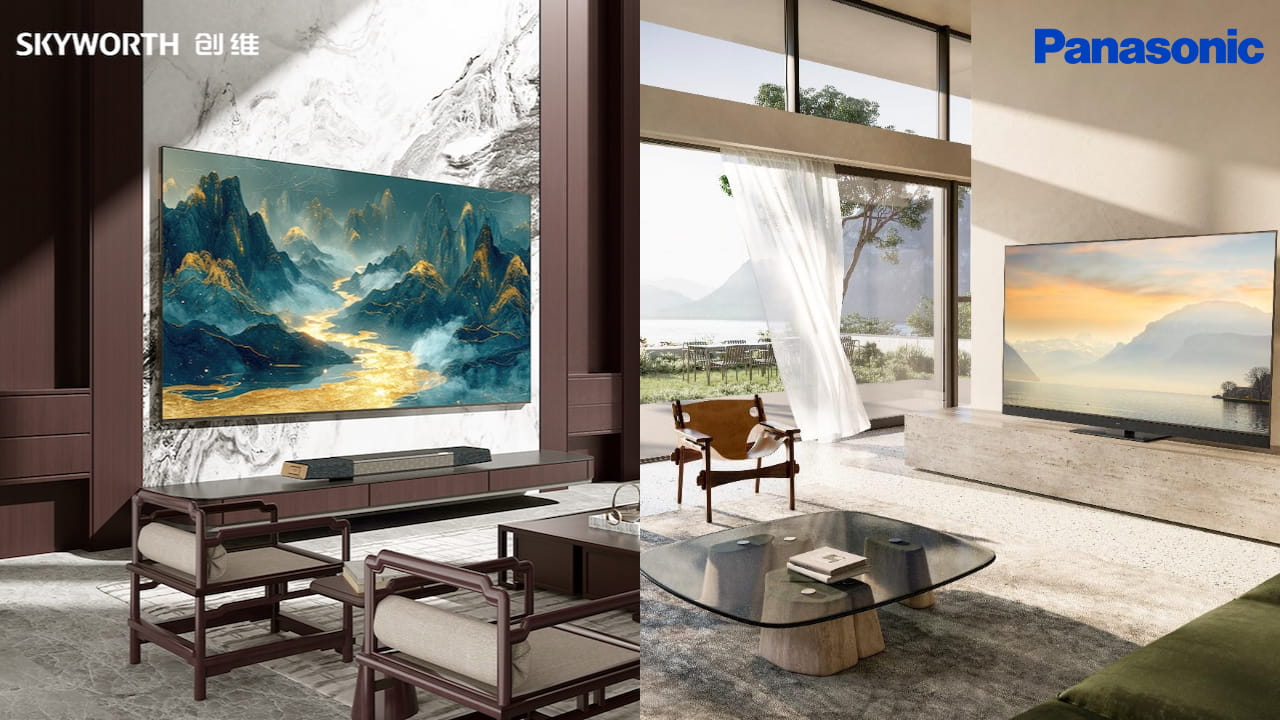
The global TV business just tilted again. Weeks after Sony sent shockwaves through the industry by negotiating a manufacturing partnership with TCL, Panasonic has made its own decisive move. The company announced a “strategic partnership” with China-based Skyworth aimed at strengthening and accelerating sustainable growth in its U.S. TV business. The agreement takes effect April 1, 2026.
Let’s not pretend these are routine supply-chain tweaks. When two of Japan’s most recognizable TV brands shift production relationships toward Chinese manufacturing giants within weeks of each other, that signals something bigger than cost optimization. It reflects a structural reset in how premium TV brands compete in 2026 — where scale, panel access, pricing pressure, and speed to market matter as much as brand heritage.
Sony’s move was significant. Panasonic’s is equally telling. The balance of power in the TV industry continues to migrate east, and legacy brands are adapting in real time.
“North America remains a key strategic region for Panasonic, with consumers consistently recognizing the exceptional quality and value of our products,” said Akira Toyoshima, CEO of Panasonic Entertainment & Communications Company (PEAC). “The new business model change will leverage the power of Panasonic’s core technical excellence in AV processing, quality, and service standards with the global scale economy of Skyworth’s manufacturing volume and speed to provide a winning formula for the customer value proposition.”
What It Means for the U.S. TV Market in 2026
Here’s what we know so far.
Skyworth USA Corporation will serve as the principal operating partner in the U.S., handling sales, marketing, and logistics. Panasonic, meanwhile, retains responsibility for development expertise and quality assurance to ensure its established performance standards are maintained.
In plain terms: Skyworth will manufacture Panasonic-branded TVs for the U.S. market.
Panasonic has also confirmed it will continue to support all TVs sold through April 2026, as well as models produced under the new agreement. Customer service and warranty coverage are not being handed off and forgotten.

The real question that TV reviewers and industry analysts are already circling, is what this means for Panasonic’s product development going forward, particularly its highly regarded OLED lineup. Over the past several years, Panasonic has delivered OLED models with some of the strongest video processing and image accuracy in the category.
If manufacturing shifts, does the performance DNA remain intact? That’s the part that will determine whether this is simply a business realignment or something more consequential.
Skyworth is hardly new to OLED. The company already produces OLED TVs under its own brand using LG Display panels; the same panel supplier Panasonic relies on. On paper, that creates technical overlap. In practice, the U.S. market is where things get complicated.
Panasonic has struggled to regain meaningful traction in the United States. Once the undisputed king of plasma, the company exited that business in 2014, which led to a 10-year absence from the U.S. TV market. Although Panasonic did continue TV operations internationally, their return to the crowded U.S. TV market in 2024 failed to capture shoppers attention, despite generally high praise among reviewers.
So what happens now?
The likely framework is straightforward: Skyworth manufactures Panasonic-branded TVs at a cost structure designed to win back market share. That requires profitability for both companies. This isn’t charity. It’s math.
Panasonic will define the product, whether OLED or LCD based on its performance standards, processing expertise, and brand expectations. Skyworth’s role will be to engineer and source the components at scale to meet those targets.
The pressure point comes if Panasonic’s traditional quality benchmarks push costs beyond what the U.S. market will bear. At that stage, both sides face a decision: preserve every performance advantage and accept limited volume, or adjust specifications to hit competitive price tiers.
That balance between maintaining Panasonic’s performance DNA and achieving aggressive pricing, will determine whether this partnership strengthens the brand or quietly reshapes it.
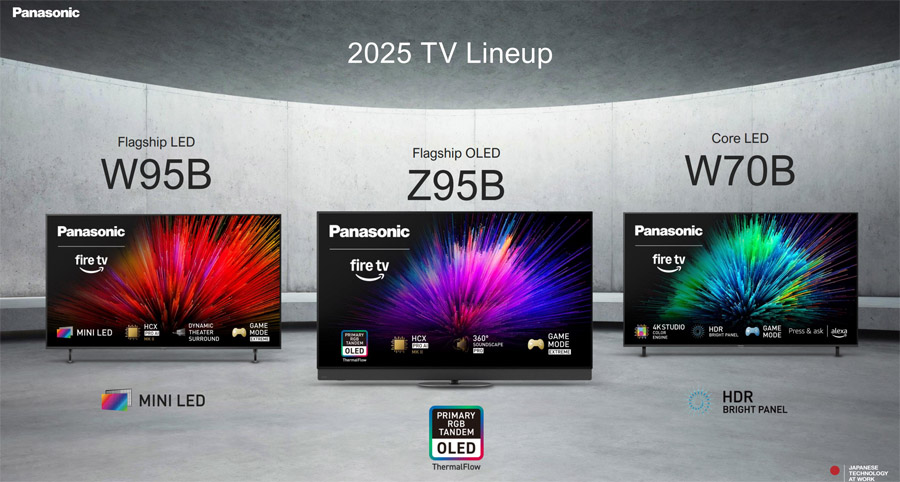
In other words, if you’re shopping for a high-end Panasonic TV built entirely under the company’s current structure, now might be the moment to act. Once the Skyworth agreement takes effect and newly manufactured models begin arriving in the U.S., the formula, even if only slightly, could change.
That’s not a knock on Skyworth. It’s a reality of scale manufacturing in a brutally competitive market. If a TV can’t be produced at a price that resonates with a broad enough audience, it won’t survive long no matter how good it looks in a calibration lab. Performance definitely matters, but sales volume keeps the lights on.
Who Is Skyworth?

Skyworth may not have the brand recognition in the U.S. of fellow Chinese heavyweights Hisense and TCL, but globally, it is a major force. The company ships roughly 36 million TVs annually and ranks among the top five worldwide in TV revenue, reportedly moving ahead of Sony in overall TV sales revenue. That’s not a minor player, which is why this move by Panasonic is rather significant.
Under the broader Skyworth Group umbrella, the company manufactures far more than televisions. Its portfolio includes consumer electronics, display devices, digital set-top boxes, security systems, networking and communications equipment, semiconductors, refrigerators, washing machines, smartphones, and LED lighting. Skyworth sells products under its own brand while also operating as an OEM for other companies — a role that makes this Panasonic agreement less surprising.
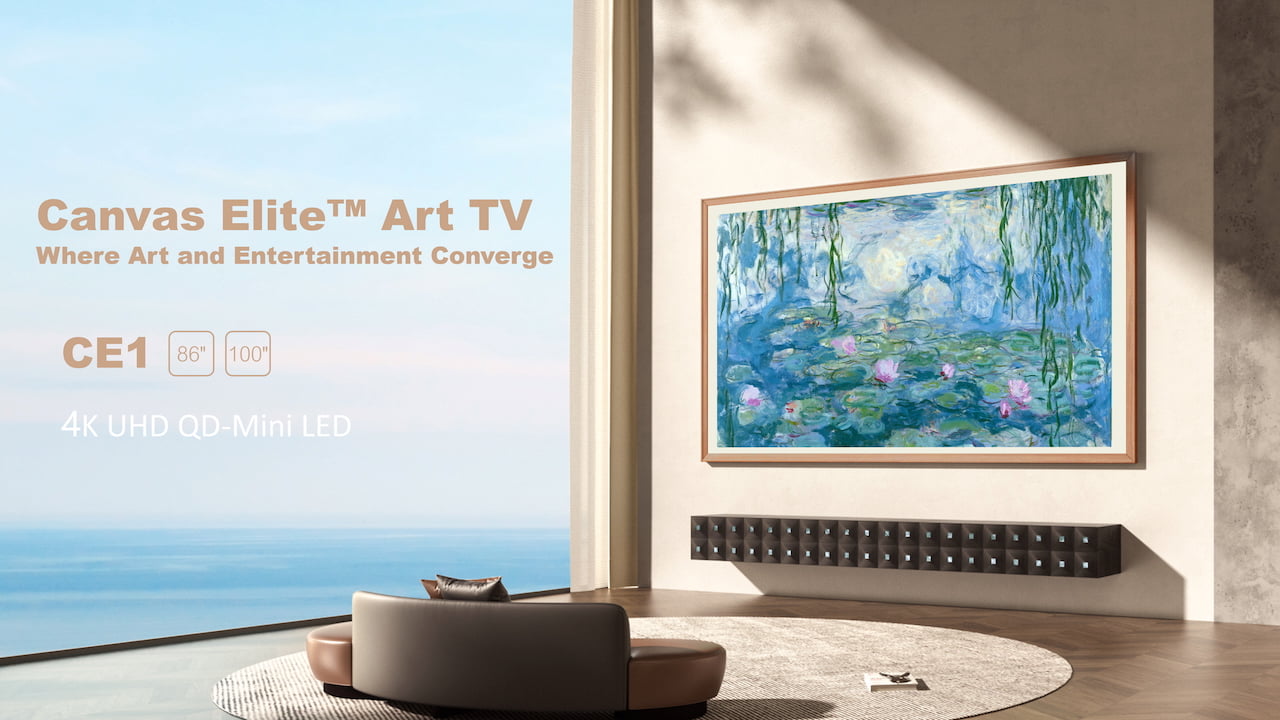
In the U.S., recent Skyworth-branded introductions include the Canvas Elite Art TV and the Clarus S1 Outdoor TV — niche-focused models aimed at lifestyle and specialty segments rather than direct mainstream domination.
In addition to the Panasonic-Skyworth agreement, the company has also outlined a broader corporate shift. Effective April 1, 2026, Panasonic confirmed that PEAC (Panasonic Entertainment & Communication) will be reintegrated into the main Panasonic Corporation structure. The stated objective is to strengthen the long-term positioning of Panasonic’s consumer business globally including in the United States.
The Bottom Line
The TV business isn’t just competitive in 2026. What we are witnessing is a monumental shift in power that is going to change what we buy and from brands that many of us might not have considered a few years ago. But is that bad news for the consumer?
On one side, display technology keeps advancing at a relentless pace: brighter OLED panels, better processing, smarter platforms. On the other, brand stability is anything but secure. Former giants are fighting to stay relevant, and consolidation across both TV and audio continues to thin the herd. Legacy names aren’t disappearing quietly; they’re restructuring, and partnering with rivals in China to make themselves more competitive. That tension was on full display at CES 2026.
While walking the halls of the Venetian during the show, I noticed a suite marked Skyworth. Inside were several televisions clearly wearing the Panasonic badge. Not concept sketches. Not mockups. Finished sets. I took a few photos. That didn’t last long.
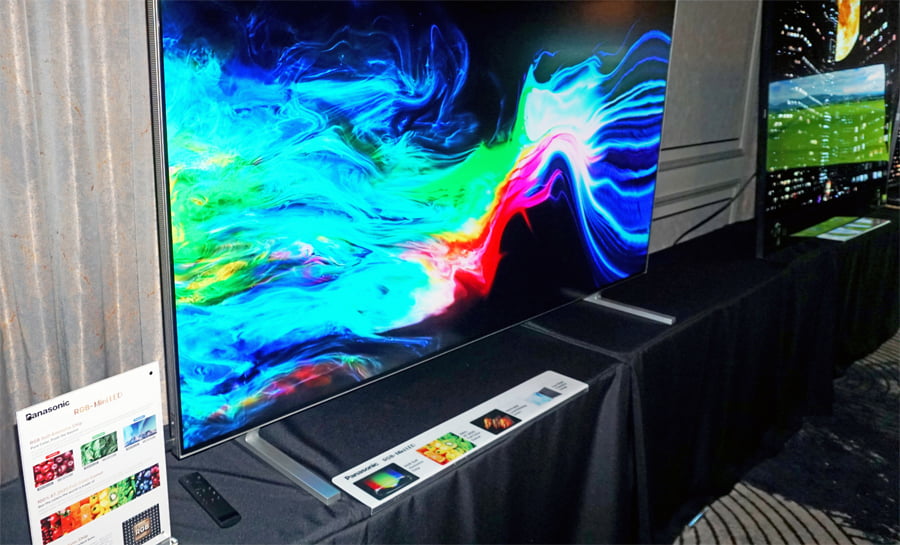
I was quickly informed that photography wasn’t permitted and that what I was seeing was not something I could report on. At the time, it was obvious something was brewing. The question wasn’t whether Skyworth was involved with Panasonic, it was how deep the relationship would go.
Now we know.
With Panasonic’s official announcement confirming a strategic partnership and manufacturing shift, what felt like a quiet industry rumor on a CES show floor has become a formal restructuring of one of Japan’s most storied TV brands.
In the case of both Sony and Panasonic, it will likely take another year before the real impact of their manufacturing partnerships with major China-based TV companies becomes clear, as new product cycles roll out and revised models reach the U.S. market. 2026 will be a transition year, and 2027 should provide a more accurate picture of how these strategic shifts affect performance, pricing, and brand positioning.
Find out more about skyworthusa.com.
Related Reading: