

This Article:
- A Decade of 4K Blu-ray
- The State of Physical Video Disc Formats
- NHK 8K TV Broadcasts in Japan
- Apple 8K Takes You Out to the Ball Game
- Why 8K Blu-ray Disc Is Unlikely
- Why Hollywood Does Not Need 8K Blu-ray
- Would Consumers Actually See the Difference?
- Why 4K Ultra HD Blu-ray Disc Will Do Just Fine
- What Actually Will Replace the Disc?
- The Bottom Line
A Decade of 4K Blu-ray
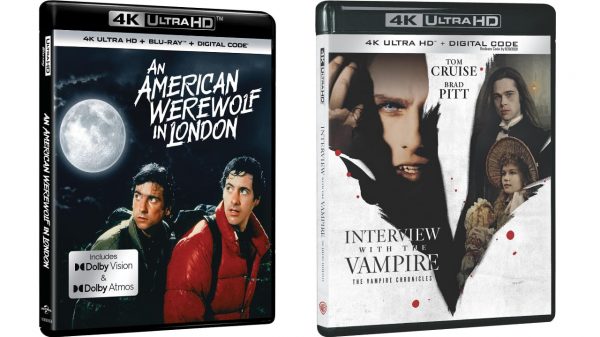
Our favorite physical media format, Ultra HD Blu-ray Disc, turned 10 years old this year. Happy birthday, UHDBD! 4K Blu-ray, as it is also known, remains the highest quality video disc format in consumer use. VHS, LaserDisc, DVD, and standard Blu-ray Disc were all followed by something better in the physical realm, and we love the way UHD Blu-rays make our favorite movies and shows look on our TVs and projection screens.
DVD arrived in 1996. Blu-ray Disc followed 10 years later in 2006, and UHD Blu-ray Disc hit the market another 10 years later in 2016. So, is 2026 the year of another major format upgrade? Probably not.
While it is technically possible to store 8K video on optical media, there does not appear to be much consumer demand for anything beyond 4K. There is currently no announced commercial 8K Blu-ray Disc format, and the Blu-ray Disc Association says it is not working on one.
In our not-so-humble opinion, there is also no persuasive reason for studios, hardware companies, or consumers to spend the money required to create an 8K physical media standard. Let’s explore why.
The State of Physical Video Disc Formats
The existing Ultra HD Blu-ray Disc standard is the most advanced physical video disc format in consumer media history. It supports resolutions up to 3840 x 2160 pixels (4K), with multiple flavors of HDR (High Dynamic Range) and fully lossless multi-channel immersive audio. The format uses 66GB dual-layer or 100GB triple-layer Blu-Ray discs, with maximum video data rates of 108 Mbps and 128 Mbps, respectively.
Here is a comparison of the video disc formats currently in use. We’ll round up to whole numbers to avoid getting messy.

| Disc Format | Ultra HD Blu-ray | Blu-ray Disc | DVD |
|---|---|---|---|
| Consumer Launch | 2016 | 2006 | 1996 |
| Resolution | 3840 x 2160 | 1920 x 1080 | 720 x 480 NTSC / 720 x 576 PAL |
| Frame Rate | Up to 60 fps progressive (60p) | Commonly 24 fps or 25 fps (progressive) for film; up to 60 Hz/50 Hz (interlaced) | 60 fps (NTSC) or 50 fps (PAL) in interlaced format, 24/25 fps progressive. |
| Color Depth | 10-bit | 8-bit | 8-bit |
| Color Gamut | Rec.2020 | Rec.709 | SD/BT.601 colorimetry |
| HDR Support | HDR10 HDR10+ Dolby Vision | – | – |
| 3D Support | – | Yes, on select titles | – |
| Video Compression | H.265 / HEVC | MPEG-2, MPEG-4 AVC (H.264), VC-1 | MPEG-2 |
| Maximum Video Bitrate | 108 Mbps on 66GB discs / 128 Mbps on 100GB discs | 40 Mbps | 9.8 Mbps |
| Disc Capacity | 66GB dual-layer / 100GB triple-layer | 25GB single-layer / 50GB dual-layer | DVD-5: 4.7GB / DVD-9: 8.5GB / DVD-10: 9.4GB |
| Laser Wavelength | 405 nm | 405 nm | 650 nm |
| Disc Size | 120 mm optical disc | 120 mm optical disc | 120 mm optical disc |
| Audio Format Support | Lossless high-resolution and object-based immersive audio, including Dolby TrueHD, Dolby Atmos, DTS-HD Master Audio, DTS-X and multi-channel PCM as well as legacy lossy formats | Linear PCM, Dolby Digital, Dolby Digital Plus, Dolby TrueHD, DTS Digital Surround, DTS-HD High Resolution Audio, DTS-HD Master Audio, Dolby Atmos, DTS-X | Dolby Digital, DTS, PCM and MPEG2 |
| Copy Protection | AACS 2.x and related protections | AACS, BD+ and Cinavia | CSS and other studio-specific protections |
| Display Requirements | 4K display and compatible protected HDMI playback chain for full 4K/HDR output | HDTV and HDCP-compatible HDMI connection for HD playback | Compatible SD or higher-resolution display |
Ultra HD Blu-ray officially supports 24, 25, 50 and 60 fps progressive video, while its 66GB and 100GB disc capacities and maximum video data rates are part of the existing BDA specification.

Here is a list of common video resolutions stated as the number of pixels displayed on a screen for HD (high definition) and above. Note that not all of these are supported within the current Blu-ray Disc specifications:
Resolution Horizontal/Vertical Pixels Total Pixels 8K UHD 7680 x 4320 33.2 million 4K UHD 3840 x 2160 8.3 million 2K Theatrical 2048 x 1080 2.21 million 1080p FHD 1920 x 1080 2.07 million 1366 x 768 HD 1366 x 768 1.05 million 720p HD 1280 x 720 921,600
NOTE: Many earlier TVs marketed as “720p” actually used 1366 × 768 panels. True 720p video resolution is 1280 × 720 pixels.
NHK 8K TV Broadcasts in Japan
The lack of a commercial 8K disc format does not mean that 8K video has never been put on Blu-ray Disc media. After all, BD is also a raw storage medium like a magnetic or solid state hard drive or USB thumb drive. And, as such, Blu-ray Discs can store virtually any sort of data.
A representative from the Blu-ray Disc Association revealed the BDA has licensed a 4K/8K BD-based broadcast-recordable format in Japan since 2018 that allows consumers to record satellite 8K broadcasts, including NHK’s BS8K service, onto compatible BD-R and BD-RE media. The specification supports HEVC video up to 8K/60p resolution and HDR using Hybrid Log-Gamma. The system uses compatible “BDXL” recordable discs with a maximum capacity of 128GB across four layers.
That system was developed for recording broadcast television and is not a formal 8K Hollywood-approved movie-disc format or a successor to commercial 4K Ultra HD Blu-ray Disc.
In practical terms, recording those broadcasts requires compatible Japanese BS/CS 8K receiving and recording hardware, the appropriate satellite reception system, and supported recordable Blu-ray Disc media. Recorded programs are captured on the recorder’s built-in HDD and can transferred to compatible BDXL optical media for long term storage.
The point is that 8K video on a Blu-ray-derived optical disc is already technically possible, but an 8K commercial or consumer disc standard is a completely different proposition.
Apple 8K Takes You Out to the Ball Game
Apple is taking a very different approach to 8K.

Beginning August 28, 2026, Apple will offer select live Major League Baseball games in Apple Immersive on Apple Vision Pro. According to Apple, the experience uses stereoscopic 3D video recorded in 8K with a 180-degree field of view. This is not simply the regular Apple TV baseball feed floating on an enormous virtual screen but a fully three dimensional VR type of experience designed to make the viewer truly feel like there are in the stadium (just without the $12 hot dogs and $20 beers).
Apple is producing these immersive broadcasts with dedicated camera positions, bespoke commentary, dedicated replays and graphics that appear within the viewer’s space. Ambisonic microphones capture the stadium for Spatial Audio, while camera positions are intended to put viewers close to the batter, dugouts, outfield wall and other locations around the field. Just be careful when you go diving for that sacrifice fly.
Check out more details and commentary in our report: Apple Vision Pro Gets Live 8K Baseball. Is This the Killer App Apple Needed?
Whether this application can eventually expand to other platforms or other programming is another story. More importantly for this discussion, Apple Immersive is not a physical format.
Why 8K Blu-ray Disc Is Unlikely
No 8K Movie Infrastructure
There is no end-to-end commercial movie distribution ecosystem built around 8K video.
Some movies are captured at 6K, 8K or even higher resolutions, but capture resolution is only one part of the process. Editing, visual effects, digital intermediates, color grading, mastering, distribution and playback all have to be considered, and these are rarely done in 8K resolution.
Hollywood remains centered on 2K and 4K workflows for theatrical distribution, streaming and Ultra HD Blu-ray Disc. Digital Cinema Initiatives continues to support both 2K and 4K digital cinema packages, with most digital cinemas actually choosing 2K in order to save money on the hardware. And those choices should tell us something about how little urgency exists within the industry itself to jump to 8K distribution.
We’ve only just recently seen the first movie download platform and playback hardware to support 8K resolution. Kaleidescape launched the Strato K player with 8K video support in mid June. Now, two months later there is just a single short film available in the Kaleidescape movie store in 8K resolution. Meanwhile the company continues to grow its 4K and new enhanced 4K Cinematic catalog of both new release and classic catalog titles.
Limited 8K TV Support
The consumer display market also shows no signs of an 8K revolution.
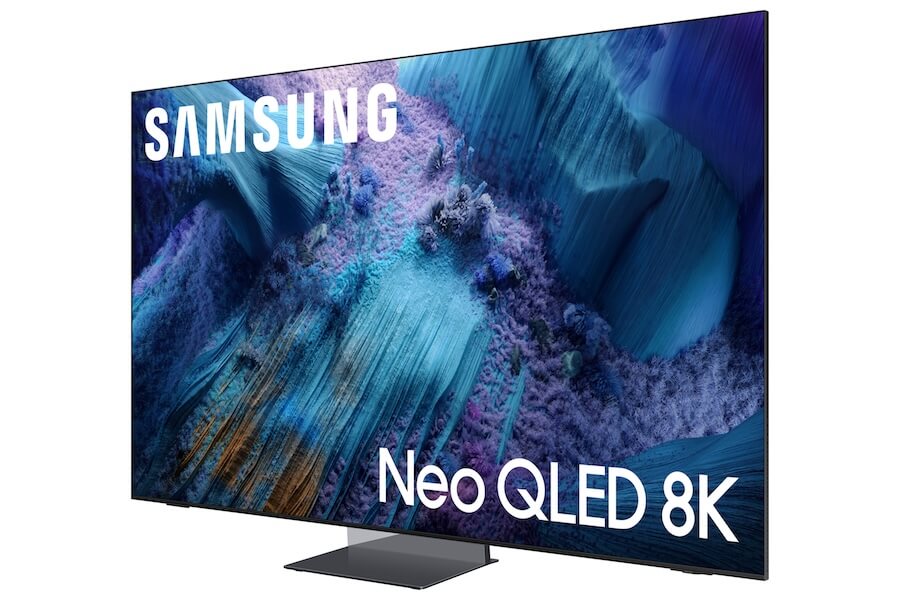
Samsung introduced consumer 8K televisions years ago, but adoption never developed as quickly as manufacturers hoped. By 2026, Samsung is effectively the last major television manufacturer still actively supporting the 8K TV category in the U.S., with products including the 85-inch Neo QLED 8K QN990H. It should tell you something when you realize that the company’s new flagship Micro RGB technology is only available in TVs with 4K resolution. Sony’s current U.S. television lineup is also centered on 4K models, while other major brands like LG and TCL have also pulled back from 8K TV development.
That is hardly the install base anyone would want before launching another physical movie format.
Resolution Is Not the Sole Indicator of Image Quality
Video resolution is no longer the most obvious area where television image quality needs improvement. In fact, it’s not even in the top 3. According to the ISF (Imaging Science Foundation), the image qualities that make the most impact on a viewer’s actual enjoyment have more to do with color reproduction and contrast, which are already well-captured in the UHD Blu-ray Disc standard.
ISF Imaging Hierarchy of Picture Quality Parameters:
- Dynamic Range (Contrast)
- Color Saturation (Richness of Color Reproduction)
- Colorimetry (Accuracy of Color Reproduction)
- Resolution (Detail)
The biggest recent improvement in consumer media quality has undoubtedly been the availability of HDR (High Dynamic Range). Movies and other content available on 4K BD in HDR can capture bright highlights and fine shadow detail. And a good display can display both specular highlights and dark details on screen at the same time. Add in wider color gamut, better tone mapping, higher brightness, improved black levels, superior video processing and more consistent mastering and you can capture some pretty incredible detail in 4K resolution from UHD Blu-ray Discs, even on the ginormous TV screens that are becoming more popular. The number of pixels ain’t the problem.
The arrival of RGB LED-backlit LCD televisions and other advances within the 4K ecosystem reinforce that point. Manufacturers are finding plenty of ways to improve picture quality without adding another 25 million pixels to the screen.
A New Production and Playback Chain Would Be Needed
A true 8K movie-disc format would require much more than adding “8K” to a box.
Studios would need authoring and mastering standards, as well as the hardware and software to support them. Replication facilities would need compatible production systems and (potentially) new disc technology, though the existing “BDXL” disc, with four layers and 128 GB of storage, would probably be up to the task of 8K resolution. In any case, manufacturers would need to build another generation of players, and consumers would need compatible displays.
The connection side is less of an obstacle. HDMI 2.1 already supports 8K/60 under appropriate configurations, while HDMI 2.2 expands bandwidth further and supports uncompressed 8K/60 with full chroma at higher bit depths. But having enough HDMI bandwidth does not magically create the content, discs or players required to use it.
Economic Stress
Then there is the part Hollywood always notices: the money.
Studios would have to spend more creating, mastering and distributing 8K releases for a tiny install base. Hardware companies would have to develop new players for a physical-media category that is increasingly driven by enthusiasts and collectors rather than the mainstream market.
That is a difficult business case before anyone even asks whether consumers could see enough improvement to care.
Why Hollywood Does Not Need 8K Blu-ray
The end-to-end production pipeline is one of the biggest obstacles to a commercial 8K disc format. Moving from 2K to 4K already increases processing, storage, rendering and mastering demands, and a true 8K workflow would multiply those requirements across the entire production chain. Hollywood can work in 8K, but the real question is whether the added cost and complexity are justified by a benefit most viewers may barely notice.
There is another wrinkle: some 4K Ultra HD Blu-ray releases are sourced from 2K digital intermediates and upscaled to 4K. That does not automatically make the resulting UHD disc pointless. Standard Blu-ray tops out at 1920 × 1080, while a 2K theatrical image is typically 2048 × 1080, and the UHD release can still benefit from HDR, wider color, 10-bit video and higher available bitrates. Again, it’s not just the number of pixels that matters.
In any case, Hollywood can still extract meaningful improvements from the existing 4K Ultra HD format without rebuilding the entire home-video ecosystem around 8K resolution.
If the demand is not there, Hollywood does not need the headache.
Would Consumers Actually See the Difference?
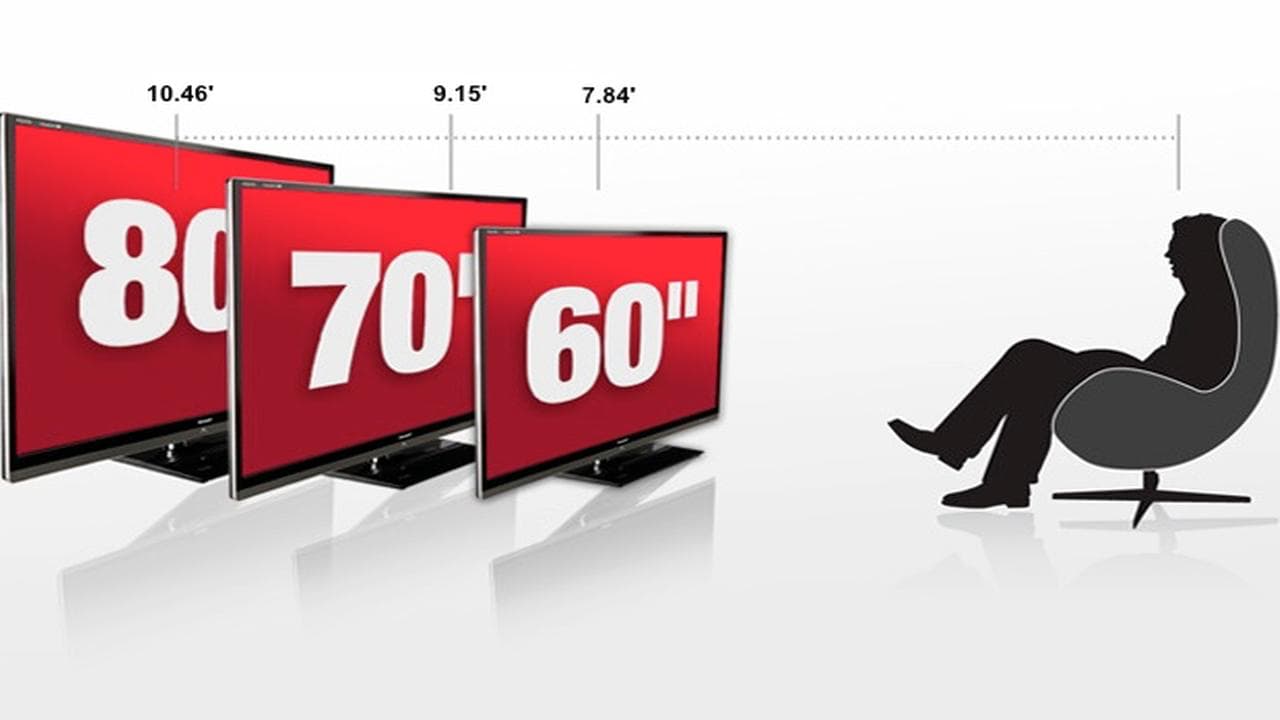
Assuming a 4K Ultra HD disc has been mastered properly, the difference over standard Blu-ray can be meaningful, thanks not only to higher resolution but also HDR, wider color, better compression and improved mastering. Screen size and seating distance matter, but the jump from 4K to 8K is far less obvious. Having seen numerous 8K demonstrations, I have rarely found native 8K movie content dramatically better than high-quality 4K at normal viewing distances, which makes it difficult to justify asking consumers to replace their discs, players and televisions again.
Why 4K Ultra HD Blu-ray Disc Will Do Just Fine
Here is the more interesting contradiction: 4K Ultra HD Blu-ray can remain a viable format without ever appealing to the mass market.
Ultra HD Blu-ray already provides high video bitrates, lossless audio, immersive soundtracks, supplemental content, consistent playback quality and, most importantly for collectors, a physical copy that does not depend on a streaming catalog or studio license remaining unchanged.
Panasonic continues to sell the DP-UB820 and DP-UB9000, while Magnetar continues to manufacture and support premium universal disc players. Magnetar released upgraded versions of their disc players last fall and is still releasing firmware updates for its new and previous players as of August 2026 as this article goes to press.
Physical media, however, is not experiencing a broad sales resurgence, despite all the attention surrounding collectors and younger buyers.
According to the DEG (Digital Entertainment Group), U.S. consumer spending on DVD, Blu-ray and 4K UHD Blu-ray declined 8.4 percent in the first quarter of 2026 to $185 million. That was still better than the 13-percent-plus decline during the first quarter of 2025. More importantly for enthusiasts, Blu-ray and 4K UHD Blu-ray each declined by less than 5 percent during the quarter as collectors continued to support premium formats.
That is not a comeback. It is something potentially more sustainable: a shrinking category finding a committed audience willing to pay for premium releases.
Major studios continue releasing films on 4K Ultra HD Blu-ray, while boutique labels such as Arrow Video, Shout! Factory, and Blue Underground cater directly to enthusiasts with catalog titles, restored films, steelbooks and collector’s editions. MVD remains an important distributor and retailer for boutique releases, while GRUV is Universal Pictures Home Entertainment’s own retail operation rather than an independent label. It may be hard to find UHD Blu-rays in brick and mortar retailers, but there is a thriving online marketplace for this and other physical media.
What Actually Will Replace the Disc?
If something eventually replaces physical discs for quality-focused home theater enthusiasts, the most plausible candidate may not be a new physical media format, nor even conventional streaming.
A high-bitrate, locally stored download platform offers some of the convenience of digital distribution without requiring the movie itself to be streamed in real time. Kaleidescape is the most developed example of that model.

Kaleidescape’s existing movie players support downloaded 4K titles with bitrates up to 110 Mbps, while the newer Strato K adds native 8K playback and the company’s higher-bitrate 4K Cinematic format. Movies are downloaded to local storage rather than streamed during playback, which virtually eliminates the buffering and compression artifacts inherent in most streaming services. Kaleidescape has even joined the 8K Association to help promote the technology and format. However, last we checked, the Kaleidescape store still only had a single 8K title available to purchase. Meanwhile the service continues to build out its 4K and 4K Cinematic library with both new releases and classic back catalog titles.
Sony Pictures Core takes a different approach. It remains a streaming service, but its Pure Stream mode can operate between 30 and 80 Mbps on supported Sony devices, putting its highest-quality streams much closer to UHD Blu-ray territory than conventional streaming services.
Ultra HD Blu-ray Discs, along with standard Blu-ray Discs and DVDs, have one major advantage over either model: normal playback does not require the owner to maintain an active account, subscription, storefront relationship or internet connection. When you want to watch a movie, just get up off the couch and grab it.
Pro Tip: Some disc-based bonus content and interactive features may require internet access.
Downloaded movies offer convenience and potentially exceptional quality, but they still depend on compatible hardware, digital rights management, studio agreements and the continued operation of the platform. While Kaleidescape has been in business now for over 25 years, there is no guarantee about its continued operation. Though with all the well-heeled Kaleidescape customers out there who have collectively invested hundreds of millions of dollars in their movie libraries and associated hardware, we think it’s a safe bet that the Kaleidescape platform will continue to thrive for the foreseeable future. Still, with content that is never truly “owned” but “licensed,” it’s something worth considering.

The Bottom Line
Based on all the signs, 8K content is not “right around the corner,” and it’s definitely not worth waiting for. There is no commercial 8K format in active development, no meaningful consumer demand for 8K media, no broad 8K display market to speak of, and little incentive for studios to absorb the higher production, mastering, replication, and hardware costs that would come along with 8K.
More importantly, 4K Ultra HD Blu-ray Disc already delivers ample resolution, rich HDR capability, deep color gamut support, low compression, and lossless immersive audio that are sure to satisfy even the most critical viewers enjoying their favorite movies on today’s largest XXL flat panel TVs and projection screens.
And just because 8K isn’t currently on the table does not mean physical media is doomed. 4K Ultra HD Blu-ray has settled into a smaller but committed enthusiast and collector market, supported by major studios, boutique labels, hardware makers, and a 4K movie and TV show catalog that continues to grow. Discussions we’ve had with industry insiders also suggest that the UHD Blu-ray Disc specification will continue to expand, even if it doesn’t add a few million more useless pixels.
For movie fans who care about consistent playback quality, lossless immersive audio, bonus content, and having a physical copy that does not depend on a subscription, changing licensing agreement, or disappearing streaming catalog, UHD Blu-ray still offers a superior home viewing experience and a strong alternative or supplement to online streaming. For those who want the convenience of near instant downloads without the video and audio sacrifices of streaming, high quality download services like Kaleidescape offer another great option.
8K may not be right on the horizon, but maybe it doesn’t need to be.
Related Reading:
- 8K Video – the Next Big Thing or Dead in the Water? Here’s What 3 Industry Insiders Think
- DVD vs Blu-ray vs 4K Ultra HD Blu-ray Explained: Picture Quality, Audio and What’s the Difference?
- Sony Ends New PlayStation Game Discs in 2028
- Your 4K Blu-Ray Player Could Support Dolby Vision 2, But Manufacturers May Not Update It
- Do We Need An 8K Media Player? Kaleidescape Says, “YES!” With New Strato K
- Best Digital Media Players And Blu-Ray Players: Editors’ Choice





























Brandon Madigan
August 22, 2026 at 1:30 am
Sigh… Physical media isn’t going away. There may be no more OPTICAL disks but spoiler alert – a flash drive is physical media. A hard drive or ssd is physical media. They may no longer sell movies ON physical media… But that’s just going to result in people ripping movies from streaming to physical media like they already do.
Ian White
August 22, 2026 at 2:06 am
Brandon,
Wait till you read Part II next week with some key industry people. They don’t think the physical optical disc is going away just yet but their take is the most realistic one and they’re key decision makers. The bigger point is that there is no market push for 8K so 4K will likely be the end of the line for physical media in terms of movies. What they are able to add to the existing format is also up for discussion.
IW
Bob Iger
August 22, 2026 at 1:24 pm
This is fantastic analysis. Kudos to Robert for this well researched analysis and it all makes sense.
WTF uses a flash drive for movies? Illegally downloaded or porn perhaps, but genuine movie fans buy films on Blu-ray or DVD.
Fred Reed
August 22, 2026 at 5:35 pm
Sorry but Hollywood claims that they don’t need 8K but the answer is yes they do need 8K. Hollywood stopped making great movies say well over 20 years ago and now the 8K format is dead no it’s just beginning. Manufacturers like Sony, Panasonic and others will revive 8K because 4K is dead now there is no reliable 4K blu ray player out there can play any 4K blu ray movie without them freezing up or not even playing at all.
Ian White
August 22, 2026 at 7:21 pm
Fred,
As someone who owns close to 3,800 movies on laser disc, DVD, Blu-ray, and Blu-ray UHD 4K, I’m about as big of a proponent of physical media as you are going to find. The reality is the market is not going to support 8K. It didn’t support it with TVs (none of the manufacturers are pushing it), and the 4-5 companies still making 4K players are starting to look for the exit door. I own two Panasonic 4K players and a Magnetar. They better last. My next investment will be a Kaleidescape system.
IW
STEPHEN FLESCHLER
August 23, 2026 at 7:13 pm
This reminds me of high resolution audio. No one ‘needs’ higher resolution as most recordings of value are also analog and lower resolution 96/24. I have 61,100 CDs/LPs/78s/R2R and a high end system. I have 1200+ blu-rays and DVDs and the Panasonic U9000 blu-ray player. My ears are in perfect listening condition at 70, as an amateur recording engineer for acoustic music in major halls for orchestral, chamber and choral music. After 24 bits resolution, there is no advantage in dynamic capabilities. There is varying options for frequency sampling though but current high sampling rates at 96Khz are adequate for most audio systems. I suspect after viewing 8K, that is the limit for typical high end home video.
Streaming involves compression and other artifacts also occur, moreso for audio than video in my experience.
The previous comments are strongly in favor of continued physical media use. There is a need for higher quality playback equipment (look what happened to the record industry over the past several decades and now possibly CDs, not because of nostalgia but because of uncompressed sound). It could be that the next physical media are flashdrives although HDs are superior for long term storage (SS storage benefits from constant use while HDs where are faster but the storage discs last indefinitely).
Time will indicate which storage/playback preference win survive. Imagine if LPs could be revived and perhaps CDs, Blu-rays or other physical media storage should survive as well.
Side note-most HD camcorders only record in AAC audio. Maximum practical limit for AAC-LC in this context: 256 kbps for stereo or consumer streaming and is a lossy compression. The older mini-dv had true PCM 1411 bitrate defines the absolute audio fidelity—no compression loss occurs Very superior sound. PCM bitrates are orders of magnitude higher than compressed AAC. The AAC has a compression rate of 5.5 to 1 (PCM equivalent).
Ian White
August 23, 2026 at 11:06 pm
Stephen,
I really don’t see flash drives being a big seller when it comes to physical media and vinyl had its best sales year in 3 decades in 2025. CD sales are UP 16% in 2026 after almost a decade of decline.
There are more state-of-the-art turntables available today that I can even mention in one article. CD player sales fell for a number of years, but now everyone is getting back in the game.
I have close to 3,800 movies in various formats. I have zero intention of ever selling them as some are too valuable to me for that to happen. I own 3 4K BD players and will maintain them for as long as possible because I know just how good 4K can look. 8K was never on my radar because I think the gains are too small at the distances that I watch TV/movies for it to be worthwhile.
IW
STEPHEN FLESCHLER
August 24, 2026 at 9:08 am
Ian,
No, I never expected flashdrives for marketing films/videos/audio. However, they are archival transfers to the musicians I make recordings for as well as friends who plug them into their server/DACs such as my Rockna Wavedream Reference Signature DAC. I also make CDrs on Taiyo Yuden and MAM-A as well. What good will 8K provide for me if the mastering is being done then made into reduced resolution blu-ray discs (my 1920s comedies with Keaton, Laurel&Hardy, Chase for example). My film noir is also not UHD quality or most of my technicolor musicals. So I will keep my two Panasonic U9000s.
With 31,300 LPs, mostly from the pre-digital area, 50s and 60s, Japanese Jazz LPs from the 70s to 90s, friends who are world famous remastering engineers, I will always be listening to vinyl. I have 16,100 CDs. I know I sound like a collector, but I listen 2 hours nightly for 35+ years, disposed of 25,000 records (16,000 were 78s) and I to hear and cull another 10,000+ LPs & CDs.
State of the art is not always preferable in cartridges though. With many less than pristine condition 50’s and 60’s LPs, I use the Dynavector 20X2L rather than a super resolving DS Audio or $10-$25,000 cartridge. They ride lowest in the groove and prefer pristine LPs; otherwise, they pick-up every defect and inferior quality vinyl noise. The Goldnote phono pre-amp provides universal selectable equalization, particularly important for my “78s.”
Perhaps we will see a Renaissance of CD players to rival turntables. I hated CDs sonics generally which were due mostly to inadequate equipment in the 1980s and 1990s, then from the mid-1990s to 2000s the loudness wars and attempts to take older analog recordings and “modernize” them which resulted in failure. Many of the current most popular streamed music sounds awful and those mastered during that period are often the cause.
ORT
August 24, 2026 at 1:58 pm
Stephen? WoW! Simply, WOW!
ORTacles of Thebes
STEPHEN FLESCHLER
August 25, 2026 at 5:22 pm
Something that could provide SOTA sound source at low cost is the use of blu-ray burned and played back on blu-ray players for audio purposes. The blank 100gb discs sell in bulk for 75¢ each. Their benefits include it’s 405 nm laser, microscopic pit geometry, superior ECC, superior reflectivity, 24‑bit PCM and 96–192 kHz sampling rate. A cheap $70 Sony blu-ray player can outdo the finest CD transport (they are terrible as a CD transport). Imagine a current Jay’s Audio CD transport quality for blu-ray playback-truly SOTA.
Unfortunately, it will never catch on as streaming has overwhelmingly dominated audio and video listening/watching. Physical media take up room (although a server can hold TBs and a 100 gb disc for 75¢ can hold an immense number of audio files as well as 4K films).
Ian White
August 25, 2026 at 6:22 pm
Stephen,
And fewer companies making recordable discs. Today sucks. Dolly Parton just died.
IW