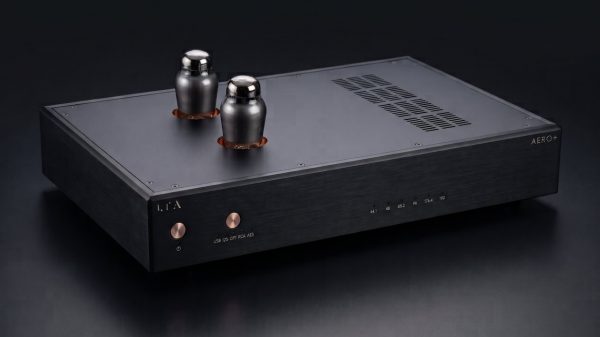
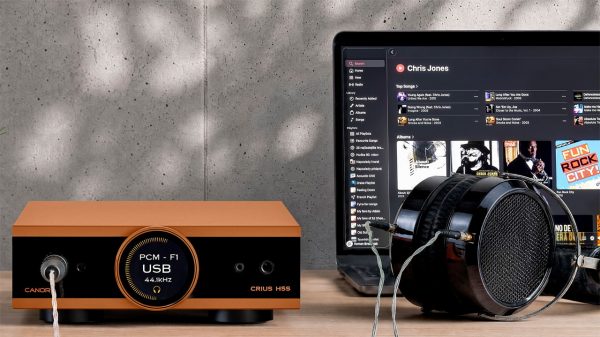
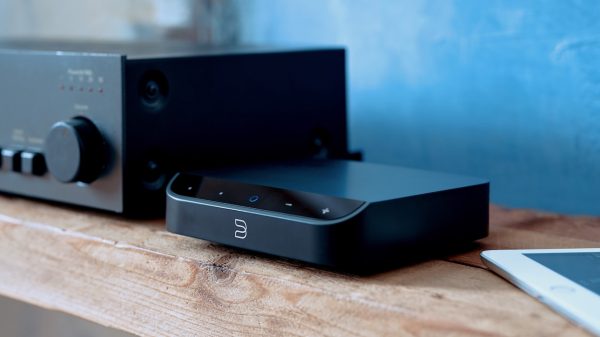
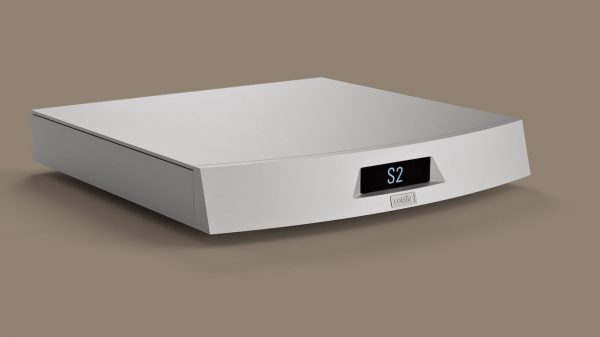
The network streamer market has become considerably more competitive, especially between $800 and $2,000, where manufacturers seem determined to convince audiophiles that another DAC, larger display, or more elaborate power supply will finally deliver digital enlightenment. Bluesound’s flagship NODE ICON ($1,299) finds itself competing with the $859 Eversolo DMP-A6 Gen 2, the $1,099 Cambridge Audio CXN100 SE, and the $1,399 Eversolo DMP-A6 Master Edition Gen 2. Spend another $500 and the Cambridge Audio EXN100 enters the conversation.
That’s a rather formidable group, and none of them needs a lesson from Bluesound about building a capable network streamer.
Bluesound has temporarily reduced the NODE ICON to $1,099 through January 15, 2027, which makes the comparison with the Cambridge Audio CXN100 SE even more interesting. Both offer balanced outputs, HDMI eARC, comprehensive streaming support, and mature software platforms.
Eversolo has been particularly aggressive with its larger touchscreens, expandable internal storage, and extensive connectivity. The Chinese manufacturer has also demonstrated that giving customers more features doesn’t necessarily require charging them an additional $500 for the privilege.
In my recent review of the Bluesound NODE N132, I found that the latest generation was a meaningful improvement over its predecessors. The slightly warmer and forgiving presentation of earlier NODE models had been replaced by tighter bass, greater transparency, improved spatial presentation, and a more controlled tonal balance.
I’ve used enough NODE streamers over the years to appreciate just how far the platform has evolved, and BluOS remains one of the better streaming ecosystems available. But WiiM, Cambridge Audio, and Eversolo have made the category far less predictable, especially for anyone who doesn’t already own multiple Bluesound components.
That brings us to the NODE ICON, which Bluesound clearly intends to position as something more substantial than another NODE with better cosmetics and a higher asking price. A dual-mono DAC architecture, balanced analog outputs, dedicated THX AAA headphone amplification, and a 5-inch display suggest a more ambitious product.
The question is whether Bluesound has genuinely elevated the performance enough to justify the premium over its already excellent standard NODE. At $1,299, the ICON doesn’t have much room for mediocrity, and the competition isn’t waiting around for Bluesound to figure that out.
Related Reading:
- BluOS Will Add Josh.ai VoiceCast Across Bluesound, NAD, PSB And More
- NAD Adds Dirac Live Room Correction To CI SA2-120 And CI S2 Custom Install Products
Inside the Bluesound NODE ICON

Canadians have a reputation for being modest, but Bluesound seems to have misplaced that particular national characteristic when designing the NODE ICON. The biggest technical upgrade is its dual-mono DAC architecture, featuring two ESS SABRE ES9039Q2M converters instead of the single chip found in the standard NODE. Each channel receives its own DAC, with balanced XLR outputs for compatible amplifiers and active loudspeakers. Of course, doubling the DAC count doesn’t automatically double the sound quality. If high-end audio worked that way, we’d all have much smaller equipment racks and fewer arguments on internet forums.
Bluesound has also incorporated MQA Labs’ QRONO d2a technology, which is designed to improve timing accuracy during digital-to-analog conversion. Yes, MQA. Those three letters are probably enough to send certain audiophiles searching for their blood pressure medication, but QRONO d2a is a separate processing technology that doesn’t require MQA-encoded music. An ESS ES9826 ADC handles the analog input, while a dedicated THX AAA headphone amplifier provides two 6.3mm outputs. It’s a welcome addition, especially when some competing streamers seem to regard headphone listeners as people who should have purchased something else.
The aluminum chassis features a 5-inch color display for album artwork, playback information, and system status, along with illuminated touch controls, five programmable presets, and a proximity sensor. Unfortunately, the display isn’t touch-sensitive. In 2026, on a $1,299 network streamer, that feels like an odd place to save money. Eversolo has demonstrated what a proper touchscreen interface can accomplish, while Bluesound apparently prefers that you admire the artwork without getting your fingerprints on it. Very Canadian. Look, but don’t touch.
The NODE ICON also includes HDMI eARC, Dolby Digital decoding, two-way Bluetooth, and support for Dirac Live room correction. There’s a catch, naturally. The Dirac Live license and compatible measurement microphone cost extra, which means the price of admission doesn’t necessarily include all the features advertised on the marquee. BluOS remains one of the strongest reasons to consider the ICON, offering extensive streaming service support, Roon integration, and multiroom playback. It’s a mature and generally reliable platform, but Bluesound can no longer assume that everyone else is still trying to figure out how to build a decent streaming app.

NODE ICON Specifications
- Price: $1,299 MSRP; $1,099 promotional price through January 15, 2027
- DAC: Dual ESS SABRE ES9039Q2M, dual-mono architecture
- ADC: ESS SABRE ES9826
- Digital processing: MQA Labs QRONO d2a
- Audio resolution: PCM up to 24-bit/192kHz; DSD256 support
- Headphone amplifier: THX AAA with two 6.3mm outputs
- Analog inputs: Stereo RCA
- Digital inputs: HDMI eARC, optical TOSLINK, USB Type-C computer audio
- Analog outputs: Balanced stereo XLR, stereo RCA, dedicated subwoofer RCA
- Digital outputs: Coaxial, optical TOSLINK, USB Audio
- Networking: Gigabit Ethernet, dual-band Wi-Fi 5
- Bluetooth: 5.2, two-way connectivity, aptX Adaptive
- Streaming: Spotify Connect, TIDAL Connect, Qobuz Connect, Apple AirPlay 2, Roon Ready, BluOS streaming services and multiroom playback
- Room correction: Dirac Live Ready; additional license and calibration hardware required
- Display: 5-inch color, non-touch
- Controls: Illuminated touch controls, five programmable presets, proximity sensor
- Dimensions: 8.7 x 3.3 x 7.6 inches (W x H x D)
- Weight: 4.92 lbs (2.23 kg)
- Finish: Black anodized aluminum
Setup & Listening
The arrival of the Bluesound NODE ICON couldn’t have been better timed. I had the ATC EL50 Anniversary Active Loudspeakers in for review (coming later this month), along with the recently reviewed ATC SCM20ASL Active Loudspeakers. Both feature balanced XLR inputs, which made them ideal candidates for evaluating the NODE ICON’s dual-mono DAC architecture and balanced analog outputs. ATC’s CA2 and SCA2 preamplifiers also provided additional options, although only the considerably more expensive SCA2 has a fully balanced signal path.
Did the balanced outputs make a difference? Did Connor Hellebuyck want out of the Peg? The answer to both questions was yes, although one departure has been considerably more expensive for the Winnipeg Jets. We’ll get into the sonic differences shortly.

The NODE ICON also spent considerable time connected to the Audio Note OTO 35th Anniversary Silver Edition, Cambridge Audio Edge A, NAD C316BEE V2, and Quad 3 integrated amplifiers. Loudspeakers included the Magnepan LRS, Wharfedale Super Denton, Q Acoustics 5040 and 3040c, and Acoustic Energy AE100 MKII. The latter spent much of its time paired with the Quad 3, a combination that continues to impress me for what it delivers without requiring anyone to liquidate their retirement account.
The NODE ICON received more use than a puck bag on a Sudbury Saturday night. Interconnects and digital cables came from Cardas, Clarus, Nirvana Audio, QED, and Chord Company, and I alternated between the balanced XLR and RCA outputs where the equipment allowed. The objective was to determine whether the ICON’s more sophisticated internal DAC implementation offered meaningful advantages across systems with very different levels of resolution and tonal balance.
For networking, I used a hardwired Gigabit Ethernet connection to my ASUS router, part of a recently upgraded whole-house Wi-Fi 7 mesh network. The NODE ICON itself supports Wi-Fi 5, but with Ethernet readily available, there was little reason to introduce another variable into the listening tests. BluOS handled streaming duties, primarily through Qobuz and TIDAL.
Meanwhile, Tyrion the Wonder Westie consumed an entire bag of salmon skin snacks during the review period. He contributed absolutely nothing to the listening notes, but remains convinced that he did most of the work.


BluOS has evolved considerably over the past five years, and having used the platform for almost that entire period, getting the NODE ICON up and running was relatively painless. Is it as visually engaging or feature-rich as the WiiM Home app? Not quite, but BluOS remains a mature, reliable platform with extensive streaming support and a straightforward interface. My app was already updated, the NODE ICON appeared on my network, and we were off to the races. No lengthy troubleshooting session or desperate search through online forums required.
Apple Music is now supported within BluOS, which is welcome news for subscribers, although it’s not a service I personally use. TIDAL and Qobuz account for roughly 90% of my streaming, while Spotify Premium serves four members of my household who clearly have different priorities. I pay for it but rarely touch it myself. Once my accounts were connected, the NODE ICON was ready for some serious listening.
Amy Winehouse, ATC, and a Rather Expensive Reality Check
I started with Amy Winehouse’s Back to Black (20th Anniversary Edition), specifically “You Know I’m No Good” and her brilliant BBC performance of “Valerie.” I’ve listened to both tracks more times than I care to admit, and Winehouse remains one of those rare singers who could make a room full of people uncomfortable without raising her voice.

The less expensive NODE had struck me as more neutral across my various systems, but the NODE ICON sounded warmer, smoother on top, and considerably more present. Winehouse had more weight and texture to her voice, the bass lines had greater substance, and the occasional sharpness that can make these recordings less enjoyable was noticeably reduced. Some might prefer the standard NODE’s more restrained presentation. I didn’t.
Both the ATC SCM20ASL Active and the $99,999 EL50 Anniversary Active loudspeakers made these tracks more engaging than almost any other system I’ve assembled at home. The EL50s were particularly addictive, and I could have spent an entire evening listening to Winehouse without giving much thought to anything else. Which raises the rather obvious question: Was the NODE ICON remotely competitive with the Esoteric streamer/preamplifier I used for most of my EL50 evaluation, or the Innuos/Playback Designs digital front end that ATC demonstrated at AXPONA? Not even close.
The Esoteric was more transparent, controlled, and revealing, while the far more expensive AXPONA combination operated on another level entirely. Anyone suggesting otherwise should probably have their hearing checked before reviewing more equipment.
But here’s where things get interesting. The Esoteric costs roughly 10 times as much as the Bluesound, while the Innuos/Playback Designs combination approaches 40 times its price. And the NODE ICON still managed to make a pair of $99,999 active loudspeakers sound thoroughly enjoyable. Would I trade the Esoteric for it? Not unless someone had slipped something into my rooibos. But for $1,299, the Bluesound was doing considerably more right than wrong. As Larry David might say, pretty, pretty, pretty good.

Four Voices, Four Different Worlds
Nick Cave, Terry Callier, Jason Isbell, and John Prine couldn’t sound more different, but they share something that matters enormously to me. Their voices tell stories that don’t require perfect pitch, studio manipulation, or a producer trying to make everything sound pretty. Cave is my favorite of the four, and I’ve never had much patience for digital components that thin out his voice, strip away the gravel, or smooth over the menace that makes him such a compelling performer. You need the weight, the darkness, and that occasional edge that makes you wonder whether he’s singing to you or preparing to bury you in the Australian outback. Take those things away and it’s bye, Felicia.
The NODE ICON understood the assignment. Cave’s voice had the necessary weight and texture, with enough bite to preserve his intensity without turning the upper midrange into a punishment. Terry Callier was another interesting test. I still prefer listening to him on vinyl, where his extraordinary blend of folk, jazz, and soul has a warmth and physical presence that digital rarely gets completely right. Qobuz through the Bluesound wasn’t quite the same experience, but it was convincing enough that I didn’t feel compelled to get up and change sources. That’s not something I say lightly.
Jason Isbell and John Prine presented very different challenges. Isbell has that unmistakable Southern twang, considerable vocal range, and a way of expressing pain that can make even a relatively simple arrangement feel devastating. Prine was a poet who understood human frailty better than most people understand their own families. His songs could be funny, heartbreaking, and remarkably humane, sometimes within the same verse. The NODE ICON gave both singers the tonal weight and emotional presence they deserved, while acoustic guitars retained enough string texture and bite to sound believable. I occasionally wished for a little more attack and less rounding of the edges, but never felt the music had lost its character.
The ATC active loudspeakers were particularly effective partners, revealing the differences between these four voices without making every recording sound as though it had been dragged into a mastering studio for questioning. The NODE ICON delivered excellent depth, convincing vocal presence, and a slightly warmer balance that complemented the ATCs’ remarkable transparency. Not everyone wants that much information coming from their loudspeakers, and I understand why. But with these four artists, the combination worked beautifully. I wasn’t listening for another layer of detail buried in the recording. I wanted to believe the people singing. More often than not, I did.

Speed, Power, and a Little Less Restraint
Electronic music was where the NODE ICON’s more forward, less restrained presentation really started to make sense. Deadmau5’s “Seeya,” Hans Zimmer and James Newton Howard’s “Why So Serious?” from The Dark Knight, Sia’s “Chandelier,” and Radiohead’s “Reckoner” provided a rather demanding mix of deep bass, layered synthesizers, explosive dynamics, and complex percussion. The Bluesound didn’t sound particularly interested in behaving itself, which was fine with me. There was genuine speed, impressive spaciousness, and enough low-frequency energy to fill all three of my listening spaces without turning everything into an indistinct wall of electronic noise.
The ATC active loudspeakers had an enormous advantage here, and it would be dishonest to suggest otherwise. Their dedicated internal amplification, active crossovers, and exceptional drivers deliver a level of bass control, drive, and resolution that my more affordable amplifier and loudspeaker combinations simply can’t match. The sustained low-frequency sweep in “Why So Serious?” beginning around the 3:30 mark had genuine authority, while the synthesizers and relentless rhythmic layers in “Seeya” remained surprisingly well separated. The NODE ICON supplied the signal, but the ATCs were doing much of the heavy lifting. At $99,999 for the EL50 Anniversary system, I’d be rather concerned if they weren’t.
That’s not to suggest that the Bluesound disappointed with the Cambridge Edge A, Quad 3, or NAD C316BEE V2. Far from it. The Audio Note OTO 35th Anniversary Silver Edition was particularly enjoyable, giving electronic music a slightly richer, more dimensional presentation that sacrificed some of the ATCs’ iron grip on the bottom end but made up for it with tonal density and a rather addictive sense of flow. Different amplifiers, different loudspeakers, different results. Imagine that.
Did the NODE ICON lose some of its authority when I switched from balanced XLR to single-ended RCA connections? A little, particularly with the ATC systems, where the balanced connection delivered a stronger sense of drive and control. But the difference wasn’t so dramatic that I’d consider the RCA outputs significantly inferior. Much depended on the amplifier and loudspeakers at the other end, and I wouldn’t recommend replacing a perfectly good integrated amplifier simply because it lacks balanced inputs.
This was also where I found it hardest to argue with the NODE ICON’s asking price. The combination of speed, low-frequency weight, spatial scale, and a slightly warmer, more assertive presentation made electronic music consistently enjoyable. It wasn’t the last word in resolution or bass control, but paired with capable amplification and loudspeakers, it could sound considerably more expensive than it is. And with the ATCs, it was sometimes difficult to remember that the little Canadian box supplying the music cost a tiny fraction of everything connected to it. Rather inconvenient for those who insist that every improvement in digital audio requires another zero on the invoice.

The Bottom Line
The Bluesound NODE ICON is the best NODE I’ve used, and at its current $1,099 sale price, it’s a very good buy. The warmer, more substantial presentation won’t appeal to everyone, particularly listeners who prefer the more neutral balance of the less expensive NODE, but I found it consistently engaging across a wide range of music and systems.
Connectivity is one of its biggest strengths. HDMI eARC is a welcome addition, although in 2026 it should be standard equipment rather than something manufacturers expect a standing ovation for. More importantly, three digital outputs (coaxial, optical, and USB Audio) allow the ICON to work with external DACs, integrated amplifiers, A/V receivers, DAC/headphone amplifiers, and compatible active loudspeakers.
What’s missing? A touchscreen would have been nice, particularly given what Eversolo offers for similar money. Dirac Live is another unfinished part of this review. Bluesound did not provide access to the optional room correction software, so I couldn’t evaluate its performance. The license and calibration microphone also cost extra, and Dirac processing isn’t supported through the USB Audio output. Those are meaningful qualifications, especially for buyers who consider room correction a major selling point.
One combination that kept coming to mind was the NODE ICON paired with the new Acoustic Energy AE Active loudspeakers. These fully analog, Class A/B powered speakers feature balanced XLR inputs and could make a rather formidable compact system without requiring a separate amplifier. Having spent years with the original AE1 Active, I’m particularly interested in exploring that pairing. Stay tuned.
The ICON isn’t going to embarrass five-figure digital front ends, and the ATC active loudspeakers demonstrated just how much the rest of a system contributes to the final result. But Bluesound has delivered a well-built, musically satisfying, and remarkably adaptable streamer that doesn’t require spending a fortune to appreciate.
Pros:
- Warm, engaging sound with excellent bass control, dynamics, and soundstage depth
- Outstanding connectivity, including balanced XLR, HDMI eARC, and three digital outputs
- Excellent build quality
- Mature BluOS platform
- Strong value at the current $1,099 sale price
Cons:
- No touchscreen despite the premium price
- Dirac Live requires a separate license and calibration microphone
- Slightly softer attack and less neutral presentation than the standard NODE
- Balanced outputs deliver somewhat greater authority than RCA in some systems
Our Ratings:
★★★★★★★★★★ Sound Quality
★★★★★★★★★★ Build Quality
★★★★★★★★★★ Connectivity
★★★★★★★★★★ Value
Where to Buy:
Related Reading: