Touch-Free Gesture Control Experience Will Net Winning Products, Increased Market Share and Revenues for Participating TV and PC Makers, Says Canesta CEO
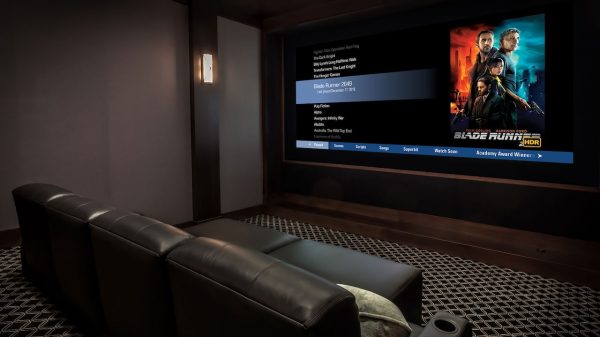
Touch-free gestural interfaces — where the user can control a nearby TV or PC with the “wave of a hand” — will revolutionize the landscape in the “digital living room”, much as the Apple iPhone and Nintendo Wii did in their respective markets, says Jim Spare, CEO of 3-D sensor chip pioneer Canesta. The payoff for manufacturers and service providers, says Spare, will be new, must-have applications, significant revenue increases, and a greater market shares for the first movers.
Spare, who is sharing his perspective at this week’s TV of the Future Conference in San Francisco, says that the gestural interfaces pioneered by the iPhone and Wii have enabled their makers to literally “burst out of the crowd” of increasingly similar products in otherwise stagnant markets, as users have flocked to the new, gesture-based products. The result is that Apple and Nintendo have been able to dominate their respective product categories, and command a premium over competitive devices with similar components and costs.
This momentum, Spare believes, will carry over to televisions and media PCs, and will kick-start a new wave of innovation in the role of these devices in the digital home.
“It’s sort of like what happened with the Apple iPhone,” explains Spare. “Here you have an entirely new entrant to the mobile phone business, with its ‘1001’ SKUs, launch yet another device — at a premium price point no less — and in only one year divert billions of consumer dollars right into Apple’s pocket.”
Spare says that the iPhone’s multi-touch, gestural interface not only provided a new experience that users found to be fun and convenient, but created an easy-to-use user interface platform that widely inspired new applications. Apple’s successful App Store — the thriving, online market for iPhone applications built on the successful iPod-iTunes model — is the proof. “And the same is about to happen with televisions and PCs,” he maintains.
As the first proof point for TVs, Spare cites the superb reception in January to prototype demonstrations of a gesture-controlled Hitachi television at the Winter Consumer Electronics Show (see Hitachi Chooses Canesta’s 3-D Sensor Chip to Power World’s First Gesture Controlled TV, January 08, 2009). “The excitement among attendees and media observers was widespread, and there was much talk about how this would change the digital living room,” he reports.
Consumers were first widely introduced to the touchless gestural interface in Steven Spielberg’s landmark film “Minority Report”, where the character played by Tom Cruise orchestrated several large forensic computer displays with a ballet of hand gestures. It wasn’t long before the concept was showing up routinely in popular TV series like CSI: Miami, as producers rushed to be au courant. “In a sense,” says Spare, “this widespread media exposure has locked and loaded the entire marketplace, and Hitachi has, essentially, fired the first shot.”
The Hitachi demo was enabled by a unique, low-cost 3-D sensor chip pioneered by Canesta.
Widespread Uses to be Demonstrated
At the TV of the Future conference, Spare is demonstrating the basics of what Canesta’s technology can enable. His demo includes videos provided by Canesta, French telecom intrapreneur Orange Vallee, and Hitachi, Ltd. that show various different implementations of gesture controls for TVs, and for extended TVs that can serve as entire household environmental control and multimedia centers.
According to Dan Saffer, who wrote the book Designing Gestural Interfaces (O’Reilly Publishing, 2008) and a founder and principal at Kicker Studio, gesture controls have the potential to revolutionize the way we use TVs and PCs — as well as many other products. “The sophisticated technology provided with Canesta’s 3-D sensor chips are proving to be the missing link to make this happen on a mass market basis,” he says.
Canesta is the pioneer of “electronic perception technology” which is emerging as a key enabler for touchless gesture recognition as well as for advanced automotive safety — such as back-up warnings or seat occupant characterization. The company realized at its outset that enabling any machine to “see” in three dimensions, and in real time, would fundamentally change the relationship between such devices and the world around them — including us.
In the intervening time Canesta has invented and commercialized a family of low-cost, chip-based 3-D sensors that can be built into virtually anything — from TVs and PCs to cars and industrial equipment.
True 3-D sensing involves determining the distance from the sensor to every important feature in the sensor’s field of view, and then using that information to discriminate objects, individuals, movements, body parts, hand gestures, or just about any other detail — mimicking the process performed so effortlessly by human eyes and brains. When performed electronically, however, such technology gives ordinary devices an entirely new degree of perception that enables unprecedented interaction with the surrounding environment.
Canesta is the only company that can achieve true 3-D sensing with a single, low-cost chip, in any environment from dark to bright sunlight, and regardless of the features and textures of either the objects of interest or the surroundings.
To underscore its leadership in 3-D sensing, Canesta recently announced that it has, to date, been granted 37 patents on a wide range of inventions that make electronic perception possible (see Canesta’s Intellectual Property Juggernaut Rolls On, February 25, 2009).
“Over the next several years, we expect hardware companies such as TV and PC manufacturers, [gesture recognition] software suppliers such as SoftKinetic and GestureTek, and service providers, to all find new ways of leveraging the 3-D touchless gestural interface to provide a better user experience, and generate new business opportunities,” concluded Spare.
About Canesta
Canesta is the inventor of revolutionary, low-cost electronic perception technology that enables ordinary electronic devices in consumer, security, industrial, medical, automotive, factory automation, gaming, military, and many other applications, to perceive and react to objects or individuals in real time. When given true, fine-grained 3-dimensional depth perception with Canesta’s unique CanestaVision™ electronic perception chips and software, such products can gain functionality and ease of use not possible in an era when such devices were blind.
Numerous applications are under active development by Canesta’s OEM customers and partners, including building automation, security, robotics, automotive, and others.
Canesta was founded in April 1999, and is located in San Jose, CA. The company has filed in excess of fifty patents, 37 of which have been granted so far. Investment to date exceeds $58 million, from Carlyle Venture Partners, Honda Motor Company, Hotung Capital Management, Korea Global IT Fund (KGIF), Venrock Associates and others.