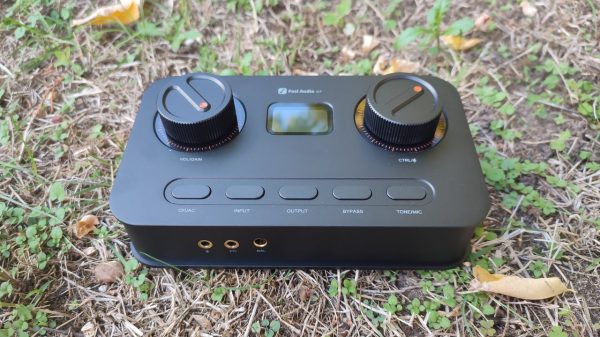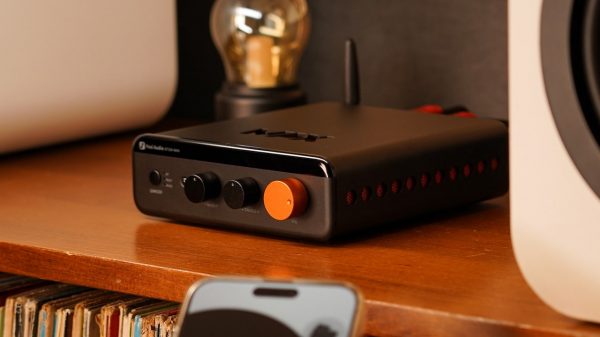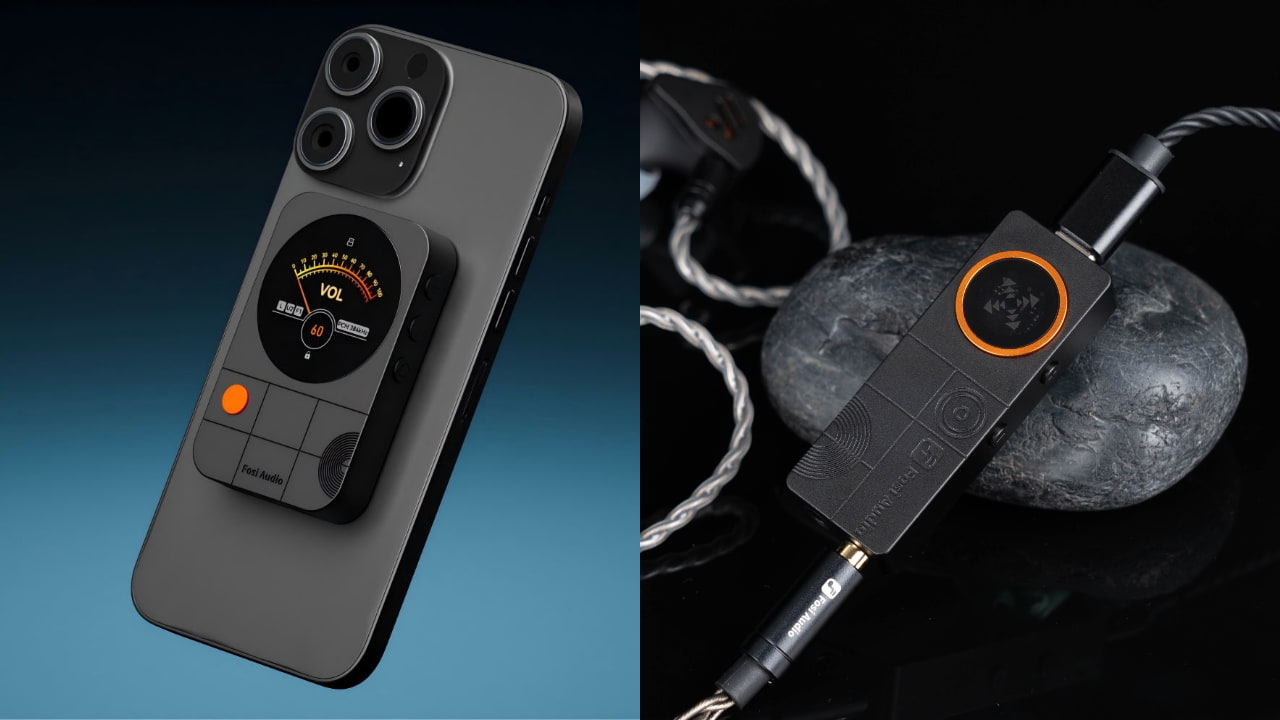
Fosi Audio is heading to CanJam Dubai 2026, marking its presence at the very first CanJam ever held in the Gulf and wider MENA region—a show that’s open to anyone who can make the trip and a clear signal that headphone culture here has officially arrived. Taking place January 24-25 at the Conrad Dubai, the event gives regional listeners hands-on access to Fosi’s newest portable gear, led by the MD3 Magnetic Portable DAC/Headphone Amplifier and the debut of the DS3 Portable DAC & Headphone Amplifier, the world’s first XMOS-powered DAC/amp built around a battery-free dongle design, co-developed with XMOS.
It’s also happening at a genuinely unusual moment: expanded regional access thanks to the Abraham Accords, alongside real-world tensions just across the water—from protests in Iran to naval posturing in the Persian Gulf and ongoing hostilities in Gaza, Israel, Syria, and Lebanon. All of which makes this debut feel bigger than headphones alone and one we hope unfolds without incident, because the region deserves a show like this.
On a personal level, this is exactly the kind of show I would have liked to attend—especially now that those of us with Israeli citizenship, or passports thick with stamps from Ben-Gurion International Airport, are genuinely welcome. I’ve heard nothing but positive reports from friends and family who’ve visited the United Arab Emirates so far, and CanJam Dubai feels like a rare opportunity to meet audiophiles from a part of the world that hasn’t always been part of the global headphone conversation. Hopefully next year. And if this debut does what it should, maybe—just maybe—it plants the seed for a CanJam Tel Aviv down the line. That would be something worth booking a flight for.
Fosi Audio MD3 Magnetic Portable DAC/Headphone Amplifier: Balanced, and MagSafe-Ready
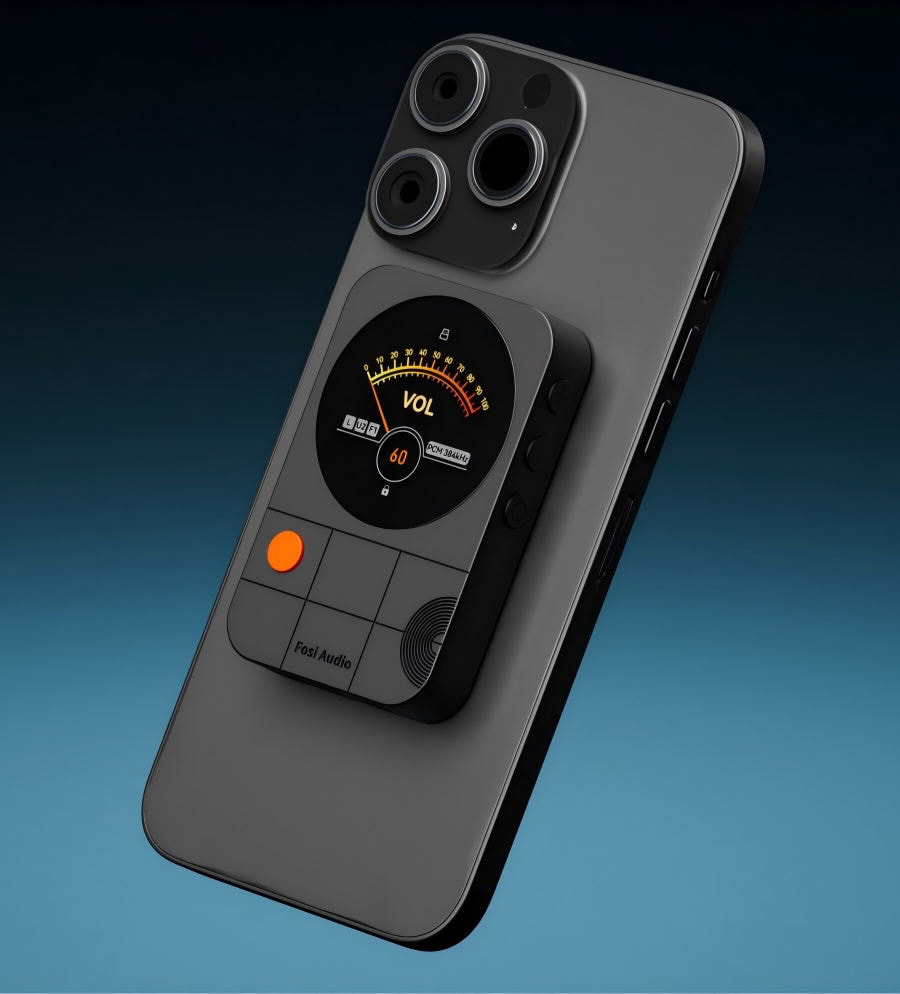
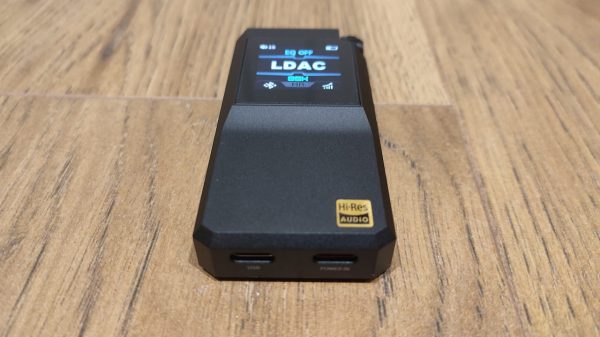
The MD3 Magnetic Portable DAC/Headphone Amplifier is Fosi Audio swinging for real-world usability without pretending a dongle can defy physics. This is a compact, audiophile-leaning design built around a true balanced signal path, anchored by an ESS ES9039Q2M DAC and four ES9603Q headphone amplifier chips working in a fully balanced configuration. The tuning goal here is obvious: clean, controlled power with enough resolution to satisfy critical listeners, but without turning the presentation sterile or fatiguing.
On the hardware side, the MD3 uses a SA9312L USB controller and incorporates an aluminum shielding plate between the magnetic system and the PCB to reduce electromagnetic interference—an important detail given the MagSafe-style mounting. That magnetic system relies on N52 magnets, allowing the unit to attach securely to compatible phones while keeping noise in check. The chassis itself is CNC-machined from 6063 aluminum, finished in a sandblasted anodized coating, and built to survive daily pocket duty rather than live its life in a desk drawer.
Control is handled directly on the device via a 1.28-inch LCD display (240 × 240) that can rotate depending on orientation, paired with physical buttons and a dedicated “Vista Button” for quick access. Fosi also leans into quality-of-life features that actually matter: dual USB-C ports for data and power, simultaneous playback and charging, 100-step digital volume control, volume memory, and even custom image upload for the display. Outputs include both 3.5 mm single-ended and 4.4 mm balanced headphone connections, which is non-negotiable at this point for serious portable listening.
Power output is sensible rather than exaggerated. At 1 kHz with THD+N below 1%, the MD3 delivers 75 mW at 32 ohms from the 3.5 mm output and 180 mW at 32 ohms from the balanced 4.4 mm output—enough to comfortably drive efficient full-size headphones and most portable planar designs, while clearly targeting headphones in the 16–300 ohm range. Distortion figures are appropriately low (0.00075% single-ended, 0.00084% balanced), signal-to-noise ratio lands at 115–116 dB, and frequency response extends cleanly from 20 Hz to 48 kHz (±0.2 dB).
One clarification worth noting: Fosi’s published materials are inconsistent on weight. The official specification lists the MD3 at 20 grams, not 50, which aligns far better with the stated 56 × 20 × 10 mm dimensions and its pocket-friendly intent. Either way, this is a genuinely small, magnet-mounted DAC/amp designed to live on a phone—not a “portable” device that still demands a bag.
Fosi Audio DS3 Portable DAC & Headphone Amplifier: XMOS-Powered, Battery-Free, and Built for Music and Gaming
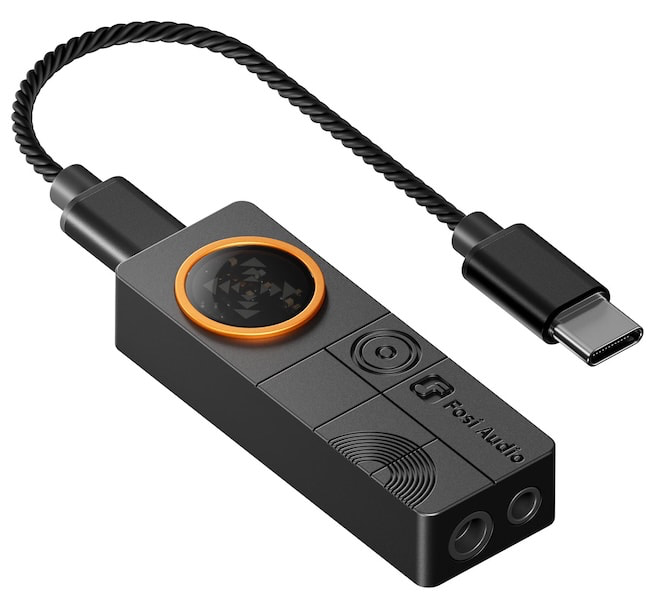
Also debuting at CanJam Dubai is the $99.99 DS3 Portable DAC & Headphone Amplifier, a genuinely interesting entry in the dongle category—and not because of marketing fluff. This is the world’s first battery-free portable DAC/amp built around an XMOS-powered processor, co-developed by Fosi Audio and XMOS. At its core is a next-generation 16-core XMOS architecture running at 1.6GHz, chosen for low power consumption, precise clock control, and hardware-level audio processing without relying on onboard batteries or external software.
Digital conversion is handled by the ESS ES9039Q2M DAC, with support for PCM up to 32-bit/768kHz and native DSD512, and enough output on tap—up to 220mW from the balanced 4.4mm output—to comfortably drive a wide range of headphones from a device that still qualifies as pocket-sized. Where the DS3 really separates itself from the usual dongle DAC crowd is its hardware-level feature set, particularly for gaming.
The unit includes driver-free, hardware-based 7.1 spatial audio processing, meaning no PC software, no background apps, and no platform lock-in—just true plug-and-play operation across compatible devices.
A dedicated Game Mode enables UAC 1.0 compatibility for direct connection to consoles such as the PlayStation 5 and Nintendo Switch, while selectable sound modes—Original, FPS, and Spatial Audio—allow users to tailor the presentation to music, competitive gaming, or immersive play.
The FPS sound engine is specifically tuned to emphasize positional cues like footsteps and gunfire, prioritizing spatial clarity over gimmicks. Looking ahead, Fosi plans to introduce web-based PEQ control with a hardware-level 32-band EQ via firmware update, implemented without signal degradation. At this price point, that’s an unusually ambitious roadmap—and one that makes the DS3 more than just another disposable dongle DAC.
The Bottom Line
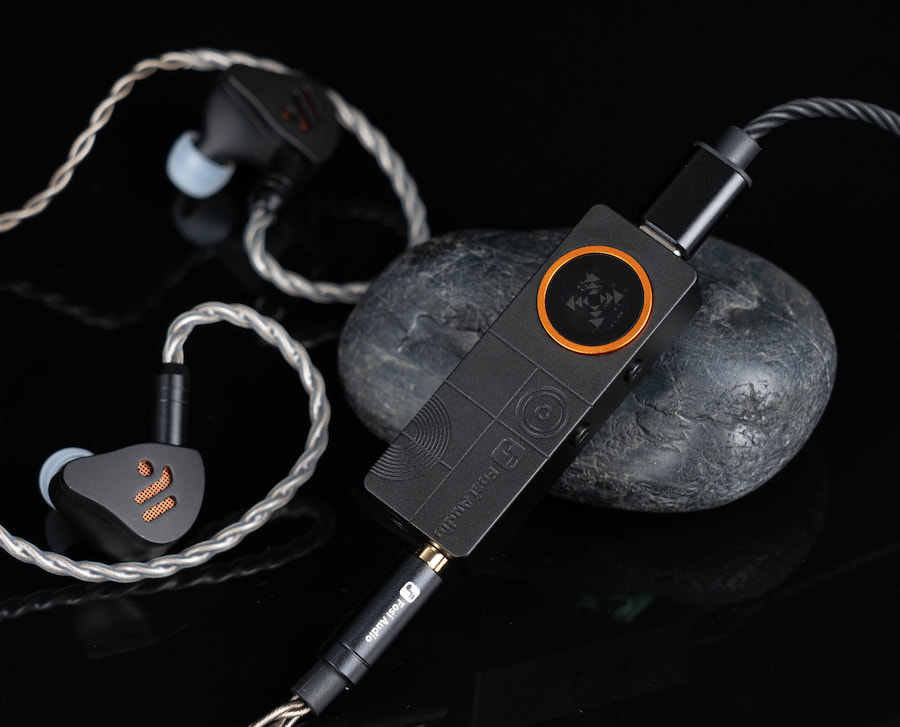
The MD3 is clearly designed as a premium, phone-mounted DAC/amp for portable listening, not a pocket powerhouse pretending to replace a desktop rig. Its balanced architecture, MagSafe-style mounting, onboard controls, and display-driven usability make it stand out in a crowded dongle market, especially for users who want something more refined than a basic USB stick. What it does not offer is the current to handle demanding, power-hungry headphones—this is not the tool for planars or high-impedance studio cans. No pricing has been published yet, and Fosi has not finalized availability details. We’ll update when that changes. As it stands, the MD3 looks best suited for IEMs and easy-to-drive portables, assuming it remains quiet with high-sensitivity models.
At $99.99, the DS3 is an unusually ambitious battery-free dongle DAC/amp, combining XMOS-based hardware processing with plug-and-play spatial audio and console compatibility. Its biggest differentiators are hardware-level 7.1 spatial audio, driver-free operation, and a feature set that targets both music listeners and gamers—without leaning on software tricks. What it doesn’t deliver is enough power for demanding headphones, and several secondary specifications have not yet been disclosed by Fosi.
Like the MD3, this is firmly an IEM-first design, especially appealing if it proves quiet with ultra-sensitive earphones—something Fosi clearly had in mind given the tuning goals behind their IM4. Sensible headphone pairings would include Grado, Meze 99 Classics (2nd Generation), and beyerdynamic DT 770 PRO X. If you’re shopping for a dongle to wake up hard-to-drive cans, keep looking; if you want clean, compact, and practical for efficient headphones, both of these make a lot of sense.
Related Reading: