

Table of contents
Turntable Buying Advice
If you’re thinking about upgrading your turntable, now is both the best and worst possible time to do it. Best, because vinyl hardware innovation is alive, well, and showing up everywhere. Worst, because the sheer volume of options can push even seasoned audiophiles toward some very expensive, very premature decisions.
A quick online search reveals well over 260 so-called “high-end” turntables currently for sale, which is borderline absurd when you remember where vinyl was limping along just 15 years ago. Add tonearms, cartridges, phono stages, record-cleaning machines, isolation platforms, and accessories that cost more than your first car—and suddenly a $5,000 “starter” deck starts getting pitched like a reasonable idea. It’s not.
What is reasonable is stepping back and realizing that the $600 to $3,500 range is where most smart, long-term vinyl systems are actually built. This is the zone where engineering matters more than flexing, where upgrades make sense over time, and where you don’t torch your budget before you even figure out what kind of listener you are.
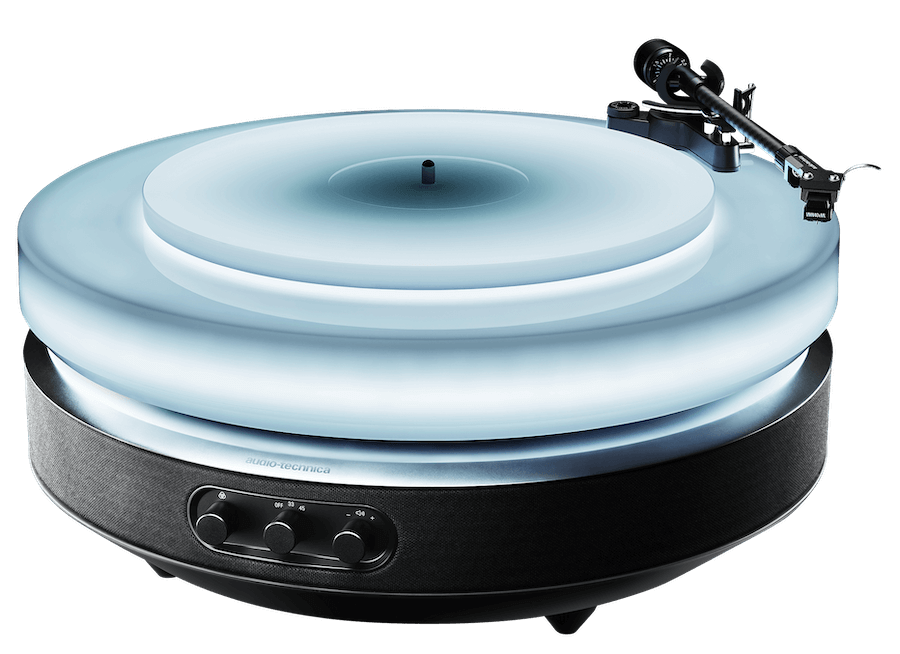
And yes—new turntables were everywhere this year, and not just warmed-over revisions. There was real innovation worth paying attention to. Audio-Technica surprised a lot of people by throwing its hat firmly into the high-end ring with a genuinely distinctive design for $10,000. That’s a lifetime worth of records right there.
Meanwhile, established heavyweights like Pro-Ject, Michell Engineering, Clearaudio, Thorens, and Technics refined proven designs rather than chasing gimmicks. New thinking also came from Andover Audio, MoFi Electronics, Miniot, and Vertere Acoustics—each bringing something legitimately different to the table.
With very few exceptions, none of these decks come in under $1,000, and that’s exactly the point. Serious analog playback costs real money—but it doesn’t require recklessness. Vinyl hasn’t been this popular in over three decades, and the business around it is more complex than ever, a topic we recently unpacked on the eCoustics podcast with Warner Music and Luminate.
Choice is great. Too much choice without guidance? That’s how people end up upgrading twice—and paying for it both times.
How Should You Prioritize Your Turntable Budget?
Most of your investment should be in the music.
A six-figure front end paired with a shelf of 30 “hot stamper” reissues isn’t a system—it’s a flex with commitment issues. Records are meant to be played, collected, and lived with.
Should You Spend More on the Turntable or the Cartridge?
Spend more on the turntable.
A better deck pays off long-term because it establishes speed stability, lowers noise, and gives every cartridge—now and in the future—a better platform to perform. Cartridges are wear items. Tables are not. Start with a solid foundation and upgrade the cartridge later when your system (and record collection) actually justify it. We’ve included several cartridge recommendations below $750 that are proven performers and easy to live with.
New Turntable or Restored Vintage—Which Is the Smarter Buy?
A properly restored vintage turntable can absolutely deliver excellent sonic results. Over the past decade, I’ve used three restored Thorens turntables from Vinyl Nirvana, and the return on investment—sonically and mechanically—has been excellent.

That said, vintage isn’t the budget shortcut many people assume. Once you factor in custom hardwood plinths, upgraded tonearms, and cartridges that make sense for tables of this caliber, the minimum investment is roughly $1,800 USD.
The upside is build quality. These 1970s Thorens decks were engineered to last, and reliability has been bulletproof. Parts availability is not a concern—Dave Archambault has enough inventory and expertise to keep these tables running for many years of service.
His custom Thorens TD-125 MKII restorations represent some of the best value in high-end vintage turntables if your budget stretches that far and you want something that can be serviced properly for the long haul.
What Makes the Most Sense for Most Listeners?
For most people, a new turntable is the smarter and simpler choice. You get modern tolerances, warranty support, easier setup, and fewer variables—without sacrificing serious performance.
Vintage can be deeply rewarding. New can be refreshingly sane.
The right answer depends on how much time you want to spend listening to records versus explaining your turntable decisions to yourself.
Audiophile Entry-Level (Below $550)
Fluance RT85N ($549)

Fluance has built its reputation on doing one thing well: delivering solid, no-nonsense turntables and loudspeakers at prices that don’t feel like a practical joke. Selling direct-to-consumer is a big part of that equation, and it’s why the RT85N and RT85 land at $549.99—even after tariffs forced a recent $50 price increase. In today’s market, that still qualifies as aggressive pricing.
Before diving too deep into spec sheets, the real-world difference between the two models is simple. The RT85N ships with a Nagaoka MP-110, while the RT85 comes fitted with an Ortofon 2M Blue. On paper, the 2M Blue carries roughly a $139 premium over the Nagaoka, which makes the RT85N’s original $499.99 price (and even the current $549.99) especially compelling if you prefer a slightly warmer, more forgiving cartridge presentation.
Beyond the cartridge choice, the RT85N checks all the right boxes for a serious entry-level deck. You get a servo-controlled motor, an acrylic platter, and what Fluance calls a “solid wood” plinth—which in practical terms means a high-mass MDF core wrapped in real wood veneer. The Lucky Bamboo and Natural Walnut finishes look genuinely good at this price and don’t scream “budget.”
The tonearm includes a removable headshell, which makes cartridge swaps painless—something that’s becoming increasingly rare as prices climb. Fluance also skips the built-in phono stage here, unlike entry-level offerings from Rega and U-Turn Audio. That’s a deliberate choice, and a sensible one. Fluance is clearly betting that buyers at this level either already own a decent external phono preamp or are using an integrated amplifier with a competent MM stage.
Build quality is where the RT85N quietly overdelivers. At nearly 17 pounds, it has real mass, and the inclusion of both a 45 RPM adapter and a bubble level shows attention to setup details that many competitors simply ignore. Most entry-level tables feel light and disposable. This one doesn’t—and that matters more than most spec-sheet bragging rights.
It can also be tweaked with a cork platter mat from Analog Restorations and certainly benefits from some isolation. You might be surprised at what this deck can do with a better cartridge and phono preamplifier.
Where to buy: $549 at Amazon
Audiophile Mid-Tier (Below $1,000)
Andover Audio SpinPlay ($729)

Andover Audio has quietly been building some of the smartest, most livable vinyl gear on the market, and the new SpinPlay might be its most convincing argument yet. Priced at $729, SpinPlay is an all-in-one record player that actually deserves the “hi-fi” label—not the dorm-room version of the term.
At the heart of SpinPlay is Andover’s patented IsoGroove isolation technology, borrowed directly from the company’s flagship Andover-One ($2,499). The goal is simple: keep vibration from trashing your sound, even when the volume knob starts drifting right. Setup is almost comically easy—pull it out of the box, plug it in, drop a record, done. No tonearm balancing. No cable spaghetti. No YouTube tutorials required.
SpinPlay is built like it expects to be moved, used, and lived with. The hardtop lid is shockingly heavy—heavier than some entry-level turntables we’ve tested—and the fabric-clad retro styling looks intentional rather than ironic. This is a system you can place in a living room, kitchen, or office without it looking like a bad throwback to freshman year.
Under the hood, SpinPlay uses dual direct-drive amplification, with each woofer and tweeter getting its own dedicated amp. The 270-degree driver array combines two 1.75″ × 4″ oval woofers and 0.75″ silk-dome tweeters, delivering 20 watts to the lows and 15 watts to the highs across a 60Hz-20kHz range. Translation: clean, balanced sound that doesn’t fall apart when things get busy.
The belt-drive turntable itself features an electronically regulated motor for stable speed and low noise, paired with a 12-inch aluminum platter that adds real mass and rotational stability. The 9-inch balanced aluminum tonearmcomes pre-balanced and fitted with an Audio-Technica cartridge—specifically the AT3600L, with replaceable stylus options (conical or elliptical). Adjustable anti-skate is included, and yes, everything is already installed out of the box.
Connectivity is another strong suit. SpinPlay offers Line, Optical Digital, and USB flash-drive inputs, along with Bluetooth transmit and receive, making it easy to integrate with wired or wireless systems. It also pairs seamlessly with Andover’s SpinSub ($379) and SpinStand ($269), the latter holding up to 150 records without collapsing under the weight of your poor impulse control.
How does it sound?
Here’s the surprise: it does not sound entry-level. It’s quiet, tonally warm, well paced, and composed. There isn’t a Crosley, Audio-Technica, or Pro-Ject deck under $550 that can compete with this as a complete system. The speakers benefit from having some space around them—but give them that, and they’re more than capable.
Weak links? The cartridge is entry-level, and yes, it can be upgraded. The internal MM phono stage does a solid job with the stock cart, so spending a bit more on an upgrade wouldn’t be unreasonable—and the system will actually reward you for it.
Used purely as a turntable into active speakers? Surprisingly good. Good enough, in fact, that SpinPlay is on track to become my kitchen system, feeding a pair of KEF LSX II.
A full review is coming this week, just before Christmas, and I’ll say this now: just how good SpinPlay is might surprise you.
It definitely surprised me.
Learn more | $729 at Andover Audio
U-Turn Audio Orbit Theory ($999)

The little engine that could is tucked away in a suburb outside of Boston, and nearly a decade in, it’s hard not to be impressed by what U-Turn Audio—and co-founder Ben Carter—have managed to pull off. 120,000+ tables sold is nothing to sneeze at.
The U-Turn Audio Orbit Theory Turntable is a genuine milestone for a company that spent most of its life owning the sub-$400 turntable conversation. This isn’t a warmed-over Orbit with nicer shoes. It’s a statement that U-Turn is ready to play in a very different league.
When I visited the company nearly eight years ago, the energy was unmistakable—but so were the growing pains. Orders were piling up faster than they could comfortably handle, and it was obvious they needed better domestic sources for platters, plinths, and motors if they wanted to scale without losing control of quality.
Carter and I talked at length about pricing strategy and whether a $700-ish turntable made sense for them long-term. Even then, there was a clear desire to build something more ambitious—something that could credibly go head-to-head with Rega and Pro-Ject.
The problem wasn’t vision—it was resources. Moving upmarket meant more capital, more skilled labor, and, most critically, the ability to design and manufacture a tonearm that would be a meaningful upgrade over the original Orbit arm. That kind of leap doesn’t happen overnight.
The Orbit Theory is proof that they didn’t rush it—and that patience, in this case, actually paid off.

The U-Turn Audio Orbit Theory lands at $999 USD, with an optional internal phono stage version priced at $1,079. That pricing alone signals how serious U-Turn is about moving upmarket—but the real flexibility comes from cartridge choice.
Buyers can now spec the table with Ortofon’s 2M Blue, 2M Bronze, or 2M Black. The 2M Black, in particular, deserves special attention. It remains one of the best moving-magnet cartridges on the market and is genuinely comfortable on turntables costing up to $3,500. I’ve used one for nearly four years on my Thorens TD-160 Super, and it has zero interest in being the limiting factor.
Spec the Orbit Theory with the 2M Black and the price jumps to $1,529—and at that point, you also need to budget realistically. This cartridge demands a $500+ MM phono stage at a minimum if you want to hear what it’s capable of. Anything less and you’re leaving performance on the table.
The design priorities behind the Orbit Theory are refreshingly clear: tonearm, motor, and plinth construction. This is not a cosmetic exercise.
For the Theory, U-Turn took its OA2 gimbal-bearing tonearm design and pushed it significantly further by reducing resonance at every possible junction. In practical terms, that meant stiffer materials, fewer connection points, and an overall structure that behaves more like a single component rather than a collection of parts.
The new motor and pulley assembly is impressively quiet—quiet enough to be mounted directly to the plinth without compromise. Speed stability is handled by an electronically controlled, DC-powered sine wave generator, which keeps platter rotation locked in and allows seamless switching between 33 and 45 RPM via a front-panel knob. No belt juggling. No drama.
The acrylic platter is frosted, precision machined on all surfaces for flatness and minimal runout, and even includes a machined groove to keep the belt perfectly aligned. It’s the kind of detail work that quietly separates a serious design from a merely competent one.
U-Turn also used the Theory as an excuse to have some fun with finishes. Real hardwood plinths are standard, but the standout is the ebonized finish—a traditional process that turns wood black chemically, without paint or stain. The result looks purposeful rather than decorative, and it suits the table’s more grown-up ambitions.
How does it sound?
Bold. Precise. Far more substantial than anything U-Turn has produced before. There’s real tonal weight here, excellent speed control, and a sense of composure that puts the Orbit Theory firmly in a different class than the earlier Orbit models.
Where to buy: $999 at uturnaudio.com | Audio Advice
Audiophile High-End ($1,200+)
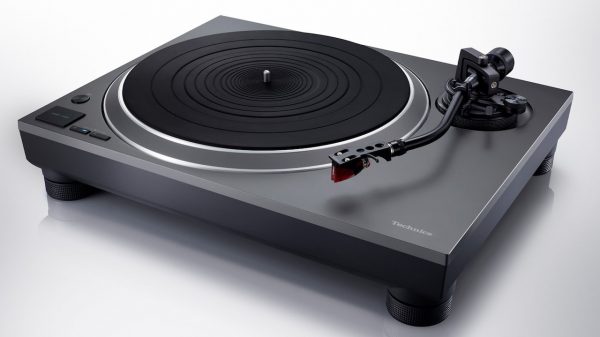
Technics SL-1500C ($1,499)

Technics has been unusually aggressive throughout the vinyl revival, rolling out new turntable models that—awkwardly for competitors—have sold out in some markets within weeks. The brand’s credibility with both DJs and audiophiles isn’t nostalgia-driven marketing either; even its top-tier decks priced north of $3,000 USD continue to sell steadily. That doesn’t happen by accident.
The SL-1500C sits squarely in the middle of the Technics lineup and has been on the market since 2019. And yet, it’s clearly not going anywhere. Instead of replacing it, Technics has doubled down by adding a new finish. Alongside the familiar silver and black versions, the SL-1500C is now available in matte white, officially designated SL-1500C-W.
With its clean, minimalistic look, the SL-1500C-W is built around performance and ease of use rather than feature bloat. Under the hood, it incorporates Technics’ coreless direct-drive, brushless DC motor, which delivers exceptionally stable rotation while eliminating the dreaded “cogging” associated with lesser direct-drive designs.
The two-layer platter improves vibration damping, while the S-shaped aluminum tonearm—with equal mass distributed on both sides of the pivot—tracks grooves accurately and consistently. Unlike many audiophile-leaning decks, the tonearm also includes an auto-lift function, reducing stylus wear and protecting records when a side ends. It’s a practical feature that doesn’t get in the way.
The cabinet itself is high-rigidity, paired with a high-damping insulator system designed to shut out external vibrations. The result is smooth tracking and excellent composure, even with demanding pressings or higher-end cartridges.
What makes this deck unique?
Speed stability. Full stop. Combined with rugged construction and a genuinely solid tonearm, the SL-1500C-W is an exceptionally reliable platform for cartridge experimentation. We’ve listened to this range of decks with cartridges from Ortofon, Hana, Grado, and Goldring, and the results are consistently impressive. It handles $750 to $2,000 cartridges far better than its price point might suggest—and just as importantly, it elevates more affordable cartridges as well.
That makes the SL-1500C-W a smart long-term play: buy it once, upgrade cartridges over time, and don’t feel boxed in by the platform.
One caveat worth noting: the price has increased by $200 heading into 2026. That’s not nothing—but in context of current tariffs, manufacturing costs, and what this deck actually delivers, it remains one of the most sensible mid-tier turntable investments available.
Reliable. Stable. Upgrade-friendly.
Where to buy: $1,499 at Crutchfield | Audio Advice
Rega Planar 3 RS ($1,795)

Rega doesn’t do reinvention-by-marketing-deck. It does refinement, subtraction, and the occasional raised eyebrow at anyone who thinks mass equals quality. The Rega Planar 3 RS (RS = Rega Special, not Racing Stripe) is exactly that philosophy turned up a notch.
At the heart of the Planar 3 RS is a new aluminium metal-skin HPL laminate plinth, designed to be the stiffest Planar 3-level plinth Rega has ever produced. The dark brushed metallic finish—edged in gloss black—looks purposeful rather than flashy. It’s not trying to win Instagram; it’s trying not to flex. And that’s the point.
This RS Edition also includes a custom-matched Neo PSU MK2, with each motor vibration circuit hand-tuned to the individual motor. That low-noise 24V motor drives the sub-platter via Rega’s Reference EBLT belt, delivering the kind of speed accuracy Rega obsessives expect—and everyone else quietly benefits from. A CNC-machined pulley and Rega’s double brace technology (metal-skin phenolic top brace paired with a 3mm phenolic bottom brace) further lock everything in place.
The tonearm is the familiar—and still excellent—RB330, handmade and mounted at the factory. It’s supplied with Rega’s new Nd5, an award-winning MM that signals where Rega’s cartridge thinking is heading. The Nd5 uses a nude elliptical diamond, brand-new generator geometry with improved symmetry, and miniaturized parallel coils wound in-house using 38-micron wire. The result is lower inductance, lower impedance, improved high-frequency response, and a noticeably wider soundstage compared to earlier Rega MM designs.
The platter remains a 12mm opti-white float glass disc—because Rega doesn’t fix what already works—and the table ships with a smoked dust cover and a lifetime warranty against manufacturing defects. Sustainability boxes are checked too, because Rega has been quietly doing that long before it became a bullet point.
Why the Planar 3 Still Matters
The Planar 3 turns 50 years old in 2027, which is borderline absurd when you consider how current it still feels. The original model shook things up with a glass platter, low-noise motor, and the radical Rega-Acos R200 tonearm. Subsequent milestones—the RB300 in 1983, the P3 refresh in 1991, the P3-24 in 2000, and the major overhaul in 2016 with the RB330—weren’t revolutions. They were course corrections. Rega’s specialty.
Rega also pioneered the lightweight, rigid plinth concept that much of the industry eventually copied—sometimes badly. The current Planar 3 RS is simply the most distilled version of that idea yet: lighter where it matters, stiffer where it counts, and utterly uninterested in excess mass for its own sake.
Where to buy: $1,795 at Turntable Lab | Audio Advice
Pro-Ject X2 B ($2,149)

Does balanced really make a difference?
In my experience, yes—if noise is part of the problem. Not always. Not universally. But when conditions are right, it can be anything but subtle.
Almost 22 years ago, I invested heavily in a turntable system and was convinced I had reached vinyl nirvana. I even paid a professional a couple hundred dollars to install the cartridge properly, dial in a finicky suspended table, and mount a dedicated wall shelf. This was not a casual setup.
The problem wasn’t the gear—it was the building.
I was living in a pre-war apartment in downtown Toronto with electrical wiring best described as “historical.” Noisy. Ground loop issues. Constant hiss. The kind of low-level junk that slowly drains the joy out of listening. First-world problem? Absolutely. But spending close to $8,000 on vinyl playback that sounds terrible is a special kind of frustration.
A local dealer suggested something that felt extreme at the time: modify the arm and table to run fully balanced, and pair it with a balanced phono stage. I sold off other gear to make it happen.
Extreme? Maybe.
Effective? Without question.
Dropping the needle on the same records I knew inside and out was a revelation. Lower noise floor. Greater clarity. Better dynamics. The system finally sounded like what I thought I had paid for in the first place.
Does balanced always sound better? No—and I’m skeptical of any manufacturer who implies otherwise. Not every “balanced” implementation is truly balanced end-to-end, and not every system needs it.
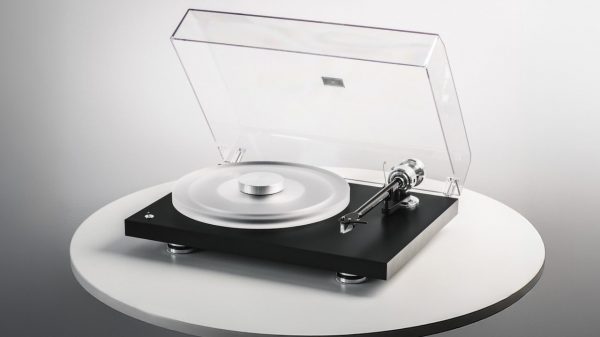
Take the Pro-Ject X2 B. It offers both single-ended and balanced outputs, but to run it fully balanced you must use an MC cartridge. Balanced MM setups are mostly marketing theater.
Is there a big gap between the Pro-Ject Debut PRO and the X2 B? Fair question.
Running the same MM cartridge—say, a Sumiko Wellfleet—the X2 B still has the edge in impact and resolution, but the gap isn’t enormous. You’re not missing half the music.
That changes dramatically once you introduce an MC cartridge and a proper balanced phono stage—whether it’s one of Pro-Ject’s balanced designs or something like the Moon 610LP.
At that point, the difference isn’t incremental. Noise floor drops. Bass tightens and gains authority. Soundstage opens up in every direction. Dynamics stop feeling constrained.
In that configuration, the Pro-Ject X2 B goes from being a very good $1,799 turntable to a genuinely exceptional one—capable of competing with decks in the $2,500 to $3,000 range. I’ve heard enough tables at that level to say that with a straight face.
Balanced isn’t magic. It’s not mandatory. And it’s not for everyone.
But when noise is the enemy—and the system is built to exploit it—it can be transformative.

Here’s the catch—and it matters heading into 2026. The X2 B has crept up by close to $400 since launch. At that price, it’s no longer the obvious value play it once was. That puts buyers in an awkward middle ground where it may make more sense to either step down to something more affordable—or step up to a Technics direct-drive table that offers rock-solid speed stability, lower noise, and fewer “what-ifs” long-term.
Read my in-depth review | $2,149 at Turntable Lab | Audio Advice
Technics SL-1300G ($3,999)

Depending on how far your budget stretches, some of the best value-to-performance turntables still live in the $2,000 to $4,000 range—where engineering decisions matter more than cosmetics and long-term reliability starts to separate the serious designs from the flavor-of-the-month crowd.
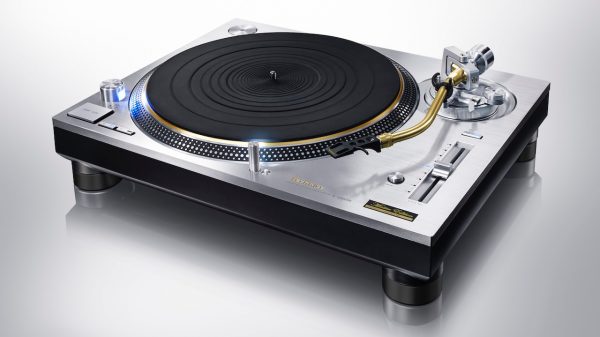
Building on the excellent ΔΣ-Drive (Delta Sigma Drive) motor control technology first introduced in the Technics SL-1200GR2 last year, Technics has taken the next logical step by pushing that technology upmarket. The SL-1300G combines ΔΣ-Drive with a more sophisticated iron-coreless direct-drive motor, with one goal in mind: eliminating minute motor vibrations to achieve exceptional rotational accuracy.
On paper—and more importantly in practice—that goal is largely met.
But here’s the question that now needs to be asked more carefully than it did in 2024: Does it make sense to spend just under $4,000 on the Technics SL-1300G?
The answer depends heavily on your existing system, record collection, and how allergic you are to upgrading again in five years. For the right listener, this genuinely could be the last turntable you ever need. Technics’ track record with direct drive motors speaks for itself, and history suggests these tables are built to survive moves, marriages, divorces, and at least one questionable rack choice.
They may not be the “sexiest” decks on the market, but speed accuracy, pitch stability, and mechanical reliability are very much their calling cards. The SL-1300G is also an excellent cartridge platform. We’ve heard it perform exceptionally well with a wide range of MM and MC cartridges, including high-end designs north of $1,000, which raises an uncomfortable question for pricier turntables: what exactly are you paying for beyond aesthetics and bragging rights?
Build quality is excellent throughout. The removable headshell alone makes cartridge swapping painless—something we’ll always support. Those with more modest cartridge budgets could run an Ortofon 2M Bronze today and move to something like a Hana EL or Denon DL-103 later without drama.
The platter is where Technics clearly wasn’t messing around. This isn’t decorative brass. The platter is a three-layer design: an aluminium die-cast base for rigidity, a 2mm solid brass top layer bonded to further suppress vibration, and a heavy rubber damping layer underneath. The added mass increases rotational inertia, which directly contributes to the SL-1300G’s outstanding speed stability.
The table itself weighs roughly 30 pounds, and yes—you’ll feel every one of them if you try to lift it casually. Inert is the operative word here.
Sonically, the presentation is exactly what you’d expect from a well-executed Technics design: excellent pace, strong low-frequency authority, layers of fine detail, and a sense of solidity between the speakers that never feels artificially hyped.
Now for the elephant in the listening room.
The price has jumped to just under $4,000, representing roughly a $700 increase since 2024. Nobody is questioning the quality, and we’re well aware that Technics—like everyone else—has dealt with parts availability and manufacturing pressures. Still, $700 is not nothing. That’s the cost of a very good phono stage, and it changes the competitive landscape in a meaningful way.
At $4K, the SL-1300G is no longer standing alone. VPI, Clearaudio, entry-level Michell Engineering, and higher-end Rega models are now firmly in the conversation—each offering different strengths, philosophies, and upgrade paths.
The SL-1300G remains an outstanding turntable and a benchmark for modern direct drive design. But at this new price point, it’s no longer an automatic recommendation—it’s a deliberate choice. And for many buyers in 2026, that means listening harder, comparing longer, and deciding whether absolute speed accuracy still outweighs everything else.
Learn more | $3,999 at Crutchfield | Audio Advice
Vinyl Nirvana Thorens TD-125 MKII Restoration

One of the most iconic belt-drive turntables of the 1970s, the Thorens TD-125, is now firmly back in demand. And not just for nostalgia reasons. Companies like Vinyl Nirvana offer fully custom restorations with modern tonearms and cartridge options that turn the TD-125 into something far more serious than a museum piece.
Thorens sold over 100,000 TD-125s in 1975 alone, which means there are still plenty of tables—and parts—circulating. What made the TD-125 special then still matters now: electronic speed control, pitch stability, and a heavy suspended design with a 7-pound platter. It was originally sold with Thorens’ own arm, but many owners quickly upgraded to SME arms, turning it into a highly flexible platform for experimentation.
The TD-125 remains relatively easy to service, modify, and restore, which explains its enduring appeal. Sonically, it doesn’t dig quite as deep in the low end as some modern designs, but pair it with something like an Ortofon 2M Black, Denon DL-103, or a Hana MC and it delivers a wonderfully musical, organic presentation with real character.
Why Buy a Restored TD-125 MKII from Vinyl Nirvana?
Because Dave Archambault is the real deal in a category crowded with people who absolutely are not. His customer service is unmatched, his packing borders on obsessive, and I would trust him to ship one of these tables to Israel without losing sleep.
He offers more than 40 hardwood plinth options, internal upgrades that materially improve performance, and restorations tailored for modern high-end cartridges. None of this is inexpensive—but none of it is half-baked either.
At this point, a restored TD-125 MKII typically lands between $2,800 and $3,200, depending on finish. Is it worth it? As a three-time customer, I’d say yes—without hesitation. But let’s not pretend this is casual spending. Dropping $3K puts you squarely into serious-money territory.

That said, I don’t think many new decks look this good, and there’s a very real sonic signature here that modern designs rarely replicate. Once you add a top-tier Hana or Ortofon cartridge, you’re looking at a $4K family heirloom—the kind of turntable your kids and grandkids will eventually draw long and pointed sticks over.
One last thing to remember: every TD-125 MKII restoration is a custom order and usually not listed on the website. If you want something immediately available, Archambault’s TD-160 Super restorations are still offered regularly.
Vintage isn’t cheaper. It’s just… permanent.
Where to buy: Contact Vinyl Nirvana to place a custom order.
The Bottom Line
Let’s stop dancing around it.
If you actually care about listening to records, most $300-and-under turntables are junk. Not “good for the money.” Not “great for beginners.” Just compromised, noisy, plasticky boxes that exist to monetize the vinyl trend—not to serve the music. They’re fine if your records are props for TikTok. They’re useless if the goal is sound quality.
Spending more on a proper turntable—whether that’s a well-engineered modern deck or a correctly restored vintage one—isn’t audiophile snobbery. It’s basic math. A good table lasts decades, protects your records, scales with better cartridges and phono stages, and doesn’t need replacing every 18 months when you realize something isn’t right.
These tables are for people who:
- Actually sit down and listen
- Own (or plan to own) more than 30 records
- Care about speed stability, noise floor, and tone—not just aesthetics
- Want a platform they can upgrade, not throw away
They are not for:
- Casual dabblers
- Trend collectors
- Anyone shopping exclusively by price or influencer hype
And let’s also address the elephant in the review room. When you see hi-fi reviewers casually recommending $10,000+ turntables, understand this: They either got it as a long-term loaner, paid well under 50%, or will never actually have to live with that purchase. That’s not cynicism—it’s how the industry works.
You don’t need a $10K turntable to enjoy vinyl. But you also shouldn’t kid yourself that the cheapest option is “good enough” if music actually matters to you.
Spend once. Spend smart. Buy a table you won’t feel the urge to apologize for later.
Because the goal isn’t bragging rights. It’s more music, better sound, and fewer regrets.
Related Reading:
- Best Phono Cartridges: Editors’ Choice
- Best Integrated Amplifiers: Editors’ Choice
- Game Changing Turntables Of 2025: How Smart Tech And Killer Design Are Making Vinyl Cool Again
- All Editors’ Choice Award Categories

















A. Kautz
December 23, 2025 at 7:07 pm
How about mentioning the Rega 50th anniversary edition? Ab
nd yess, you still can find it. Not sure how much the new skin adds and why (really) it wasn’t included in the 50th and also the new cartridge. But I do know that the 50th kicks butt.
Ian White
December 24, 2025 at 1:54 am
A.
Unless I’ve heard it, it is not eligible. But I agree that Rega is making killer decks.
IW
John K
December 23, 2025 at 9:14 pm
I’ve owned a rega planar 6 for a few years now, and it’s a phenomenal deck.
It doesn’t try and ‘ shout out, look at me’ ,it’s far more subtle than that, it draws you in and just sounds right, and with an audio technica at33pgmk2 cartridge, it’s sublime.
It’s taken me 20+ years to get to thus point, I now have my forever turntable.
You do need a good system to get the best out if it.
I’m using an icon audio PS 1.2 valve phono stage with transformers for the MC input, and it sounded truly excellent
Ian White
December 24, 2025 at 1:55 am
John,
Rega is really one of the most impressive high-end companies and I’ve always admired their unwillingness to follow everyone else. Great decks and their amps are pretty great too.
IW
Fredrik
December 25, 2025 at 4:16 pm
Linn Sondek – at least it use to be the benchmark
Ian White
December 25, 2025 at 6:04 pm
Fredrik,
Has not been for many years after some very large price increases. A fully tricked out Sondek in 2025 is almost as expensive as a mid-tier Kuzma, VPI, or top of the line Michell and all 3 offer superior performance.
IW