
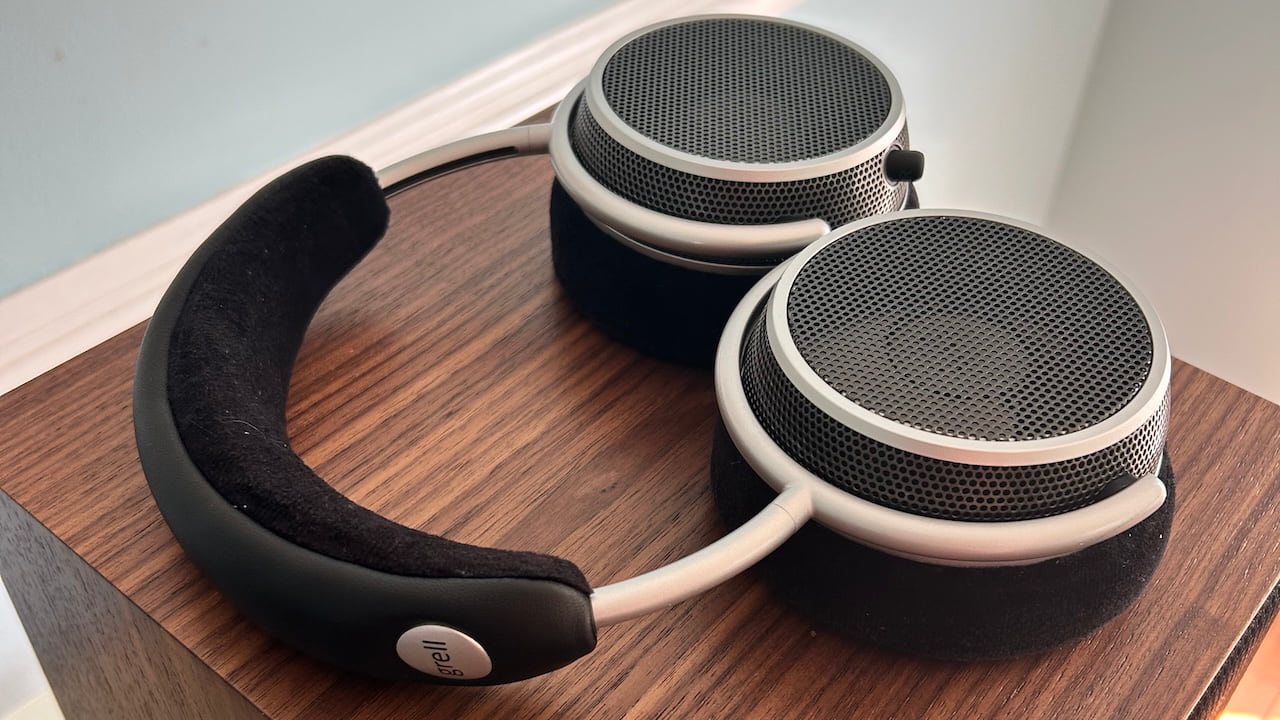
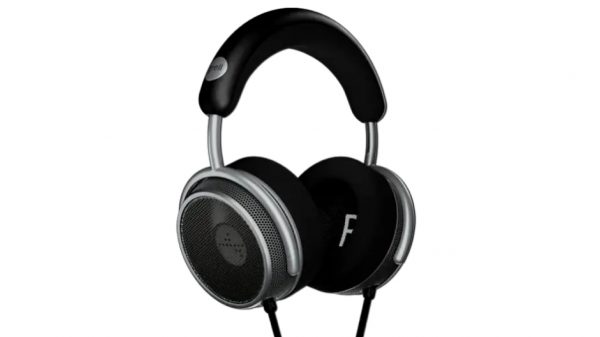
At CanJam NYC 2026, the Grell OAE2 open-back headphones review conversation started the moment Axel Grell’s latest design hit U.S. soil. Priced at $599, the Grell OAE2 is his follow-up to the OAE1 and a very deliberate attempt to answer a growing problem in personal audio: too many great-sounding headphones, not enough real differentiation. Everyone claims tonal accuracy. Everyone promises comfort. Everyone says theirs is the one you’ve been waiting for. Different flavor of the same strudel. And as most of you know — I’m rather particular about my strudel as a way to break the Passover holiday after 8 days of matzo.
Grell’s pitch is more specific and riskier. The OAE2 open-back over-ear design uses a newly optimized dynamic driver and a reworked acoustic housing to push sound forward, not just around your head. The goal is a more speaker-like presentation, something that feels placed in front of you rather than locked between your ears. It’s not a new idea. It’s just one that almost nobody actually pulls off.
If you’ve walked enough show floors, you know how this goes. Another startup, another quiet room, another promise that everything you’ve heard before was wrong. Cue Norah Jones. Cue the Eagles. Cue the polite nod while you check your watch and think about that piece of schnitzel coated with matzo meal you can’t wait to rush home to eat.
But when the badge says Axel Grell, the tone shifts.
Before launching his own brand, Grell spent decades at Sennheiser, helping create some of the most respected high-end headphones in the category. Not exactly a hobbyist with a soldering iron and a Kickstarter page. This is the guy companies quietly hope don’t show up with something better.
So the question isn’t whether the Grell OAE2 sounds good. At $599 in 2026, a lot of headphones sound good. The real question is whether it gives you a reason to care; whether that speaker-like imaging is more than marketing copy, and whether Grell has actually found a way to stand out in a category that’s starting to feel like a very crowded German bakery.
He seems to think he has. Now we find out if he’s right.
The Problem Isn’t Sound Quality—It’s Spatial Reality (And Nobody Fixes It)
In 2026, there are dozens of headphones that measure well, sound balanced, and check every box on paper. But most of them still deliver music the same way: directly into your head, with a presentation that feels locked between your ears. It’s wide, sometimes impressively so, but rarely convincing as a real acoustic space.
Axel Grell’s approach with the OAE2 doesn’t start with frequency response. It starts with how sound reaches your ear. The open-back, over-ear design incorporates a newly optimized dynamic driver and an acoustically refined housing intended to improve airflow and control how the driver interacts with the ear itself. Instead of firing straight into the ear canal like most designs, the OAE2 is engineered to project sound forward, engaging the outer ear and using those natural cues to create a more speaker-like soundstage in front of the listener. That’s the theory. And it’s a big swing, because most headphones that claim this never quite get there.
Technically, the OAE2 keeps things grounded. It uses a 40 mm dynamic driver with a bio cellulose diaphragm, tuned for tonal accuracy without leaning into obvious coloration. The housing is engineered to better manage airflow, reducing unwanted resonance while preserving its open character. The goal is not just clarity or detail, but stability, placing instruments in a way that feels less artificial and more anchored in space. It is not trying to inflate the soundstage for effect. It is trying to make it believable, with instruments and musicians positioned in front of you in a way that makes sense rather than calls attention to itself.
Technical Specifications & Wearability
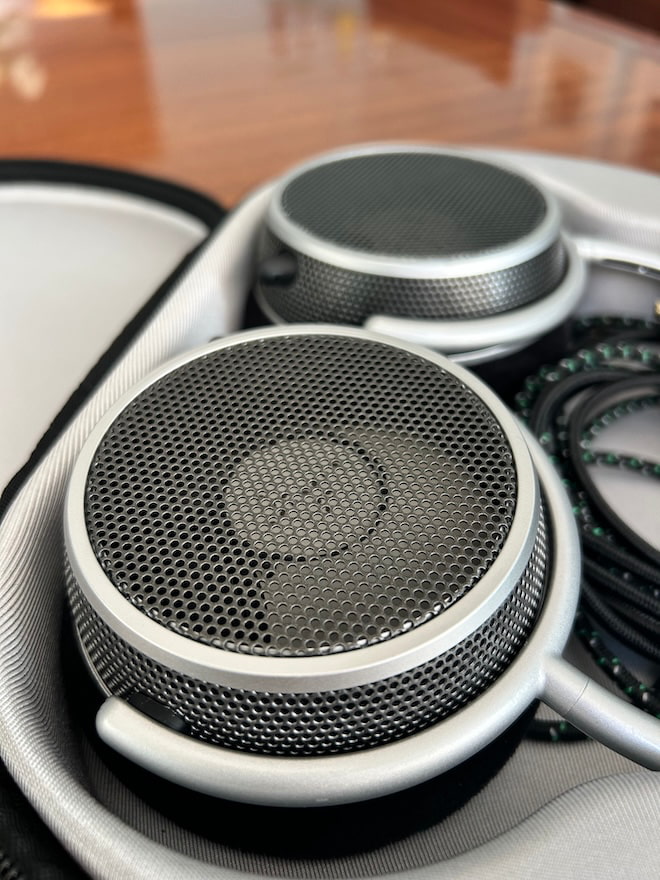
The Grell OAE2 keeps things practical out of the box. It ships with two detachable 1.8-meter cables; a 3.5 mm single-ended and a 4.4 mm balanced, along with a screw-on 3.5 mm to 6.3 mm adapter for traditional headphone amplifiers and a protective carry case.
From a technical standpoint, the OAE2 stays close to the OAE1 with some measured refinements. The circumaural open-back design uses a dynamic transducer rated from 12 Hz to 34 kHz within ±3 dB, extending to 6 Hz to 46 kHz at -10 dB. Nominal impedance is 38 ohms with 100 dB sensitivity at 1 kHz (1 VRMS), making it easy to drive from portable sources while still benefiting from a capable amplifier.
Total harmonic distortion is rated at 0.05 percent at 1 kHz and 100 dB. Weight comes in at 378 grams without the cable—about three grams heavier than the OAE1. German engineering tends to add, not subtract.
In use, that translates into flexibility. The OAE2 doesn’t require a powerful desktop amplifier to perform, but it scales when paired with one. Support for both single-ended and balanced connections adds to that versatility across different setups.
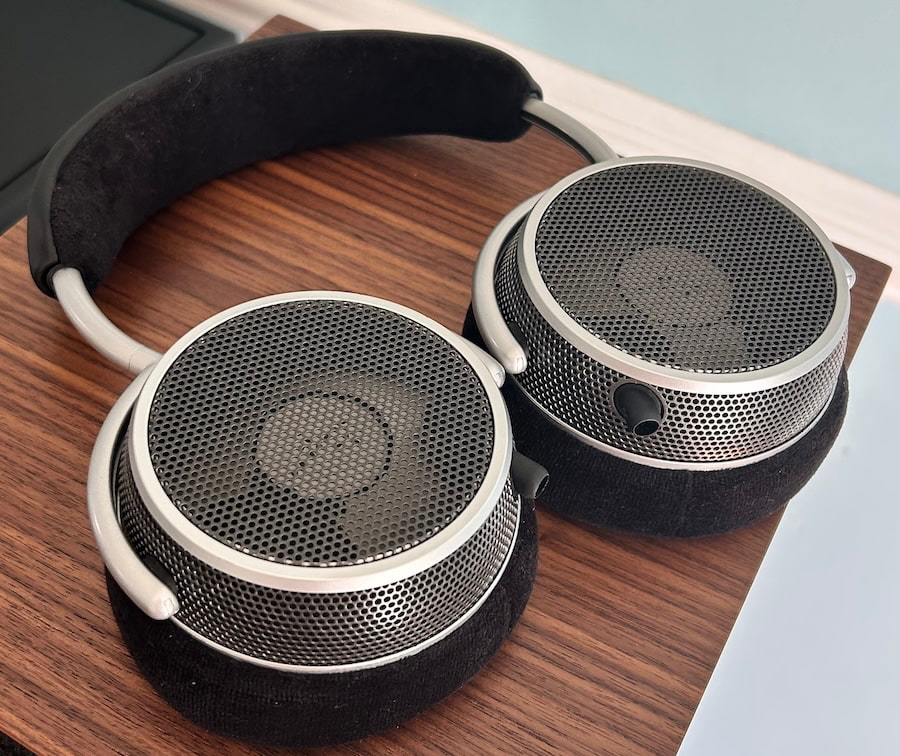
Build quality follows the same approach. The OAE2 uses a metal frame with a modular design that allows for replaceable parts, which should extend its usable lifespan compared to sealed designs. At 378 grams, it’s not especially light, but the weight is distributed across a padded headband and a circumaural fit designed for longer listening sessions without excessive pressure.
Industrial Design, Fit, and Real-World Comfort
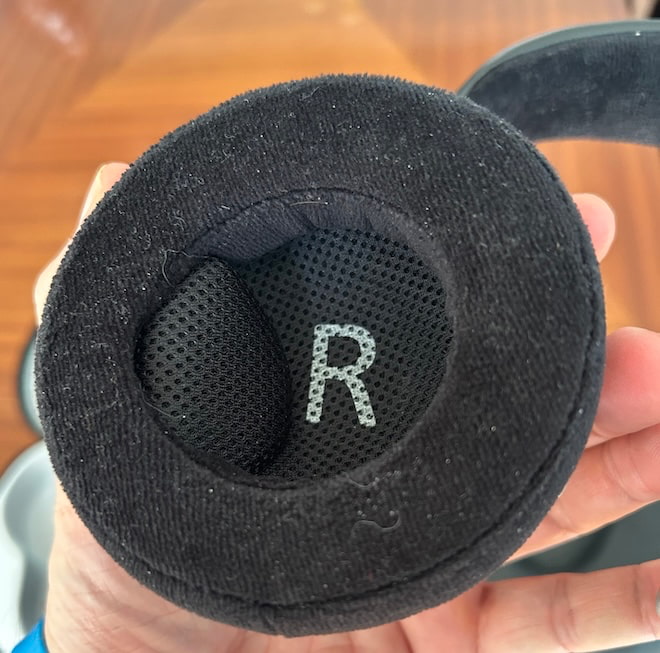
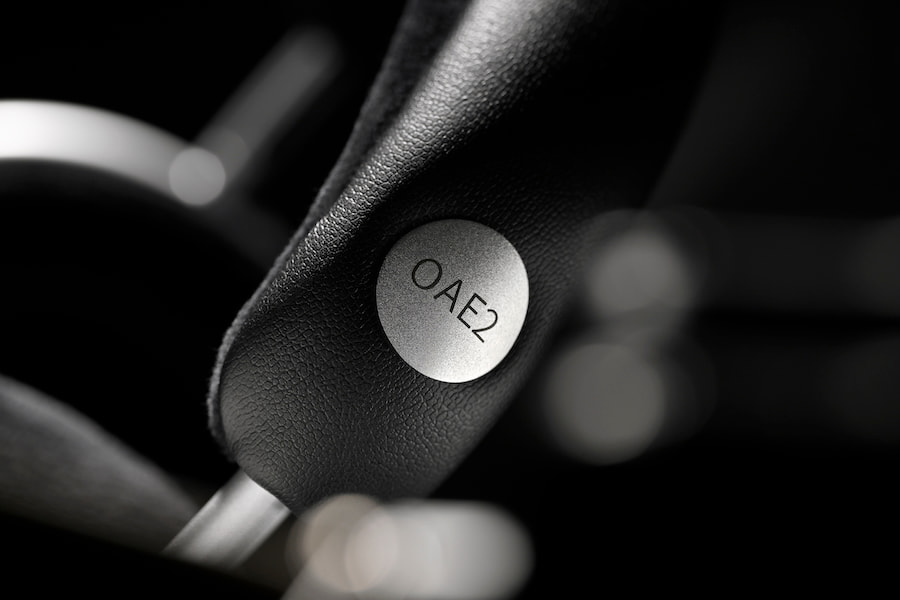
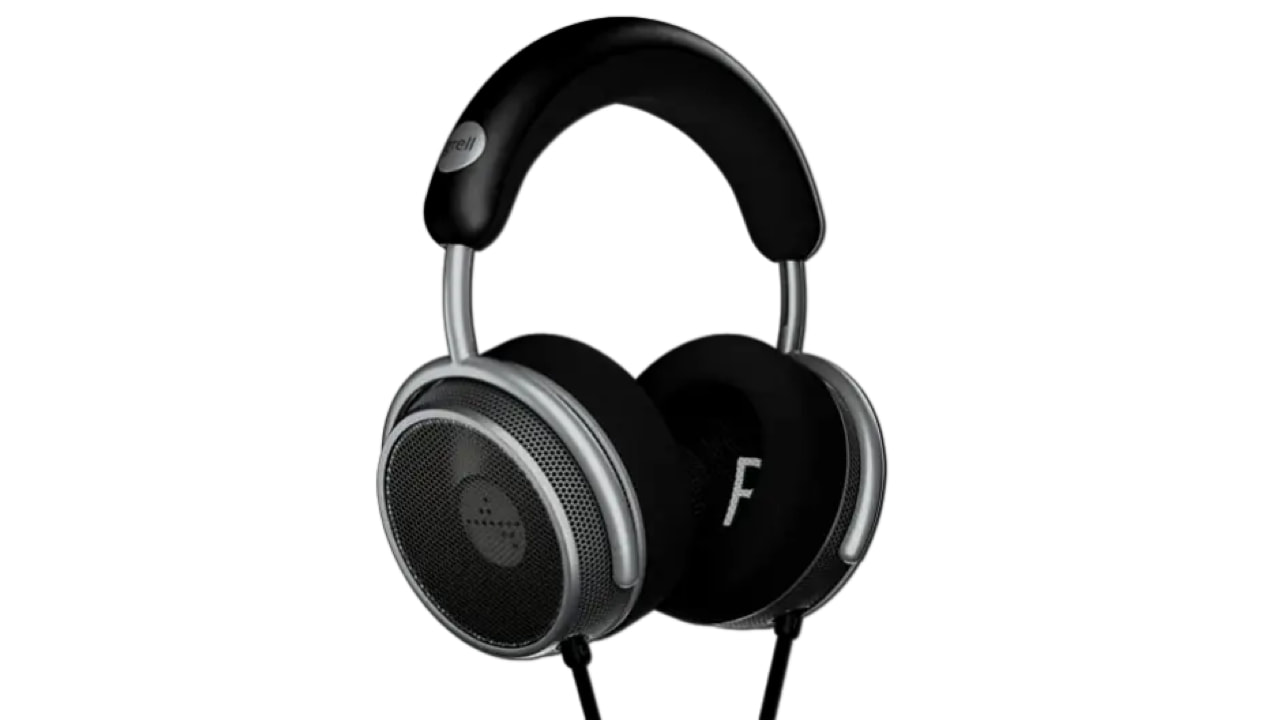
The Grell OAE2 makes a strong first impression where it matters most — around the ears. The earcups and earpads are well executed, both in terms of design and comfort. The circumaural fit is secure, and the pads strike a good balance between softness and support, making them easy to wear for extended sessions. Clamping force is slightly above average out of the box, but not to the point of discomfort, and it does ease up a bit with use.
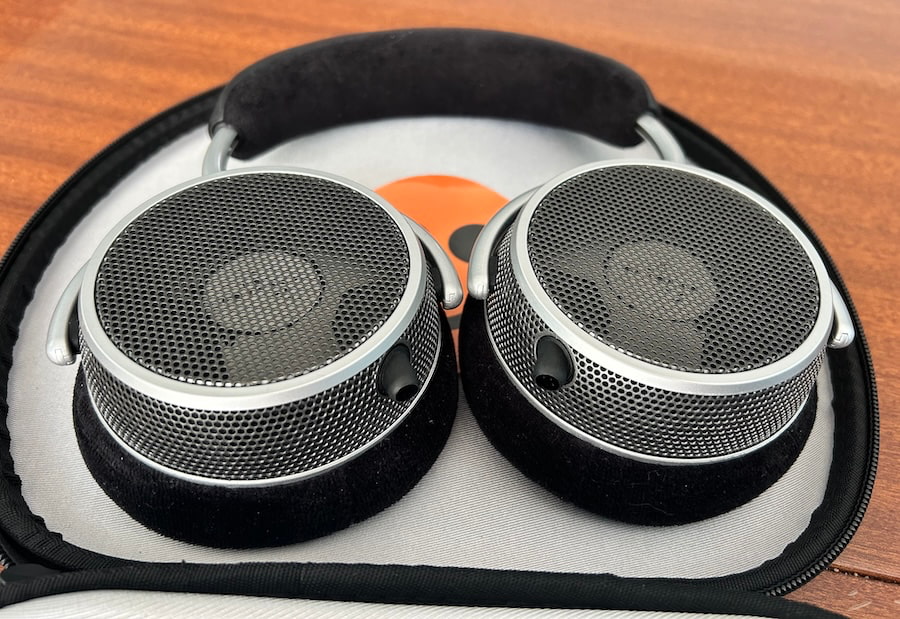
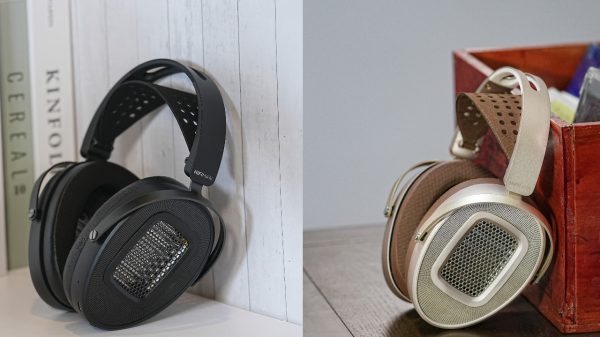
The industrial design leans more functional than flashy. The earcups rotate flat for storage, which is a practical touch and makes them easier to pack away than some bulkier open-back designs. That said, the overall shape, particularly the headband, feels wider than it needs to be. Grell’s intent is clear: distribute weight more evenly across the head. In practice, it works from a pressure standpoint, but visually it makes the headphones look larger and less streamlined than some competing designs. These aren’t trying to be svelte, and it shows.
The headband itself is adequately padded, but it’s not a standout. During longer sessions, I did notice a bit of a hotspot developing at the top of my head. It’s not a dealbreaker, but it’s also not class-leading comfort. This is one area where companies like Meze Audio still have the edge with more refined suspension-style designs that disappear a bit more when worn.
Overall, the OAE2 is comfortable and thoughtfully built, especially around the earcups, but not without a few trade-offs. The fit improves with time, the materials feel solid, and the design choices are clearly intentional, even if not all of them are perfect.
Case, Cables, and Everyday Practicality
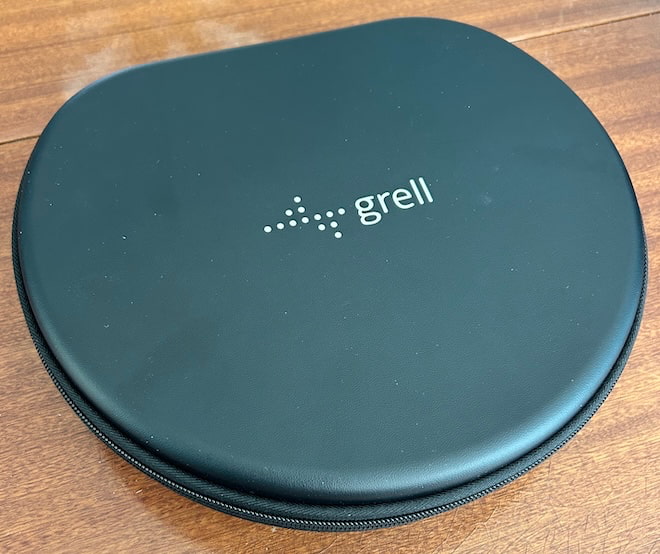
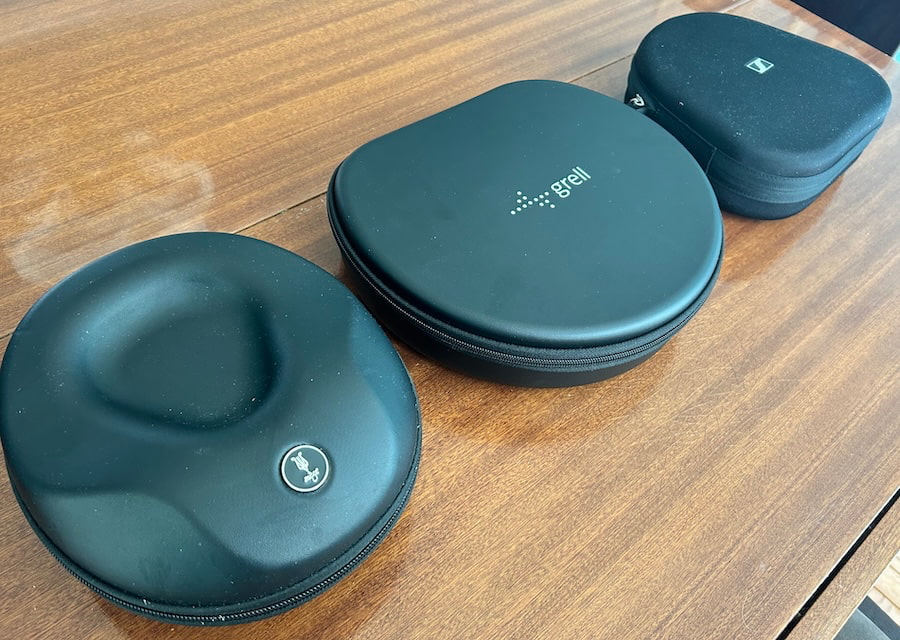
The included carry case deserves a quick discussion because it’s both well executed and slightly impractical at the same time. The curved design looks great and offers solid protection, but it’s large. Not “toss it in a small bag and go” large—more like “hope you brought a proper backpack” large. If you’re commuting with a compact setup, this isn’t helping. Functional, yes. Compact, not even close.
The supplied cables are a better story. Both the 3.5 mm single-ended and 4.4 mm balanced options feel well made, with no noticeable microphonics or handling noise. They’re not overly thick or stiff either, which is something that still manages to trip up a lot of otherwise good designs. I’m not a fan of bulky cables, detachable or otherwise, and these stay out of the way.
Even in situations where these probably don’t belong, like sitting in a local café with an open-back headphone, the cables don’t get in the way. Keep the volume reasonable, don’t annoy the person next to you, and it works. Not exactly what they were designed for, but then again, neither is half the gear people drag into coffee shops.
Listening
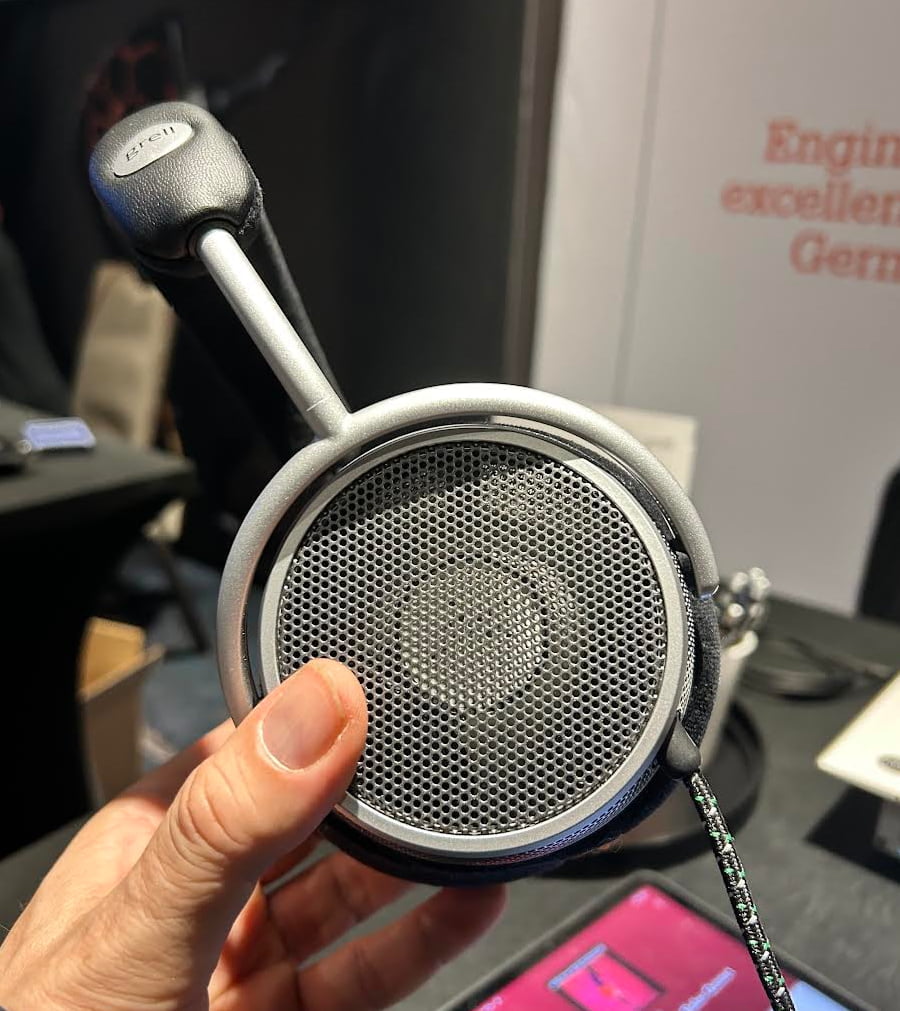
Before putting the Grell OAE2 into rotation, it was worth revisiting what Axel Grell said at CanJam NYC 2026. His goals weren’t vague or marketing-driven. They were specific: a neutral tonal balance, a headphone that’s easy to drive across a wide range of sources, and a presentation that projects sound in front of the listener rather than inside your head. Three targets. Miss one and the whole thing starts to fall apart.
Open-back headphones might be the default recommendation in Head-Fi circles, but step outside that bubble and the appeal drops quickly. I’ve spent enough time working out of a local coffee shop with a rotating cast of headphones from Grado, Meze, Beyerdynamic, Sennheiser, and Bowers & Wilkins, to know how that conversation usually goes. The baristas are curious. The people at the next table, less so. Open-backs don’t isolate, and in a crowded room, that matters. They’re not designed for that environment, and they don’t pretend to be. Passive isolation is not their strong suit. Neither is the avocado and smoked salmon tartine. Stick with the lasagna.
For this review, I used a mix of portable and desktop sources to see how well the OAE2 holds up across different use cases. On the go, that included an iPhone 17, a MacBook Air, and the iFi Go Bar Kensei dongle DAC. At the desk, I rotated through an iMac paired with the FiiO K11 R2R, the Apos x Community Gremlin and Merlin combination, and TEAC’s UD-507, HA-507, and NT-507T stack. The idea wasn’t to find the perfect pairing. It was to see how close Grell gets to his three goals under normal conditions.
Right off the bat, distracted by the she/me/they/it at the next table in a keffiyeh that looked more Amazon Prime than Ramallah, hammering away on a fresh round of performative outrage, I queued up some Ofra Haza and Leonard Cohen on Qobuz and got to work.
The iFi GO Bar Kensei isn’t lacking for power. It delivers 477 mW into 32 ohms from its balanced output and 300 mW from the single-ended 3.5 mm jack, which is more than enough for most portable listening scenarios.
Under the hood, it uses a 16-core XMOS microcontroller paired with a 32-bit Cirrus Logic DAC. Solid, well-proven components rather than anything experimental. It supports up to 32-bit/384 kHz PCM, native DSD256, 2x DXD, and full MQA decoding. Not that anyone actually uses that anymore.
Sonically, it leans warm with good control through the bass, which makes it a stable and easy pairing across a range of headphones.
I barely had to push the volume past 50% before it was obvious the OAE2 isn’t even remotely difficult to drive. That checks one of Grell’s boxes right away.
Ofra Haza and Leonard Cohen aren’t with us anymore, but there was a strange kind of solace in hearing both through this setup. When you’ve got family, and a future son-in-law, under bombardment, you take your calm where you can find it. Even if it comes through a pair of open-backs in a coffee shop that really wasn’t built for either.
Tonally, the Grell does what it set out to do. Neutral, clean, and composed from top to bottom. No obvious emphasis, no artificial warmth to make things sound bigger than they are. What stands out more is how it handles the extremes; both the low end and the top, where the tuning choices feel deliberate, and likely to matter depending on what you listen to and how you listen.
Master of Your Own Domain
Bass enthusiasts might have mixed feelings about the Grell. I don’t. My listening habits have changed at 56. TOOL, Rush, Metallica, AC/DC—they’re still in rotation, just not at levels that used to rattle windows, terrify small animals, and prompt Mrs. Roth next door to linger a little too long at the bathroom window. Different priorities now.
With the iFi GO Bar Kensei, the low end hits with authority, arguably more so than the FiiO desktop DAC/headphone amp in this setup, but it never crosses into excess. The OAE2 isn’t trying to overwhelm you with bass weight, and it doesn’t. What it does instead is deliver bass that’s tight, quick, and well-defined. Notes are easy to follow, texture is there, and nothing bleeds into the midrange.
If you’re looking for something that rattles your skull, this isn’t it. But it’s also far from thin or lacking. The emphasis here is control and precision. You can actually hear the shape of bass lines, not just feel them. I’ll take that over a headache any day.
The upper bass and lower midrange is where things tend to go sideways with a lot of headphones. Some add a little extra weight to give instruments and male vocals more body, which can work until it starts masking detail or turning everything into a warm blur. It’s a fine line between texture and excess, and not everyone walks it cleanly.
Nick Cave is my personal poet, and his voice is a reliable test for this region. “Avalanche,” “Into My Arms,” and much of his recent material will tell you very quickly whether a headphone gets it right. That gravel, the depth, the way his voice sits in the mix. It either comes through with clarity and presence or it gets thick and loses definition.
The Grell takes a more restrained approach. There’s no extra padding here, no artificial weight to make things sound bigger than they are. It’s clean, direct, and honest. Call it a plain piece of strudel if you want, but when the recording brings the texture and weight, the OAE2 lets it come through without interference. And when that happens, it works.
The TEAC stack is probably overkill for the Grell, but it does bring something extra to the table. More drive, more control, and a sense of grip that tightens everything up without changing the overall character. Call it a little more spice in the filling.
With Nick Cave, that added control translated into more authority. His voice had weight and presence, but more importantly, it had placement. Instead of sitting inside my head like most headphones tend to do, he was positioned in front of me. Not pushed halfway across the room, but just far enough forward to feel anchored. Maybe a foot or so, with stable imaging that didn’t wander.
It’s an interesting effect, and one that lines up with what Grell is trying to achieve. But it’s not universal. The result depends heavily on the recording. Some tracks benefit from that forward projection, others less so. When it works, it’s convincing. When it doesn’t, it reminds you that you’re still listening to a pair of headphones.
Wide, Swirling, and Under Control
Switching over to electronic music made it easier to hear what the Grell OAE2 is doing right, and where it draws a line. This is where a lot of headphones lean into added weight and low end emphasis to create impact. The OAE2 doesn’t take that route.
With Boards of Canada, The Orb, Kraftwerk, Deadmau5, and Aphex Twin in rotation, the presentation opens up in a way that feels both wide and fluid. Ambient passages from Boards of Canada and The Orb have that swirling, almost liquid quality, with layers moving around each other instead of collapsing into a flat wall of sound. The stage isn’t just wide for the sake of it. It has motion and space, which makes these recordings more immersive without sounding artificial.
Bass remains tight and controlled rather than dominant. Kick drums have definition, not just force, and synth bass lines are easy to follow without bleeding into the midrange. There’s no extra lift to make things sound bigger than they are, which might disappoint listeners looking for a more physical presentation. But if you care about precision and separation, this approach works.
Speed is another strength. Aphex Twin’s more complex passages don’t turn into a blur, and Deadmau5 tracks maintain their structure even as layers build. With Kraftwerk, the minimalist arrangements benefit from how cleanly each element is presented. Nothing feels crowded or forced together.
The forward presentation adds another dimension. Certain elements, especially synth leads and percussive details, feel slightly projected rather than locked inside your head. It’s subtle, but combined with that width and sense of movement, it gives electronic music a more organized and engaging presentation.
If your goal is maximum bass impact, there are headphones that will give you more of that. The OAE2 is more about control, space, and letting the music breathe.
Clarity, Air, and Zero Sugar Coating
I listen to a lot of female vocals. It’s a thing. Amy Winehouse, Nina Simone, Ella Fitzgerald, Tori Amos, Joni Mitchell, Patsy Cline, Dolly Parton. That range will expose any issues in the upper midrange and lower treble very quickly, and I’m more sensitive there than most. I also tend to listen to vocals and jazz at higher volumes, so if a headphone gets aggressive or starts pushing too hard in that region, it’s a problem.
The Grell walks that line carefully. It doesn’t roll off early to play it safe, but it also avoids getting sharp or brittle. Recordings that are hot will still sound hot. There’s no smoothing over the edges to make everything more pleasant than it really is. That matters, because there’s a difference between honesty and harshness.
Amy Winehouse is a perfect example. “Valerie” from the BBC Sessions has a very present top end. It can sound a little hard on the wrong system. Through the OAE2, that edge is still there, but it doesn’t turn into something fatiguing. You hear the bite, but you also hear the texture in her voice.
With the right source or amplifier, female vocals come through with a sense of presence that feels intentional. They’re slightly forward, but not unnaturally so. Nina Simone’s weight, Ella Fitzgerald’s control, Joni Mitchell’s phrasing, Tori Amos’ intimacy, Dolly Parton’s quiver. It all comes through without added gloss or restraint.
If anything, the OAE2 rewards good recordings and doesn’t hide the flaws in weaker ones. That may not be for everyone. But when everything lines up, it works.
The Bottom Line
The Grell OAE2 doesn’t try to win by doing everything louder, bigger, or more dramatic than the competition. That’s probably the smartest decision Axel Grell made. In a market full of very good headphones chasing the same tuning targets, the OAE2 focuses on how sound is presented, not just how it measures. The result is a headphone that delivers a clean, neutral tonal balance, excellent control from top to bottom, and a spatial presentation that, at its best, pushes elements slightly in front of the listener rather than locking everything inside your head. It’s not a gimmick. It doesn’t work equally well on every recording. But when it clicks, it’s different enough to matter.
What’s good is the balance. The OAE2 is easy to drive, scales with better gear, and avoids the common traps in the upper bass and lower midrange that can muddy things up. The low end is tight and articulate without trying to overwhelm you, and the treble walks a careful line between extension and restraint. Build quality is solid, the modular design makes sense for long-term ownership, and the included cables are practical and well thought out.
What’s great is the intent, and in many cases, the execution behind the presentation. That forward projection, combined with a wide and stable soundstage, gives certain recordings a sense of placement that stands out in this price range. It’s not about being the most exciting listen. It’s about being one of the more convincing ones.
What’s not so great? Comfort is good, not class-leading. The headband can create a hotspot over longer sessions, and the overall design isn’t as compact or refined as some competitors. The case is large enough to be inconvenient for portable use. And if you’re chasing heavy bass impact or a more colored, forgiving sound, this isn’t your headphone.
Who are these for? Listeners who value neutrality, control, and spatial realism over hype. People who want to hear into recordings, not just be impressed by them. If you listen to a lot of vocals, jazz, acoustic, or well-produced electronic music, the OAE2 makes a strong case for itself.
Would I buy them? Yes.
As for whether this represents a new chapter in Axel Grell’s legacy, that’s the more interesting question. The brand he helped build into a global force is navigating an uncertain future, and the headphone space it once dominated has moved faster than most expected. The OAE2 doesn’t try to recreate the past. It’s a quieter statement than that. But it’s also a clear one: Grell still knows exactly what he’s doing.
Pros:
- Neutral, well-balanced tuning with excellent control across the frequency range
- Forward, speaker-like presentation that can sound more natural on the right recordings
- Easy to drive but scales well with better sources and amplification
- Tight, articulate bass with strong texture and separation
- Solid build quality with modular, replaceable components
Cons:
- Headband comfort is good, but not class-leading; hotspot possible over long sessions
- Large carry case limits portability
- Design feels wider and less compact than some competing models
- Bass may lack impact for listeners who prefer a heavier low-end presentation
- Forward imaging effect is recording-dependent and not always consistent
Where to buy:
Related Reading:
- Audio-Technica ATH-ADX7000 At CanJam NYC 2026: The Dynamic Featherweight Flagship That Thinks It’s An Electrostat?
- Grell OAE2 Open-Back Headphones Debut At CanJam NYC 2026 With Forward Projecting Soundstage You Have To Hear To Believe
- Grado Signature S550 Open-Back Headphones Bring Warmer Tuning, Same Brooklyn Attitude
- Best Audiophile Headphones (Wired): Editors’ Choice











Randy Nancy
March 31, 2026 at 2:44 pm
Outstanding job on this review. Actual criticism.
I looked at your CanJam coverage and thought that they looked fairly compact.
I guess not.
Price seems reasonable.
Ian White
March 31, 2026 at 6:23 pm
Appreciate the support. For telling the truth.
They’re not compact at all. And my family thought they were very large looking on my head. Which is also large.
For the price, they are excellent headphones. Will be on my Editors’ Choice list for the first half of 2026 for sure.
IW