
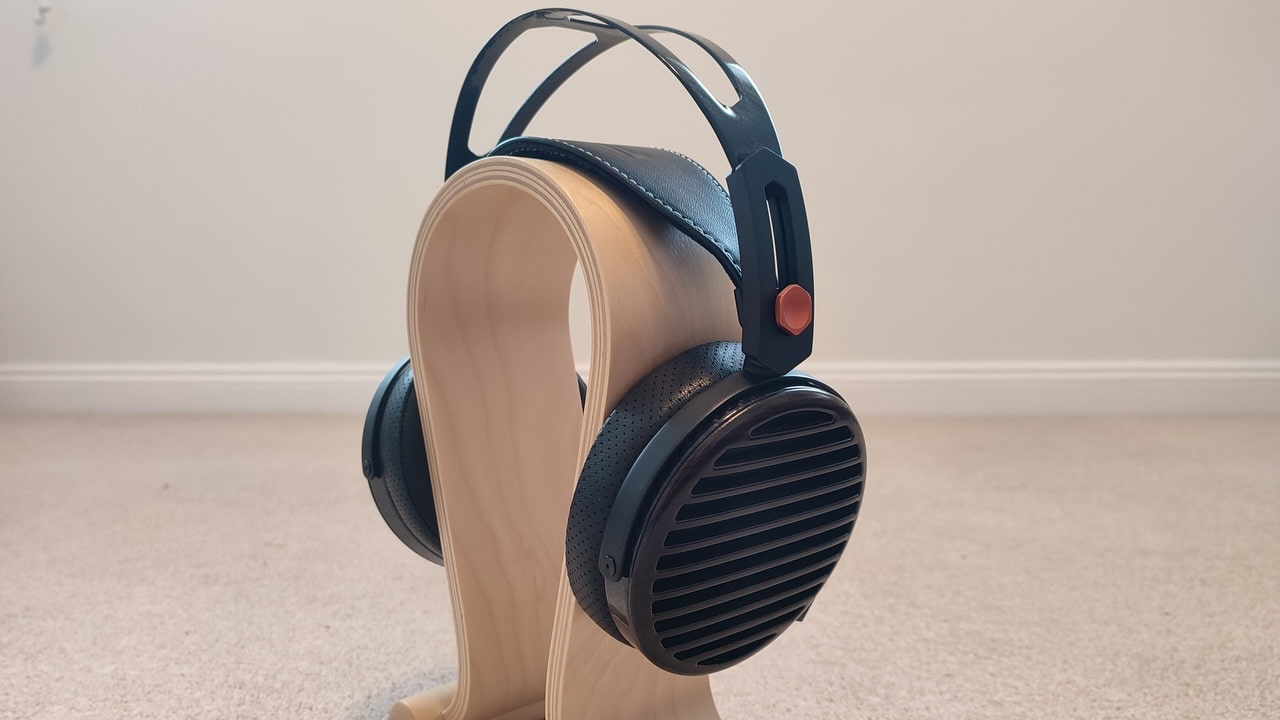
FiiO has built its reputation on delivering well-designed, well-performing DACs, headphone amplifiers, and portable audio products that consistently offer strong value for the money. While the company is still relatively new to the full-size, over-ear headphone category, its recent releases have been met with positive reception, suggesting that this isn’t a side project so much as a deliberate expansion. The FT7 represents the top of FiiO’s current headphone lineup, and at $699, it lands well below the asking price of many flagship open-back planar magnetic designs from established rivals.
That pricing comes with context. FiiO introduced more than three dozen new products in 2025, followed by an already busy start to 2026, underscoring an aggressive development cycle that few audio brands can match. Releasing the FT7 during a period that also saw new models from Dan Clark Audio, HiFiMAN, Sendy Audio, and Meze Audio was a calculated move, not a quiet one. At $699, the FT7 isn’t positioned as a budget alternative—it’s asking to be taken seriously in a crowded, highly competitive segment.
The open question is straightforward: does the FT7 meaningfully justify its place among well-established planar competitors, or does its aggressive pricing simply highlight how difficult this tier of the market has become?
Planar Magnetic Technology & Core Specifications
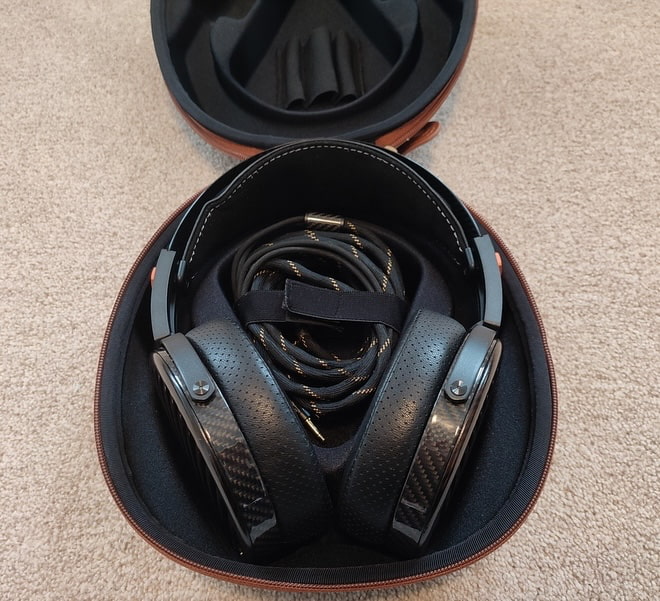
At the center of the FT7 is its planar-magnetic driver design, which is clearly where FiiO has focused most of its engineering effort. Each driver measures 106 mm in diameter, placing it among the largest planar drivers currently used in a full-size headphone. Larger drivers don’t guarantee better sound on their own, but they do allow for greater air movement and lower distortion when properly implemented—something FiiO is clearly aiming for here.
The diaphragm itself is extremely thin, measuring one micron, and uses a multi-layer coating of gold and silver. According to FiiO, this combination is intended to balance low-frequency weight with upper-frequency clarity. Those claims are easy to make on paper, so whether the materials translate into meaningful sonic benefits is something best judged during listening rather than assumed from the spec sheet.
Driver control comes from dual-sided magnet arrays, with nine high-strength neodymium magnets per side arranged in a uniform pattern. The goal here is consistent magnetic force across the diaphragm, which in theory improves detail retrieval and dynamic stability while reducing uneven motion—standard planar principles, executed at a relatively ambitious scale.
FiiO extends that attention to detail to the supplied cable. The FT7 ships with a 6N OCC copper cable that has undergone extended cryogenic treatment, a process intended to relieve internal stress in the conductor. The cable is insulated with PFA, chosen for its durability and electrical properties rather than marketing flash. Whether these choices materially affect the sound is always open to debate, but they do reflect a design approach that prioritizes consistency and build quality over shortcuts.
Design & Comfort
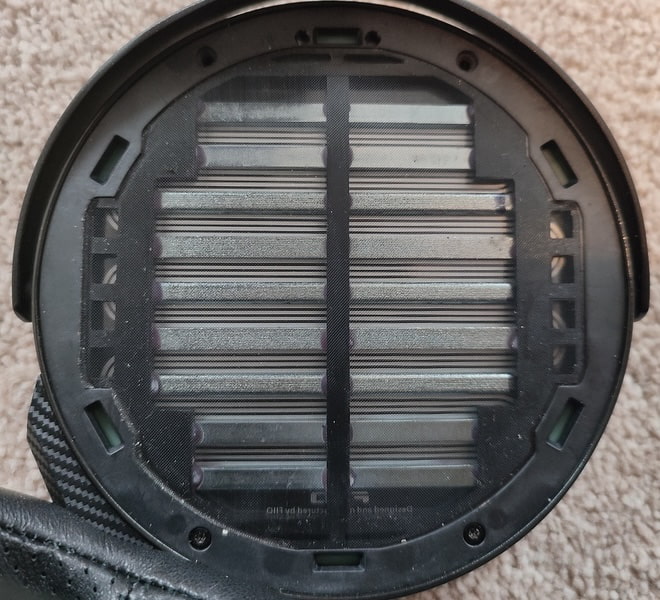
Included with the headphones is the supplied three-meter cable, which terminates in a 4.4 mm Pentaconn balanced connector. For users without a 4.4 mm output, FiiO includes adapters for both ¼-inch (6.35 mm) and 4-pin XLR, so connectivity shouldn’t be a limiting factor regardless of amplifier choice.
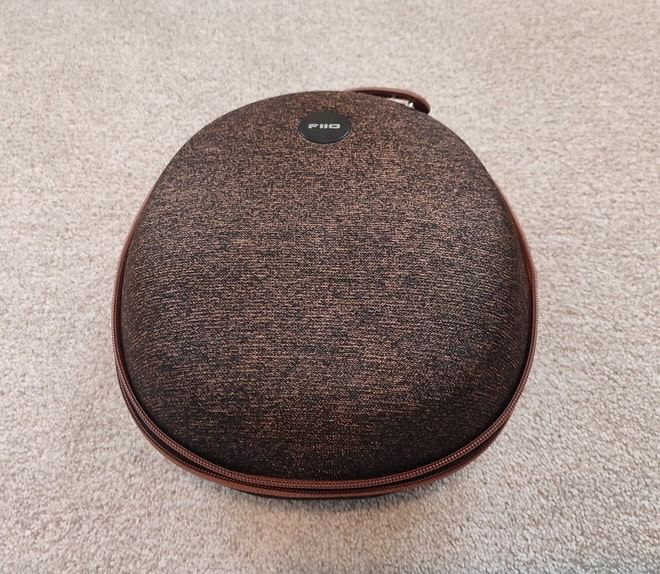
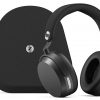
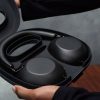
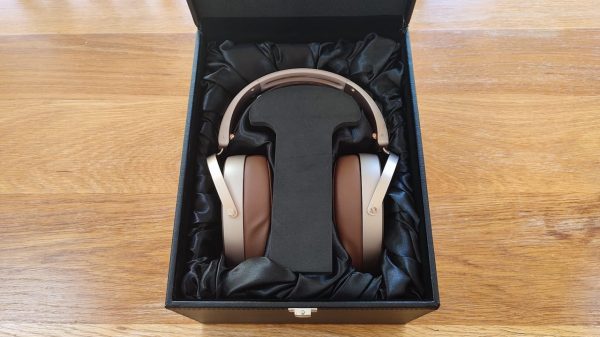
FiiO’s familiar semi-hard carrying case also returns with the FT7. It’s similar in concept to the cases used by Focal, finished in Yaoli linen that feels durable and appropriately premium. Two sets of earpads are included: the perforated lambskin pads fitted at the factory and a second set of fabric pads, giving users a straightforward way to fine-tune comfort and tonal balance.
The cable itself is the weakest part of the package. It’s stiff, relatively heavy, and prone to holding its shape, which makes desk use less pleasant than it should be. It tends to get in the way rather than disappear. Given what brands like Sendy Audio provide with similarly priced models such as the Egret, this feels like an area where FiiO could and should do better.
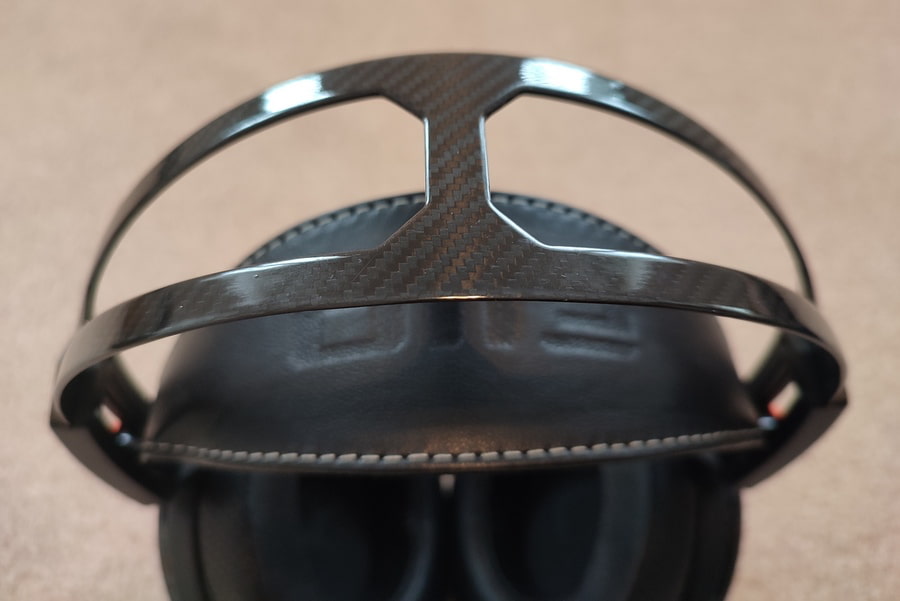
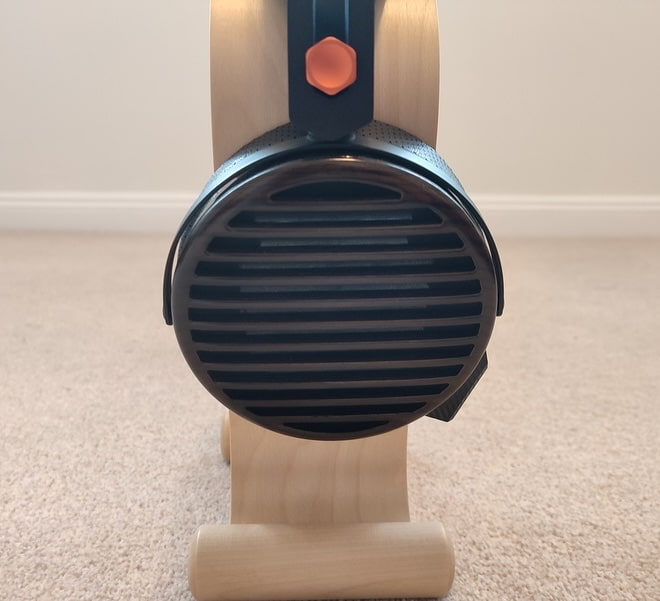
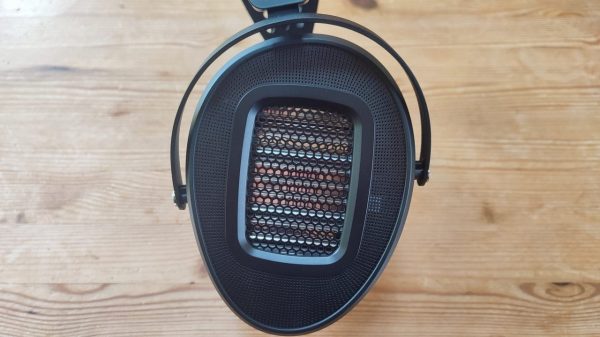
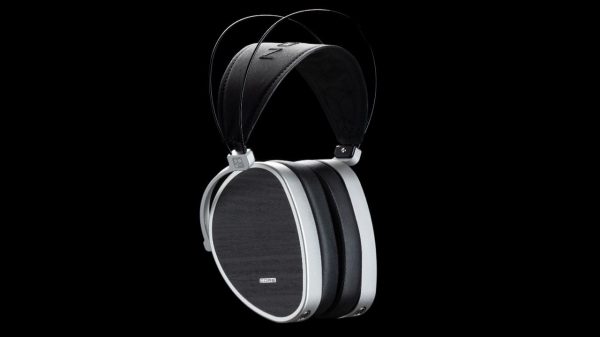
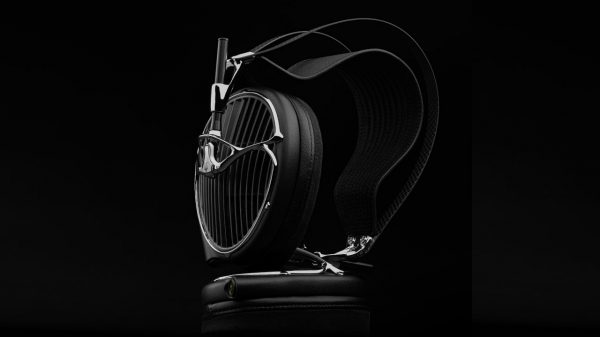
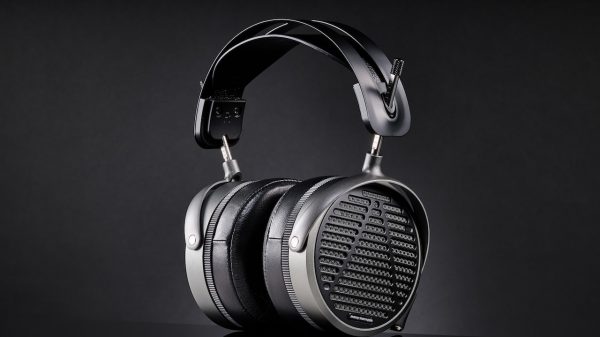
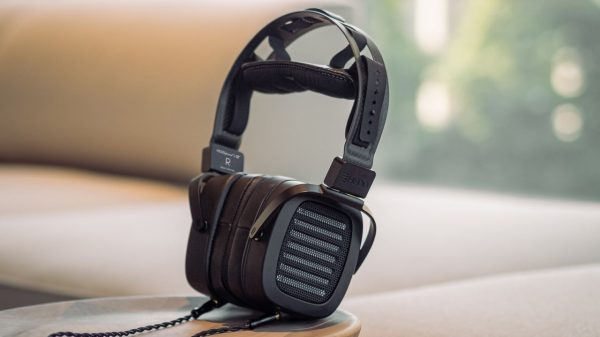
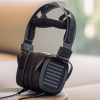
By contrast, the material choices used on the headphones are clearly a priority. The outer grilles are made from zebrawood sourced from West Africa, and both the cups and headband structure use real carbon fiber, not cosmetic trim. That combination is still uncommon in this price range and helps distinguish the FT7 from more conventional metal-and-plastic designs.
The extensive use of carbon fiber also keeps weight down. At 427 grams, the FT7 is light for a full-size planar magnetic headphone. Combined with the plush earpads and suede leather headband, this results in a comfortable fit over long sessions. Hotspots at the top of the head are a common issue with large planars, and in this case, they simply didn’t materialize during extended listening.
Not everything about the physical execution fully comes together. The headband adjustment mechanism relies heavily on plastic and feels clunky and underdeveloped compared to the rest of the build, and there is a noticeable amount of creaking when handling the headphones or putting them on.
These issues don’t negate the thoughtful material choices or the impressively low weight, but they do chip away at the sense of refinement. The FT7 looks and wears like a premium design, yet the adjustment system and audible flex serve as reminders that fit-and-finish still matter as much as materials when you’re asking to be taken seriously at this level.
Listening
I spent several months with the FT7, using it across a wide range of material and listening scenarios. Music ranged from mellow acoustic recordings to more aggressive electronic and rock tracks, streamed via Spotify as well as locally stored hi-res FLAC files. Amplification duties were shared between compact dongle DACs, including the Campfire Audio Relay, and larger desktop setups such as my long-standing SMSL DO400 paired with the Aune S17 Pro. This gave a good sense of how the FT7 behaves with both modest and more capable sources.
Across that range of gear, the overall tuning of FiiO’s flagship over-ear headphone can best be described as mildly V-shaped. There are small but clearly audible lifts at both ends of the frequency spectrum, with a touch more emphasis in the bass and upper treble compared to the midrange. The effect isn’t dramatic or exaggerated, but it does give the FT7 a presentation that leans slightly toward energy and clarity rather than strict neutrality.
Bass
The FT7 has a subtle lift in the mid-bass, which gives drums and electronic elements a bit of extra weight without becoming dominant. The emphasis is restrained rather than showy, adding impact and definition while avoiding any sense of bloat or overhang. For most listeners, this will come across as controlled and pleasing rather than bass-forward.
Low-frequency extension, however, doesn’t reach quite as deep as some competing planar magnetic designs. There is a gentle roll-off beginning around the sub-50 Hz region, which becomes apparent on material that relies heavily on sustained sub-bass energy. On Hans Zimmer and James Newton Howard’s “Why So Serious?”, the very low-frequency swell at roughly the three-and-a-half-minute mark required more effort to perceive than expected, lacking some of the physical presence heard on deeper-reaching planar designs.
It’s worth noting that this may be influenced by fit rather than tuning alone. The large internal diameter of the earcups makes achieving a perfect seal more challenging, particularly around the jawline and where the neck meets the head. Any loss of seal will disproportionately affect sub-bass response. With a smaller head, this was difficult to eliminate entirely, which likely contributed to the perceived low-end roll-off.
Midrange
As noted earlier, the FT7’s mildly V-shaped tuning has a small but audible effect on the midrange. Resolution remains good, and the midband is generally even in terms of tonal balance, but it sits slightly behind the bass and treble rather than asserting itself. The result is not a hollow or recessed presentation, but one that favors clarity and extension at the frequency extremes over midrange presence.
This is most noticeable on vocal-centric material. On L’Impératrice’s “La Lune,” female vocals are positioned a step back in the mix, while bass lines and high-frequency elements such as hi-hats and triangles draw more attention. The balance doesn’t feel unnatural, but it does shift the focus away from the midrange in a way that listeners who prioritize vocal intimacy may notice.
Treble
The treble is where the FT7 shows much of its technical capability. The upper frequencies are clean and extended, with a light sense of sparkle that adds clarity without drifting into obvious sharpness. Detail retrieval is a clear strength here, and fine high-frequency information comes through easily. On L’Impératrice’s “La Lune,” elements like triangles and other light percussion are rendered with precision and texture, standing out clearly without sounding etched.
Treble-sensitive listeners may find the upper range a touch forward, but it’s unlikely to be an issue for most. FiiO’s inclusion of alternative fabric earpads provides a useful option, subtly softening the lower and mid-treble regions. That change also brings a slight increase in midrange presence, helping vocals and instruments feel a bit more centered in the mix without fundamentally altering the FT7’s overall balance.
Technicalities & Staging
The slight mid-bass lift gives the FT7 a sense of weight and momentum, but it doesn’t fully translate into standout dynamic performance. Both macro- and microdynamics are competent rather than exceptional, and some instruments lack the last bit of transient snap and contrast that help notes feel fully energized. In direct comparison with similarly priced planar designs such as the HiFiMAN Arya Organic, the FT7 sounds a touch more reserved when it comes to attack and dynamic swing.
Where the FT7 clearly excels is in spatial presentation. The soundstage is notably wide, with very precise imaging and strong separation between instruments. Layering is handled cleanly, making it easy to place sounds within the mix. On several occasions, the sense of space was convincing enough to momentarily suggest sounds originating outside the listening room. Switching to the fabric pads slightly reduces overall stage width, though imaging accuracy remains intact, making pad choice a meaningful factor in how the FT7 presents space.
Drivability
The FT7 falls into the middle ground in terms of drivability, with a rated sensitivity of 94 dB/mW and an impedance of 25 ohms. In practical terms, that makes it usable with a wide range of sources, from full-size desktop amplifiers to portable dongle DACs. You can even run it straight from a phone or laptop in a pinch, but dynamics, bass control, and overall clarity take a noticeable hit. These headphones scale enough that better amplification isn’t optional if you want to hear what they can really do.
With higher-quality power, the FT7 responds in predictable and worthwhile ways. Imaging tightens up, bass gains authority, and the overall presentation feels more composed. This was easy to hear when moving from the FiiO BTR17 portable DAC/amp to a desktop chain built around the SMSL DO400 and Aune S17 Pro. The improvements weren’t subtle, particularly in low-end control and spatial precision. Still, it’s encouraging that the FT7 remains genuinely listenable on portable gear, which isn’t always the case with large planar designs.
One important caveat: because the FT7’s impedance is relatively low, it is not a good match for most OTL tube amplifiers. Those designs tend to favor high-impedance dynamic headphones, and pairing them with the FT7 results in loose bass and compromised tonal balance. Solid-state amplification—or transformer-coupled tube designs—makes far more sense here.
The Bottom Line
The FiiO FT7 is a thoughtfully engineered planar magnetic headphone that delivers where it matters most: sound quality. Its mildly V-shaped tuning, wide soundstage, and precise imaging make it an engaging listen across a broad range of genres, particularly for listeners who value clarity, space, and treble detail without crossing into excess. With adequate amplification, the FT7 scales well, rewarding higher-quality sources with better bass control and more stable imaging.
Build quality is more mixed. The choice of premium materials—carbon fiber, zebrawood, and leather—suggests a more refined physical experience than the FT7 consistently delivers. The creaking chassis and underwhelming headband adjustment don’t affect sound, but they do detract from the sense of polish at this price. Comfort, on the other hand, is a strong point, helped by the low weight for a full-size planar and generous ear pad design.
The FT7 is best suited to listeners who prioritize sonic performance over tactile perfection and who already own, or plan to use, a capable solid-state amplifier. Portable DAC/amps will work, but the headphone clearly benefits from cleaner, more powerful desktop gear. At $699, the FT7 undercuts many established planar competitors while offering legitimate high-end sound. It isn’t flawless, but for listeners focused on performance and value rather than prestige finishes, it represents a compelling entry into the upper tier of open-back planar headphones.
Pros:
- Very comfortable fit with low fatigue during extended listening sessions
- Mildly V-shaped tuning that should appeal to a wide range of listeners
- Excellent imaging accuracy and wide, well-defined soundstage
- Two distinct tuning options via included leather and fabric earpads
- Scales well with better amplification while remaining usable on portable sources
- Competitive price for a full-size open-back planar at this performance level
Cons:
- Midrange sits slightly behind the bass and treble, particularly with stock pads
- Headband adjustment mechanism feels underdeveloped and produces noticeable creaking
- Build quality is mixed
- Sub-bass extension is limited compared to deeper-reaching planar competitors
Where to buy:
Related Reading:
- Best Audiophile Headphones (Wired): Editors’ Choice
- Sendy Audio Egret Headphones Debut with New Planar Drivers and Nano Fiber Diaphragm Tech
- Review: Meze Audio 105 SILVA Headphones — Beauty, Brains, and the Pressure of Perfection in a Crowded Head-Fi World
- Fosi Audio i5 Review: Planar Magic or Headphone Misfire?









PeterInVan
January 20, 2026 at 6:20 pm
I have been enjoying my FT7 for about three months. I want to address a couple of the issues raised in this review.
First the V shaped tuning and recessed mid range is fixed by using the new velour pads (FiiO HS-FT7A).
Next, I experienced the slipping headband adjustment problem. I installed a couple of 10mm o-rings under the small torx screw. This locks the adjustment in my preferred spot. NOTE: the orange knob is not a bolt head.
Albeit the phones no longer fit in the carry case, but I never take these outside so no worries for me.
I don’t have an issue with sub-bass. The FT7 compares with my Audeze LCD-XC in that area.
Ian White
January 20, 2026 at 8:54 pm
Peter,
There is no question that changing the ear pads will impact the overall performance. James is reporting on what he heard with what FiiO supplied.
Reviewers are not permitted to modify a review sample, because that’s not what a consumer is going to get in the box. I appreciate your “tip” and it’s valuable information but none of that changes our assessment.
What source gear or amplifier are you using?
James has proven to be very accurate with his reviews and we stand by his conclusions.
Best,
IW
Peter
January 25, 2026 at 5:40 pm
Thanks for your response James. I appreciate the “out of the box” review. I just wanted potential buyers to know that the issues reported can be easily addressed. I use:
Win11 > Tidal > FiiO K11 R2R (Pre/OS) > Schiit Loki+ > Vali3
Very happy with this rig 🙂