What’s the most overlooked factor in a high end audio system? It’s not cables. It’s not room treatment. It’s power. And most people don’t give it a second thought until something sounds wrong.
The Clarus Concerto MKII (model CP-8MKII) Power Conditioner exists because the electricity coming out of your wall is rarely the pristine 120V at 60Hz sine wave we like to imagine. EMI, RFI, voltage fluctuations, harmonic distortion, line noise, sags, surges, transients, and ground loops can all affect sensitive audio gear. Utilities are not designing power delivery for your DAC, preamp, or integrated amplifier. They are trying to keep the grid stable, your appliances running, and the heat pump from going full Chernobyl in January.
Much like 87 octane fuel is good enough for most cars on the road, unconditioned wall power is good enough for most everyday devices. Computers, radios, appliances, and basic electronics are designed to tolerate imperfect AC power, convert it to DC, and clean things up enough to keep operating without drama.
But high performance audio is not the family minivan. Race teams do not fill up at the local Stop and Rob before heading to the track, and serious audio systems should not be expected to perform at their best when fed whatever polluted electricity happens to be coming out of the wall.
Is There a Difference Between Surge Suppressors and Power Line Conditioners?
The most common power protection device is the surge suppressor, not because surges are the most frequent problem, but because a serious one can turn expensive gear into a very sad insurance claim.
UPS units are also common, especially with computers and network gear, but they serve a different purpose. Most consumer UPS products provide just enough battery power to ride out a brief outage or shut equipment down safely. They are not backup generators, and pretending otherwise ends badly.
High end online UPS systems go further by converting incoming AC to DC, storing it in battery banks, and then converting it back to AC for connected equipment. That approach can solve many source power problems, but it can also introduce its own noise, cost, weight, heat, and maintenance headaches. Clean power matters, but nobody wants a utility substation squatting beside the audio rack.
A line conditioner sits between a basic surge bar and full power regeneration. It still relies on incoming utility power and does not function as a UPS, but its job is to reduce noise, manage interference, and help protect sensitive equipment before that power reaches the system.
The Clarus Concerto MKII Power Conditioner is designed for that middle ground. It is not trying to replace the power company or impersonate a battery backup. It is there to filter EMI, RFI, line noise, surges, transients, and other garbage riding along with the AC signal before it reaches your source components, preamp, amplifier, or DAC.
For high end audio, the safest assumption is simple: interference is bad. Audio components are designed around the expectation of reasonably clean power, not the random electrical circus that happens when a neighbor backs into a transformer or a lightning storm decides to audition for Zeus. Most components include some internal power filtering, but that is rarely the core focus of the design.
A good real world example is my Astell&Kern KANN Alpha. When I listen while charging over USB, it produces an obvious hum. Disconnect the USB cable and the hum disappears immediately. That does not require a lab coat or a $40,000 analyzer to understand. Dirty or poorly managed power can introduce noise, and once you hear it, you stop pretending the wall outlet is innocent.
So if power conditioning is not the main focus for most electronics manufacturers, and it is not a priority for the utility company, whose job is it to make sure your high-end audio system is being fed properly?
That one is rhetorical. It is yours.
The right solution depends on the system, the room, the available space, and the budget. As a rough starting point, spending around 10% of the total system cost on proper power protection and conditioning is not unreasonable. If you have a $500 system from a big box store, a $50 power strip makes sense. Not every setup needs a power conditioner that looks like it was removed from the Red October.
Clarus Concerto MKII Power Conditioner: Built for Serious High End Systems
At the other end of the spectrum sits the Clarus Concerto MKII, a $12,000 power conditioner designed for high-end systems where protection, isolation, and clean power are not optional accessories.
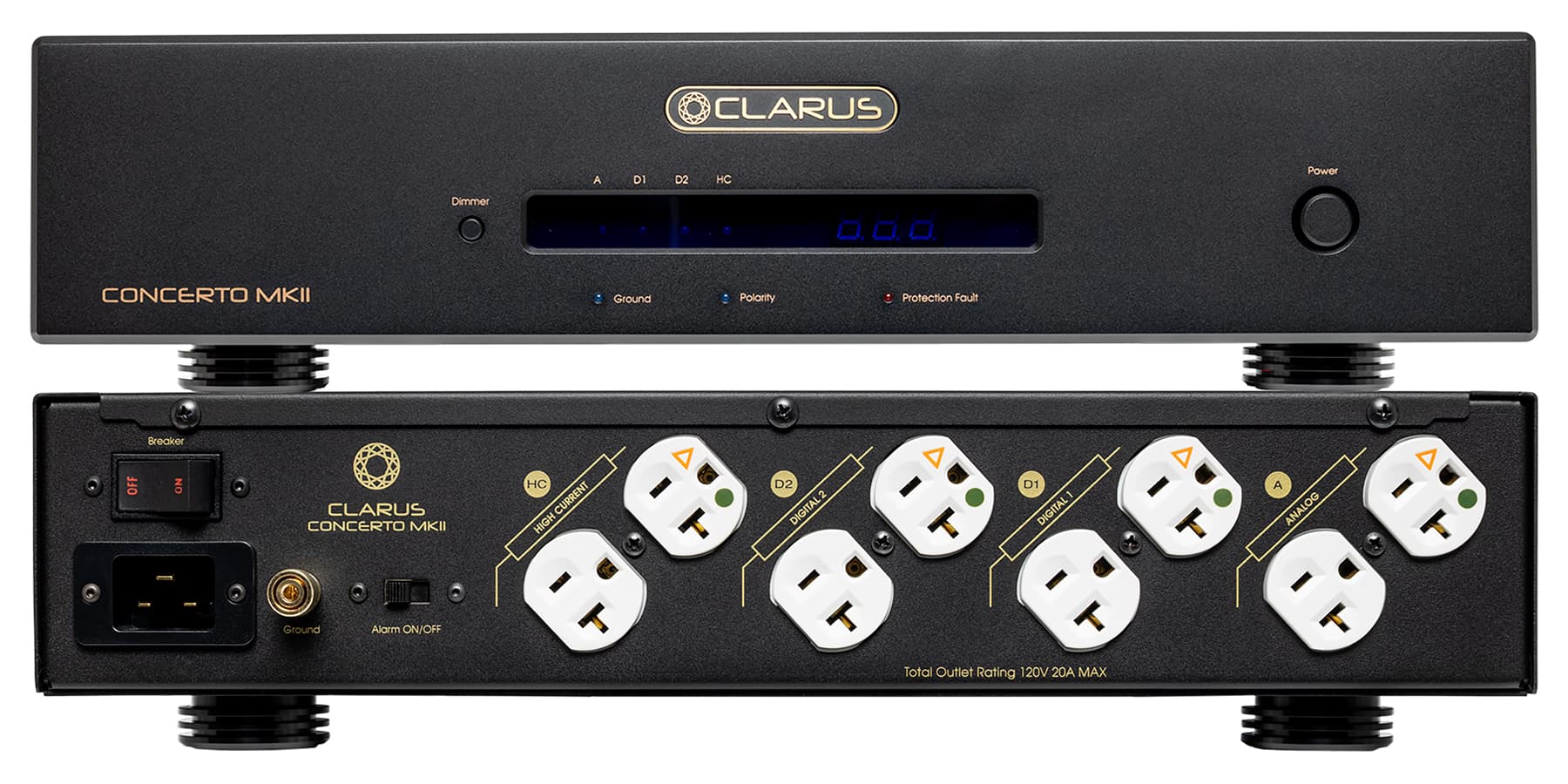
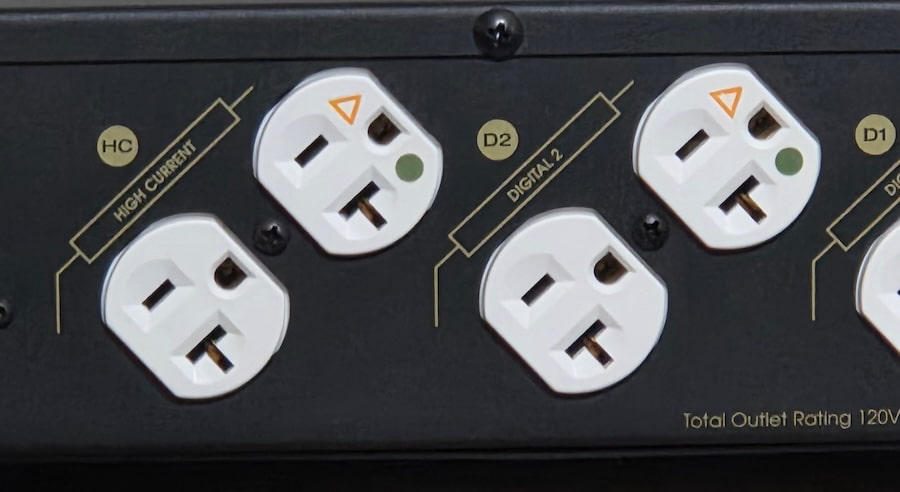
The Concerto MKII provides eight outlets: two optimized for analog components such as preamplifiers, tuners, and other low-current source components; four optimized for digital sources such as DACs and transports; and two high-current outlets for power amplifiers. Each outlet receives Clarus’ full suite of line conditioning, noise reduction, surge suppression, over and under voltage protection, and vibration control.
Clarus also includes a cable support bar, which sounds minor until you start using heavy audiophile power cords that behave like they were trained by bridge engineers. For systems built around serious amplification, delicate source components, and expensive analog front ends, that kind of physical stability is not just tidy. It is practical.
Design: Simple Controls, Serious Hardware
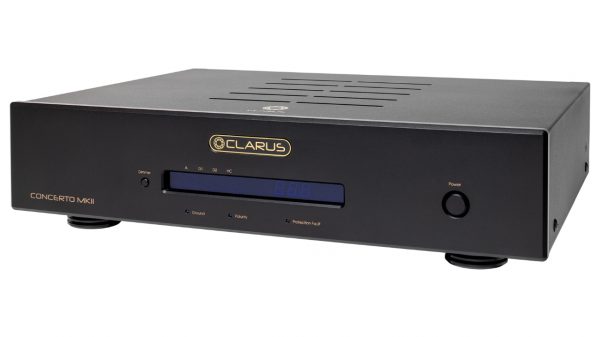
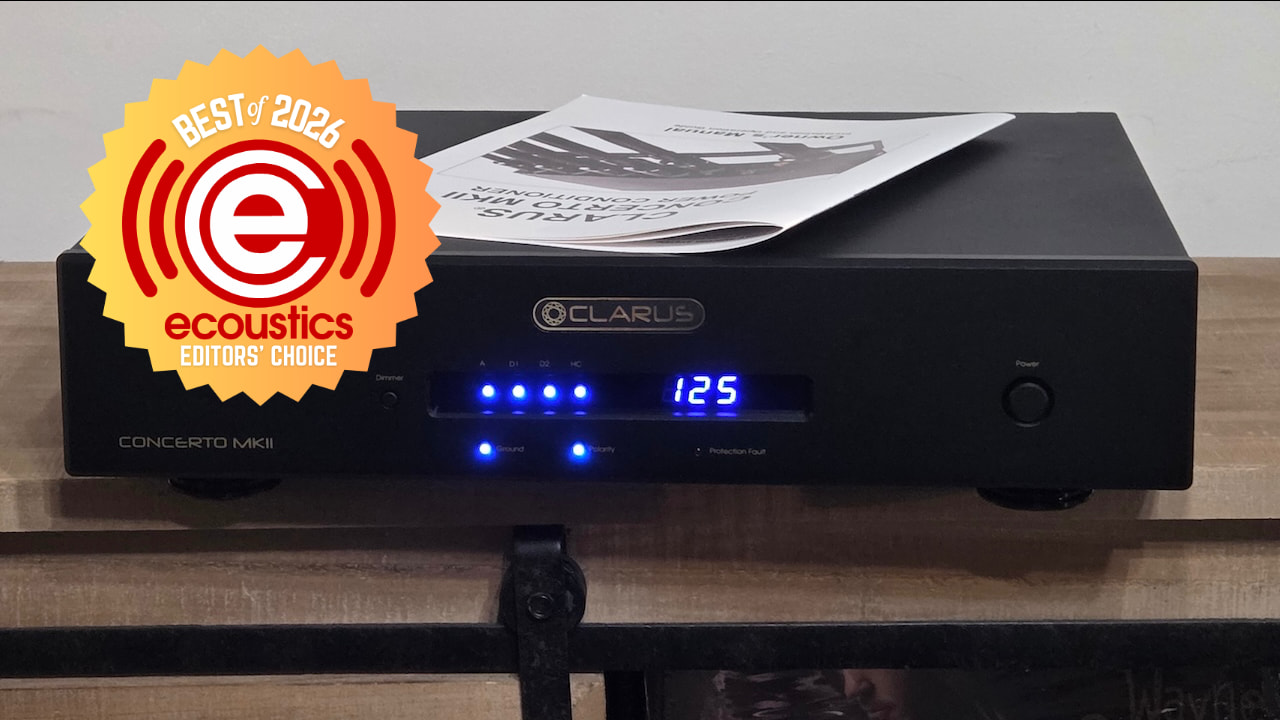
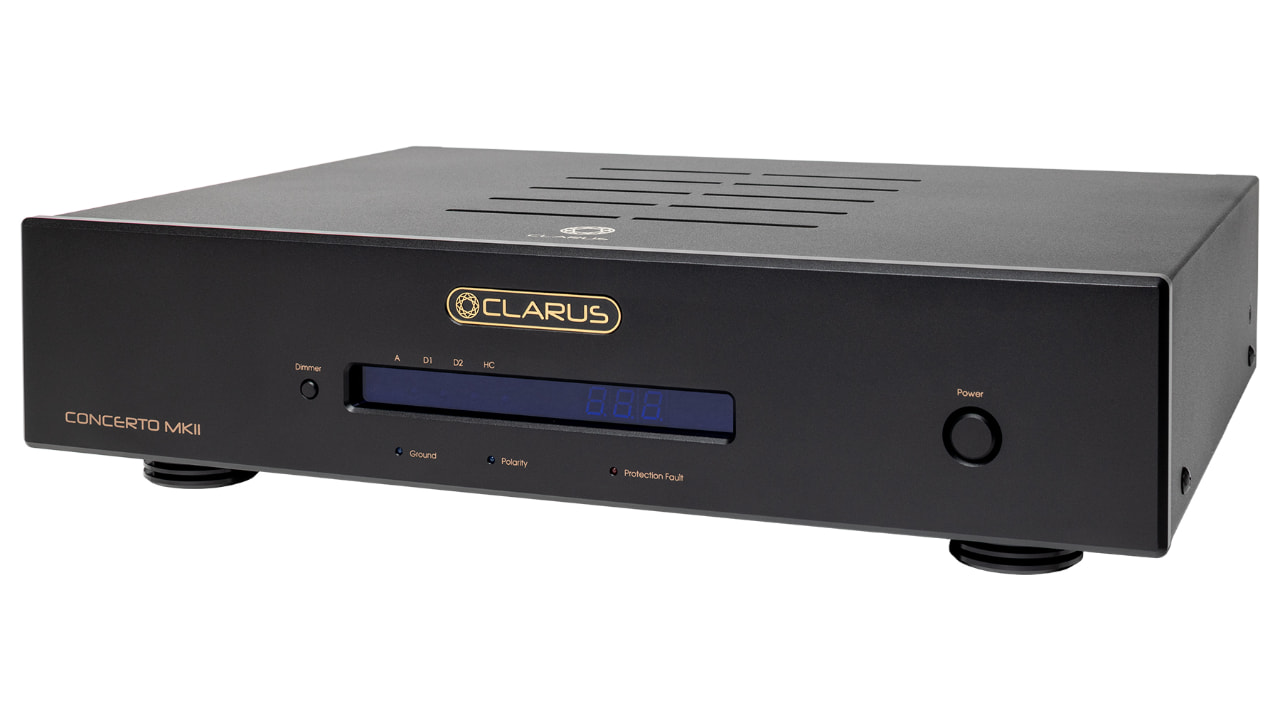
The front panel of the Clarus Concerto MKII keeps things straightforward. You get LED indicators for each outlet bank, an AC voltmeter, polarity, ground, and fault indicators, an LED dimmer control, and a front power switch that controls the rear outlets. The main power switch for the unit itself is located on the rear panel above the power inlet.
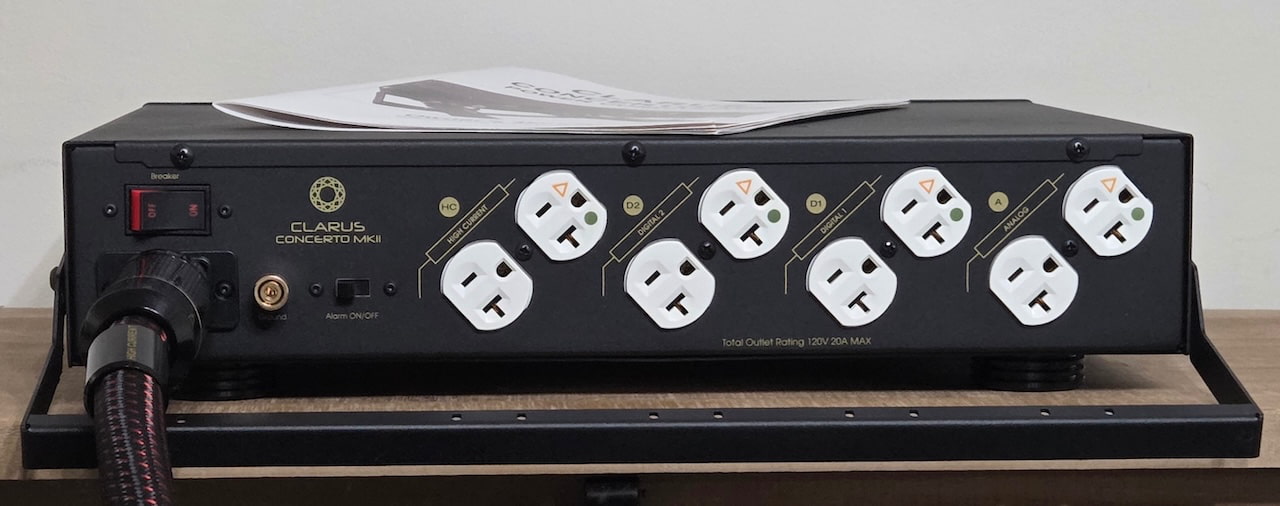
Across the back, Clarus lays things out logically: ground connector, alarm switch, high current outlets, digital outlet banks, and the analog outlet bank. Nothing cute. Nothing confusing. Just the business end of a $12,000 power conditioner.
The all metal chassis feels solid but is lighter than expected at around 26 pounds. Many power conditioners use large isolation transformers and end up weighing as much as small amplifiers with a gym membership. The Concerto MKII avoids that approach.
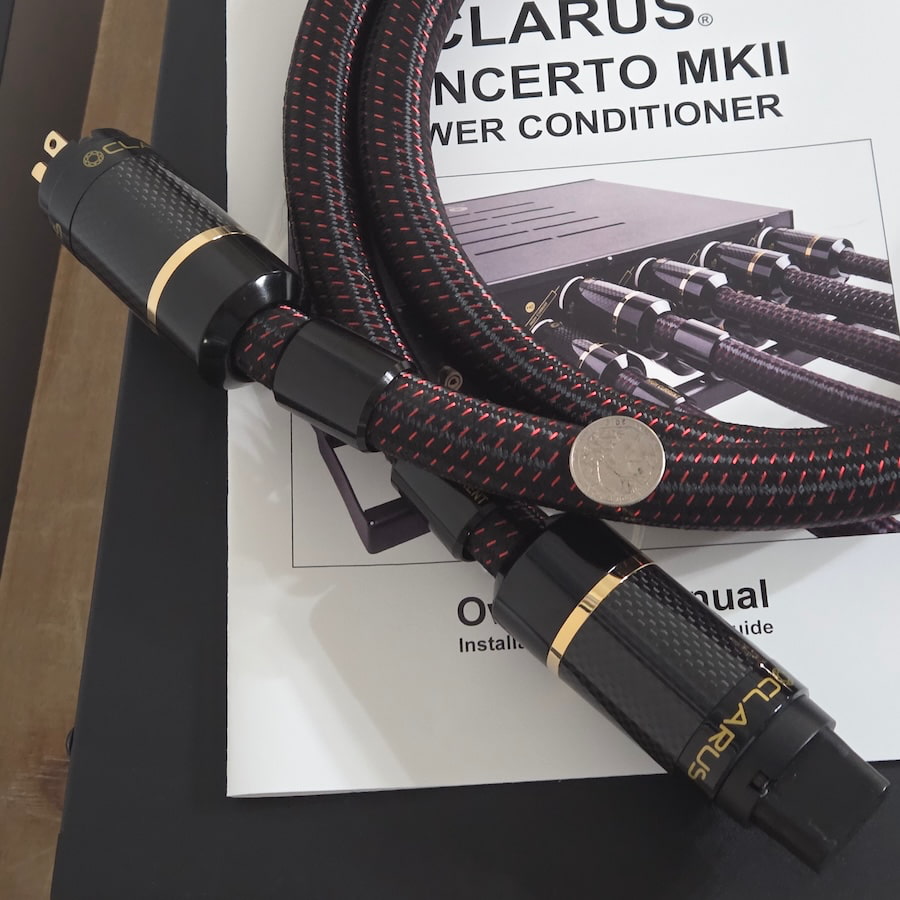
Clarus included one of its Crimson MKII High Current AC power cables with the review sample, which makes sense given the brand’s cable heritage and the Concerto MKII’s position at the top of its power conditioning lineup. However, the Crimson cable is not included and would add an additional $3,520 to $6,670 into the final cost, depending on length.
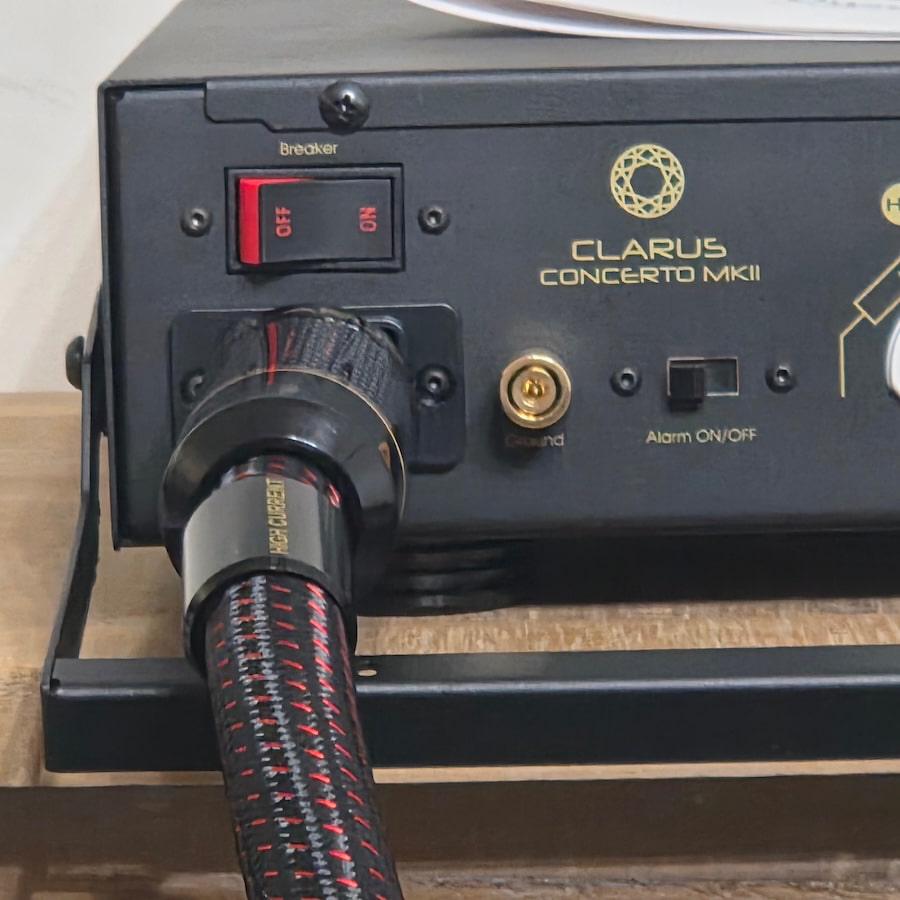
The Concerto MKII can connect to either a 15 or 20 amp circuit, providing up to 1,800 or 2,400 watts of available output power depending on the circuit. That is serious current delivery, and serious current usually means heat. Fans would solve that problem while creating another one: noise. Clarus wisely avoids that route and instead uses a five stage cleaning approach designed to reduce noise without adding more of it.
Clarus’ first line of defense is its C-Core technology, which is designed to reduce magnetostriction. That mouthful refers to the way ferromagnetic materials can change shape when exposed to changing magnetic fields. In power products, that movement can contribute to mechanical vibration and electrical noise. Reduce the movement, and you reduce one more source of unwanted junk riding along with the power.
The second part is additional damping. AC current passing through windings can create vibration, and vibration can cause tiny changes in the magnetic field around the component. In a high end audio system, that is not helpful. The Concerto MKII is designed to control those physical vibrations before they become another way for noise to creep into the system.
The third piece is voltage protection and regulation. Within a 90V to 135V AC range, the Concerto MKII is designed to help maintain a stable 120V output to the connected components. If incoming voltage drops below 90V or rises above 135V, the unit shuts down and blocks power from reaching the attached equipment. That gives the Clarus both line conditioning and a meaningful layer of safety, which is the whole point unless you enjoy using expensive gear as sacrificial offerings.
Fourth is the use of Thermal Metal Oxide Varistor devices, or TMOVs, which are designed to reduce small voltage spikes before they reach connected equipment.
Those spikes can happen when other devices on the same circuit turn on or off. Motors are a common culprit. Fans, hair dryers, refrigerators, HVAC equipment, and anything else with a motor can create an initial inrush of current that is higher than its normal operating draw. When that happens, other devices on the circuit can see a brief sag, followed by a rebound spike when the demand settles.
The Concerto MKII is designed to keep those spikes away from your audio gear. If the TMOVs overheat, which can indicate excessive current demand or an unsafe condition, the unit shuts down to protect itself and the connected components.
That matters because even a serious power conditioner has limits. Plug 3,200 watts of equipment into the Clarus Concerto MKII and it is not going to salute and carry on. It will object, loudly and correctly, before your system becomes an expensive lesson in electrical arrogance.
Finally, and perhaps most important, the front panel LEDs confirm whether incoming power is properly phased and grounded.
That might sound basic, but it matters. A surprising number of wall outlets are wired incorrectly, poorly grounded, or not grounded at all behind that harmless looking white cover plate. The Clarus Concerto MKII gives users a clear visual warning before expensive components are asked to trust bad wiring.
Listening
Reviewing a power conditioner is tricky because the best results are often about what you no longer hear.
To give the Clarus Concerto MKII a fair workout, I first removed my existing power conditioning and ran the system directly from the wall. That required a small act of faith, because my local utility is not exactly a model citizen. Even LED bulbs seem to live shortened, nervous lives in this neighborhood.
After what felt like an eternity, but was closer to 30 minutes, I inserted the Clarus Concerto MKII into the system and reconnected the gear. The change was immediate. The noise floor dropped, and I was able to turn the volume up noticeably higher on my PrimaLuna preamp before hearing any noise through the large Magnepan loudspeakers.
With the Concerto MKII in place, I gained roughly another 20% of travel on the volume knob with no music playing before any noise became audible at the speakers. That is not subtle. That is the kind of improvement that makes you look at the wall outlet like it has been lying to you for years.
With music playing, the first obvious improvement was soundstage. Spatial information lives in the smallest details, and those are often the first things buried by noise and distortion. In this system, it became clear that dirty power had been shaving off performance in ways that were not obvious until the Clarus Concerto MKII cleaned up the mess.
Transient response also improved. That may have come from lower noise, more stable power delivery, or some combination of both. Either way, the system sounded quicker, cleaner, and more controlled with the Concerto MKII in the chain. The wall outlet had been doing the system no favors.
The Bottom Line
The Clarus Concerto MKII (model CP-8MKII) is expensive, but it does something that matters in a serious high-end system: it lowers the noise floor, improves system stability, and protects expensive gear from the questionable electricity coming out of the wall. In this system, the gains were not theoretical. Soundstage improved, transient response tightened up, and the system stayed quieter at higher volume settings with no music playing. That is the kind of difference you notice before the audiophile committee arrives with clipboards.
What makes the Concerto MKII unique is the complete package: eight optimized outlets for analog, digital, and high current components, over and under voltage protection, surge suppression, vibration control, a useful cable support bar. It is not a budget accessory, and it makes no sense for a modest system. But for listeners with serious money invested in amplifiers, DACs, transports, tube gear, and big loudspeakers, the Concerto MKII is both a performance upgrade and an insurance policy. The only real consideration is the price. Clean power is not cheap, but neither is replacing your system after the utility company has a bad day.
If you are lucky enough to own a high-end audio system, then the Clarus Concerto MKII provides what is needed to ensure it is well fed and well cared for. The beauty of the unit lies in how well it works, how compact it is, and how little heat it adds to the gear rack. The Clarus Concerto MKII earns an Editors’ Choice 2026 award for power conditioning in the cost-no-object category, as I fully believe you cannot find better without spending a good bit more on a whole home system.
Pros:
- Excellent build quality
- Lowers the system noise floor
- Improves soundstage clarity and spatial detail
- Better transient response and overall control
- Eight outlets optimized for analog, digital, and high current components
- Over and under voltage protection adds real peace of mind
- Cable support bar is genuinely useful with heavy power cords
Cons:
- Overkill for modest or entry level systems
- Clarus Crimson power cable is not included
Our Ratings
★★★★★★★★★★ Performance
★★★★★★★★★★ Usability
★★★★★★★★★★ Build Quality
★★★★★★★★★★ Value
Where to buy:
For more information: claruscable.com
Related Reading:
- Clarus Concerto MKII Power Conditioner Debuts at AXPONA 2026 With Ultra Premium Design and Price to Match
- Stranger Things Strike Again: IsoAcoustics, IsoTek & the Great Weiner Resurrection: Editor’s Round-Up
- Say Goodbye to Unsightly Cables With the AUDIO Cu Sound Over Power Line Solution
- I Just Listened to a $14,000 Power Conditioner from Gryphon. Is It Wrong that I Want One?