
The biggest exhibitor at CES 2026 is once again Samsung, and the company isn’t hiding in the convention center this year. Instead, Samsung has gone off-site at the Wynn Las Vegas, using the hotel as a sprawling showcase for its 2026 product strategy. Alongside its usual firepower—TVs, monitors, and appliances—Samsung is giving its audio portfolio real floor space, with a 2026 lineup centered on soundbars and wireless speakers.
Full specs and pricing are still under wraps (because of course they are), but between refreshed Q-Series soundbars, wireless speaker platforms, and tighter ecosystem integration, Samsung is making it clear that audio is no longer just an accessory to the screen—it’s part of the main event.
Hun Lee, Executive Vice President of the Visual Display Business at Samsung Electronics, explained: “For more than a decade, Samsung has shaped the evolution of home audio through advanced acoustics, intelligent features, and thoughtful design. We’re continuing that legacy with next-generation sound devices designed to deliver a rich, expressive performance for any space and moment.”
Samsung Q-Series Soundbars
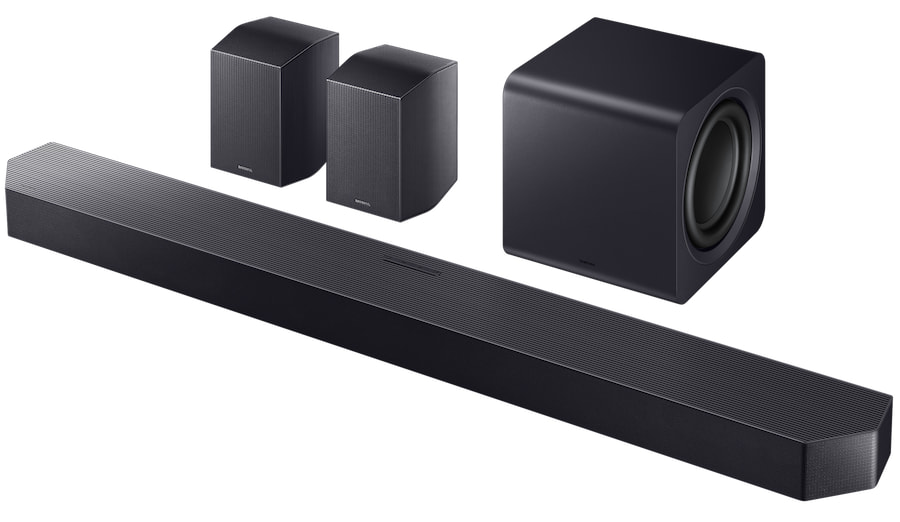
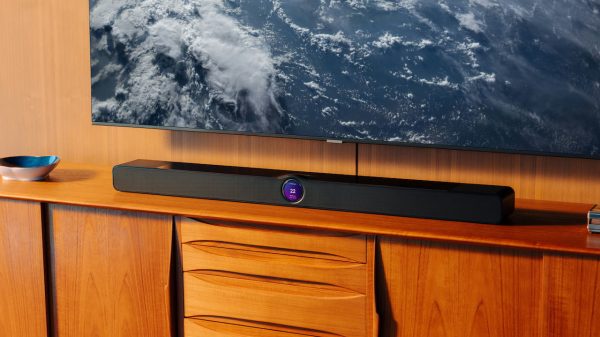
The 2026 Q-Series soundbars from Samsung are clearly aimed at people who want a cinematic experience without turning their living room into a wiring diagram. The focus here is scale and flexibility; big, immersive sound that can adapt to different room sizes and listening habits without demanding a dedicated home-theater build-out.
At the top of the pile sits the flagship HW-Q990H, Samsung’s most ambitious soundbar to date, which replaces the HW-Q990F (2025 model at $1,699). Both feature an 11.1.4-channel layout, combining a 7.0.2 main bar, 4.0.2 rear speakers, and a dual 8-inch driver system housed in a compact active subwoofer designed to deliver serious low-end without dominating the room. From what we know so far both outgoing and new models look very similar, possibly identical. The new HW-Q990H is said to offer “AI Enhancements”, but we can’t yet confirm exactly what that entails.
Tip: 2026 Samsung models end in “H”, while 2025 Samung models end in “F”.
Up-firing channels handle height effects, while next-generation AI tuning continuously adjusts output based on the space and content. The goal, according to Samsung, is to deliver the kind of immersion normally associated with full-scale home theater systems, minus the rack of gear and the domestic negotiations that usually come with it.
Additional key features of the HW-Q990H focus less on gimmicks and more on solving everyday annoyances that plague soundbars at this level:
Sound Elevation shifts dialogue upward toward the center of the screen, helping voices sound anchored to the picture instead of floating somewhere below it. It’s a practical fix for modern TVs mounted higher than ideal.
Auto Volume keeps levels consistent across different sources and scenes, smoothing out jumps between quiet dialogue and sudden effects without crushing dynamics.
Just below the flagship sits the Samsung All-in-One Soundbar (HW-QS90H), a more streamlined option that trades modular expansion for simplicity. The QS90H is a self-contained 7.1.2-channel design with 13 drivers, including nine wide-range speakers, eliminating the need for separate surrounds or a dedicated subwoofer. Its Quad Bass Woofer system is engineered to deliver meaningful low-frequency impact from a single enclosure, keeping floor space clear and setup minimal.
The QS90H also leans heavily into flexibility. Its Convertible Fit design supports both wall-mounted and tabletop installations, while an integrated gyro sensor automatically adjusts channel mapping based on orientation. The result is a soundbar that adapts to the room instead of forcing the room to adapt to it—an increasingly sensible approach as living spaces get smaller and expectations keep getting bigger.
Samsung Music Studio Series Wi-Fi Speakers
In addition to its soundbar push, Samsung is expanding its wireless speaker portfolio with two new Wi-Fi models for 2026: the Music Studio 7 and Music Studio 5.
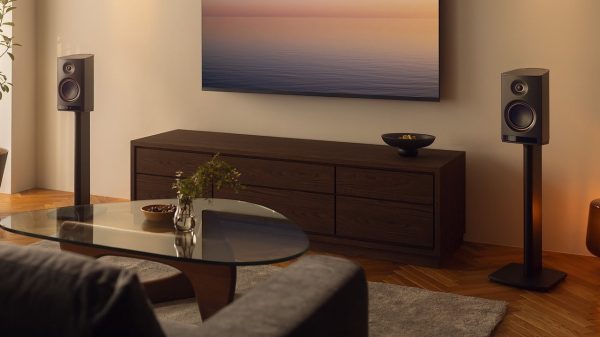
The Music Studio Series is designed to work across a broader range of Samsung audio system configurations than previous generations, giving users more flexibility in how they build and expand a multi-room or TV-centric setup. The emphasis here isn’t just louder or bigger—it’s fuller, more refined sound packaged in speakers meant to live in real spaces, not dominate them.
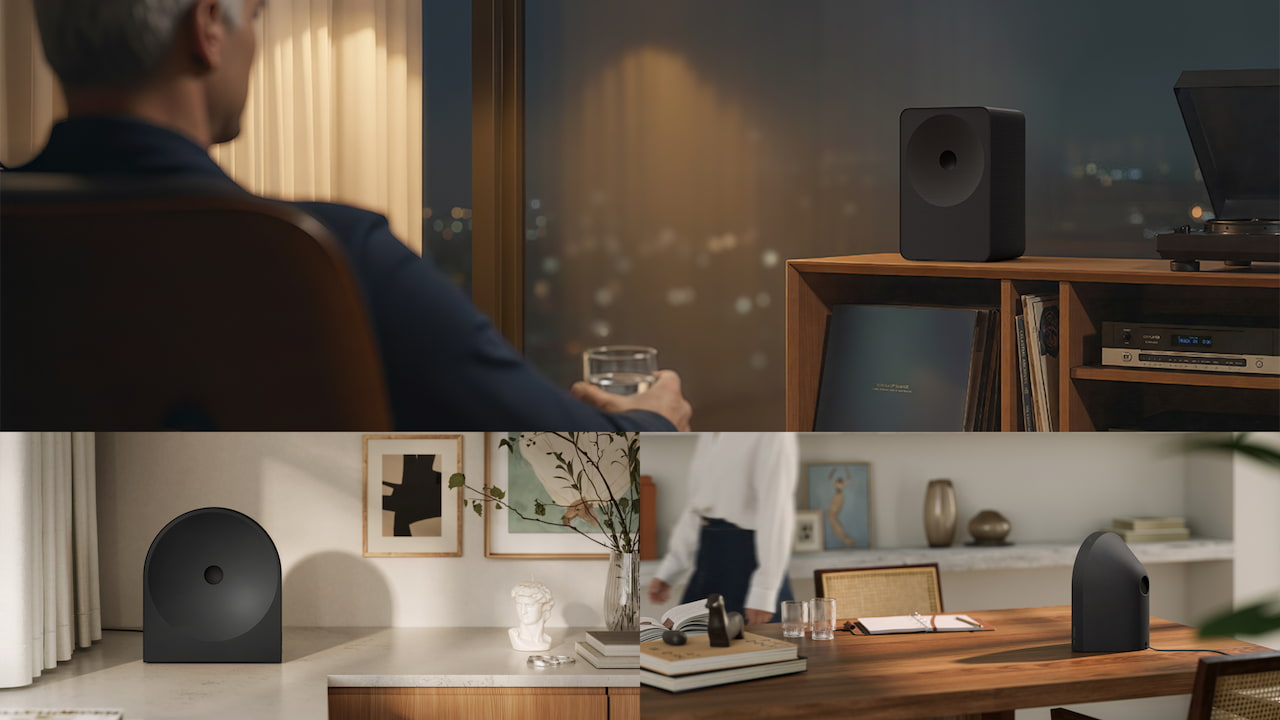
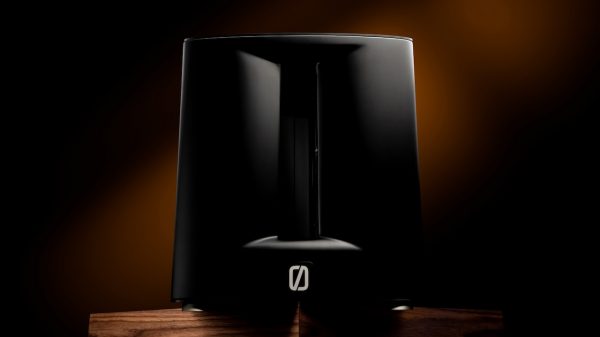
Visually, both models share a distinctive “dot” design concept created by renowned designer Erwan Bouroullec. The idea draws from a universal symbol found throughout music and visual art, while staying rooted in Samsung’s current industrial design language. The result is a pair of wireless speakers that are meant to blend into a room naturally—doing their job without screaming for attention, which, frankly, is exactly how most people want their speakers to behave.

The Music Studio 7 (LS70H) is the most ambitious model in Samsung’s new Wi Fi speaker lineup, built to deliver a genuinely immersive experience from a single enclosure. It uses a 3.1.1 channel spatial audio configuration, with left, center, right, and top firing drivers working together to create a convincing sense of height and dimensionality without requiring a full surround setup.
Two technologies sit at the core of the LS70H’s sound profile:
Audio Lab Pattern Control Technology manages how sound is distributed across channels, reducing overlap and congestion so effects and dialogue remain clearly defined.
AI Dynamic Bass Control is designed to deliver deep, controlled low frequencies with minimal distortion, while supporting high resolution audio up to 24-bit/96kHz.
Available in black, the Music Studio 7 can function as a standalone immersive speaker or integrate with compatible Samsung Wi Fi speakers, soundbars, or TVs via Q Symphony for expanded stereo or full surround configurations. Its smaller, gallery inspired form is clearly intentional, designed to complement and elevate interior spaces rather than dominate them.

The Music Studio 5 (LS50H) takes a more compact, décor friendly approach, aimed at homes where visual blending matters just as much as sound quality. While smaller, it is still engineered to deliver controlled bass without distortion and supports modern connectivity options including Wi Fi casting, streaming services, voice control, and Bluetooth for seamless everyday use.
Tuned by the Samsung Audio Lab in Valencia, the Music Studio 5 incorporates a 4 inch woofer and dual tweeters, striking a careful balance between clarity, low end presence, and room friendly design. It is clearly positioned as the understated option in the lineup, less about spectacle and more about fitting naturally into how people actually live with their audio gear.
Samsung Q-Symphony
For 2026, Q-Symphony becomes a more flexible and intelligent part of Samsung’s audio ecosystem, allowing compatible Samsung TVs, soundbars, and Wi Fi speakers to operate as a single, coordinated sound system rather than isolated components.
The biggest functional upgrade is scale. Q-Symphony now supports pairing up to five audio devices with a Samsung TV, opening the door to wider soundstages and more immersive layouts without the complexity of a traditional AV receiver based system. Just as important, the platform can automatically adjust output based on the room, helping to calibrate performance for the space rather than relying on static presets.

In practice, the goal is simple and very Samsung: clearer dialogue, more precise placement of effects, and surround sound that feels cohesive instead of stitched together. When it works as intended, Q-Symphony pulls you into the scene rather than reminding you where each speaker happens to be sitting in the room.
In addition, Wi-Fi connectivity paired with the SmartThings app ties Samsung’s 2026 audio lineup together under a single control layer. From one interface, users can adjust sound settings, manage multi room group playback, and access supported music streaming services without juggling multiple apps or remotes.
The SmartThings platform also serves as the gateway for voice assistant integration, making it easier to control playback, volume, and system behavior hands free. The emphasis here is convenience rather than flash. Samsung is clearly aiming to reduce friction, letting the tech fade into the background so the focus stays where it should be, on the content and the listening experience.
Samsung Sound Towers: High Output Party Speakers Built for Big Rooms and Bigger Sound
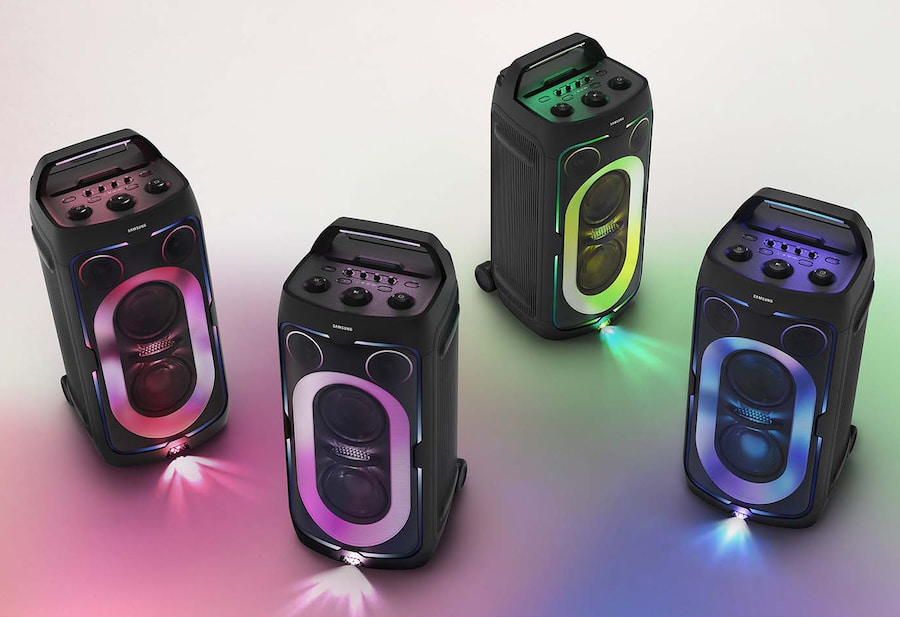
‘The 2026 audio lineup from Samsung also includes the latest generation of Sound Towers, with the ST50F and ST40F models introduced in late 2025. These are unapologetically party focused speakers, designed for higher output and broader coverage in social settings where subtlety is not the goal.
Positioned alongside the more refined Music Studio speakers and the home theater oriented Q Series soundbars, the Sound Towers serve a different purpose. They are built to deliver big, room filling sound quickly and with minimal setup, making them better suited for gatherings, casual listening, and shared spaces than traditional living room audio systems.
Together, the Sound Towers help round out Samsung’s home audio portfolio, underscoring the company’s push to cover multiple use cases under one ecosystem. The through line is consistency: practical acoustics, approachable design, and smart connectivity that makes the system easy to set up, easy to use, and connected without getting in the way of simply enjoying the music.
Where to buy:
- Samsung Sound Tower ST40F – $499 at Amazon | Crutchfield
- Samsung Sound Tower ST50F – $699 at Amazon | Crutchfield
The Bottom Line
Samsung may still be best known for its TVs and monitors, but in home audio it’s very much a heavyweight, especially in soundbars. Owning Harman gives Samsung deep access to serious acoustic engineering, DSP expertise, and real world audio tuning that most TV brands simply do not have. That advantage is clearly reflected in where the 2026 lineup is heading.
Based on what has been revealed so far, Samsung is shaping a tightly integrated ecosystem built around at least two high end Q Series soundbars, flexible Music Studio Wi-Fi speakers, and expanded Q Symphony support. On their own, these components are designed to sound good. Combined with Samsung TVs, they are clearly intended to function as a cohesive audio entertainment system that works equally well for music listening and immersive home theater playback without the complexity of a traditional receiver based setup.
Details are still limited and pricing remains under wraps, but the direction is clear. Samsung is doubling down on audio as a core pillar of its home entertainment strategy, not a side accessory. We will be updating this story directly from CES 2026 with first photos, hands on impressions, and our initial sound evaluations as soon as we get time with the gear.
Related Reading:
- Samsung Expands Micro RGB LED TV Line Ahead of CES 2026
- Samsung Unveils Movingstyle Lifestyle Displays—Because Stationary Screens Are So Last Decade
- Samsung Launches Perplexity AI-Powered TV App, Bringing Generative AI Assistance to Smart TVs
- Samsung and CANVAS HiFi Launch The HiFi Frame: 4K & 8K TVs with BACCH 3D Sound and Premium Danish Design













Anton
December 28, 2025 at 1:15 am
One would think that Samsung would have gone the extra mile and had someone from Marantz or Bowers which they now own design those Wi-Fi speakers. Boring industrial design.
I heard a rumor that Cambridge has some magnificent wireless speakers coming next year.
Do you guys know anything about that?
Ian White
December 28, 2025 at 1:28 am
Anton,
Until I see something up close, I can’t really comment on the design.
In regard to Cambridge, you’re just going to wait like the rest of us.
IW
Mike Cornell
December 28, 2025 at 2:39 pm
They now own Roon also, right? Wondering if there will be any changes there, or new pricing, for example.
Ian White
December 28, 2025 at 3:38 pm
Mike,
That is correct. Roon is part of Harman Luxury Audio now. I think it needs to be a lot cheaper. I suspect you’ll see it pop up on Samsung smartphones as an option this year. It’s still very niche.
IW