There is a point in almost every first serious hi-fi system where somebody asks the question nobody enjoys answering: how much should I spend on the cables?
The correct answer is usually less than the internet would have you believe.
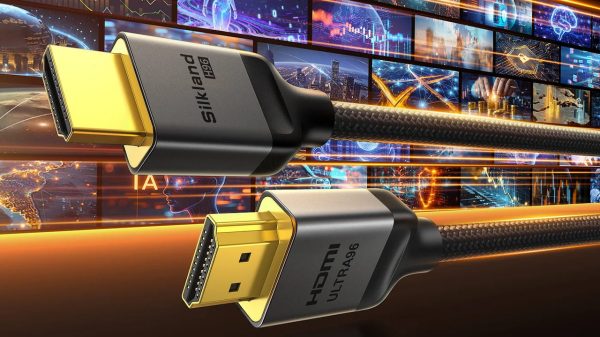
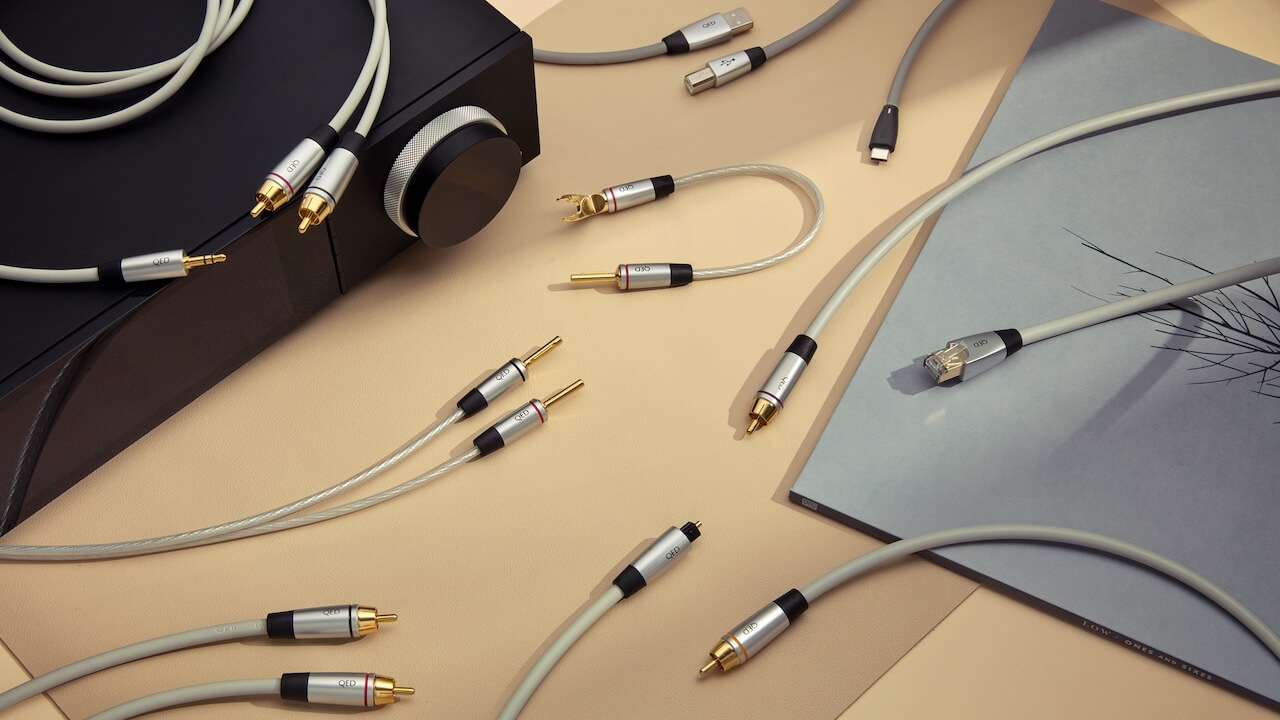
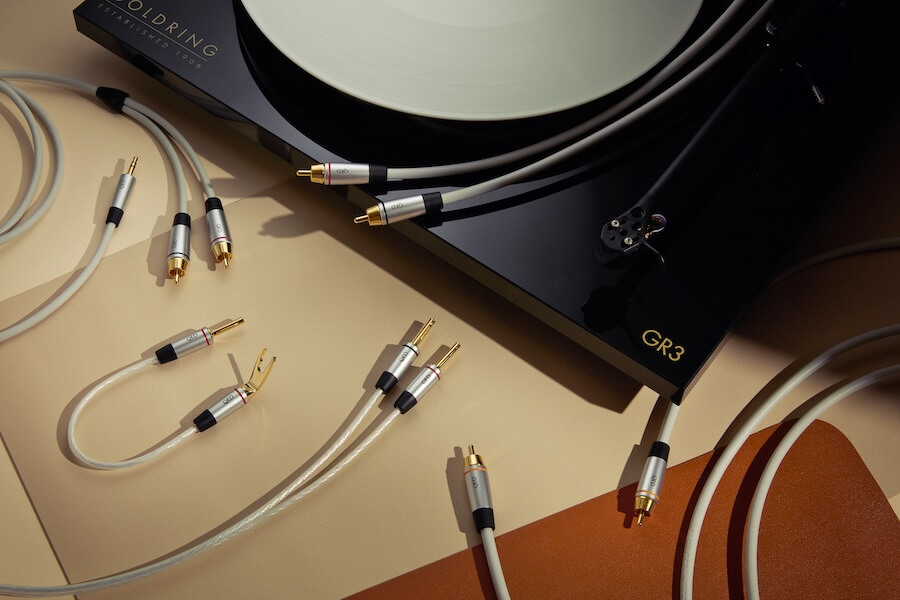
British cable specialist QED has refreshed its Performance range for 2026 with a 13-product family covering loudspeaker, analog, subwoofer, digital, optical, Ethernet, and USB connections. The idea is straightforward: give buyers one sensibly priced ecosystem for connecting everything from a turntable and CD player to a network streamer, DAC, television, and amplifier without requiring a separate financing application for the wire.
That has always been one of QED’s strengths.
We’ve used and reviewed QED cables extensively at eCoustics, including the Golden Anniversary XT, Reference XT40i, Signature Revelation, Reference Audio 40, Performance J2P, and Reference USB and Ethernet models. The recurring theme has been rather boring in the best possible way: solid construction, sensible pricing, predictable performance, and no suggestion that your $1,000 amplifier requires $3,000 worth of cables to achieve enlightenment.
For someone assembling a first proper system, boring can be beautiful.
Related Reading:
- QED Golden Anniversary XT Speaker Cable: Review
- QED Audio Cables: Proof You Don’t Have To Go Nuts
- Armour Home Appoints AA&V As Exclusive North American Distributor For Q Acoustics, QED, And Goldring
What Has Changed?
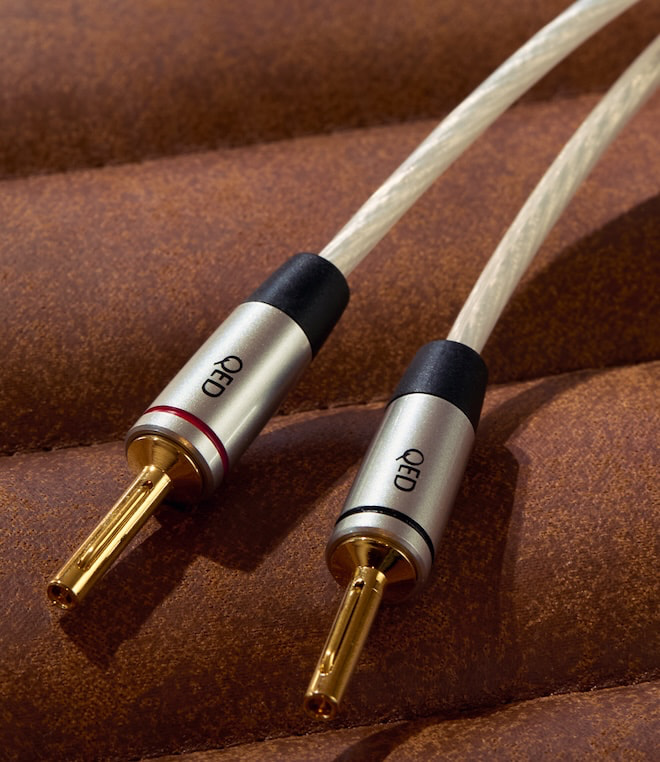
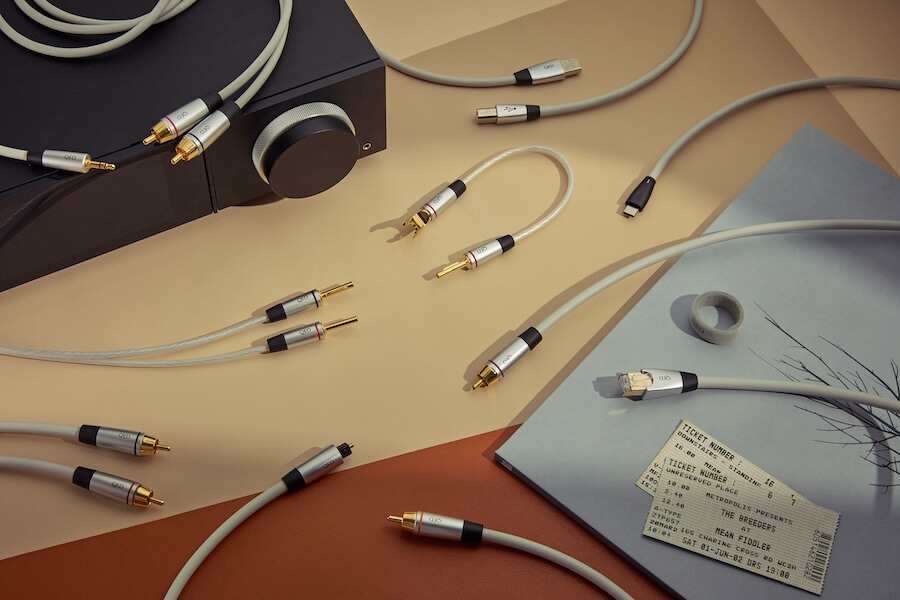
The new Performance range gets a cleaner visual identity with silver-grey connectors and a softer, more flexible TPE jacket on most models, which should make routing behind equipment racks less like wrestling garden hose. QED says the new styling will eventually carry into its more expensive Reference and Signature ranges.
The underlying materials remain appropriately serious for the price. Most of the range uses 99.999% oxygen-free copper, with 24K gold-plated contacts on analog models; USB connectors use nickel plating instead.
The new Performance Speaker Cable uses a substantial 2.5mm² conductor area with QED’s X-Tube Plus geometry, which is designed to maintain more consistent current density across the conductor as frequency rises. Factory-fitted Airloc banana plugs or spades provide cold-welded terminations rather than leaving new owners to discover how surprisingly annoying bare speaker wire can become behind a crowded rack.
The matching Performance Audio interconnect uses QED’s Solid Complementary Conductor Technology, OFC conductors, shielding, and Ferrite Insulation Technology to reduce high-frequency interference.
This is not exotic metallurgy harvested during a lunar eclipse. That may disappoint some corners of the cable industry.
Digital Finally Gets More Attention
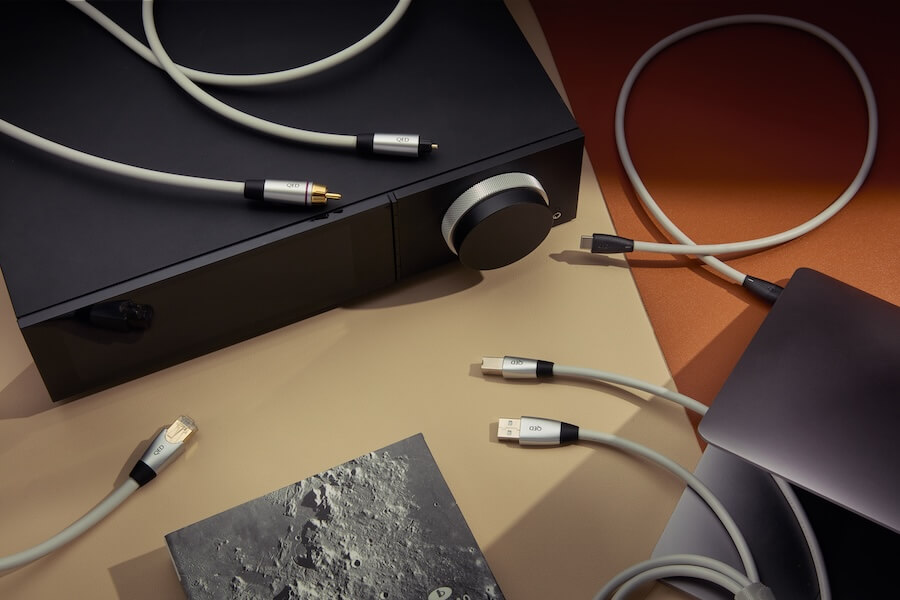
The biggest expansion is on the digital side.
QED has added USB configurations covering USB Type-A to Type-B, USB Type-A to Type-C, USB Type-C to Type-C, and USB Type-C to Type-B, with U.S. pricing beginning at $49. The USB models carry independent USB-IF compliance certification, which is considerably more useful than a brochure promising improved emotional connection with your DAC.
Performance Ethernet also starts at $49, while coaxial digital and optical cables begin at $69 and $79 respectively.
That makes the revised lineup considerably more relevant to modern systems built around streamers, network amplifiers, and USB DACs rather than just turntables and CD players.
QED Performance Range Pricing
U.S. availability begins in late November 2026.
Some representative prices:
- Performance Speaker Cable: $209 / 2m pair; $229 / 3m; $309 / 5m
- Performance Bi-Wire Links: $169
- Performance Audio RCA: $89 / 0.75m; $99 / 1.5m
- Performance Subwoofer: $99 / 3m
- Performance 3.5mm to RCA: from $69
- Performance Digital Audio: from $69
- Performance Optical: from $79
- Performance Ethernet: from $49
- Performance USB: from $49
The speaker cable is obviously the largest investment, but even a system using QED speaker cables, an analog interconnect, Ethernet, and USB could remain well below what some manufacturers charge for a single pair of interconnects.
Perspective is useful.
Why Is The Performance Range Different?
QED’s strongest argument has never been that cables should become the most expensive part of your system.
The company has spent decades pursuing an evidence-led approach to cable design, including research summarized in its Genesis Report, which examined measurable electrical characteristics and how conductor geometry, resistance, capacitance, and inductance can influence performance. The original QED 79 Strand from 1979 helped establish the concept of specialist loudspeaker cable in the first place.
The Performance range takes that engineering downstream to prices that make sense for a $1,000 amplifier, $1,500 pair of loudspeakers, or modest streaming system.
That makes it particularly appealing to listeners entering hi-fi for the first time. Spend money on better speakers, amplification, cartridges, or room acoustics first. You can always discover $5,000 speaker cables later if retirement planning becomes too predictable.
QED Is Part Of Something Bigger
QED is one of three audio brands owned by Armour Home Electronics, alongside Q Acoustics and Goldring. Armour Home also distributes brands including Grado, Burson Audio, and XGIMI in the UK.
The larger company has been going through a noticeable leadership and growth push in 2026. Former Cambridge Audio CMO and Naim Audio Managing Director Charlie Henderson became Armour Home’s Managing Director in May, while longtime leader George Dexter moved into the Chairman role. Armour has subsequently added new global sales and marketing leadership and recently promoted Anca Popa to lead EMEA sales across QED, Q Acoustics, and Goldring.
We spoke with Henderson this summer about rebuilding visibility in North America after QED, Q Acoustics, and Goldring had become surprisingly quiet in the market. American Audio & Video — part of Exertis | JAM USA — now handles North American distribution for all three brands.
The refreshed Performance range therefore arrives at a useful moment: Armour Home wants QED in front of more mainstream music listeners, and a $49 USB cable is a considerably easier introduction than asking someone to begin with the Signature range.
The Bottom Line
The new QED Performance range is not aimed at audiophiles who enjoy explaining why their cable risers require cryogenic treatment.
It is for people building real systems with real budgets.
The technology is credible, the construction looks substantially better than generic accessory-bin cables, USB and Ethernet have finally been brought fully into the family, and prices remain low enough that newcomers can wire a serious system without wondering whether they should have bought better loudspeakers instead.
We’ve used QED cables for years precisely because they tend to offer performance without financial theater. For anyone building their first serious hi-fi or home theater system, that remains a very good place to start.
For more information: qed.co.uk
Related Reading:
- Q Acoustics, Goldring And QED Went Quiet In America. Charlie Henderson Explains What Happens Next
- Advance Paris Introduces The LINK Cable Series And They’re Still Affordable With The Tariffs