When Klipsch was folded under the Gentex corporate umbrella, there was plenty of industry side-eye about what that would mean for one of audio’s most historically important brands. Fast forward to CES 2026, and the answer is becoming clear: Klipsch hasn’t just survived the transition—it’s gaining momentum. Its growing collaboration with Onkyo, also part of the Gentex portfolio, is already translating into fresh thinking and renewed energy across multiple audio categories.
At CES 2026, Klipsch is underscoring that confidence with a private, invitation-only showcase of forthcoming product concepts. The closed-door demos give media and partners an early look at where the brand is headed, spanning personal audio, Bluetooth and tabletop listening, outdoor-capable home theater, and premium hi-fi loudspeakers. Not every concept shown is a guaranteed product, but together they paint a clear picture of Klipsch’s trajectory through the rest of 2026—measured, deliberate, and very much focused on building forward rather than chasing trends.

Vinny Bonacorsi, Chief Operating Officer, emphasized how Klipsch is approaching what comes next:
“At Klipsch, the future is built on a very specific promise: make every moment sound more alive. CES gives us a rare opportunity to share where we’re headed before the curtain goes up, and to do it in a way that is intimate, experimental, and true to the enthusiasts who’ve always pushed us forward.”
With that context in mind, here’s a clear look at what Klipsch is previewing—and what listeners, home theater fans, and long-time Klipsch loyalists may have to look forward to throughout 2026, assuming the roadmap unfolds as planned.
Klipsch Atlas Series Headphones: A Serious Push Into Premium Personal Audio

Despite offering solid headphone products over the years, Klipsch has never truly been a dominant force in the headphone category. That appears to be changing with the introduction of the new Atlas Series—a premium line of hi-fi headphones positioned as a clear step beyond the company’s former Heritage headphone range and a more serious play in the personal-audio space.
The Atlas Series consists of three distinct models, each aimed at a specific type of listener while staying grounded in Klipsch’s core voicing philosophy. Comfort, modern feature integration, and long-term usability are clearly central to the design brief. Klipsch expects the Atlas Series to launch in the U.S. in Summer 2026.
Atlas HP-1 is a wireless, over-ear headphone with active noise cancellation designed for travel and everyday listening. The focus here is on ultra-lightweight construction, extended wear comfort, and long battery life. Klipsch is using a coaxial driver approach to maintain efficiency and its familiar sonic character, while also planning support for third-party spatial audio and hearing-compensation features—suggesting a deliberate effort to bridge traditional hi-fi values with modern DSP-driven expectations.
Atlas HP-2 shifts in a different direction, offering a closed-back hi-fi design tuned for elevated bass output and immersive low-frequency impact. This model targets listeners who want physical, visceral energy without tipping into bloated or uncontrolled bass, aiming squarely at the bass-forward enthusiast segment rather than casual consumer tuning.
Atlas HP-3 sits at the top of the lineup as the flagship model. It adopts a semi-open-back design intended for critical two-channel listening, prioritizing space, air, and a more speaker-like presentation. Comfort and materials take center stage here, with a wider cushioned headband for improved weight distribution, Alcantara finishes, perforated earcups for breathability during long sessions, and a premium packaging concept that includes a dedicated headphone stand. The HP-3 is clearly positioned as Klipsch’s most serious headphone statement to date.
Portable Bluetooth Speakers: Klipsch Expands Its Go-Anywhere Sound Strategy
Best known for building room-dominating loudspeakers like the Klipschorn, Klipsch has also spent years translating its core audio DNA into portable form factors. That on-the-go side of the business is getting a meaningful update at CES 2026 with the next-generation Music City Series II Bluetooth speakers.
The new Music City Series II expands the lineup with support for Auracast broadcast audio, enabling compatible source devices to connect to multiple speakers without the usual Bluetooth pairing limitations. Auracast also allows synchronized playback across multiple speakers in both home and public environments, making it particularly well-suited for group listening scenarios—indoors or out.
Klipsch is also introducing a refreshed Music City design identity. The emphasis is on real-world portability and placement flexibility, including redesigned carrying straps for easier grab-and-go use and integrated magnets that allow the speakers to attach to surfaces or gear wherever music happens.
The updated Music City Series II speakers are expected to arrive in the U.S. in Summer 2026, positioning them as a more flexible, more connected evolution of Klipsch’s portable Bluetooth lineup.
Tabletop Bluetooth Speakers: Compact Designs With Real Klipsch Sound
Alongside its portable lineup, Klipsch is also refining its tabletop Bluetooth speakers, focusing on connectivity and everyday usability rather than cosmetic tweaks. At CES 2026, Klipsch confirmed that both The One IV and The Three IV will gain Auracast broadcast audio support, bringing them into the same shared-audio ecosystem as the new Music City Series II speakers.
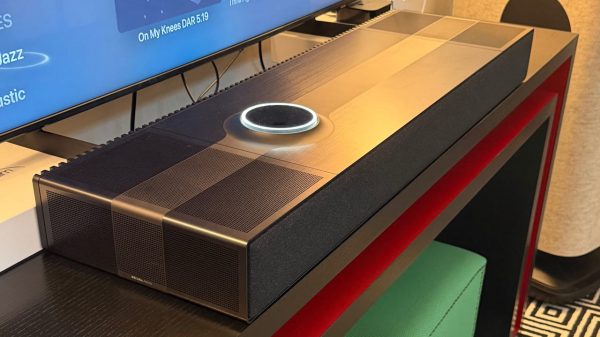
The updated The Three IV also introduces a new front-mounted coin-style interface designed to surface what listeners actually care about—album art, track information, volume, input selection, and playback status—combining tactile control with a clear, at-a-glance visual readout of what’s playing. Taken together with the Music City Series II concepts, these tabletop updates point toward a more cohesive, multi-room, multi-listener Klipsch ecosystem that prioritizes flexibility and shared listening. The refreshed tabletop models are expected to be available in the U.S. in Summer 2026.
Outdoor Soundbar: Klipsch Flexus Element Brings Home Theater Sound Outside
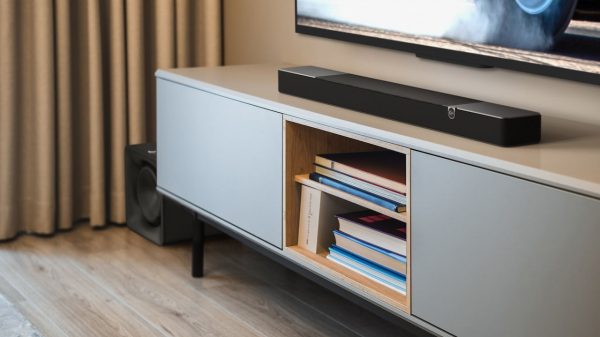
When most people think of soundbars, outdoor use isn’t exactly top of mind—but Klipsch is clearly looking to change that. At CES 2026, Klipsch previewed the upcoming Flexus Element soundbar, an outdoor-capable extension of its Flexus soundbar line developed in collaboration with Onkyo.
The Flexus Element takes the core idea behind the Flexus lineup and pushes it into new territory, with a design focused on durability and consistent performance in all-weather installations. The goal is straightforward: bring recognizable, cinematic Klipsch sound to patios, garages, and outdoor entertainment spaces without the complexity of traditional outdoor audio systems.
No racks, no custom installs—just a more direct way to add serious sound where TVs and projectors are increasingly being used outdoors. The Klipsch Flexus Element soundbar is expected to debut in the U.S. in Fall 2026, signaling another deliberate expansion of the brand’s home theater footprint beyond the living room.
Premium Hi-Fi and Home Theater Loudspeakers: Klipsch Doubles Down on Its Core Strengths
All of the product previews shown at CES 2026 point to new directions for Klipsch, but none of them come at the expense of the brand’s core identity: high-performance hi-fi and home theater loudspeakers. While the company continues to evolve into new categories, it’s still very much anchored in the space where its reputation was built.

Building on the familiar Reference Premiere foundation, Klipsch is previewing early examples of its forthcoming Reference Signature Series alongside “Project Apollo”—described internally as the brand’s next moonshot and a deeper push into enthusiast-level performance.
Both initiatives focus on elevated industrial design, upgraded materials, and new engineering that draws directly from Klipsch’s horn-loaded architectural heritage, with voicing aimed squarely at audiophiles and serious home theater listeners. Select models from both lines are currently targeted for debut later in 2026.

Note: All product details and visuals shown are conceptual and subject to change, presented strictly as part of Klipsch’s CES 2026 preview.
The Bottom Line
Klipsch is setting ambitious but realistic goals for 2026, and the early signs suggest it’s serious about executing across multiple categories rather than chasing a single headline product. The Atlas headphone series stands out as the most deliberate move, with three distinct models that collectively cover travel, bass-forward listening, and critical hi-fi use—leaving gaming as the only obvious gap in an otherwise well-thought-out lineup.
On the wireless side, adding Auracast to its Bluetooth and tabletop speakers materially increases flexibility and shared-listening appeal, while the outdoor Flexus soundbar expands Klipsch’s footprint into a category that’s growing faster than most traditional home theater segments.
The real wildcard remains the next generation of high-end loudspeakers. If Klipsch can deliver performance that justifies their eventual pricing, those products could quietly become the most important releases of the year. Either way, 2026 is shaping up to be a proving ground—less about nostalgia, more about whether Klipsch can translate momentum into execution across the board.
Related Reading:
- Klipsch Launches ProMedia Lumina LED-Illuminated Speakers, Fusing Hi-Fi Heritage with Next-Gen Gaming Power
- Klipsch Courtyard Landscape Speaker System: Making Backyards Concert-Worthy Since Now: CEDIA 2025
- Klipsch KO-R1 Limited Edition: OJAS Hosts ‘Exclusive’ Listening Sessions at RubenBenjamin Studio in Munich – Leb das Leben, bevor es dich überholt!
- Klipsch Unveils Red Oak Forte IV and Heresy IV, Onkyo Icon Series Brings the Heat at Audio Advice Live 2025
- The Latest Stories from CES 2026