
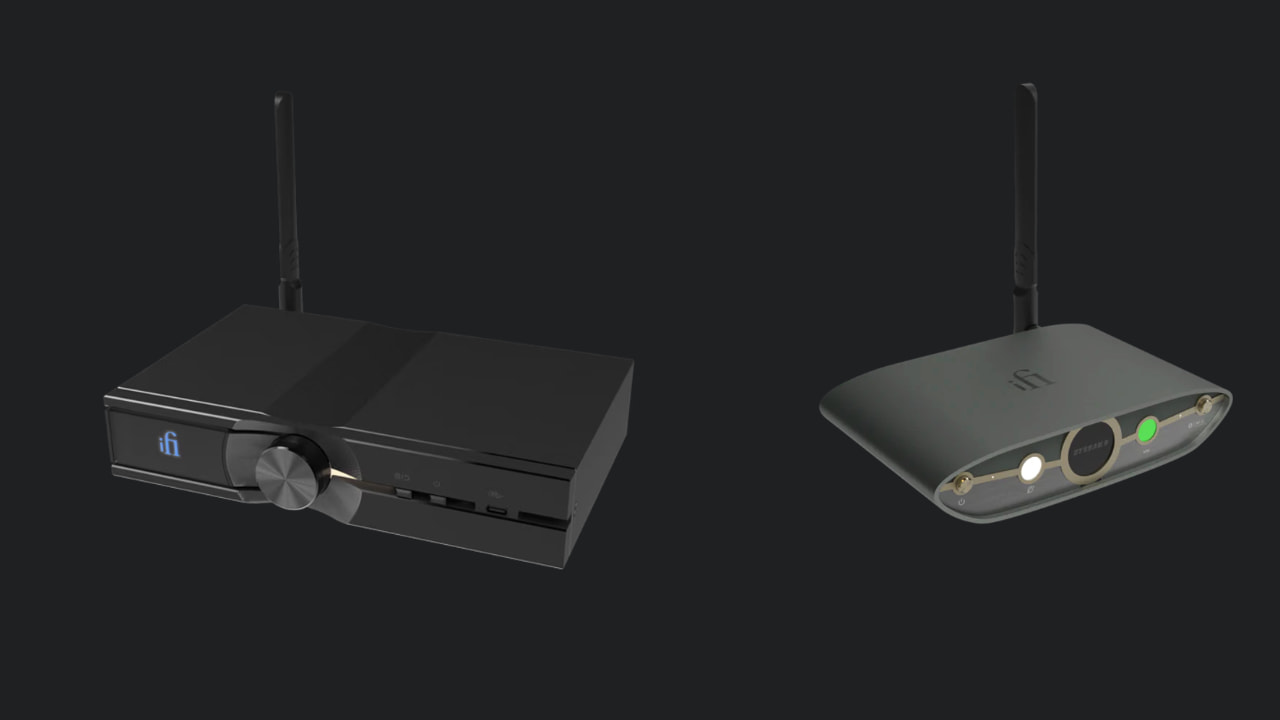
The sub $1,000 network streaming market is no longer short on options. Between WiiM, Eversolo, Bluesound, and Cambridge Audio, buyers can choose from a wide range of compact streamers that handle modern services cleanly and integrate easily into existing systems. Most now cover the basics well. What separates them is how they integrate into real world systems, the flexibility they give users, and their performance in everyday listening.
That is where iFi Audio positions the $999 NEO Stream 3 and $399 ZEN Stream 3. Both are built around a modern streaming platform that supports Qobuz Connect, TIDAL Connect, Spotify Connect, and Apple AirPlay 2, allowing users to stream directly from native apps without workarounds or proprietary control layers. Setup is handled through a straightforward IoT process, and ongoing updates are managed through iFi’s Nexis platform rather than requiring users to chase firmware manually.
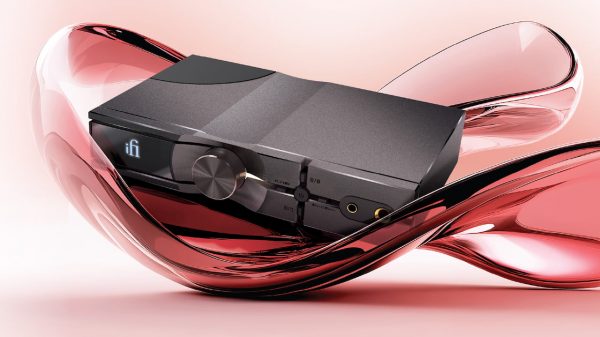
In practical terms, the NEO Stream 3 is designed for listeners who want a single box that can act as the digital front end of a system, handling streaming duties and conversion without external hardware. The ZEN Stream 3 takes a different approach, focusing on being a quiet and reliable network transport for systems that already have a DAC the owner likes and does not want to replace. Both models lean on improved power design and noise reduction to keep the signal path stable, an area where iFi has traditionally focused its engineering effort.
But is that enough to compete below $1,000? Let’s take a look at what both offer straight out of the box.
NEO Stream 3 and ZEN Stream 3 Share the Same Core Streaming and Noise Control Architecture
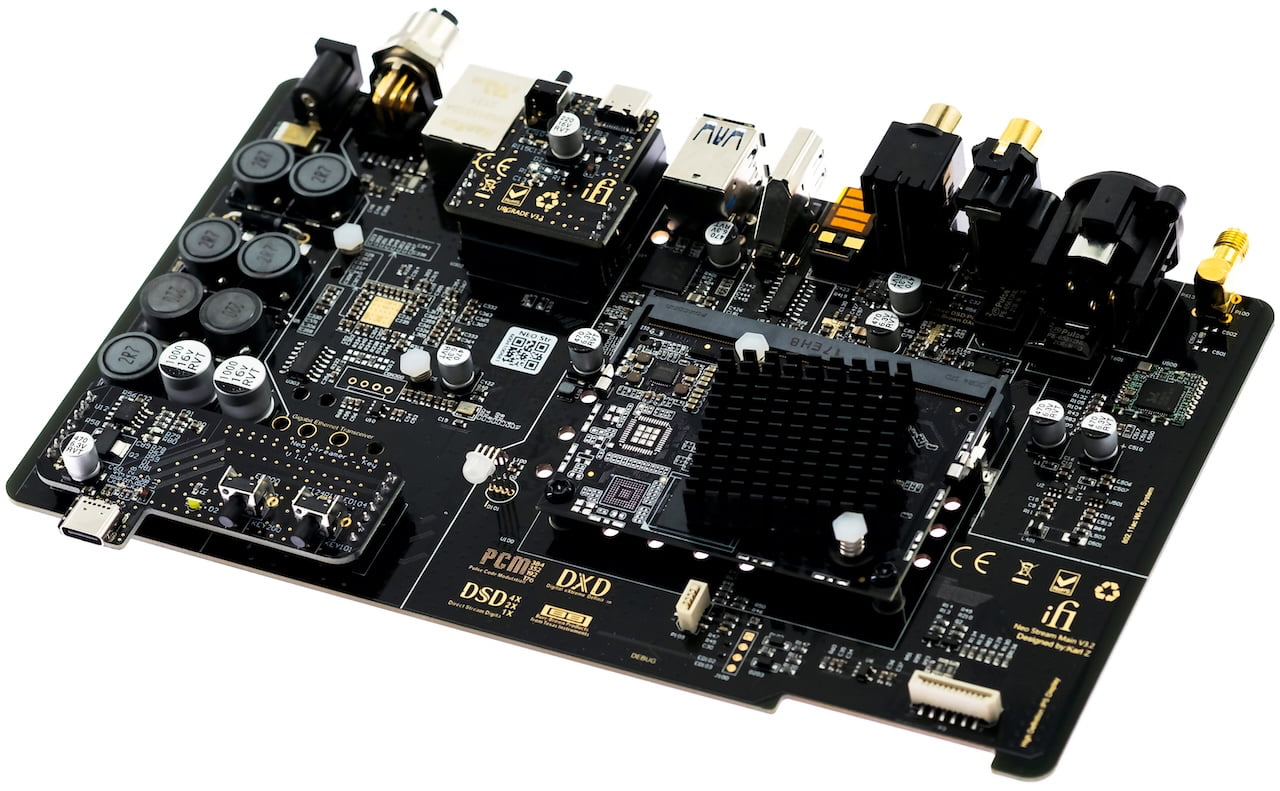
Both the NEO Stream 3 and ZEN Stream 3 are built on the same core streaming and noise-control platform, with differences that are deliberate rather than cosmetic. At a baseline level, both models receive refinements to their power supplies, including upgraded polymer capacitors for lower noise delivery and the continued use of ELNA Silmic II capacitors in the audio path. The goal here is consistency and stability, not tonal revoicing, with iFi focusing on cleaner power and predictable behavior in long-term use.
Setup and system management are also shared. Both streamers now include iFi’s updated IoT hardware, enabling faster initial configuration and smoother day-to-day operation.Firmware updates and system control are handled through either a browser based interface or the iFi Nexis app, streamlining setup and ongoing maintenance compared with earlier manual update processes. Exclusive Modes return on both units as well, allowing users to disable unused background processes during playback to minimize potential noise sources.
Noise mitigation remains a defining design priority across both products. Each includes iPurifier2 technology on the S/PDIF outputs and Active Noise Cancellation on the USB ports, specifically aimed at reducing interference from connected storage devices or computers when feeding an external DAC.
The NEO Stream 3 goes further by retaining the OptiBox optical isolation system from the original NEO Stream, which isolates the wired network connection and prevents network-borne electrical noise from entering the audio system. The ZEN Stream 3 does not include OptiBox as one its connectivity features.
On the software side, both units use the latest version of iFi’s ultra-resolution streaming engine. This platform supports Qobuz Connect, TIDAL Connect, Spotify Connect, and AirPlay 2, with improvements focused on stability, smoother web radio playback, and a cleaner interface with deeper configuration options. Control is handled through native apps rather than forcing users into a proprietary ecosystem. Support for Spotify Lossless, however, is still not finalised but we’re told it’s coming.
Where the two models clearly diverge is in system role. The NEO Stream 3 is designed as an all-in-one digital front end, combining network streaming with an integrated DAC capable of handling up to 768 kHz PCM and DSD512. It is intended for users looking to modernize an existing hi-fi system without adding external digital components. The ZEN Stream 3, by contrast, is a dedicated network transport. It supports up to 384 kHz PCM and DSD256 and is meant to slot into systems where a preferred external DAC is already in place.
Both models also incorporate K2 technology developed in collaboration with JVCKENWOOD. This processing is designed to restore harmonic information often lost during recording, mastering, or encoding. Two modes are available: K2, which preserves the original file resolution, and K2HD, which optionally upsamples PCM content to 192 kHz 24-bit. With this generation, K2 processing is no longer limited to internal DACs. Any external DAC connected to either streamer can benefit from K2 processing, while the NEO Stream 3 adds the ability to apply K2HD upsampling internally to PCM material below 192 kHz.
NEO Stream 3
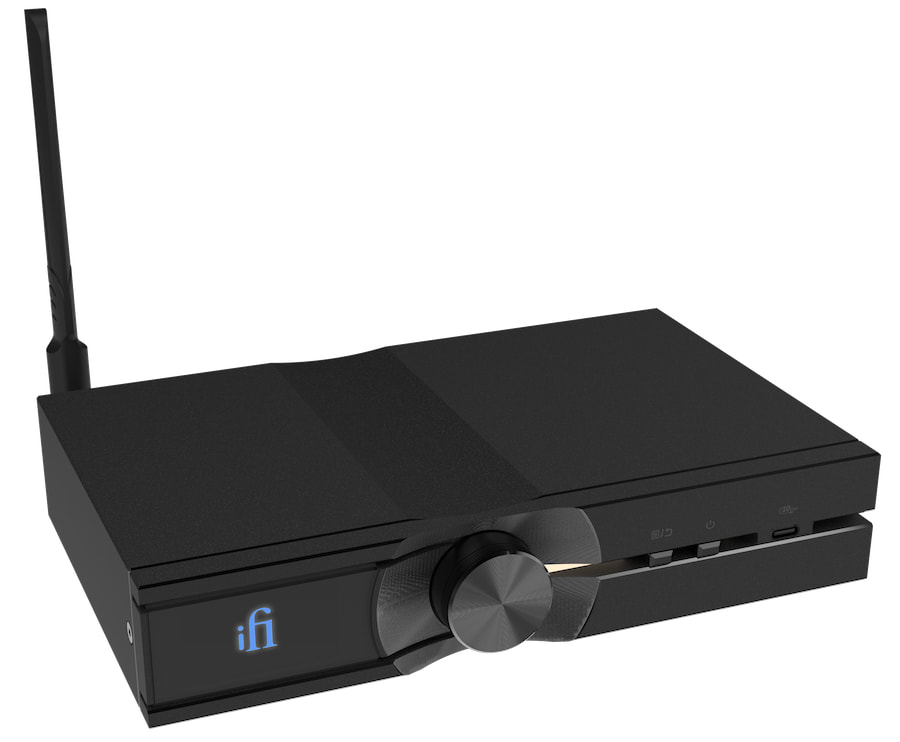
The NEO Stream 3 is a combined network streamer and DAC designed to function as a complete digital source component. It supports Wi-Fi and wired networking via RJ45 Ethernet as well as iFi’s M12-X optical network input. Digital inputs include USB-A for storage or DAC use and a front-mounted USB-C port. Digital outputs are comprehensive, with dual USB-A, S/PDIF optical, S/PDIF coaxial, AES/EBU, and I2S, allowing the unit to operate either as a DAC or as a dedicated digital transport. Analog outputs are provided via a balanced 4.4 mm connection and single-ended RCA.
Internally, the NEO Stream 3 uses a Burr-Brown DAC stage derived from the NEO iDSD 2 and supports high-resolution audio up to 768 kHz PCM and DSD512. Balanced output voltage is rated at 4 V RMS, with 2 V RMS available from the RCA outputs.
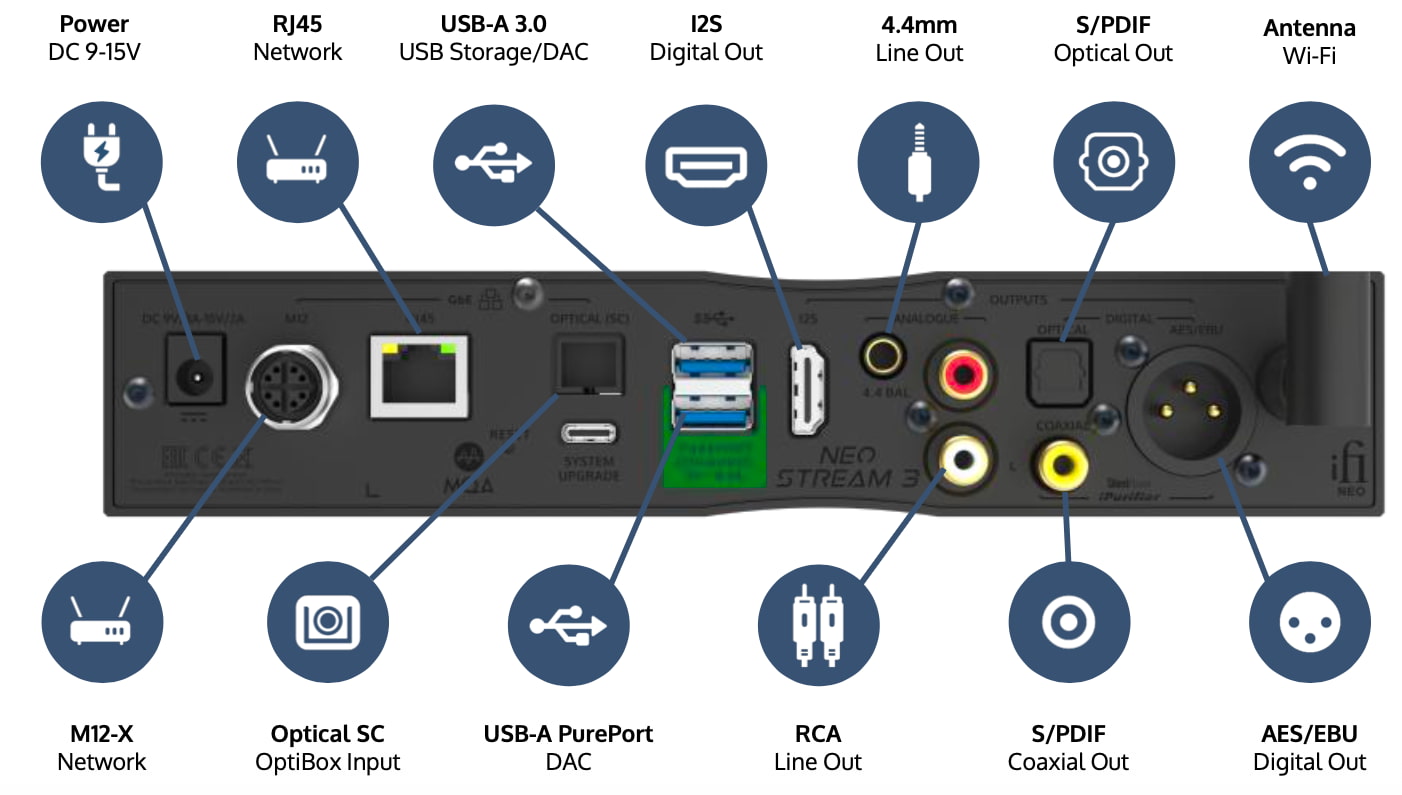
Power is supplied via a DC input supporting 9 to 15 volts, with internal regulation using upgraded polymer capacitors and ELNA Silmic II capacitors. Power consumption is under 0.5 watts at idle and approximately 14 watts at maximum load.
Setup and ongoing updates are handled through a simple browser-based interface or the iFi Nexis app, made possible by the new IoT hardware, so there is no need to fuss with manual update routines. With a compact chassis measuring 214 x 151 x 41 mm (8.4 x 5.9 x 1.6 inches) and weighing just 1 kg (2.26 lbs), the NEO Stream 3 is easy to place on a desk or equipment shelf without demanding much space.
Comparison
| NEO Stream 3 | NEO Stream | |
| Price | $999 | $1299 |
| Digital Inputs | Wi-Fi; Ethernet (RJ45, M12-X, Optical); 2xUSB-A; USB-C (front) | Wi-Fi; Ethernet (RJ45, M12-X, Optical); 2xUSB-A; USB-C (front) |
| Digital Outputs | 2x USB-A; S/PDIF Optical; S/PDIF Coaxial;AES/EBU; I2S | 2x USB-A; S/PDIF Optical; S/PDIF Coaxial;AES/EBU; I2S |
| Analogue Outputs | 4.4mm Balanced, SE RCA | 4.4mm Balanced, SE RCA |
| Operating System | Volumio 3 | Volumio 2 |
| Bluetooth Setup | Yes | No |
| Controllable via Nexis | Yes | No |
| K2HD Technology | Yes | No |
| Upgraded Capacitors | Yes | No |
| Chassis Colour | Matte Black | No |
Tip: There was never a NEO Stream 2 product.
ZEN Stream 3
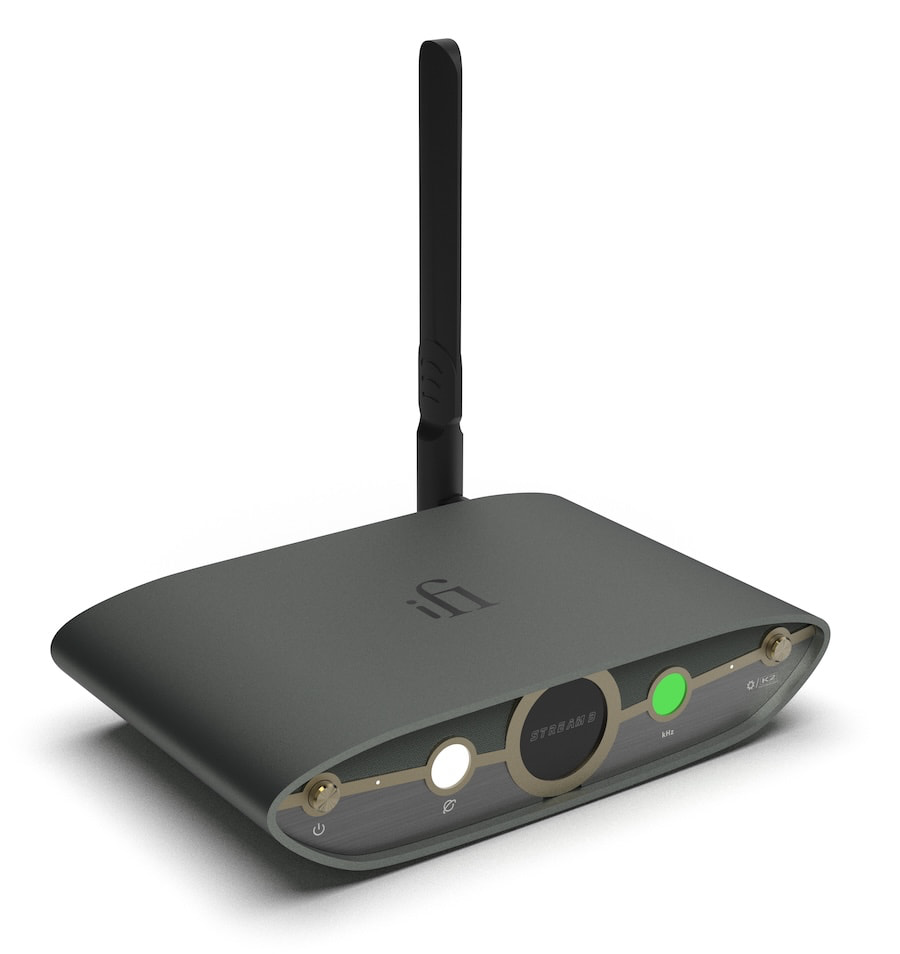
The ZEN Stream 3 is designed as a dedicated network transport for systems where digital conversion is handled elsewhere. It focuses entirely on getting a clean, stable digital signal out to an external DAC rather than duplicating functionality already present in many higher-end systems. Networking is handled via Wi-Fi or RJ45 Ethernet, with two USB-A ports available for local storage or DAC output.
Digital output options include two USB-A outputs for DAC connection and a coaxial S/PDIF output, each incorporating iFi’s iPurifier and Active Noise Cancellation technologies to reduce electrical noise before the signal reaches the DAC. There are no analog outputs and no internal DAC, which keeps the signal path simple and aligned with its role as a transport.
High-resolution support extends up to 384 kHz PCM and DSD256, handled by the same next-generation streaming engine used in the NEO Stream 3. Streaming is managed directly through native apps with support for Qobuz Connect, TIDAL Connect, Spotify Connect, and AirPlay 2, avoiding reliance on proprietary control software. K2 processing is included to restore harmonic information lost during recording or encoding and is applied before the digital output, allowing connected DACs to benefit without altering their internal architecture.
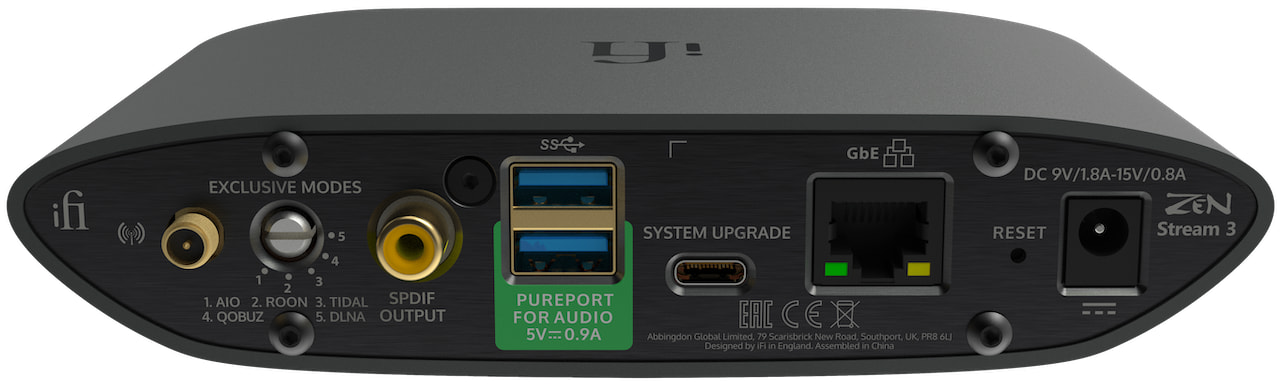
Power delivery has been revised with upgraded polymer capacitors and ELNA Silmic II capacitors to improve stability and reduce noise under load. Power is supplied via a DC input supporting 9 to 15 volts, with idle consumption under 6 watts and a maximum draw of approximately 10 watts. Firmware updates and system setup are handled through a rear USB-C service port, using either a browser-based interface or the iFi Nexis app, enabled by the updated IoT hardware platform.
Physically, the ZEN Stream 3 is compact and lightweight, measuring 158 x 100 x 35 mm (6.2 x 3.9 x 1.4 inches) and weighing 578 g (1.27 lbs). It is sized to sit easily on a desktop or equipment shelf alongside an external DAC, making it a practical drop-in upgrade for your existing system.
Comparison
| ZEN Stream 3 | ZEN Stream | |
| Price | $399 | $399 |
| Inputs | Wi-Fi; Ethernet (RJ45); 2x USB-A | Wi-Fi; Ethernet (RJ45); 2x USB-A |
| Outputs | 2x USB-A; S/PDIF Coaxial | 2x USB-A; S/PDIF Coaxial |
| Operating System | Volumio 3 | Volumio 2 |
| Bluetooth Setup | Yes | No |
| Controllable via Nexis | Yes | No |
| K2 Technology | Yes | No |
| Upgraded Capacitors | Yes | No |
| Chassis Style | Updated to ZEN 3 | Previous generation ZEN |
Tip: There was never a ZEN Stream 2 product.
The Bottom Line
With competition this strong, iFi is not trying to win by simply piling on features. The strategy here is differentiation through system role, execution, and the details that tend to matter after the initial setup. That includes easy integration into existing systems, app-native control rather than closed ecosystems, and a design that stays below the psychological $1,000 threshold while still targeting more demanding listeners.
That approach comes with tradeoffs. Brands like WiiM have shown that a comprehensive, frequently updated operating system can win over a large segment of the market, especially when paired with features such as room calibration and broad device compatibility. At this point, support for the major streaming platforms is largely table stakes across the category.
Where these products are ultimately judged is not on spec lists or feature counts, but on how smoothly they operate day to day, whether firmware updates are painless rather than disruptive, and how they actually sound once they are part of a real system. iFi is betting that its focus on noise control, power integrity, and flexible system roles will resonate. Whether that is enough to stand out in a crowded sub-$1,000 field will be up to listeners to decide.
Price & Availability
- NEO Stream 3 – $999 at iFi Audio
- ZEN Stream 3 – $399 at iFi Audio
Related Reading:
- ONIX Zenith XMT20 Streamer Transport Debuts With TIDAL Connect, Qobuz Connect, And Roon Ready Certification
- Mission Debuts 778S Music Streamer With Qobuz, TIDAL, Spotify Connect & AirPlay 2
- TEAC Unveils NT-507T: All-Digital Roon Ready Network Transport Joins Reference 500 Series
- Best Music Streamers: Editors’ Choice









Thai
February 23, 2026 at 12:52 am
Is there UpNp on Zen Stream 3?
Ian White
February 23, 2026 at 2:23 pm
I don’t think so. DLNA is supported. I will find out.
IW