Fender Audio is making its CES debut in 2026, marking the brand’s first appearance at the show as it expands beyond instruments and amplifiers into personal audio. Coinciding with Fender’s 80th anniversary, the company is entering the highly competitive wireless speaker and headphone market with two new product lines: the ELIE portable Bluetooth speakers and MIX wireless headphones.
It’s a measured but meaningful move into a category dominated by well-established players, where success depends less on legacy and more on execution. With ELIE and MIX, Fender is testing whether its design language, tuning philosophy, and brand credibility can translate into everyday wireless audio—an arena where consumers have plenty of choices and very little patience.
ELIE Portable Bluetooth Speakers
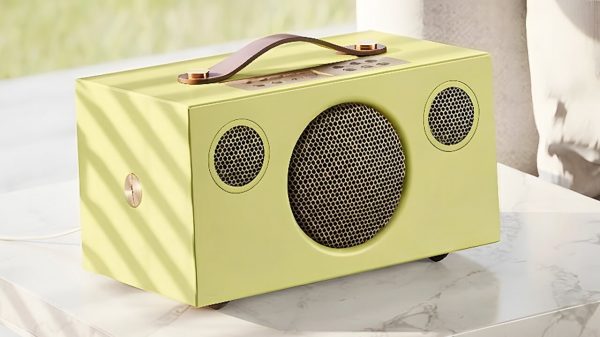
The ELIE (Extremely Loud Infinitely Expressive) portable Bluetooth speaker series blends Fender Audio’s industrial design with a straightforward, spec-driven approach to sound. The lineup launches with two models—the E6 and E12—aimed squarely at listeners who want more output and presence than typical lifestyle speakers without drifting into party-speaker excess.

The ELIE E6 is a compact, three-driver design that uses one tweeter and one full-range driver, supported by a dedicated subwoofer to reinforce low-frequency performance. Fender rates the E6 at a maximum power output of 60 watts, positioning it as the smaller, more portable option in the series while still promising enough headroom for real-world listening indoors or out.

The ELIE E12 steps up the scale with a more robust multi-driver configuration designed for higher output and greater room-filling capability. It employs two tweeters and two full-range drivers, backed by dual subwoofers to provide added low-frequency weight and control.
Fender rates the E12 at a maximum power output of 120 watts, delivered as 2 × 60 watts, clearly positioning it as the more powerful option in the ELIE lineup for listeners who want higher volume capability and a broader soundstage without moving into oversized portable speaker territory.
Both the ELIE E6 and E12 integrate a Waves system-on-a-chip (SoC), which Fender Audio describes as a world-first implementation in a portable speaker. The goal here is practical rather than flashy: delivering higher output with lower distortion while maintaining control across a wide dynamic range.


By rethinking how DSPs (digital signal processors) and SoCs are deployed in a compact speaker design, the ELIE platform is engineered to support greater power efficiency, allowing the speakers to play louder and cleaner than many similarly sized portable models without sounding strained. The emphasis is on usable volume and clarity, not just headline wattage.
Beyond standard Bluetooth playback, the ELIE speakers are designed for flexible, multi-source use at home or on the go. Both models support up to four audio channels simultaneously with low latency, making it possible to mix multiple inputs at once. Users can connect a Bluetooth source such as a smartphone or wireless microphone, add a wired input via XLR or ¼-inch cable, and pair two additional wireless channels using compatible Fender Audio accessories.
The ELIE E6 and E12 also support stereo pairing for true left/right channel separation, or multi-speaker mode to synchronize multiple units across a larger space—extending their use beyond casual listening into small events, creative setups, or shared environments where versatility matters more than gimmicks.
Comparison


| Fender Model | ELIE E6 | ELIE E12 |
| Product Type | Portable Bluetooth Speaker | Portable Bluetooth Speaker |
| Price | $299.99 | $399.99 |
| Speaker Configuration | 1 x Full-range driver 1 x Tweeter 1 x Subwoofer | 2 x Full-range drivers 2 x Tweeters 2 x Subwoofers |
| SPL | 96db @ 1m | 101db @ 1m |
| Max Power Output | 60W | 120W |
| EQ Controls | Not Indicated | Bass & Treble |
| Wireless Inputs | Bluetooth / 2 x Low Latency | Bluetooth / 2 x Low Latency |
| Wired Input | 1 x XLR Combo | 1 x XLR Combo |
| Wired Output | 3.5mm AUX | 3.5mm AUX |
| Bluetooth Version | 5.3 | 5.3 |
| Bluetooth Codecs | SBC, AAC, LC3, LHDC | SBC, AAC, LC3, LHDC |
| Stereo/Multi-Pairing | Yes | Yes |
| Battery Life | 18 hours | 15 hours |
| Quick Charging | 15 minutes = 1.5 hours of playtime | 15 minutes = 2 hours of playtime |
| Battery Type | Lithium-Ion Polymer | Lithium-Ion Polymer |
| IP Rating | IP54 | IP54 |
| Reverse Charging | USB-C, 12V | USB-C, 12V |
| Net Weight | 2.3 kg (5.1 lbs) | 4.8 kg (10.6 lbs) |
| Gross Weight | 1.8 kg (4.0 lbs) | 3.9 kg (8.6 lbs) |
| Dimensions (LDH) | 12.3 x 10.4 x 19.6 cm 4.8 x 4.1 x 7.7 inches | 28.0 x 15.1 x 17.5 cm 11.02 x 5.94 x 6.89 inches |
MIX Headphones

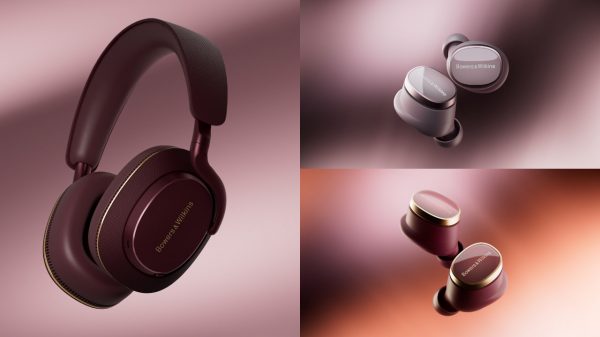
The MIX wireless headphones reflect Fender Audio’s attempt to approach personal listening as a modular, lifestyle-driven system rather than a one-size-fits-all design. Built to adapt to different listening preferences, aesthetics, and daily use cases, MIX is positioned as a flexible platform that can evolve with how—and where—users listen, rather than locking them into a fixed sound or feature set.
A key part of that flexibility is the included FWD Tx USB-C transmitter, which expands the headphones’ wireless capabilities beyond standard Bluetooth. The transmitter supports lossless LHDC-V, low-latency LC3, and Auracast transmission, allowing MIX to handle higher-quality audio streams, reduced lag for video or gaming, and broadcast-style sharing in compatible environments.
The MIX headphones use 40mm graphene drivers as their acoustic foundation, paired with hybrid active noise cancellation and dual microphones with environmental noise cancellation for calls. Fender Audio supports both wired and wireless playback, giving the MIX flexibility across mobile devices, computers, and dedicated audio sources. Spatial audio processing is also included, providing a 360-degree listening presentation designed to add immersion without overwhelming the core stereo image.

Battery life is a clear priority, with Fender Audio quoting up to 100 hours of playback, making the MIX well suited for extended listening, travel, and multi-day use without constant recharging.
A defining aspect of the MIX design is its modular construction. Key components can be swapped or replaced, allowing users to personalize the look and feel while also simplifying servicing and potential upgrades. It’s a practical approach that extends product lifespan—something rarely emphasized in the wireless headphone category.

Fender MIX Headphones Specifications
| Fender Model | MIX |
| Product Type | Wireless Headphones |
| Price | $299.99 |
| Speaker Drivers | 40mm hyper-efficient Graphene drivers |
| Frequency Response | 20Hz – 40kHz |
| Special Audio Modes | Lossless, Low Latency, Auracast |
| Active Noise Cancellation | Hybrid ANC with Environmental Noise Cancellation (ENC) |
| Microphone System | Dual-mic with ENC for clear calls |
| Battery Life | 100 hours (ANC off) 52 hours (ANC on) |
| Quick Charging | 15 minutes = 8 hours play time with ANC, 15 minutes = 14 hours play time without ANC |
| Charging Time | 2 hours full charge |
| Charging Port | USB-C |
| Wired Input | 3.5mm AUX-in |
| Bluetooth | Ver 5.3 |
| Bluetooth Codecs | SBC, AAC, LC3, LHDC |
| Included Wireless Adapter | FWD Tx USB-C wireless transmitter |
| Unit weight with case | 0.5 kg / 1.1 lbs |
| Unit dimensions (LDH) | 18 x 5 x 20 (cm) 7.1 x 2 x 7.9 (inches) |


The Bottom Line
Fender Audio is entering a crowded and unforgiving market, but it isn’t doing so blindly. The ELIE E6 at around $300 lines up directly against compact premium portables like the ELAC NAVA100, while the larger ELIE E12 at $400 takes aim at bass-forward competitors such as the Brane Audio X, which has been a standout portable speaker since its 2024 debut and still commands $449.
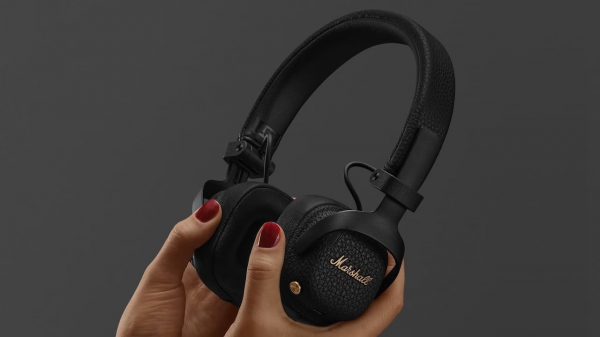
There’s also the unavoidable shadow of Marshall, whose portable lineup—including models like Emberton II, Kilburn III, and Tufton—has sold exceptionally well by combining recognizable design with consistent, consumer-friendly sound. That’s the real benchmark Fender Audio will be judged against, not nostalgia.
The MIX wireless headphones arguably face an even steeper challenge. At $300, they land in a very crowded headphone category, going head-to-head with newer releases like the Final Audio UX5000 ($250) and the Skullcandy Aviator 900 ($299)—both of which are already well established with younger buyers and frequent upgraders.
Where MIX does stand out is battery life: Fender’s claim of up to 100 hours of playback is close to unheard of in this category and, if accurate, would put MIX near the top of the wireless headphone market for endurance—something very few competitors have managed to approach.
Ultimately, CES 2026 demos will matter more than spec sheets. Fender Audio has made itself relevant on paper; whether ELIE and MIX can translate that into real-world performance—and carve space among very capable rivals—will determine if this is the start of a lineup or a one-off experiment.
Price & Availability
- Fender ELIE 6 Portable Bluetooth Speaker – $299
- Fender Elie 12 Portable Bluetooth Speaker – $399
- Fender MIX Wireless Headphones – $299
Related Reading: