Recorded in November 1957, Soul Junction didn’t hit shelves until three years later—but when it did, it landed with quiet authority, not hype. Pianist Red Garland, fresh off sharpening his instincts inside the Miles Davis orbit, leads a lineup that reads like a jazz history syllabus: John Coltrane on tenor, Donald Byrd, Art Taylor, and George Joyner. Future legends, still hungry, stress-testing the blues—and winning.
The 15½-minute title track is Garland at full command: relaxed, precise, and utterly unconcerned with showing off. This is endurance jazz with taste—fingers dancing, ego parked, time doing the heavy lifting. Craft Recordings’ Original Jazz Classics series has been on a tear in 2025, and Soul Junction fits right in. AAA lacquers cut from the original tapes by Kevin Gray at Cohearent Audio, pressed on 180-gram vinyl at RTI, tip-on jackets done right—and yes, a same-day 192/24-bit hi-res digital release.
Red Garland didn’t stumble into jazz history—he fought his way in, sometimes literally. Born William McKinley Garland Jr. in Dallas in 1923, he started out on clarinet and alto sax before the piano claimed him for good. His early musical education came the hard way: absorbing lessons from Texas bandstands, Army barracks, and mentors connected to the Kansas City lineage that also shaped Charlie Parker. Garland wasn’t groomed for elegance—he earned it.
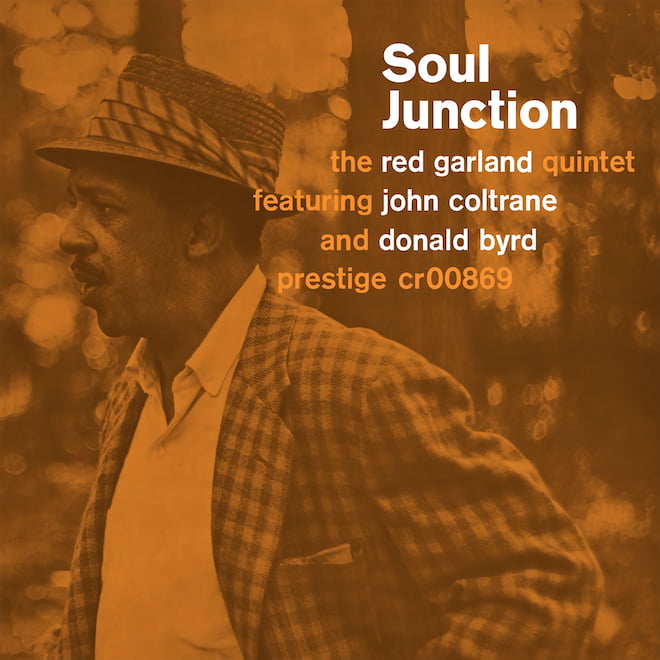
World War II rerouted everything. Stationed at Fort Huachuca, Garland learned piano seriously while serving, picking up discipline and touch from fellow Army musicians. He also boxed. Yes, that kind of boxed—famously stepping into the ring with Sugar Ray Robinson and living to tell the tale. That toughness never left his playing. Even at his most lyrical, there’s steel underneath the swing.
By the mid-1950s, Garland’s combination of time, touch, and block-chord authority caught the attention of Miles Davis, who brought him into one of the most consequential quintets in jazz history alongside John Coltrane, Philly Joe Jones, and Paul Chambers. Garland’s piano became the spine of the group’s legendary Prestige Records sessions—Cookin’, Relaxin’, Workin’, Steamin’. No flash, no filler, just immaculate time and harmonic weight that made everyone else sound better.
Then came the real workload. Between the mid-1950s and early ’60s, Garland recorded more than two dozen albums for Prestige, leading trios, quartets, and quintets at a pace most pianists couldn’t survive—let alone sustain at this level. These weren’t throwaway dates. They were confident, blues-deep, perfectly balanced records that defined mainstream modern jazz piano without ever pandering.
That output looks even more staggering in hindsight: Garland died in 1984 at just 60 years old. No long victory lap. No late-career reassessment tour. Just an absurdly consistent body of work that still swings harder than half the catalogues released since. Red Garland didn’t chase innovation for its own sake—he refined feel, touch, and time until they became unmistakable. And once you hear it, you always know who’s at the keyboard.
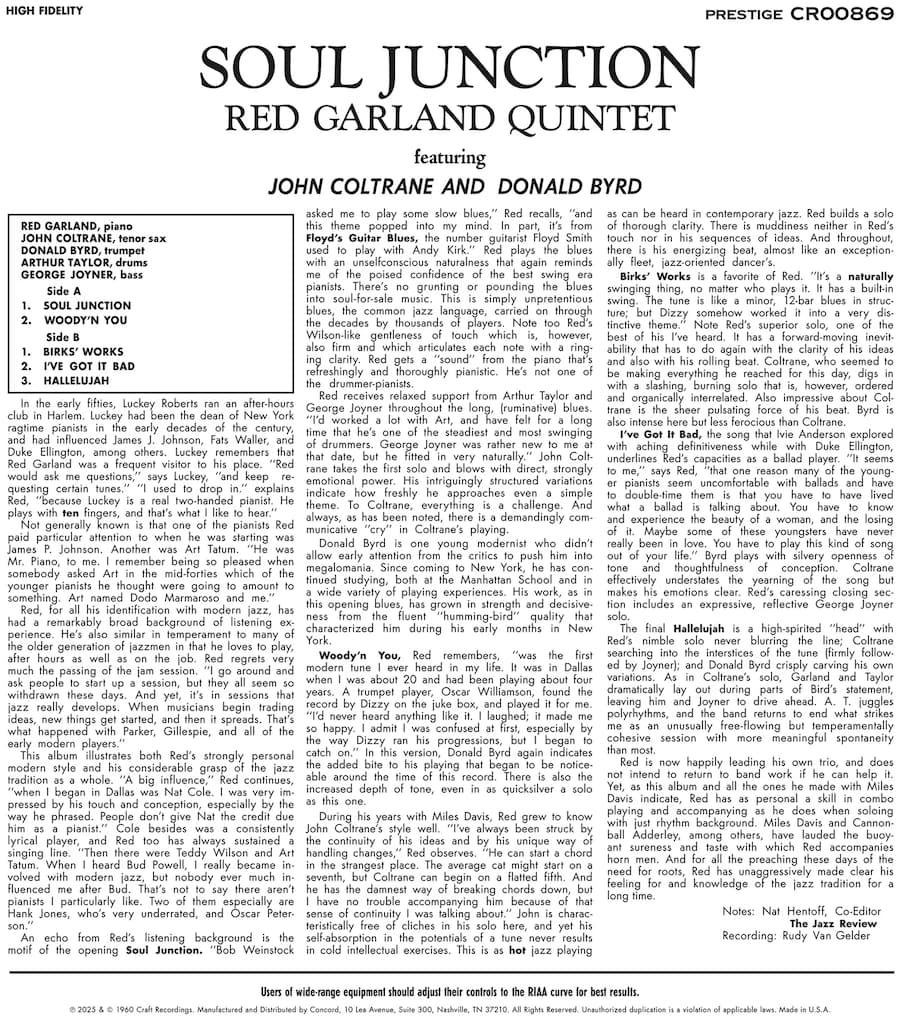
Recorded on at Van Gelder Studio in Hackensack, New Jersey, Soul Junction is a 42-minute hard-bop clinic that proves why Rudy Van Gelder’s living room remains sacred ground. Released on Prestige Records, the session balances structure and stretch: the 15:30 title track gives Red Garland all the runway he needs, while staples like Dizzy Gillespie’s “Woody ’n’ You” and “Birks’ Works,” Ellington’s world-weary “I’ve Got It Bad,” and a gospel-leaning “Hallelujah” keep things moving without ever rushing the point.
John Coltrane is in frighteningly good form here, firing off early “sheets of sound” solos that feel inevitable rather than indulgent—velocity with purpose, not empty calories. This album has already seen five reissues, but the Original Jazz Classics edition arriving January 23, 2026 makes the strongest case yet for revisiting it.
Clean, well-balanced sound with the piano firmly front and center and carrying proper tonal weight. The soundstage is compact rather than expansive, but everything is clearly defined and sensibly placed. Garland’s lighter and heavier touches come through clearly, highlighting just how controlled and musical his playing was. The horns have good presence and bite without crossing into glare. The hi-res Qobuz version is solid and faithful, but it gives up some body and weight compared to the vinyl. Subtle tempo changes keep the session engaging throughout.
And here’s the part that shouldn’t be controversial but somehow still is: Red Garland should be essential listening for anyone who cares about the piano—jazz, classical, rock, whatever. Touch, timing, restraint, feel—this is how it’s done.
Where to buy: $40 at Amazon | Craft Recordings
Related Reading:
- Benny Golson’s “Gone With Golson” Vinyl Reissue Review: Craft Recordings Restores 1960 Prestige/New Jazz Rarity
- Wheelin’ And Dealin’ 180-Gram Vinyl Review: Craft Recordings’ OJC Reissue Showcases Waldron And Wess
- Review: Here’s Lee Morgan – Craft Recordings’ OJC Reissue Revives A Hard Bop Rarity
- Review: Looking Ahead – Ken McIntyre & Eric Dolphy’s Boundary-Pushing OJC/Craft Recordings Reissue On 180g Vinyl