

Table of contents
Introduction
Integrated amplifiers have roared back into the audiophile mainstream for one simple reason: people are tired of assembling component Franken-systems when a single, well-engineered box can do the job with less noise, less clutter, and—brace yourself—better value. But not every modern amp with a menu of inputs and a Bluetooth antenna qualifies as a “network” or “streaming” amplifier. That label needs to be earned with true Wi-Fi or Ethernet streaming hardware and a dedicated internal network player, the kind you’d find in our separate guide for streaming amplifiers.
This Editors’ Choice list is laser-focused on integrated amplifiers that do not include built-in network streaming platforms. These are traditional integrateds in the modern sense: a preamp and power amp in one chassis, often with a phono stage, a headphone amp, and sometimes an onboard DAC—but without any internal network playback engine. Bluetooth support doesn’t magically elevate an amp into “network” territory; it’s a convenience feature, nothing more.
What follows is a look at the best pure integrated amplifiers—the ones that keep your signal path clean, your system flexible, and your streaming device of choice firmly outside the chassis where it belongs.
Our emphasis this year is on new models we’ve directly reviewed, have in for review, or have spent significant hands-on time with. That said, several standout amplifiers from our 2024 list remain in production—and remain absolutely worthy of your attention. You can find those recommendations here.
When shopping for an integrated amplifier in 2025, you’re not just picking a power source—you’re choosing the engine that dictates how the rest of your system behaves. And with so many brands stuffing extra features into every spare inch of chassis space, it pays to know what actually matters and what’s just marketing perfume.
A subwoofer output to conveniently connect a powered subwoofer. This output may or may not include a low-pass crossover or bass management settings.
Digital Inputs such as USB, Optical Toslink or Coaxial enable enable connectivity to external music sources such as CD players or digital music streamers. Such inputs mean the amplifier has an internal DAC.
A USB input to access digital music locally from USB stick, hard drive, laptop, tablet or computer.
A headphone output generally means the amp includes a special amplifier just for headphones, mainly audiophile headphones with high impedance requirements. Ideally it makes headphone listening sound better.
A remote control is usually included, but not always.
An internal MM or MM/MC Phono Pre-amplifier (aka phono stage) allows you to connect a turntable directly to the amplifier without the need for an external component that adds to system cost.
Design Considerations
Build quality matters. Circuit design matters. And matching your amplifier to the right speakers and source components matters more than most people realize. You can have the prettiest chassis in the world, but if the amp can’t control your loudspeakers or plays badly with your gear, you’re just admiring expensive metal.
Don’t get hung up on power ratings. They’re often misunderstood and occasionally misleading. Some speakers barely sip a few watts from an 8-ohm tap, while others demand an amplifier that can double its output into 4 ohms and remain stable doing it. And yes—you’re far more likely to damage a loudspeaker by starving it of power than by giving it too much. Clipping ruins more drivers than excess wattage ever will.
Tube or solid-state? There’s no universal answer. Tube amps require more hands-on care, and the stereotype that tubes are always “warm” or “rich” simply doesn’t hold up. Likewise, not all solid-state amplifiers are neutral; some are voiced darker or warmer than their glass-glowing cousins. Trust your ears, your room, and your speakers—not the mythology.
Most importantly, budget intelligently. Leave room for speakers, source components, cables, and room treatment. An integrated amp—whether purist or feature-packed—should sit within a balanced system, not overshadow it.
If you’re building your first serious stereo system or upgrading one that’s been with you a while, this guide lays out the integrated amplifiers that offer the strongest performance for the money right now without the distraction of built-in network players.
Methodology
Eligible products must be currently shipping whether or not they were released in the current year. At least one eCoustics staff member must nominate a product within the category that they feel offers best-in-class performance at its listed retail price before it can be voted on by our editors.
Best Integrated Amps of 2025
WiiM Vibelink Amp ($300)
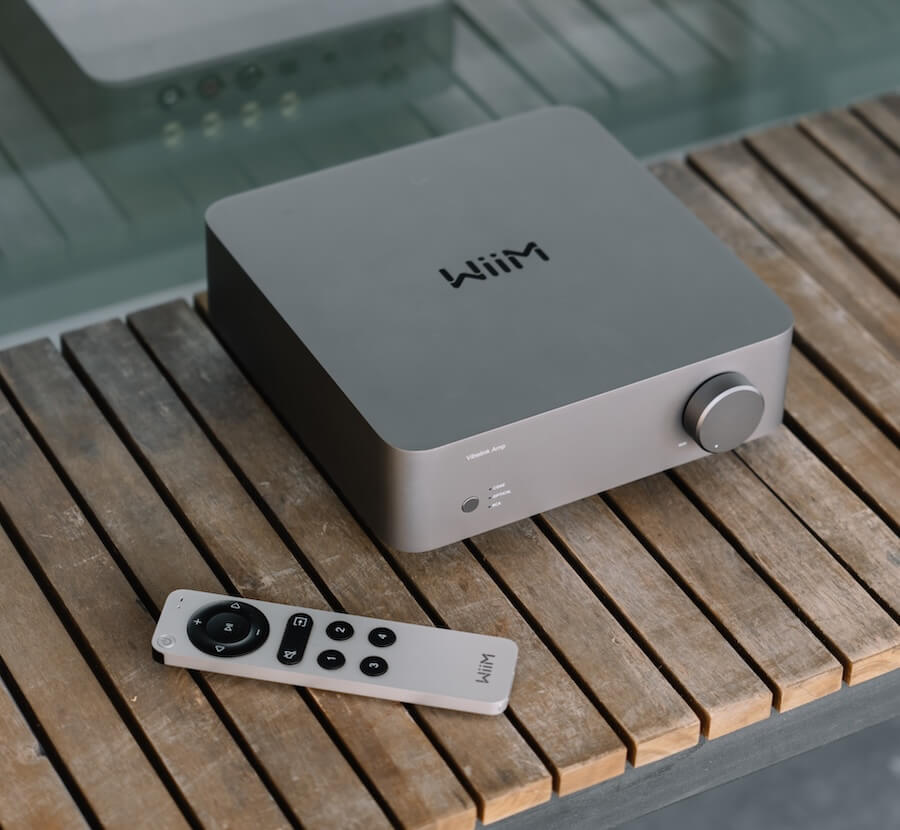
The WiiM Vibelink Amp doesn’t bother with streaming, HDMI, or a phono stage—it’s a bare-knuckled Class D amplifier built to do one thing: deliver clean, controlled power without excuses. Rated at 100 watts per channel into 8 ohms (and 200 into 4), it pairs muscle with precision, anchored by an ESS ES9038Q2M DAC capable of 24-bit/192kHz playback. The rear panel keeps it brutally simple: RCA, optical, and coaxial inputs, plus solid binding posts that take banana plugs. The aluminum oxide chassis feels tougher than its price suggests, and while there’s no HDMI ARC, USB, or Wi-Fi, it plays nicely with WiiM’s streamers—Ultra, Pro, Pro Plus, or Mini—for those who want to stay in the family.
Sonically, it’s neutral, tight, and polite—clean enough to respect the recording, but a little too restrained to thrill. Bass control is solid but not seismic; treble detail is crisp but slightly flat. Pair it with a warmer DAC or streamer like a Bluesound NODE or Cambridge MXN10, and it comes alive. No fluff, no nonsense—just a compact, reliable amp that gets the job done for under $300. It won’t charm you, but it won’t let you down either.
Go to full review | $299 at Amazon
MOON by Simaudio 250i V2 ($2,400)

Straight out of Montreal, where hi-fi craftsmanship rivals the bagels, the MOON 250i V2 refines one of Simaudio’s most respected integrated amplifiers with upgraded circuitry, next-gen semiconductors, and a newly added MM phono stage—a welcome inclusion missing from its predecessor. Delivering 50 watts per channel into 8 ohms and 100 into 4, this Class A/B design embodies everything MOON is known for: a robust, neutral sound with just a hint of warmth that makes long sessions addictive.
Built like a tank at 23 pounds, it’s compact but reassuringly substantial, featuring a headphone amp, preamp output, and the option to use it purely as a preamp. There’s no DAC or streaming, but that’s the point—the 250i V2 is pure, unfiltered analog excellence from one of Canada’s best.
Learn more | $2,400 Locate a Dealer
Quad 3 ($1,895)
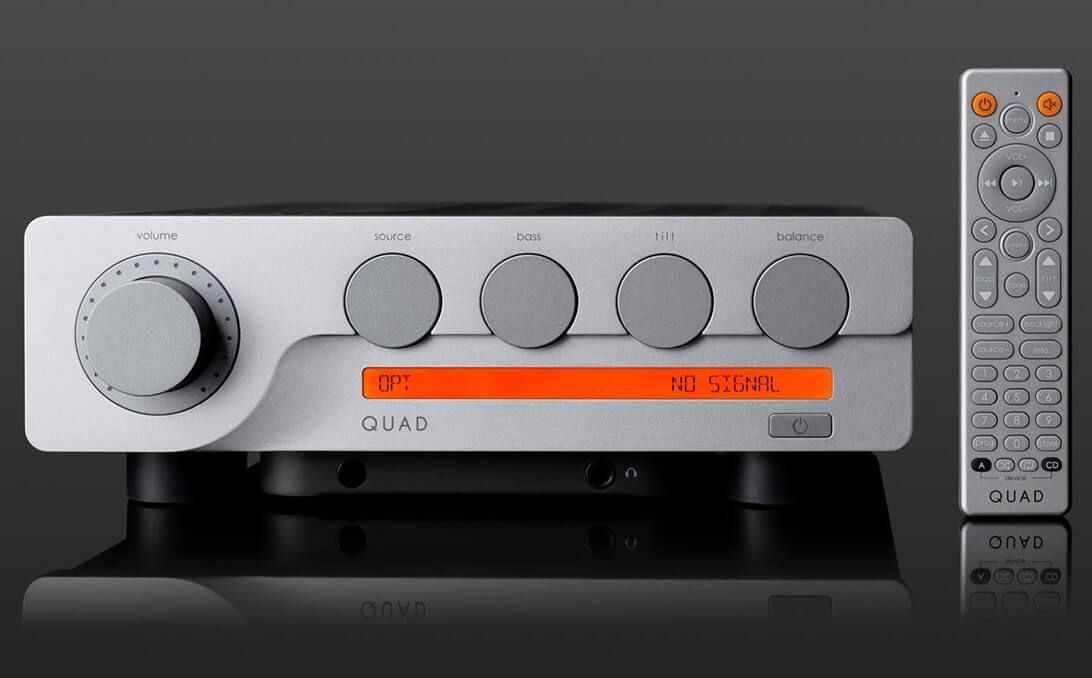
The Quad 3 perfectly bridges vintage British design and modern hi-fi engineering, blending Class A/B warmth with 21st-century versatility. Rated at 65 watts per channel into 8 ohms, it uses Quad’s Complementary Feedback topology to maintain linearity, reduce distortion, and stay cool under pressure. Inside, multiple low-noise power supplies ensure superb detail retrieval and soundstage precision, while the ESS Sabre ES9038Q2M DAC handles hi-res audio up to 32-bit/768kHz PCM and DSD512—with full MQA decoding for those still flying that flag.
Connectivity is extensive: coaxial, optical, USB-B, HDMI ARC, twin RCA line inputs, and a moving magnet phono stage for vinyl. There’s even a 6.35mm headphone jack and Bluetooth 5.1 onboard. The industrial design stays true to Quad’s heritage—smooth, sturdy, and built like a tank—with the iconic orange strip now LED-backlit and discreetly housing a modern LCD display.
Sonically, it’s open and smooth, with exceptional vocal clarity and refinement, though the bass could use a touch more punch. Still, the Quad 3 delivers an addictive mix of nostalgia and modern precision that feels timeless—and built to stay that way.
Learn more | $1,895 Locate a Dealer
Advance Paris A10 Classic ($2,999)
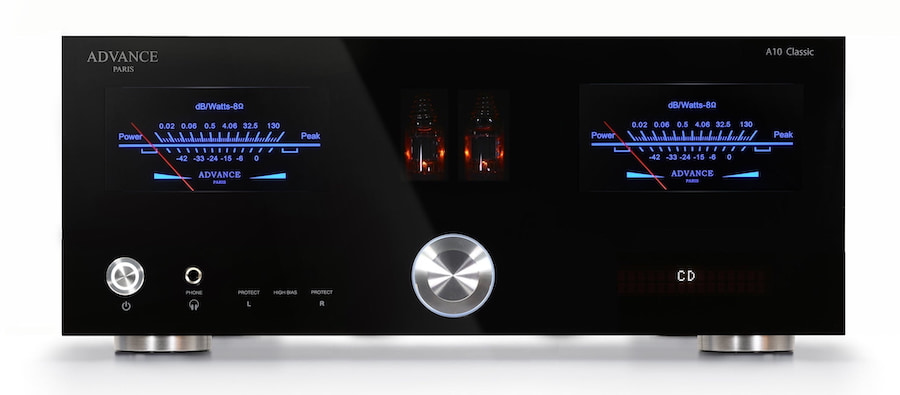
The Advance Paris A10 Classic is unapologetically French—equal parts style, muscle, and drama. Inspired by the flagship X-i1100, it blends a tube preamp stage (ECC81/12AT7) with a Class A/B push-pull amplifier delivering 130 watts per channel into 8 ohms (and 190 into 4 ohms). Connectivity is exhaustive: six RCA inputs including a moving magnet phono stage with adjustable capacitance, balanced XLR, five digital inputs (three optical, coaxial, and USB), and even HDMI ARC for TV integration. There’s also a USB-A port for flash playback and optional aptX Bluetooth via the XFTB01 or XFTB02 modules. Inside, it’s built like a tank with a massive transformer, while distortion remains impressively low at <0.1%.
Sonically, the A10 Classic delivers a bold, warm presentation with just enough French refinement to keep things civilized—slightly rounded at the extremes, but beautifully balanced, detailed, and alive. It even managed to drive Magnepan LRS panels with real authority, nearly matching amps twice its size and triple its price, including my $6,000 Cambridge Edge A. At night, that illuminated front panel turns into the best-looking lightshow this side of the Hudson River—because if the French are going to build an amp, it’s going to sound good and look better doing it.
$2,999 at Amazon | Crutchfield
Marantz Model 10 ($15,000)
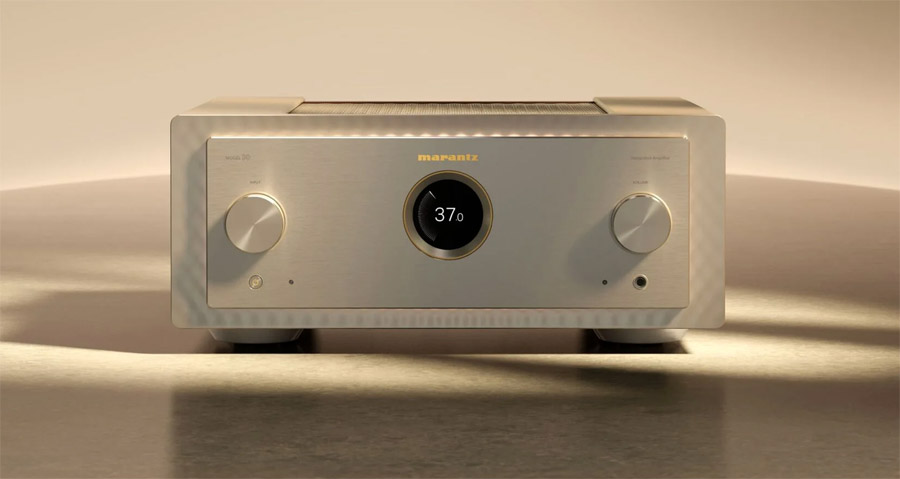
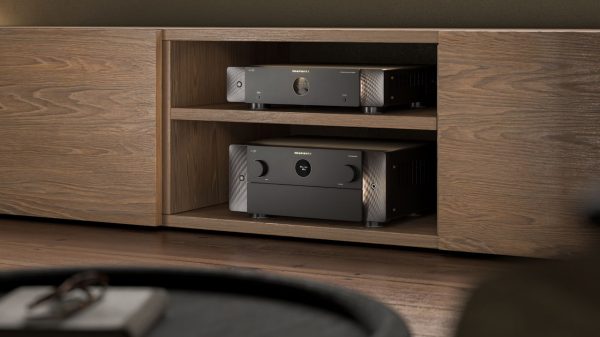
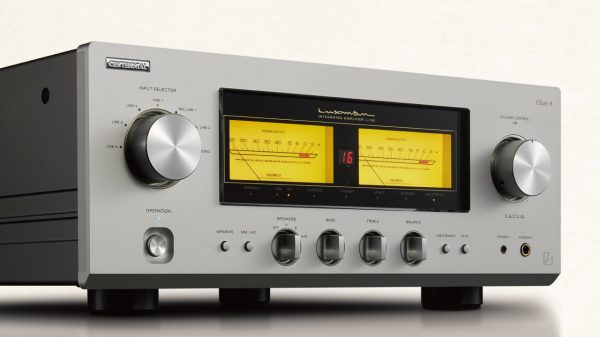
Developed over five years at Shirakawa Audio Works in Japan, the Marantz Model 10 Reference Integrated Amplifier ($15,000 USD) redefines what a modern reference amplifier can be. As the first component in the brand’s new 10 Series, it embodies a fusion of heritage, precision, and contemporary design. Built around a dual-mono symmetrical amplifier topology, the Model 10 uses a copper-plated triple-layer chassis with internal shielding to isolate high- and low-power circuits, reducing interference and improving dynamics. Working in partnership with Purifi, Marantz created a fully balanced amplifier from input to output, with dedicated power supplies for each channel and a separate linear supply for the preamp stage. The result is a muscular yet refined performer that delivers 250 watts into 8 ohms and 500 watts into 4 ohms, with the ability to add a second Model 10 for bi-amplified operation via Marantz’s Floating Control Bus System (F.C.B.S.).
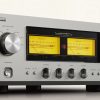
Distortion is impressively low at 0.005% THD, and the amplifier can deliver up to 30 amps of peak current, ensuring exceptional control and dynamics regardless of speaker load. The latest HDAM (Hyper Dynamic Amplifier Module)analog circuitry gives the preamp section remarkable speed and resolution, making the Model 10 as transparent as it is powerful. Connectivity is equally comprehensive, including two balanced XLR inputs, three RCA inputs, and a high-quality phono stage compatible with both MM and MC cartridges (with three impedance settings). Weighing in at 74.3 pounds (33.7 kg), the Model 10 combines elegance and brute strength — an amplifier capable of driving almost anything while revealing every musical nuance. Finished in champagne gold, it’s not just the best-sounding Marantz amp ever made — it’s the most beautiful.
Learn more | $15,000 at Marantz
The Bottom Line
Integrated amplifiers without built-in network players remain a vital part of the audiophile landscape, but the field looks different this year. There’s a clear price gap between the models that made this list—not because the market has dried up, but because manufacturers are far more eager to send us their streaming amplifiers for review. We can only stand behind products we’ve actually tested, spent meaningful time with, and understand in real systems.
What we did review this year shows that traditional integrated amplifiers are still evolving: smarter circuit design, stronger phono stages, better headphone outputs, and more refined voicing across the board. Matching them to the right speakers and sources remains the deciding factor in whether your system sings or sulks.
If you want the cleanest signal path, rock-solid build quality, and the freedom to choose your own streamer, these are the integrated amplifiers we trust right now. The pricing may jump around, but every model here earned its place the old-fashioned way—by being heard, not hyped.
Related Reading:





















Kevin
December 6, 2025 at 10:05 pm
Nothing worthwhile between $300 and $2400???
Ian White
December 6, 2025 at 10:35 pm
Kevin,
So a few things about this specific list. Manufacturers sent us a rather large number of integrated amplifiers in 2024 and then the tariffs happened and it suddenly became network amplifiers or nothing. We asked for things and when they never arrived, it became DAC/Amps, network amplifiers, streamers, speakers, and close to 60 headphones/IEMs. Listening for 10 minutes at a show doesn’t qualify. We already put in our requests for “integrated amplifiers” for 2026 based on what we know is coming and most still want to send the other categories mentioned above. A few companies changed distributors mid-year and had no inventory of specific models to send us (Musical Fidelity as one example).
For 2026, I will be doing more integrated amplifier reviews from Unison Research, Marantz, and Audiolab. I would suggest checking out our 2024 list for models that are still available as well.
IW
Michael Little
December 7, 2025 at 5:37 pm
Hi Ian,
I am really glad to see the A10 made the list.
I bought a new to me one based on a few reviews of the A12.
When did the A10 review get posted?
Mike
Ian White
December 7, 2025 at 6:26 pm
Mike,
Next week. Have Quad, Andover, and Marantz reviews ahead of it. It’s a very good amp. I’m beyond impressed.
IW
Michael Little
December 9, 2025 at 12:41 am
Awesome,
I have already done some tube rolling with great results.