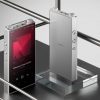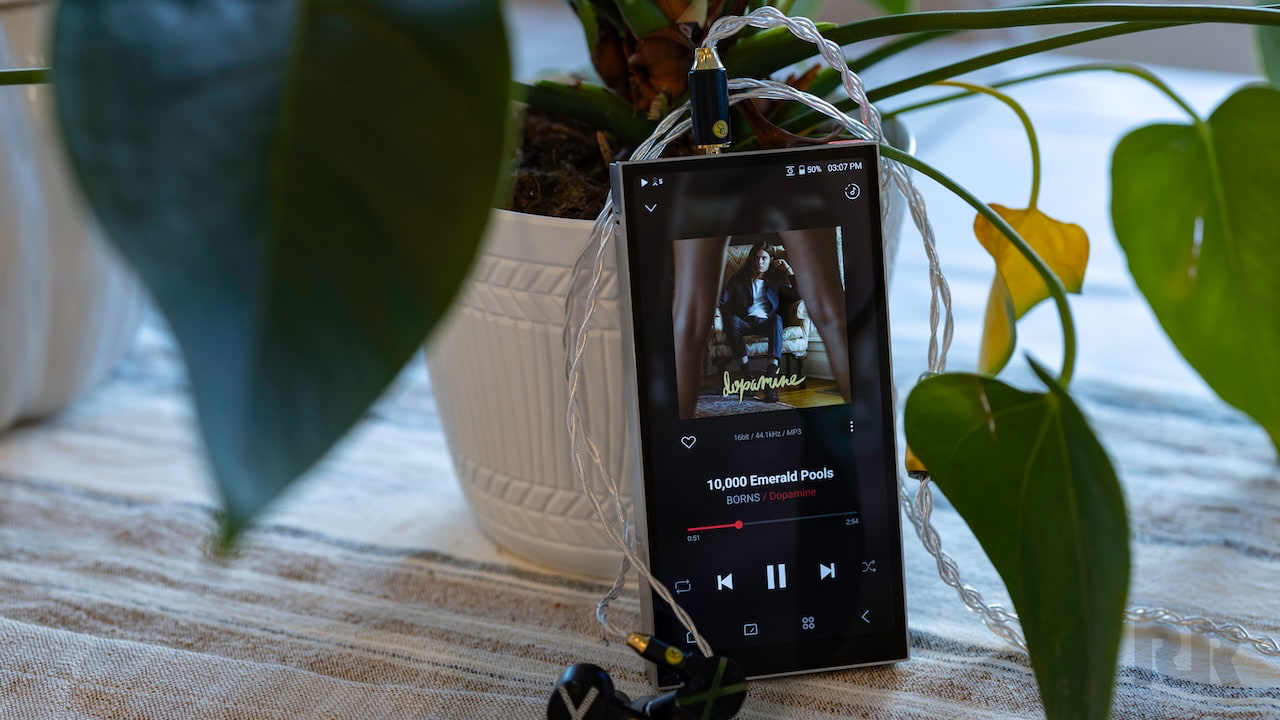
Astell & Kern is a heavy hitter in the premium audio space. The Korean brand has spent years defining the upper tier of the digital audio player market, pushing prices into territory where performance, build quality, and long-term relevance actually matter. The PD10 lands squarely in the upper tier at $2,749 with the dock ($2,410 without it), placing it in direct competition with the most serious portable players available. At nearly three grand, sound quality and prestige are no longer enough.
The high-end DAP market is brutally competitive right now, and Astell & Kern is leading the charge; but leadership alone isn’t enough when buyers have real alternatives and very high expectations. Building a good audio player isn’t enough anymore. Designing unique feature sets with genuine utility is the name of the game. The PD10’s 2-channel cradle is an interesting value proposition, but does it actually justify the PD10’s immense price?
PD10 Technical Overview: Power, Connectivity, and Storage
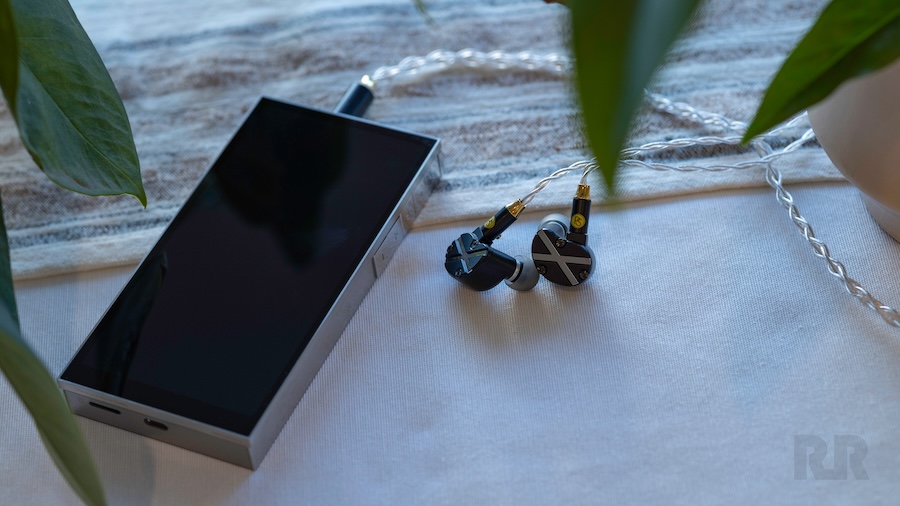
Astell & Kern tends to lead the charge at developing ever-more-sophisticated portable audio systems. To that end, they often dump large, dense walls of technical specifications at the user. That suites technically-minded buyers quite well, but obfuscates the most-import specs for delivering a truly-great user experience.
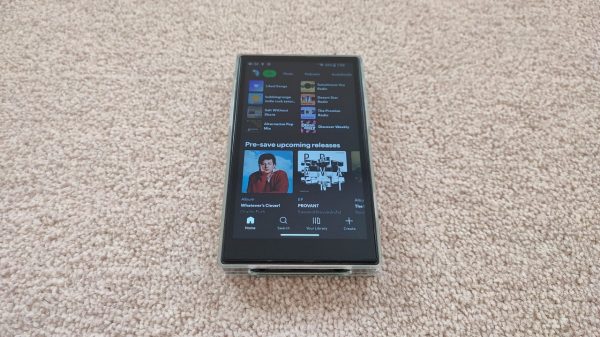
The first element of the PD10’s design that you interact with is its 6-inch 1080×2160 IPS display. Selecting a vibrant, high-contrast panel gives the PD10 a modern, smartphone-like interface that’s responsive and easy to navigate. Next is its output power, which is substantial: in low gain, the PD10 delivers 2.6Vrms from the unbalanced output and 5.6Vrms balanced, keeping noise under control for high-efficiency IEMs. Switch to high gain and those numbers jump to 4Vrms unbalanced and a very serious 8.3Vrms balanced—enough voltage to comfortably drive high-impedance and current-hungry headphones without external amplification.
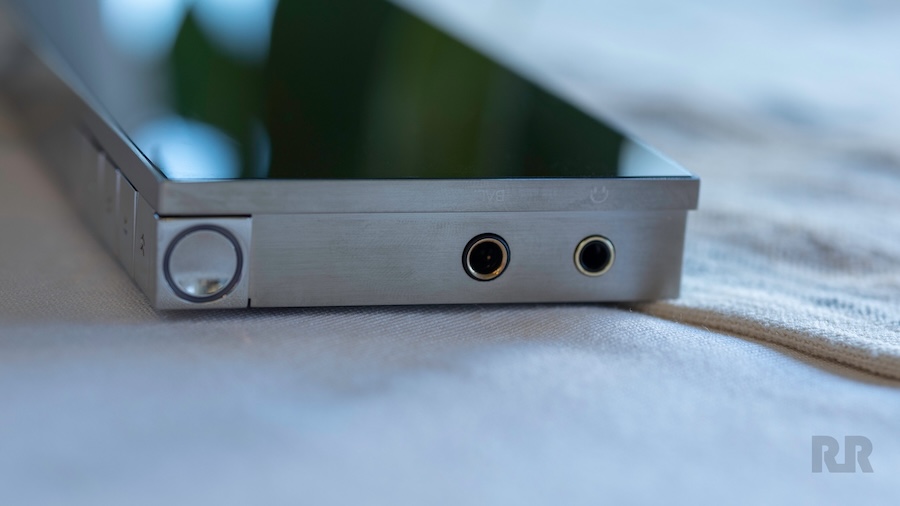
Output impedance stays sensibly low at 1 ohm from the 3.5mm jack and 1.6 ohms from the 4.4mm balanced output, which means stable frequency response and predictable behavior with multi-driver IEMs. At the heart of the PD10 is a no-nonsense AKM DAC implementation, pairing dual AKM4191EQ modulators with four AKM4498EX DACs. This complex arrangement of SoCs allows Astell & Kern to separate digital and analog stages more effectively, reducing noise and preserving dynamic range in both portable and docked use.
Astell & Kern’s Advanced DAR (Digital Audio Remaster) is an optional two-stage processing system that upsamples audio before it reaches the DAC. It can be enabled or disabled at will, and whether it’s useful depends on the source material and listener preference. DAR is strictly optional. Leave it off for native playback, or use it selectively if you prefer the presentation it brings to certain recordings.
Connectivity is current, but not exhaustive. Dual-band Wi-Fi (2.4 and 5GHz) ensures reliable high-resolution streaming, and Bluetooth 5.3 support includes aptX HD, LDAC, LHDC, AAC, and SBC. What’s notably absent, however, is aptX Lossless, a codec that’s starting to appear on competing high-end portable devices. For wired listeners, this omission won’t matter. For those expecting the latest Bluetooth standards at this price, it’s worth flagging.
Storage is generous out of the box at 256GB and expandable up to 1.5TB via microSD, which is essential for anyone sitting on a large hi-res or DSD library. Physically, the PD10 is unapologetically substantial. At just under 6 inches tall, nearly 3 inches wide, and weighing roughly 15.3 ounces, it’s clearly built for stability and performance rather than pocket-friendly minimalism. Powering all of this is a 5,770mAh battery, sized to support long listening sessions despite the high output stages and large display.
File Support, Bit-Perfect Playback, and Output Choices
The PD10’s file support makes it clear who this player is designed for. It handles every major lossless and lossy format that actually matters—WAV, FLAC, AIFF, ALAC, APE, and AAC—alongside legacy formats like MP3 and WMA for anyone with older libraries. More importantly, native DSD support extends all the way up to DSD512, covering DSD64, 128, and 256 without conversion. That puts the PD10 squarely in “bring your entire archive” territory, not just high-res streaming playlists.
On the PCM side, support runs from 8kHz to a frankly excessive 768kHz at up to 32-bit depth. The PD10 is capable of bit-perfect playback without resampling or truncation, which matters if you’re particular about preserving the integrity of your files from storage to output.
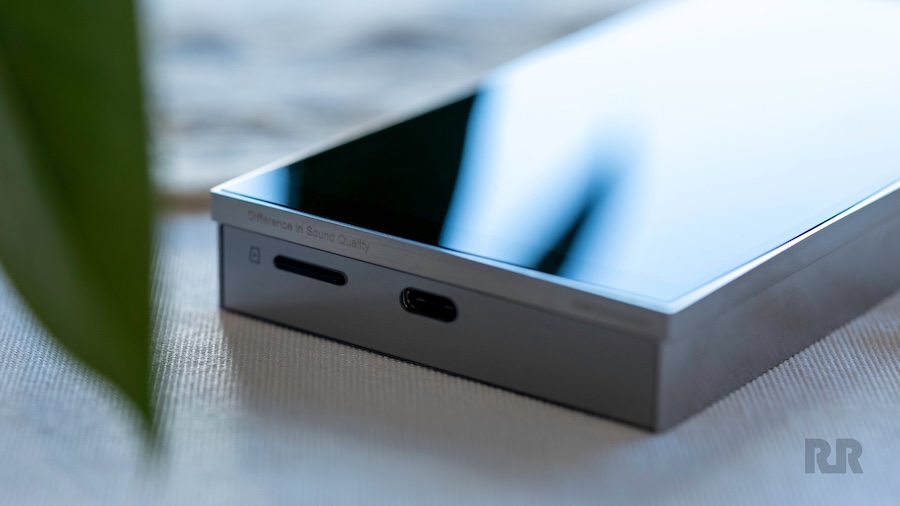
USB-C serves double duty here, handling charging as well as data for PC and Mac connections. Used this way, the PD10 can function as an external DAC, extending its usefulness well beyond portable playback and reinforcing its role as a flexible digital source.
Output options are practical and well chosen. The 3.5mm jack covers both unbalanced headphone output and optical digital output, allowing the PD10 to feed an external DAC or integrated amplifier in a home system. Balanced output is handled via a 4.4mm five-pole connection, which has become the de facto standard at this level and avoids the fragility and channel-matching issues of older balanced formats.
Build Quality That Matches the Asking Price?
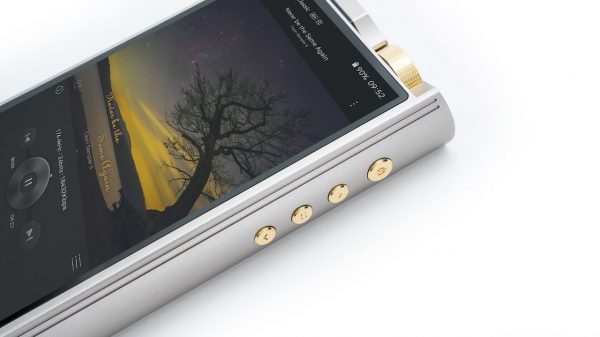
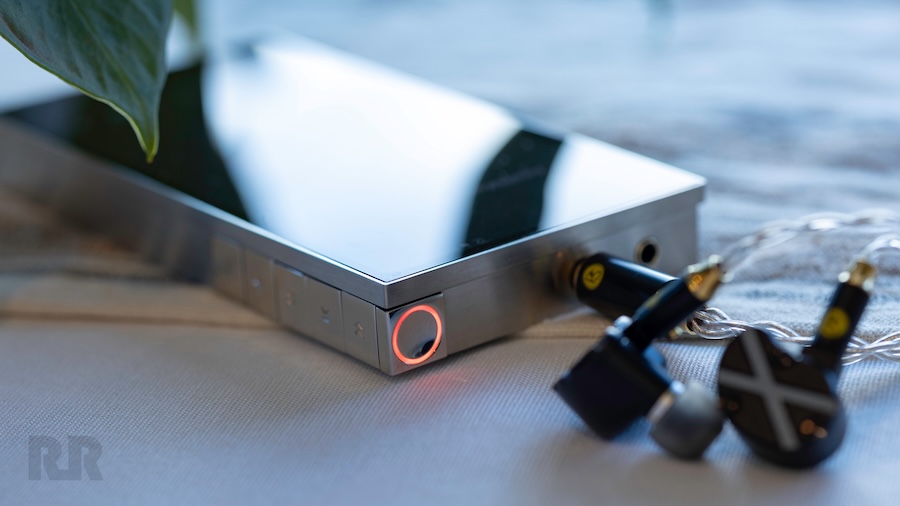
Astell & Kern’s biggest selling point has always been its command of industrial design and materials. One look at their players tells you they aren’t inexpensive—and the PD10 continues that tradition, even as it makes a few deliberate departures from past models. Longtime owners will immediately notice the absence of the scroll wheel found on many earlier A&K designs. It’s a controversial move for some, but in day-to-day use it doesn’t meaningfully impact usability. In its place is a set of stainless-steel buttons mounted along the right side of the chassis.
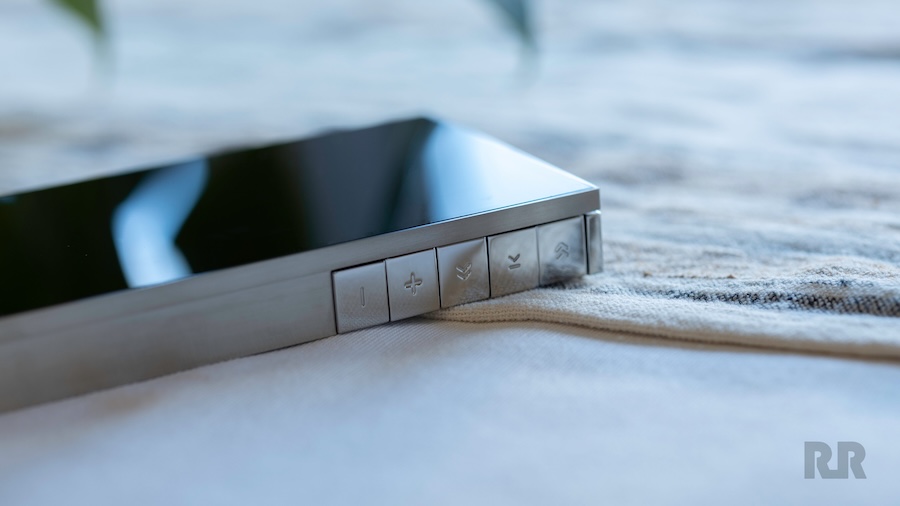
Visually, those polished buttons look the part. UX-wise, they fall just short. They have a slight amount of play and can rattle faintly, which is noticeable and disappointing on a device at this price. Small details matter when you’re spending several thousand dollars. Thankfully, that’s the extent of my criticism. The USB-C port is solid and secure, the microSD card slot inspires confidence, and the chassis itself feels dense and well assembled.
If the looseness of the side buttons bothers you, the included leather case effectively masks the issue. It’s precisely cut, comfortable in hand, and finished to a level that feels appropriate for the PD10. Astell & Kern even varies the texture around the button area, making it easy to locate controls by touch alone.
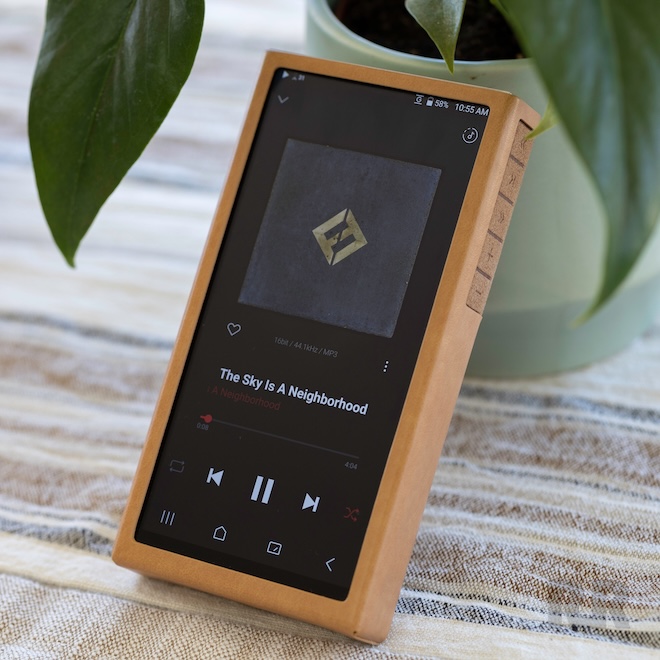
The PD10’s status-light power button is a thoughtful touch. It remains off when playback is stopped and changes color to reflect different operating states.
The Price Is Fixed. The Features Aren’t.
Digital audio sources hit the point of diminishing returns well before $2,700. In 2026, portable audio makes that especially clear, with capable DACs and premium dongles pushing that threshold closer to $200. The PD10 only makes sense if it goes beyond raw specifications—and that’s where Astell & Kern makes its case.
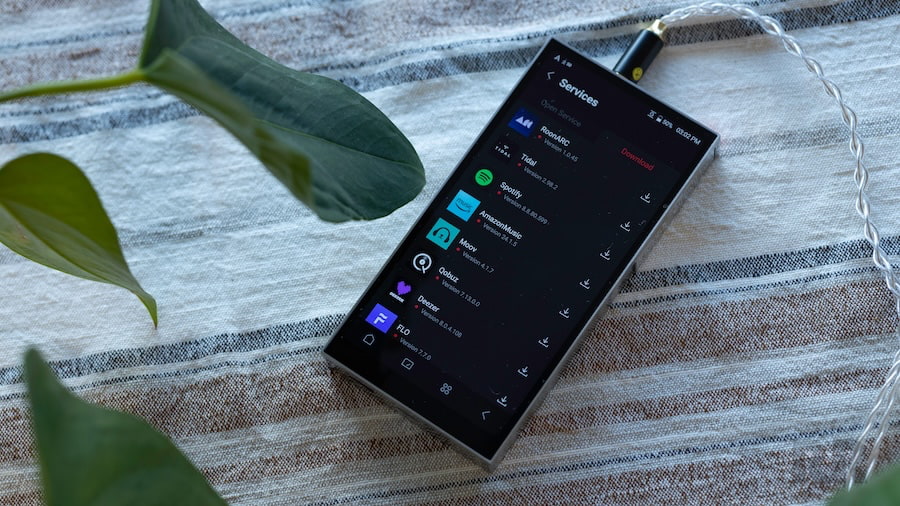
Rather than chasing numbers, the PD10 layers a broad feature set onto a solid technical foundation. Alongside its integrated 256GB of storage, it supports Roon, Qobuz Connect, LDAC, and aptX HD, with access to a wide range of streaming services via the Google Play Store. Wireless playback can be handled through AirPlay, while local file management is simplified through AK File Drop, allowing FTP transfers across a home network without plugging anything in. Sophistication and refinement matter a lot more at this price-point, and Astell & Kern get strong marks for ensuring that their features are extensive and polished.
The Full-ish Android Experience
One of the PD10’s more compelling features is its access to the Google Play Store. Few high-end audio players offer this level of openness, and those that do often burden third-party apps with restrictions that make everyday use frustrating. On the PD10, Play Store access is handled cleanly and without ceremony. Sign in to a Google account, tap the shortcut, and you’re in.
From there, installing a familiar set of Android apps is straightforward. I used Microsoft Word for note-taking and set up Syncthing to automate real-time synchronization of my music library with a home media server. Even with relatively heavy background processes running, the PD10 remained responsive and stable, with no audible impact on playback. It behaves like a mature Android device first—and a high-end audio player that just happens to run Android second, which is exactly how it should be.
The Death of a Streamer
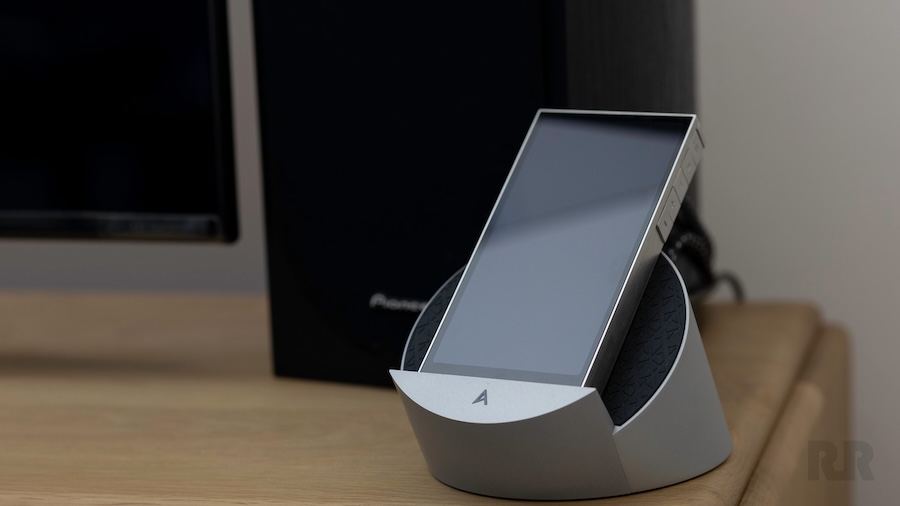
You can opt to purchase the PD10 with its all-metal cradle, and this is where the product stops behaving like a conventional DAP. The cradle allows the PD10 to dock much like a Nintendo Switch, routing audio directly to a speaker system or receiver. In practice, it turns the PD10 into a steel-clad, Android-enabled streamer—one that happens to detach and leave the room with you.
Docking is seamless and largely foolproof, provided you’re not using the leather case, and the PD10 automatically switches to XLR output mode without drama. Output from the dock measures a healthy 5.6Vrms, which is sufficient to drive most power amplifiers directly, eliminating the need for a separate preamp. The dual-nature of the PD10’s is its strongest differentiator and a compelling reason to choose it over both cheaper and more expensive Astell & Kern alternatives.
By allowing the PD10 to function either as a premium handheld player or a fixed streamer in a speaker-based system, Astell & Kern has addressed a real-world use case. Audiophiles who split their time between headphones, speakers, and long car rides can maintain a consistent interface and sound signature across all of it without duplicating hardware or compromising convenience.
Listening
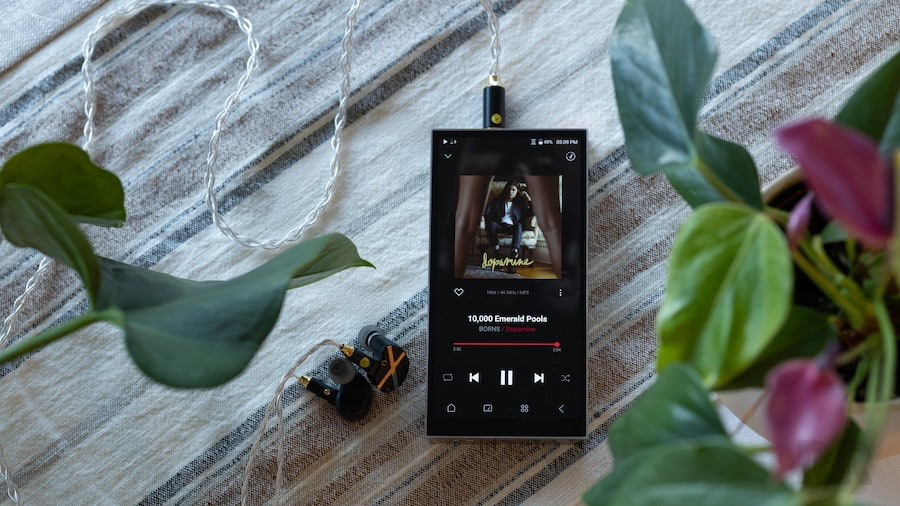
Docking and streaming aside, the core job of any DAP is straightforward: play locally stored audio files through IEMs and headphones without getting in the way. Most of my time with the PD10 was spent focused on exactly that. In practice, it powered nearly everything I threw at it without complaint. I took it to CES 2026, where it had no trouble with sensitive IEMs and handled planar headphones with ease. More demanding full-size models; particularly some from Dan Clark Audio, do ask for more current than the PD10 can comfortably deliver, which is worth noting if those are your daily drivers.
The PD10’s low and predictable output impedance makes it especially well suited to IEM use, including models with complex passive crossovers. Higher output impedances can interact with those crossovers and subtly alter frequency response. With the PD10, that simply didn’t happen. My most sensitive multi-driver IEM, the Campfire Audio Andromeda, sounded dynamic, smooth, and warm—exactly as intended. The player imposed no audible character of its own, which is precisely what you want from a high-end source.
I also stress-tested the PD10’s file handling by aggressively scrubbing through large local AIFF and WAV files. Skipping to random points in massive files was instant, with no buffering or hesitation. That kind of responsiveness suggests Astell&Kern didn’t cut corners on internal storage quality—a detail that matters more than it gets credit for in real-time playback scenarios. Cheap or slow storage has a way of revealing itself quickly here, and the PD10 never gave me a reason to question it.
This Is Not a Flagship Smartphone
Despite costing more than most flagship smartphones, the Astell & Kern PD10 is not built on cutting-edge mobile hardware. While Astell & Kern clearly prioritizes audio components and does so successfully, the company relies on lower-tier system-on-chip and compute hardware to get there. The result is a device that sounds exceptional but behaves very differently from a modern phone.
Discerning mobile users will notice it immediately. The PD10’s display is sharp and vibrant, but touch responsiveness lags behind even relatively affordable smartphones. Compared to devices like the Asus Zenfone 9 or Google Pixel 10 Pro, the PD10 feels slower and less fluid. Part of that comes down to modern phones running 120Hz displays, but it’s also a consequence of conservative hardware choices under the hood.
None of this makes the PD10 unusable—far from it. Its interface is perfectly adequate for its primary job: selecting music and playing it reliably. But for users accustomed to high-end smartphones, the difference in responsiveness is noticeable and occasionally frustrating, especially when navigating with more complex touch gestures. It’s a reminder that the PD10 is an audio-first device that happens to run Android, not a luxury smartphone replacement—and expectations should be set accordingly.
The Bottom Line
The PD10 isn’t perfect, and it isn’t priced to be forgiven for much. What it delivers—long battery life, a vanishingly low noise floor, and enough output power for the vast majority of real-world headphones and IEMs—it delivers with confidence. But the real differentiator isn’t sound quality alone. It’s the dock.
With its all-metal cradle, the PD10 stops being just another high-end DAP and becomes something closer to a modular digital source. Docked, it operates as a capable, Android-based streamer with XLR output and enough voltage to drive most power amplifiers directly, sidelining traditional streamers in the process. That single feature fundamentally separates it from alternatives in Astell & Kern’s own lineup and from competitors alike.
For buyers focused strictly on portable performance, there are clear options. Astell & Kern’s own SP4000 offers higher outright output and refinement as a pure DAP, while players like the iBasso DX340 deliver strong performance at a lower cost. Likewise, anyone already invested in a dedicated streamer may find little justification for replacing it.
Sound wise, the PD10 belongs exactly where Astell & Kern priced it. It delivers the refined, low noise, high resolution presentation expected from top tier DAPs, and in several cases it equals or exceeds the sound quality of dedicated streamers I have tested. That matters, because without that level of performance the rest of the PD10’s argument falls apart.
The PD10 only makes sense for a very specific audiophile, and Astell & Kern is not pretending otherwise. $2,750 is serious money, but Astell & Kern buyers already understand that reality. If you are strictly a portable listener or strictly a two channel listener, there are cheaper and in some cases better options available. But for listeners who genuinely split time between headphones on the move and a serious speaker system at home, the PD10 does something few products attempt. It replaces multiple components without compromising sound quality, usability, or overall polish. That combination of performance, Android flexibility, and cradle based system integration is what gives the PD10 its value and why for the right listener it stands alone.
Pros:
- Excellent sound quality with an imperceptible noise floor
- Plenty of output power for most IEMs and full-size headphones
- Low, stable output impedance makes it ideal for sensitive multi-driver IEMs
- Extensive format support, including native DSD up to DSD512 and high-rate PCM
- Unrestricted Google Play Store access with stable performance
- Smooth handling of large local files and high-quality internal storage
- Roon Ready, Qobuz Connect, AirPlay, LDAC, aptX HD
- Optional cradle transforms the PD10 into home hi-fi streamer
- Can drive power amplifiers directly when docked, eliminating the need for a preamp
- Premium materials and overall build quality appropriate for the price
- Well-executed leather case included
Cons:
- Very expensive, with limited value for price-to-performance focused buyers
- Does not support aptX Lossless, Spotify Connect, TIDAL Connect
- Android performance lags behind modern flagship smartphones
- Touchscreen latency can be noticeable to experienced smartphone users
- Side buttons exhibit slight looseness and rattle
- Leather case must be removed to dock the device
Where to buy:
You can find the PD10 for sale on Bloom Audio for $2749 with the cradle and $2410 without.
Related Reading: