
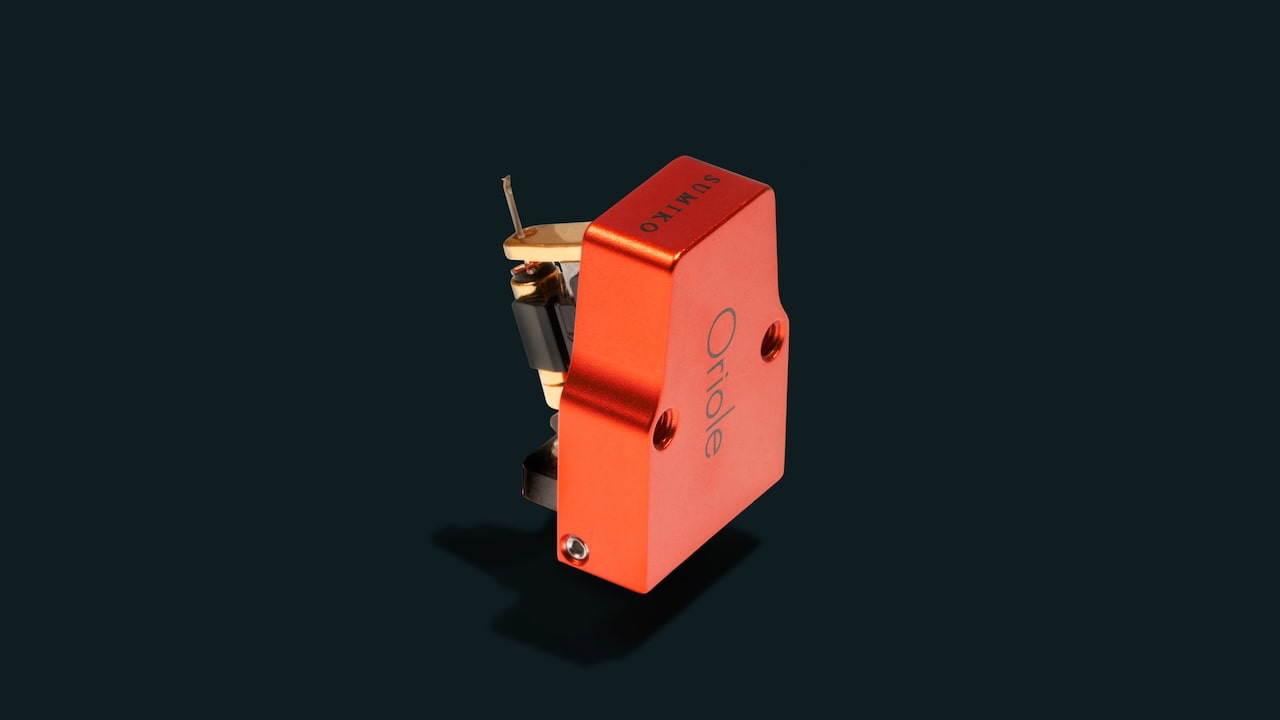
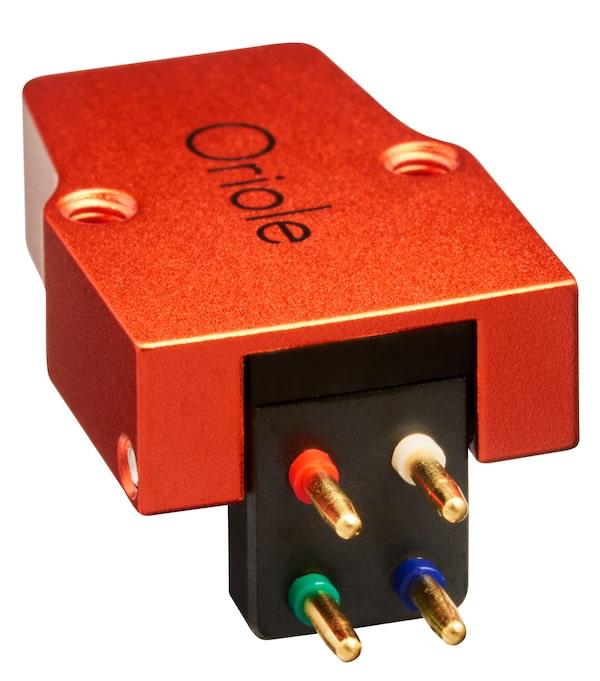
Sumiko doesn’t need a comeback story, a reinvention arc, or a reminder tour. They’ve been building hand-crafted Japanese phono cartridges for decades, and anyone who’s lived with models like the Wellfleet, Amethyst, or Blue Point No. 3 already knows the score. Sumiko’s track record is established. What makes the Oriole matter is where it lands. At $1,699, it drops squarely into territory long dominated by some of the strongest low-output moving-coil cartridges from Hana, Ortofon, and higher-end offerings from Audio-Technica and Dynavector—all without drifting into boutique pricing north of $2,000.
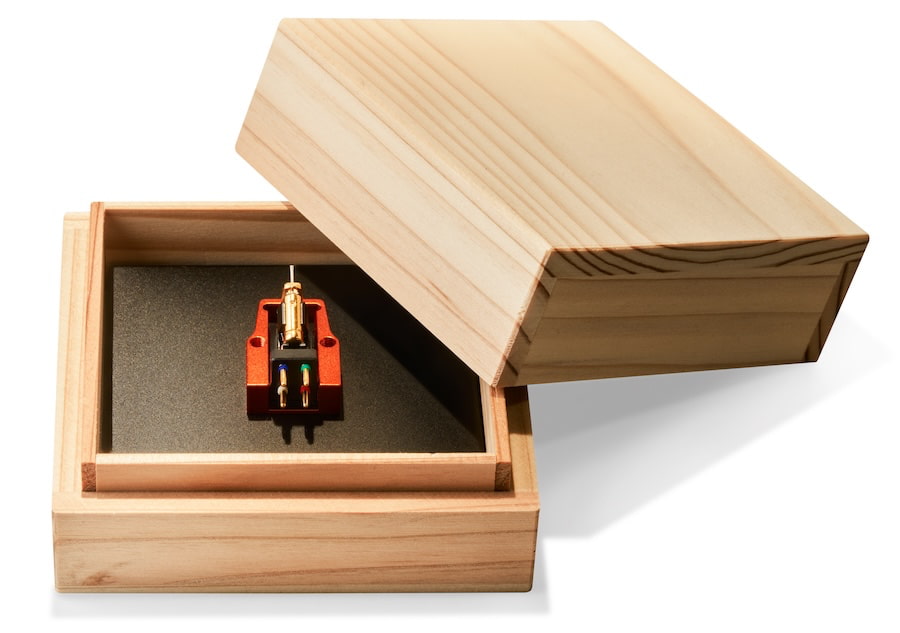
It’s been a while since Sumiko aimed directly at that group, and the Oriole is a deliberate shot. Handcrafted in Japan and positioned between the Songbird and Starling, the Oriole uses a nude Shibata stylus mounted directly to the cantilever, reducing tip mass compared to bonded designs and improving high frequency tracing accuracy. The Shibata profile’s extended contact area increases groove wall contact, which lowers localized pressure, improves tracking at lower forces, and reduces tracing distortion, particularly on inner grooves and complex passages. If alignment is sloppy, it will let you know.
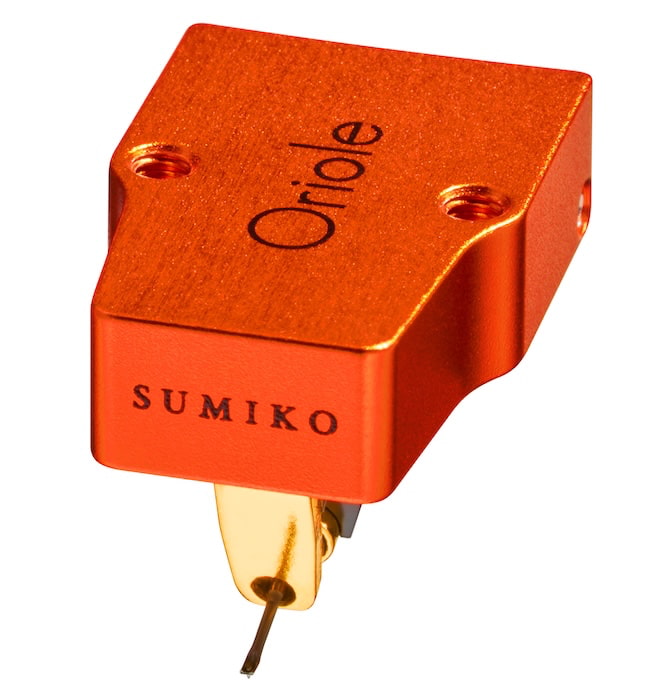
The Oriole is a low output moving coil cartridge with a 0.3mV output. In plain terms, that means it needs a phono preamp that specifically supports moving coil, because the output coming off the cartridge is much lower than a moving magnet cartridge. So you are looking for an MC phono stage (or an MM stage plus a step up device), and you will be using a higher gain setting than you would with an MM cartridge.
At the stylus end, the Oriole uses a nude Shibata profile measuring 6.5 × 40 microns, chosen for its extended contact area along the groove wall. Compared to simpler elliptical shapes, this allows more accurate tracing of high-frequency information and improved performance on inner grooves, provided alignment is done carefully. The stylus is mounted to a reinforced aluminum cantilever with a 0.5mm diameter, a material choice that balances stiffness, durability, and controlled mass rather than chasing exotic alternatives.
With a mass of 7.3 grams and a compliance rating of 12 × 10⁻⁶ cm/dyn at 100Hz, the Oriole is well suited to medium-mass tonearms commonly found on modern turntables. The recommended tracking force of 2.0 grams sits in a familiar and stable range for moving-coil designs, supporting consistent tracking across a wide variety of records.
Channel separation of 30dB and tight channel balance contribute to stable imaging, while the specified 12Hz to 45kHz frequency response indicates bandwidth well beyond the audible range without overstating its significance.
The other key number is the 5.5 ohm internal impedance. That matters because most MC phono stages let you choose a “load” setting, and the cartridge is designed to be used with the kind of adjustable loading and gain you get from MC phono preamps people actually buy in this price bracket. Think McIntosh, MOON by Simaudio, E.A.T. and Pro-Ject phono stages, plus other mainstream high quality MC designs, not five figure statement phono preamps.
In practical terms, the Oriole makes sense on turntables like McIntosh’s MT series, VPI decks under $5,000, classic and modern Thorens models, Michell Audio designs, and Pro-Ject tables once you move beyond the Debut Series.
The bold orange housing may be the first thing you notice, but the real story is simpler. Sumiko hasn’t rushed a new model to market, and they haven’t chased trends. The Oriole exists because there was room for a cartridge at this price that competes head-on with the category’s best—and Sumiko decided it was time to occupy that space again.
Where the Oriole Fits in the Sumiko Lineup
Starling
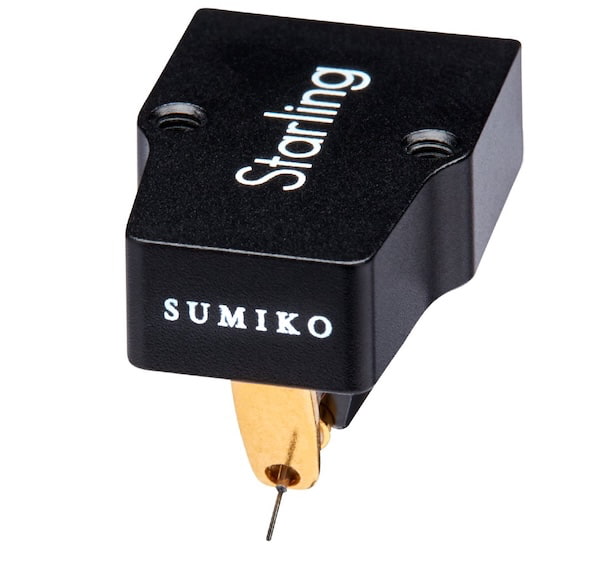
Priced at $2,099 (effective February 1, 2026), the Starling sits at the top of Sumiko’s moving-coil lineup and is intended for high-quality turntables and phono stages that can take advantage of its resolution. It weighs 9.5 grams and uses a conventional cartridge body size, making it compatible with most modern medium-mass tonearms without special counterweights or setup workarounds.
At the front end is a solid ultra-low-mass Microridge stylus mounted on a boron cantilever. In practical terms, this stylus profile is designed to follow the record groove very precisely, especially on densely cut records and inner grooves where simpler stylus shapes can struggle. The boron cantilever is both stiff and lightweight, which helps the stylus respond quickly to changes in the groove while maintaining control.
The Starling produces 0.5mV, which is on the higher side for a low output moving-coil cartridge. This makes it easier to match with a wide range of MC phono preamps, as it does not require extreme gain settings. Its internal impedance of 28 ohms means it works best when loaded at 100 ohms or higher, a setting commonly available on many MC phono stages.
Songbird
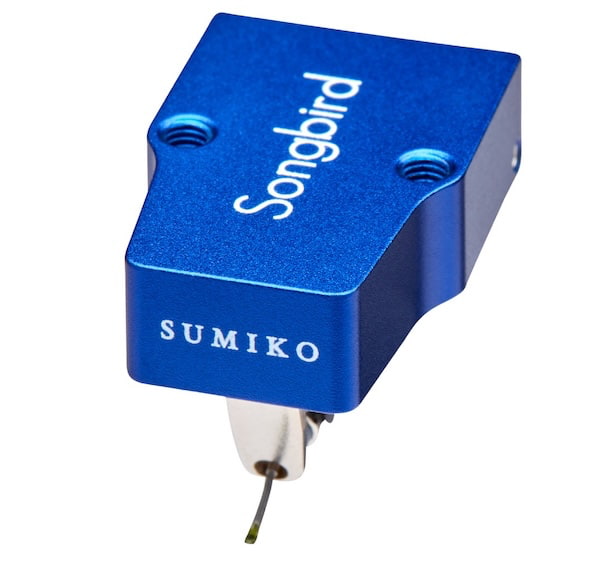
The $899 Songbird is Sumiko’s high-output moving-coil cartridge, designed for listeners who want the speed and clarity of a moving-coil design without the added cost or complexity of a dedicated MC phono preamp. With an output of 2.5mV and a standard 47k ohm load requirement, it can be used with most moving-magnet phono stages, making it an easy upgrade path from MM cartridges.
Weighing 8.5 grams and using a standard cartridge body size, the Songbird works well with the majority of modern medium-mass tonearms. Its elliptical stylus is less complex than the profiles used on higher-end models, but it is forgiving of setup errors and record condition, which makes it well suited for everyday listening across a wide variety of pressings.
The aluminum cantilever is slightly heavier than boron or other exotic materials, but it offers predictable behavior and durability. Tracking force is set at a familiar 2.0 grams, and the compliance is matched to common tonearms including those found on Pro-Ject, VPI, and Thorens turntables.
With a frequency response extending to 40kHz and solid channel separation, the Songbird delivers a clear, well balanced presentation with good stereo imaging, while remaining approachable for systems that are not built around high-gain MC electronics.
The Bottom Line
At $1,699, the Oriole lands right in the middle of Sumiko’s serious moving-coil lineup, between the Songbird and Starling, and it walks straight into a crowded and very competent field. This is the same price range where cartridges from Hana, Ortofon, Audio-Technica, and Dynavector already have long track records and clear technical identities. The Oriole makes sense for listeners with well-sorted turntables and a real MC phono stage who are shopping on performance and system fit, not curiosity.
The Sumiko Oriole is a low-output moving-coil cartridge with a nude Shibata stylus and a 0.3mV output into a 5.5-ohm generator. That tells you exactly what this is and what it is not. It is not for moving-magnet inputs, and it is not forgiving of a weak or poorly implemented phono stage. If your phono preamp does not have proper MC gain and loading options, the Oriole is simply the wrong cartridge.
Related Reading:
- Best Phono Cartridges: Editors’ Choice
- Rega Unleashes Nd9: A Boron-Cantilever MM Cartridge Inspired By The Aphelion 2
- Audio-Technica Fires Back At Ortofon With New AT33x Phono Cartridge Range — Handcrafted In Japan With Stereo And Mono Versions
- Sumiko Wellfleet And Amethyst Phono Cartridge Reviews: Great Performance You Can Afford











Ogi Raykoff
February 11, 2026 at 10:46 am
Yes, Superb Cartridge !