

Mission has finally pulled the trigger on the 778S, its first-ever network music streamer — and this is a far more serious product than the long wait might suggest.
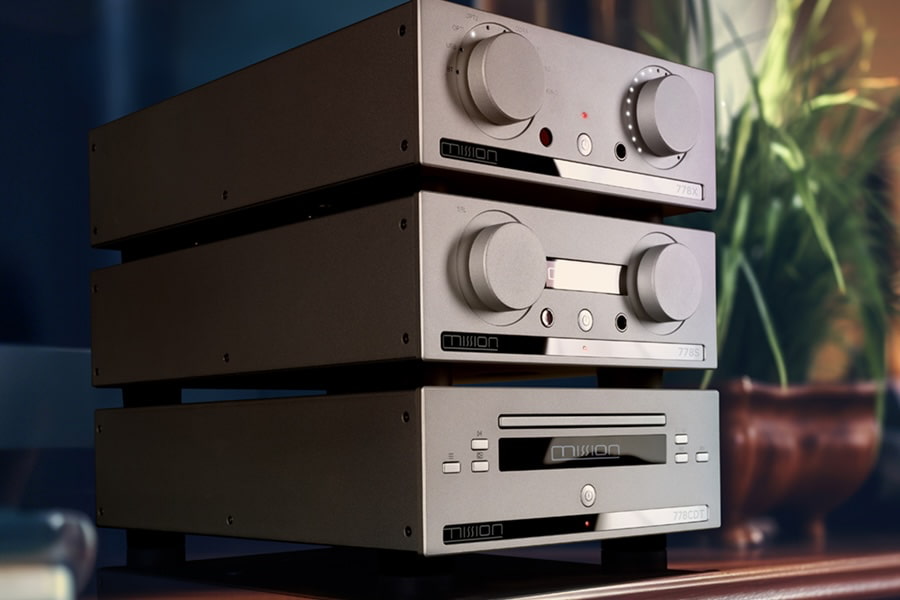
Designed as the natural partner to the 778X integrated amplifier, the 778S follows the same compact half-width formula that helped put Mission back on the electronics map after a four-decade absence. The amplifier earned strong marks for its balanced, unfussy sound and sensible feature set at a genuinely accessible price point. The streamer has been teased since Munich 2024, but only now do we get full specifications and pricing.
Here’s the catch: in the UK, £799 is defensible for a well-specified, brand-new platform from Mission. In the US, $1,699 is a much tougher sell — especially when proven heavyweights like the Bluesound NODE ICON and Cambridge Audio CXN100 cost significantly less and bring mature ecosystems with them. That price gap alone makes the 778S a far more compelling proposition on one side of the Atlantic than the other.
Silent Angel Streaming Architecture
Mission didn’t build the 778S streaming platform in isolation. The digital backbone was developed in collaboration with Silent Angel, a company that has focused exclusively on network audio hardware and software since 2014.
According to Mission, the 778S runs a tailored implementation of Silent Angel’s core streaming engine, integrated with Mission’s own analogue and digital circuit design, and controlled through a dedicated mobile app for both iOS and Android.

In practical terms, the feature set covers the essentials: native Connect support for Qobuz, TIDAL, and Spotify, access to TuneIn internet radio, and full AirPlay 2 compatibility. Network connectivity is provided via both Ethernet and Wi-Fi, and DLNA/UPnP support allows playback from local network storage such as computers or NAS systems. Roon Ready certification is included.
What it does not include is Google Chromecast or Bluetooth. And yes, the absence of Bluetooth — especially higher-quality options like aptX Lossless or LDAC — will stand out for some buyers. But the 778S isn’t a network amplifier or an all-in-one convenience box. It’s a dedicated streamer, and within that context its wired and network-based connectivity is broad, well considered, and far more serious than the spec sheet might first suggest.
DAC Architecture, Format Support, and Connectivity
At the heart of the 778S is ESS Technology’s ES9038Q2M Sabre DAC, supported by Mission’s own clocking and power regulation design. The goal here is simple and sensible: keep noise low, timing stable, and the digital and analogue stages properly isolated so the conversion process isn’t compromised before the signal ever reaches your amplifier.
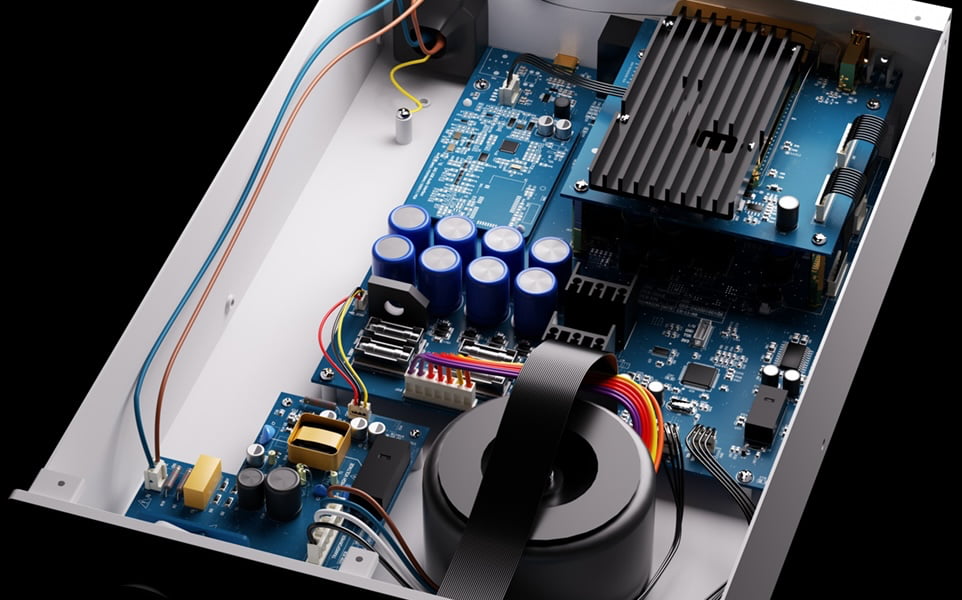
Format handling is broad by any current standard. The 778S will accept PCM up to 32-bit/768 kHz and DSD512, which comfortably covers the demands of modern high-resolution libraries and the most demanding streaming services.
Mission also includes optional PCM upsampling to 352.8 kHz or 384 kHz, pushing quantization artefacts well outside the audible band. For users who prefer a more hands-on approach, five selectable digital filter modes are available to tailor transient response and tonal balance to system and source.
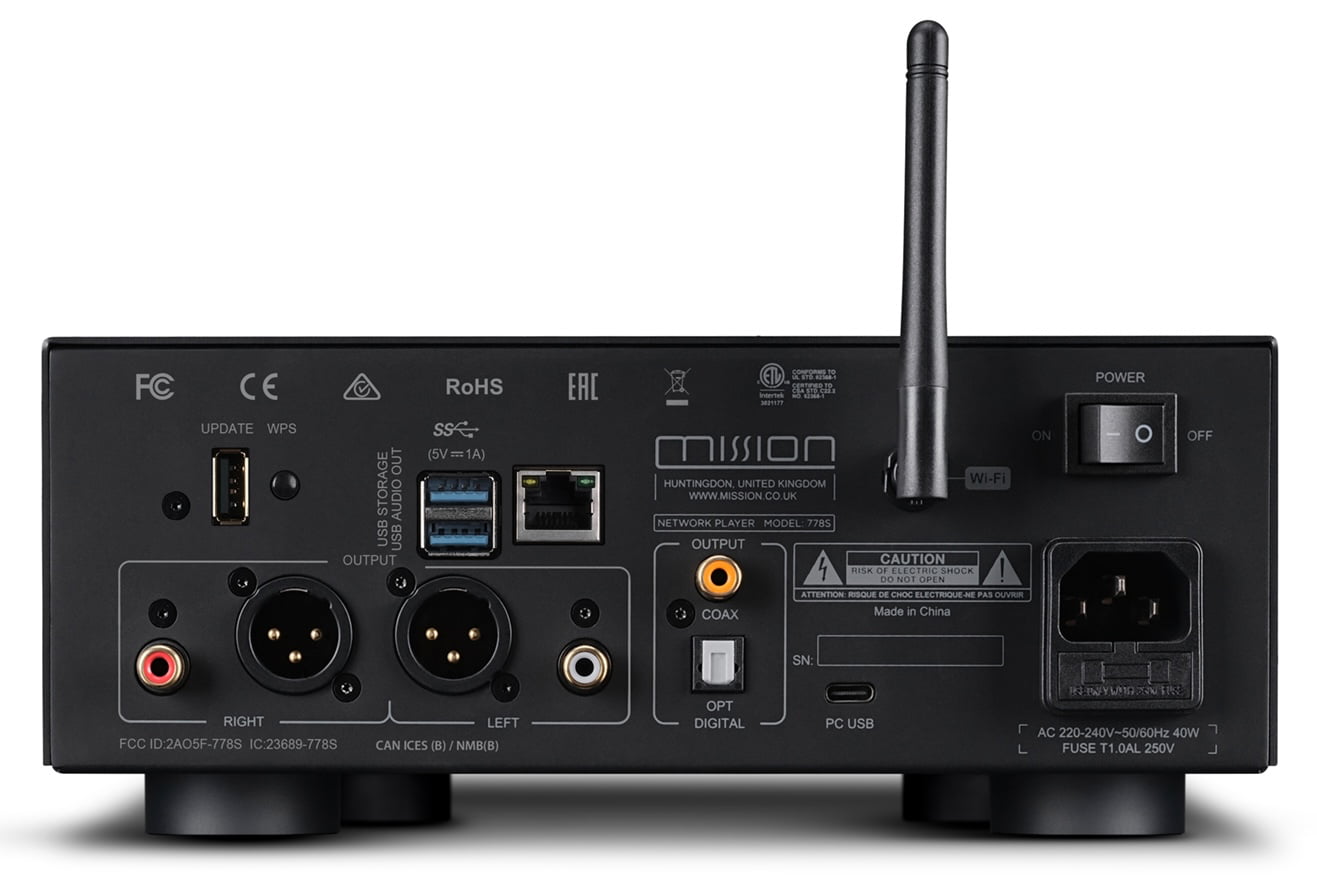
On the hardware side, connectivity is generous for a component of this size. USB-C and dual USB-A inputs support computers and external storage, while analogue output is available via both balanced XLR and unbalanced RCA. Digital output options include coaxial and optical S/PDIF, along with USB-A. A full-size 6.35 mm headphone jack rounds out the rear panel and front-end versatility.
Industrial Design & User Interface
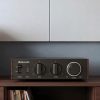
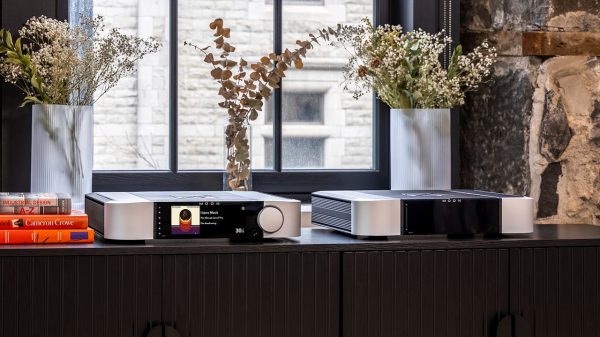
Visually and mechanically, the 778S is clearly cut from the same cloth as the 778X integrated amplifier. The compact half-width chassis is wrapped in anodised aluminium, giving the unit a solid, purposeful feel rather than the lightweight aesthetic that often plagues small-format streamers.
The front panel is deliberately simple, anchored by two large rotary controls arranged symmetrically: one dedicated to source selection, the other to volume adjustment.
What you won’t find is a high-resolution color screen with animated album art. Instead, Mission opts for a restrained, dimmable OLED display that prioritizes legibility and basic system information over visual flair. It’s functional, understated, and very much in keeping with the 778S’s hardware-first design philosophy.

The Bottom Line
The Mission 778S is a well-engineered network streamer that focuses on sound quality, proper DAC implementation, and clean system integration rather than feature bloat. It delivers high-resolution format support, balanced outputs, Roon Ready operation, and a purpose-built streaming platform developed with Silent Angel — all wrapped in a compact, well-built chassis that pairs naturally with the 778X amplifier.
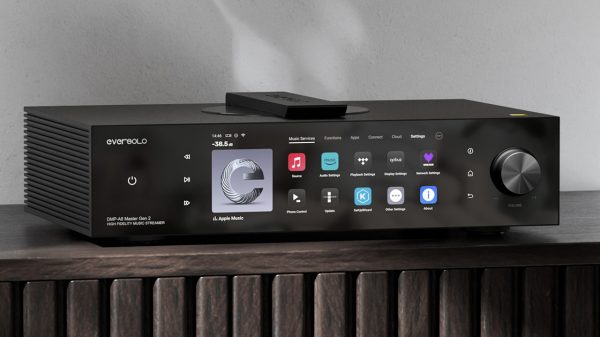
What it doesn’t offer is the modern “everything box” experience. There’s no Bluetooth, no Chromecast, no color display, and no lifestyle-driven shortcuts. At £799 in the UK, the value proposition is reasonable. At $1,699 in the US, it becomes much harder to justify when excellent alternatives like the Bluesound NODE ICON and Cambridge Audio CXN100 cost less, and when aggressively priced platforms from WiiM and Eversolo deliver enormous functionality for a fraction of the money — even if they don’t match Mission’s supposed analog refinement.
The 778S makes sense for listeners who prioritize engineering discipline and sonic integrity over feature checklists. For everyone else, the market is now very crowded and far less expensive.
For more information: mission.co.uk/778s/
Related Reading:
- Going Back to the Future with the Mission 778X Integrated Amplifier
- Bluesound NODE NANO, NODE and NODE ICON Music Streamers Get Price Bump [Updated]
- Best Music Streamers: Editors’ Choice












Anton
January 17, 2026 at 8:20 pm
Not super attractive from a design perspective but rather rich in terms of connectivity options.
The price isn’t terrible but the tariffs are making this stuff a lot more expensive than it needs to be.
Ian White
January 18, 2026 at 12:03 am
I’m curious to listen to it, but you won’t convince me to ditch my Cambridge or WiiM streamers. I’ve tried both with very good DACs and absolutely good enough for me long-term.
IW