While most of CES week is consumed by AI buzzwords, connected refrigerators, and another avalanche of Mini-LED TVs, FiiO is doing what it did all through 2025—quietly dropping affordable hardware for people who actually care about sound. The newly announced M33 R2R digital audio player brings true R2R decoding into the mainstream portable category, following closely on the heels of the Air Link, DM15 R2R portable CD player and the FT13 wooden headphones that were introduced in the last quarter of 2025.
It’s a familiar pattern: FiiO shipped more than three dozen new products last year, and 2026 is already shaping up the same way. Positioned below the flagship M27 but clearly influenced by it, the M33 R2R pairs a fully differential 24-bit R2R resistor array with modern processing, balanced outputs, and practical usability.

FiiO M33 R2R Targets the Affordable High-Performance DAP Market
At the core of the FiiO M33 R2R is a fully differential 24-bit R2R resistor array; an approach that prioritizes tonal accuracy, dynamic contrast, and coherence. The ladder-DAC architecture is paired with a Texas Instruments multi-stage audio amplifier designed to maintain control and composure across a wide range of loads, delivering a presentation that leans neutral and grounded rather than etched or artificially boosted.
Rated at 1100mW + 1100mW, the M33 R2R has the muscle to handle everything from sensitive IEMs to harder-to-drive full-size headphones. This isn’t a “portable only” tuning exercise—it’s built to scale with better headphones and not run out of power when you might require it.
Signal integrity is addressed end-to-end with an independent XMOS XU316 USB interface and FiiO’s M27-derived DAPS audio purification system, which work together to reduce jitter, suppress noise, and keep the signal path clean from decoding through amplification. The goal here is consistency and stability, not DSP tricks.
Driving the software side is the Qualcomm Snapdragon 680, running Android 13 for a responsive and genuinely modern DAP experience. With 8GB of RAM and 128GB of internal storage, plus microSD expansion, the M33 R2R is clearly intended for users who stream, multitask, and carry large local libraries without compromise.
A 5.5-inch HD display handles navigation duties cleanly, whether you’re browsing albums, managing apps, or diving into system settings.
For tuning flexibility, FiiO includes a 10-band parametric EQ with AUTO EQ support, allowing precise headphone matching without resorting to external software. An independent power input unlocks a Desktop Mode, enabling higher output levels and positioning the M33 R2R closer to a compact desktop amp in capability when needed.
Despite the power on tap, efficiency hasn’t been ignored. Battery life is rated at up to 14 hours, making the M33 R2R practical for extended listening sessions both at home and on the move—no charger anxiety required.

FiiO M33 R2R vs. M21: Two Takes on Affordable High-Performance Portable Audio
The M21 is FiiO’s reminder that “entry-level” no longer means compromised. At $329, it delivers a genuinely modern Android DAP with a Snapdragon 680, Android 13, enough RAM and storage to behave like a real streaming device, and a quad-DAC Cirrus Logic design that keeps noise and crosstalk under control. Its standout trick is Desktop Mode, which bypasses the battery and unlocks near-desktop power when plugged in—making the M21 as comfortable feeding a hi-fi system as it is driving headphones on the go. For the price, it sets a new baseline for what an affordable Android DAP should deliver.
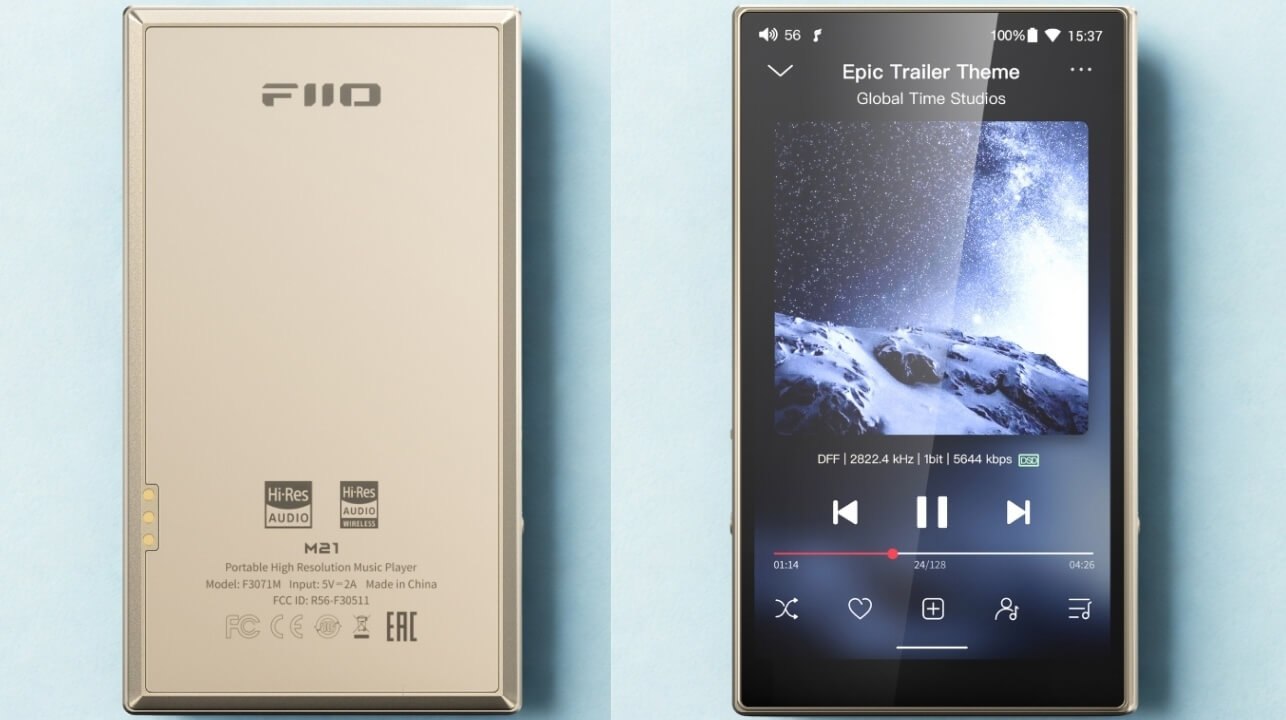
The M33 R2R, positioned nearly twice as high, clearly isn’t meant to replace the M21—it’s meant to move the conversation. Where the M21 leans on modern delta-sigma DACs and efficiency, the M33 R2R pivots hard toward discrete R2R ladder decoding, higher output power, and a more purist signal path inspired by FiiO’s flagship M27.
While FiiO is still holding back a full spec dump, it’s difficult to imagine the M33 R2R arriving without everything the M21 already offers; whether that’s more robust amplification, deeper tuning control, or expanded connectivity. In short: the M21 defines the floor of FiiO’s affordable Android lineup, while the M33 R2R is shaping up to be the ceiling for listeners who want something closer to high-end without crossing into flagship pricing.
Shanling M3 Plus vs FiiO M33 R2R: Two Affordable DAP Powerhouses, Different Philosophies
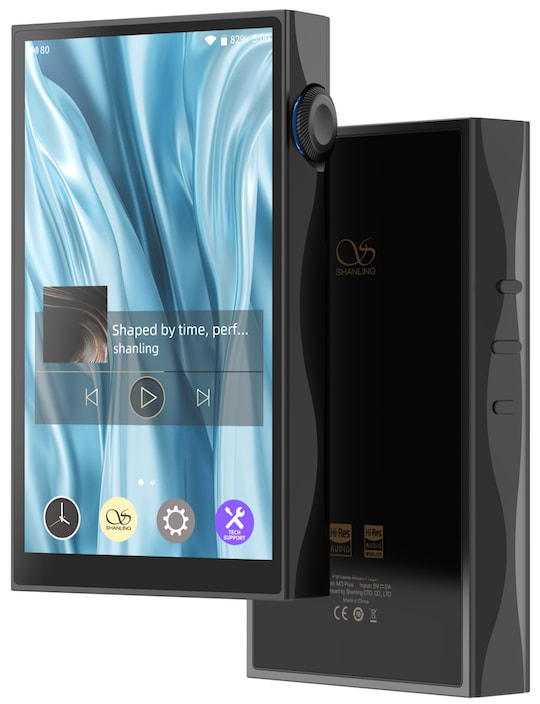
The Shanling M3 Plus is one of the best values under $500: quad Cirrus Logic CS43198 DACs with native high-res and DSD support, up to ~800 mW balanced output, Android 13 on a Snapdragon 665, and AGLO bypass to preserve high-quality streams. It’s versatile too: USB DAC, Bluetooth DAC/amp for your phone or laptop, and solid battery life (~11 h balanced, ~14 h single-ended). The tuning is warm and inviting without being bloated, and for most headphones you’ll never feel short-changed. (You can read our detailed review of the M3 Plus here.)
The FiiO M33 R2R, priced north of the M3 Plus, is staking its case on a fully discrete R2R ladder DAC, higher output power, and what should be a more refined analog signal path. That said, “more refined” isn’t automatically better for every listener — what really matters is whether the R2R implementation yields clearer detail, lower noise, and better macro control in real listening. R2R circuits are more expensive largely because of the labor and calibration involved, not magic silicon.
There are a few unknowns right now that matter in the real world: Bluetooth codec support on the M33 R2R hasn’t been confirmed — we don’t yet know if it supports LDAC, aptX HD, aptX Lossless, Bluetooth LE audio, etc. Those codecs are a significant part of everyday usability for many listeners, and if FiiO skimped here, that would temper the advantage over the Shanling.
Power, output options, UI responsiveness, heat management, and real-world battery life will ultimately dictate whether the extra spend makes sense — but at ~$600+ the M33 R2R needs to clearly outperform the M3 Plus in measurable ways: more headroom, lower noise floor, better jitter control, and smoother Android performance. The promise is there, but the proof will be in the listening.

The Bottom Line
At ~$600 / £449, the FiiO M33 R2R is priced squarely above value-focused Android DAPs and will be judged accordingly. The move to a discrete R2R ladder DAC brings higher manufacturing cost, but that alone won’t be enough. Key details remain unconfirmed, including Bluetooth codec support (LDAC, aptX HD, aptX Lossless, Bluetooth LE Audio), along with final figures for output performance, battery life, and overall connectivity.
To earn its place, the M33 R2R needs to show clear, practical advantages over strong sub-$500 alternatives: more usable power with better control, a lower noise floor with sensitive IEMs, stable and responsive Android performance, and wireless support that doesn’t feel compromised. If those boxes are ticked, the pricing makes sense. If not, the gap between it and less expensive competitors will be hard to justify.
Related Reading:
- Best Portable DAPs (Digital Audio Players): Editors’ Choice
- ONIX Tocata XM2 DAP Arrives With 800 MW Output And Full Hi-Res PCM/DSD Support
- FiiO M21 DAP Launches At $329: Because Apparently $199 Wasn’t Fancy Enough
- Astell&Kern PD10 Digital Audio Player Gains New Color And Flagship-Level Features From SP4000