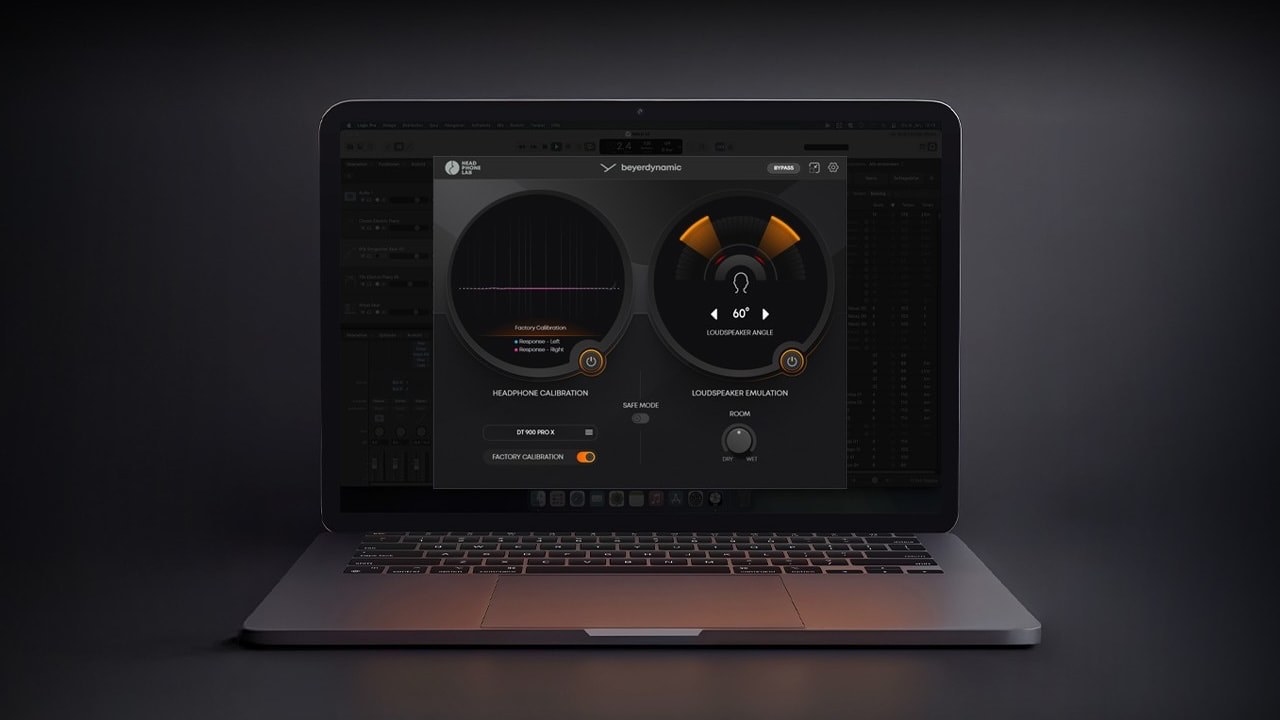
beyerdynamic made a smart, very NAMM-appropriate move this week by introducing HEADPHONE LAB at NAMM 2026—a free studio plug-in designed to bring factory-calibrated, reference-grade monitoring to its professional headphones. While NAMM isn’t always top-of-mind for audiophiles in the same way as AXPONA or the high-end shows in Warsaw and Vienna, 2026 is shaping up to be one of the more interesting NAMM editions in years, especially for listeners who care about how music is actually made, mixed, and mastered. And yes, we’ve got a lot more coverage coming—particularly on YouTube.
HEADPHONE LAB is aimed squarely at modern producers and creators who work in bedrooms, apartments, hotel rooms, or home studios where traditional loudspeaker monitoring and acoustic treatment simply aren’t realistic. Instead of demanding expensive speakers, subwoofers, and room correction, the plug-in simulates a high-end studio environment over headphones, using beyerdynamic’s new factory calibration process to deliver a consistent and reliable reference for critical listening. It’s a pragmatic solution to a real problem and expect an in-depth review in the coming weeks.
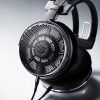
This also lands squarely in our wheelhouse. Over the past few months, we’ve already reviewed the DT 770 Pro X, DT 1770 Pro MKII, and DT 1990 Pro MKII, so we’re well acquainted with beyerdynamic’s current studio lineup and how these headphones perform as reference tools. HEADPHONE LAB doesn’t try to replace good engineering—it builds on it, extending professional monitoring into spaces where speakers simply can’t go. For creators juggling portability, accuracy, and budget, that makes this one of the more quietly significant pro-audio announcements to come out of NAMM 2026.
Factory-Calibrated Monitoring for Studio Headphones
For decades, beyerdynamic has been a consistent presence in professional studios, with headphones that are widely used as reference tools rather than lifestyle products. HEADPHONE LAB extends that approach into software. Introduced at NAMM 2026, the free plug-in is designed to improve the reliability of headphone-based mixing and mastering by approximating how studio loudspeakers behave in a controlled listening environment.
The focus is practical rather than transformative. HEADPHONE LAB addresses one of the core limitations of headphone monitoring: the exaggerated channel separation that places sound entirely inside the listener’s head. The plug-in applies a crossfeed model that accounts for frequency-dependent timing and level differences between ears, combined with established Head-Related Transfer Functions (HRTFs). The result is a more speaker-like stereo image with clearer spatial cues and depth, intended to support more predictable mix decisions.
Low-frequency reproduction is handled with restraint. Bass is kept centered and phase-consistent, avoiding artificial widening or emphasis that can mislead balance and imaging judgments. The intent is accuracy and stability, not enhancement.
Calibration is central to how HEADPHONE LAB operates. Each supported headphone model maintains its inherent tonal character, but is adjusted using a proprietary studio sound profile developed by beyerdynamic through internal research and collaboration with professional studios. This profile is meant to serve as a consistent reference target rather than a corrective overhaul.
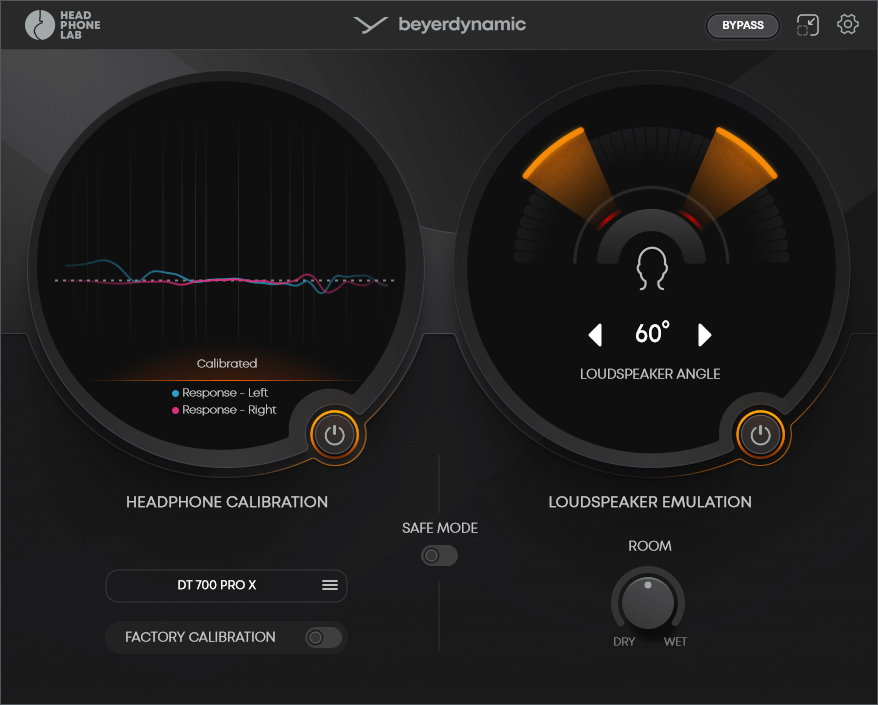
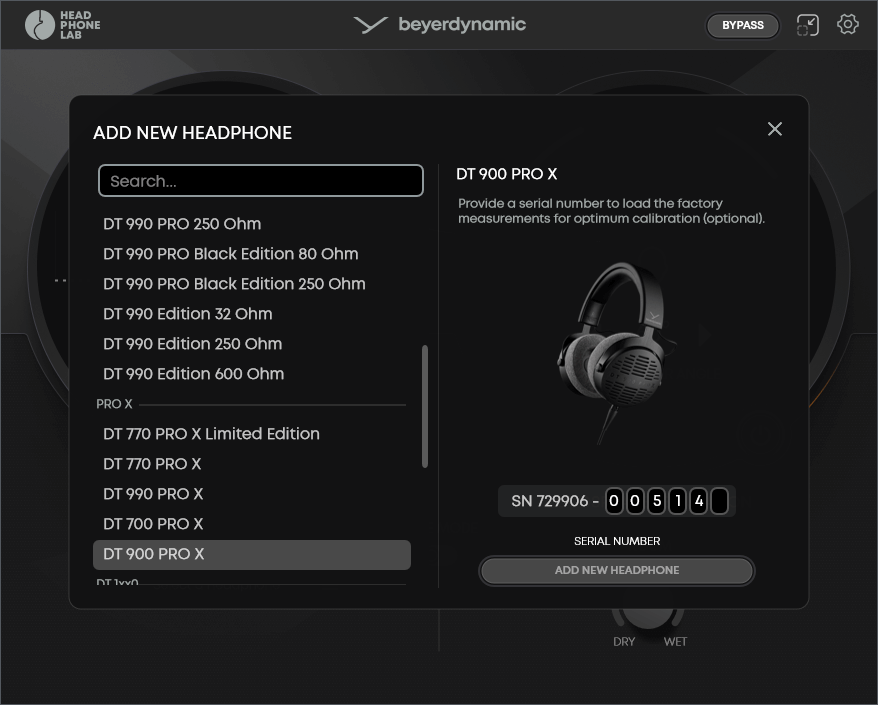
All supported DT-series studio headphones receive a Standard Calibration, based on a “Golden Sample” reference unit defined by beyerdynamic’s acoustics team. For select models—DT 700 PRO X, DT 900 PRO X, DT 1770 PRO MKII, and DT 1990 PRO MKII—the plug-in also supports factory calibration, which uses the original production measurement data from the individual headphone unit. This allows compensation for small manufacturing tolerances and material variations, resulting in tighter unit-to-unit consistency.
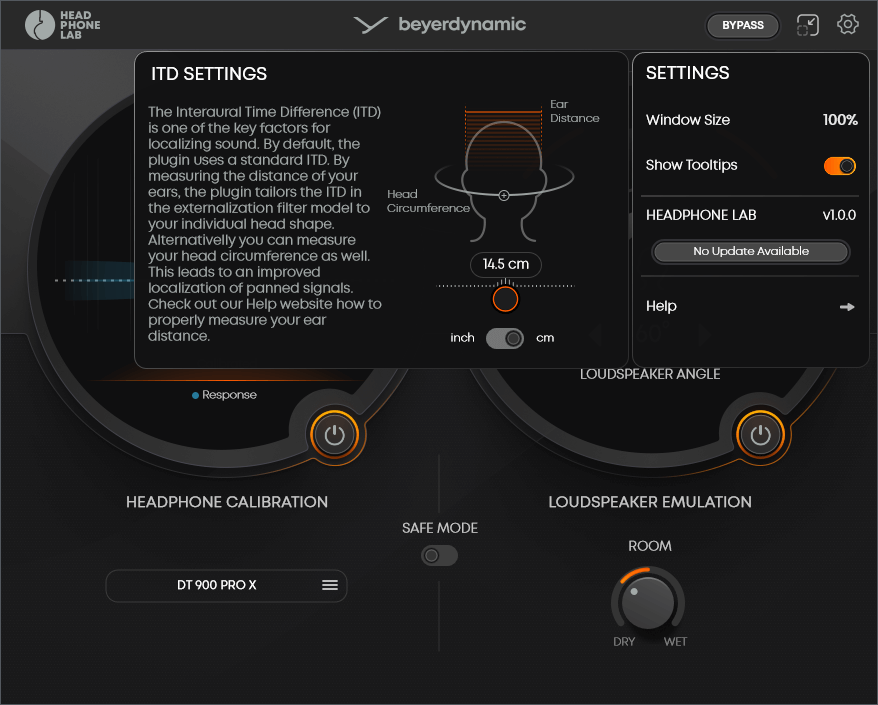
HEADPHONE LAB also includes user-adjustable parameters intended to fine-tune spatial perception. These include manual input for ear spacing and head circumference, selectable virtual speaker angles (40°, 60°, or 80°), and optional room simulation. The goal is to maintain a stable reference when working in non-ideal or unfamiliar environments.
Overall, HEADPHONE LAB is positioned as a monitoring aid for creators who rely on headphones due to space, budget, or location constraints. It does not replace loudspeaker monitoring, but it aims to make headphone-based workflows more consistent and predictable, particularly for mixing and mastering tasks.
Listening Impressions
At NAMM 2026, eCoustics Founder Brian Mitchell spent time with HEADPHONE LAB and came away genuinely surprised by how useful it is. The selectable effects are not subtle window dressing. They are immediate, clearly audible, and genuinely engaging, adding real value to both everyday listening and critical monitoring.
What stands out most is that the software is completely free. beyerdynamic could have charged for HEADPHONE LAB and it still would have felt worth the money. Instead, every beyerdynamic headphone owner, including those using long discontinued models, just received a substantial free upgrade that makes existing gear more capable and more valuable overnight. For new buyers, it offers added confidence that their purchase delivers a level of precision and accuracy that few competitors can match.
The Bottom Line
HEADPHONE LAB is a free, cross-platform plug-in for Windows and macOS that supports VST3, AU, and AAX, making it easy to integrate into any major DAW. It works with all current beyerdynamic DT-series studio headphones and DT-series in-ear monitors, offering calibrated, speaker-style monitoring without additional hardware or cost.
For more information: beyerdynamic HEADPHONE LAB
Related Reading:
- Beyerdynamic DT 270 PRO: New Entry-Level Studio Headphones Built For Podcasting And Pro Audio
- Beyerdynamic DT 770 PRO X Review: German Studio Precision Goes Mainstream—Finally
- Beyerdynamic DT 1770 Pro MKII Review: Refined And Affordable For Studio Work
- Beyerdynamic DT 1990 Pro MKII Open-Back Studio Headphones Review
- Best Audiophile Headphones (Wired): Editors’ Choice