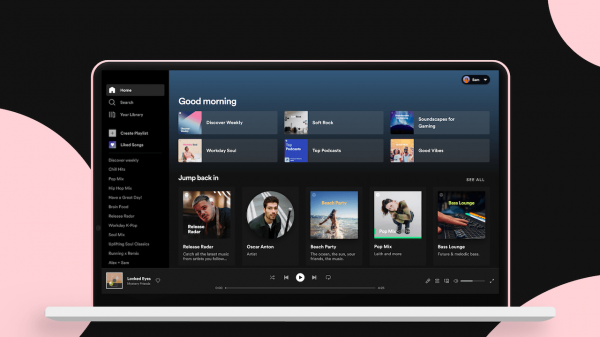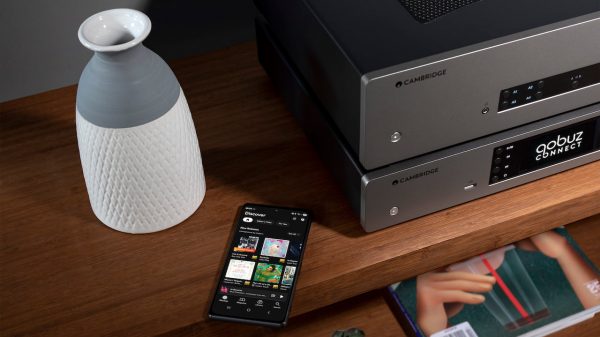
After years of teasing audiophiles with vaporware promises, Spotify finally launched its long-delayed Lossless tier — streaming 24-bit/44.1kHz FLAC instead of the compressed slop that’s powered the world’s biggest music platform for a decade. Brands wasted no time jumping aboard: HEOS, Cambridge Audio, and now McIntosh have all announced compatibility.
It’s a smart move for McIntosh, whose customers tend to care about the last drop of detail in a hi-hat, but let’s be honest — nobody uses Spotify for sound quality. They use it for convenience, playlists, and podcasts that somehow stretch into five-hour therapy sessions. The rest of us fled to TIDAL or Qobuz years ago for real hi-res audio.
Spotify’s new “lossless” format is technically 24-bit/44.1kHz FLAC — one notch above CD quality, but far below the 24-bit/192kHz streams offered by Apple Music, Amazon Music HD, TIDAL, and Qobuz. Even then, Spotify won’t call it hi-res. The platform is rolling out Lossless support across mobile, desktop, and tablet, plus a growing list of Spotify Connect–enabled devices from Sony, Bose, Samsung, and Sennheiser. Our friends in Binghamton didn’t want to be be late for the party.
What Spotify Lossless Really Means for Sound Quality (and McIntosh Users)
Spotify’s Lossless rollout is available to Spotify Premium subscribers ($11.99 per month for individual plans) on compatible devices — finally delivering CD-quality streams to the masses. It’s not hi-res, but it’s a significant step up from the typical compressed bitrates that Spotify users have endured for years.
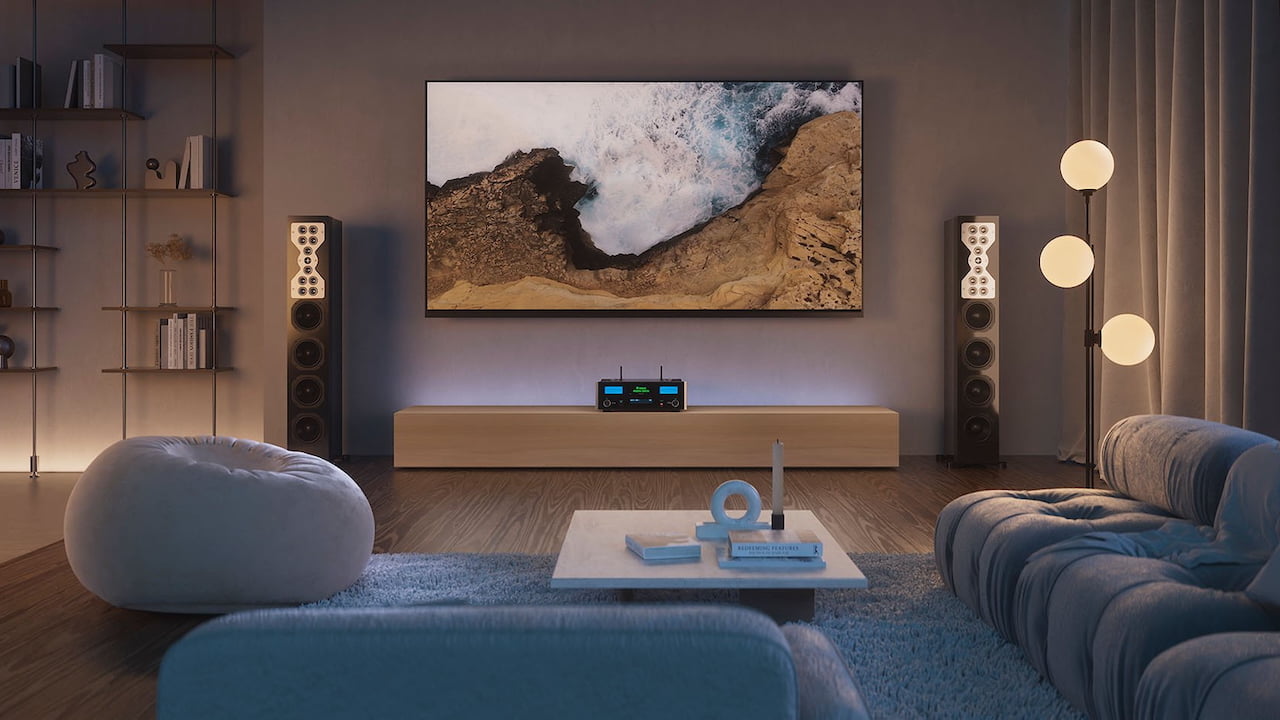
McIntosh owners now get to experience that upgrade firsthand. The company has added Spotify Lossless support to three products so far: the DS200 Streaming DAC, MSA5500 Streaming Integrated Amplifier, and MX123 A/V Processor. That means Premium subscribers can stream directly through Spotify Connect at full CD quality without any of the old lossy bottlenecks.
For McIntosh, this isn’t a reinvention — it’s refinement. The brand already supports Apple AirPlay, Bluetooth, Qobuz Connect, and TIDAL Connect. Adding Spotify Lossless simply closes the loop, giving those blue-meter faithful one more way to spin music in uncompromised fidelity — even if Spotify’s definition of “lossless” is still playing catch-up.
How to Access Spotify Lossless
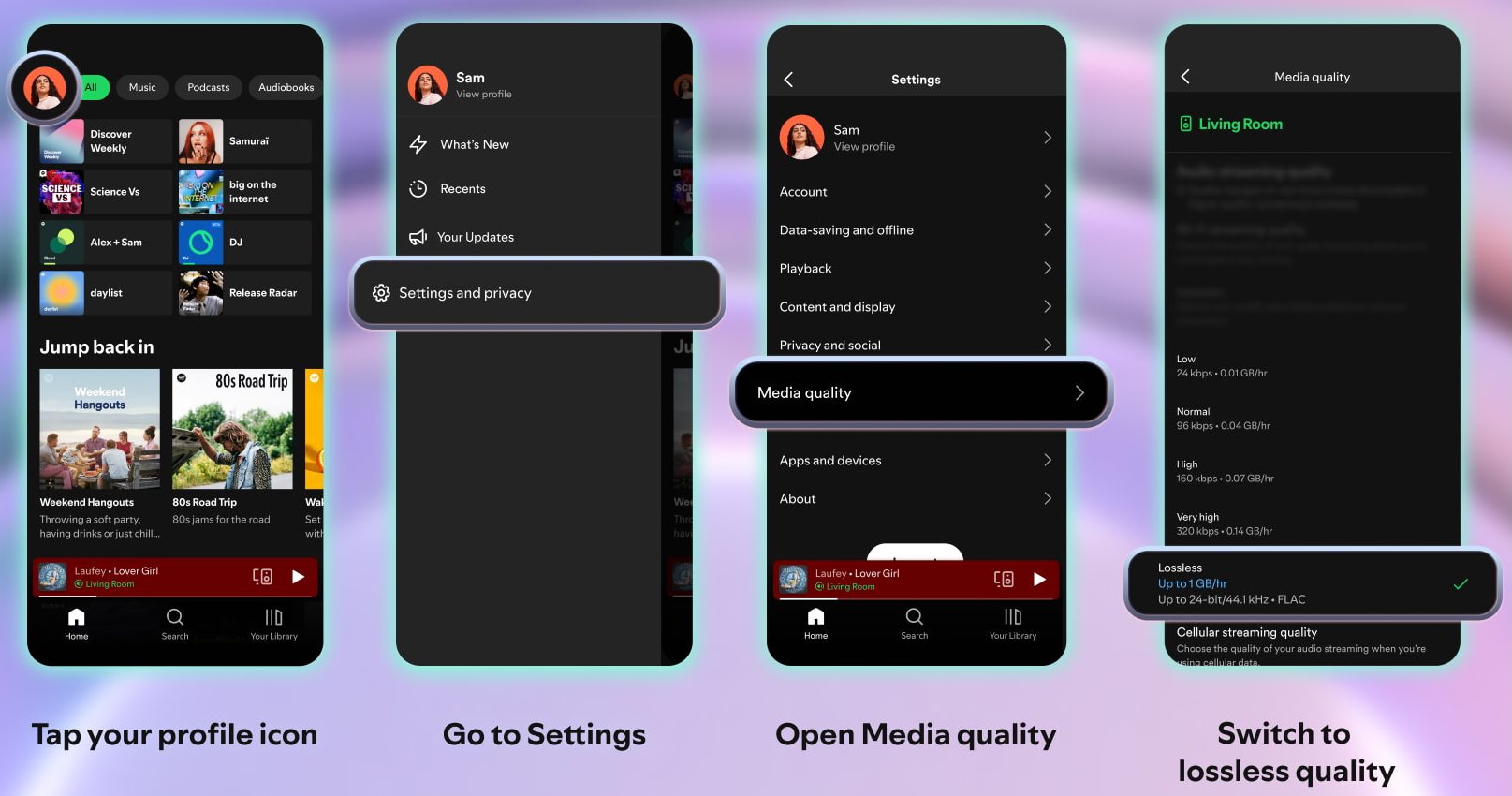
To stream in Lossless quality, you’ll need a Spotify Premium subscription. Once you’ve updated the Spotify app, open the settings menu and navigate to “Media Quality.” From there, you can enable Lossless streaming and finally hear Spotify without the compression haze. It’s simple enough, though it feels strange saying “Lossless” and “Spotify” in the same sentence.
Updating McIntosh Components for Spotify Lossless
For McIntosh users, the DS200 Streaming DAC and MSA5500 Streaming Integrated Amplifier should support Spotify Lossless out of the box with no firmware updates required. However, the MX123 A/V Processor may need a firmware update to enable the feature.
To update the MX123, go to the following menu:
Setup > General > Firmware > Update > Check for Update > Update > Update Start.
Make sure the MX123 is connected to the internet before running the update — otherwise, nothing happens except frustration and blue meters that just stare back at you.
DS200 Streaming DAC ($4,000 USD)

The DS200 Streaming DAC is designed for listeners who already have a home audio system but lack a dedicated media streamer. It adds digital streaming capability with ease, offering both balanced and unbalanced analog outputs for direct connection to a preamp, amplifier, or A/V receiver.
There are no analog inputs on the DS200 — meaning you won’t find a phono stage or the option to plug in a turntable. It’s a pure streaming device, built for those who already have their analog front end handled elsewhere.
MSA5500 Streaming Integrated Amplifier ($8,000)

McIntosh MSA5500: Power Meets Streaming
The MSA5500 Streaming Integrated Amplifier takes the DS200’s streaming and DAC foundation and adds two channels of built-in amplification, allowing you to connect directly to your speakers — no external amp required. It’s a full-featured solution for those who want McIntosh sound without stacking boxes.
Unlike the DS200, the MSA5500 also includes digital and analog audio inputs, plus a dedicated phono input for vinyl playback. Streaming support covers everything you’d expect: Apple AirPlay, Bluetooth, Google Cast (formerly Chromecast), Spotify Connect, TIDAL Connect, and now Spotify Lossless, including TIDAL Hi-Fi Lossless Quality. It’s the all-in-one answer for those who want McIntosh power with modern streaming flexibility.
MX123 A/V Processor ($8,500)

Originally released in 2019, the MX123 A/V Processor has stayed current thanks to a steady stream of firmware updates — including the addition of 8K video compatibility in 2021 — and now another update enabling Spotify Losslesssupport.
As an A/V Preamp/Processor, the MX123 handles all of the audio, video, and streaming management for your system, now including Spotify Lossless among its many supported services. However, since it’s a preamp, you’ll still need to connect external amplifiers to power your speakers.
The MX123 provides up to 13.2 channels of connectivity and processing, making it a powerful hub for both high-end listening rooms and serious home theater setups — proof that firmware updates can keep even a 2019 component feeling brand new.
McIntosh Product Availability
The McIntosh DS200, MSA5500, and MX123 can be purchased through an Authorized Dealer.
Related Reading: