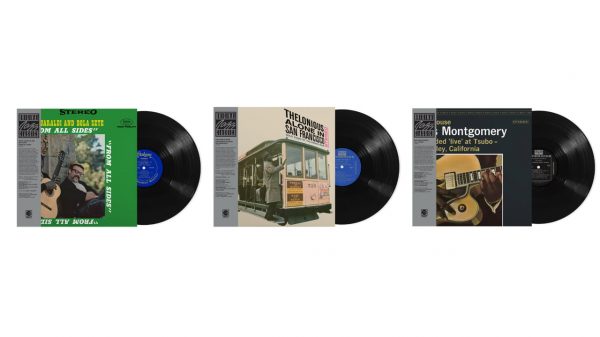
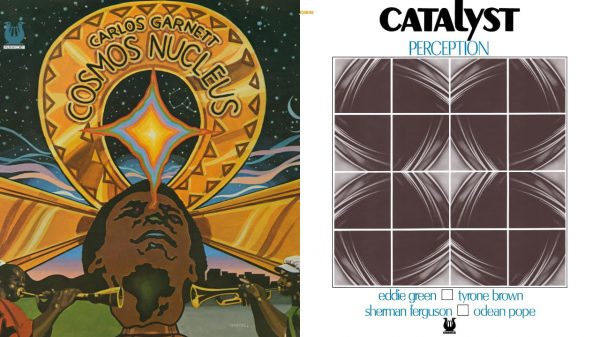
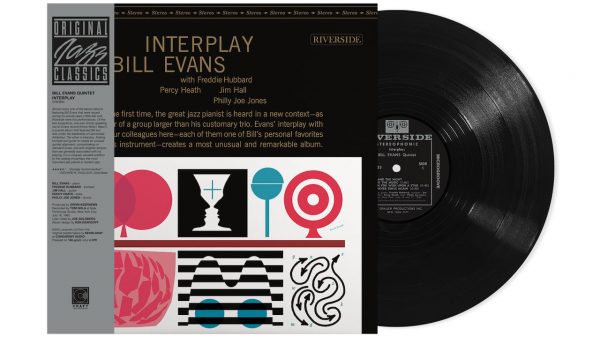
Craft Recordings is closing out 2025 with another solid entry in the Original Jazz Classics series. This final batch arrives on vinyl and in hi-res digital and includes Jazz Message #2 (Hank Mobley), Boss Guitar (Wes Montgomery), Surf Ride (Art Pepper), Plus 4(Sonny Rollins), Jazz Mood (Yusef Lateef), and Soul Junction. Also in the mix is After Hours, led by Thad Jones and an all-star crew of jazzmen.
As with the rest of the series, the execution sticks to what’s worked all year. Lacquers are cut AAA from the original master tapes by Kevin Gray at Cohearent Audio, pressed on 180-gram vinyl at RTI, and packaged in tip-on jackets that accurately reproduce the original artwork without revisionist nonsense. Each title is released simultaneously in 192/24-bit hi-res digital, for listeners who want the same mastering without committing to the vinyl playback ritual.
Thad Jones (March 28, 1923 – August 20, 1986) didn’t waste time asking for permission. Born in Pontiac, Michigan into a seriously musical family—older brother Hank Jones on piano, younger brother Elvin Jones on drums—he taught himself trumpet and went pro at 16. No conservatory pedigree, no safety net, just talent and nerve.
He joined the Count Basie Orchestra in 1954 and quickly became one of its most important voices, not just as a soloist but as an arranger who understood swing from the inside out. By the late ’50s, he was in demand everywhere, including a stint on cornet for Thelonious Monk’s 5 by Monk by 5 in 1959—because of course Monk wanted him.

Jones left Basie in 1963 to freelance, compose, and eventually co-lead the Thad Jones/Mel Lewis Orchestra, reshaping big-band jazz without turning it into a museum piece. He returned to the U.S. from Denmark in 1985 to lead the Basie Orchestra after Basie’s death, closing the circle with the same authority he’d carried all along. One of the greats—not a slogan, just a fact.
Thad Jones takes the reins here and doesn’t look back. This bop sextet—stacked with Mal Waldron on piano, Kenny Burrell on guitar, Frank Wess on flute and tenor, Paul Chambers on bass, and Art Taylor on drums—plays like a crew that’s already survived the night and decided to keep going anyway. Jones and Wess, both alumni of Count Basie’s band, don’t just lead the session; they own it, trading authority for attitude and stealing the spotlight without breaking a sweat.
The album was also reissued in 1963 as Steamin’, credited to Frank Wess and Kenny Burrell, using the same material recorded earlier. The program consists of four extended tracks: “Steamin’” (9:20), “Blue Jelly” (11:20), “Count One” (7:52), and “Empty Street” (12:35). The session was recorded on June 21, 1957 at Van Gelder Studio in Hackensack, New Jersey, with a total running time of 41:07.
“Empty Street” sprawls past the 12-minute mark and earns every second—a gloriously boozy, blues-soaked slow burn that cuts straight through the album’s more frantic moments. This is late-night jazz with calloused hands and nothing left to prove. Every phrase drips with experience, restraint, and quiet menace. After Hours isn’t a clever title—it’s a statement of intent, and the band means every last note.

Musically, this is straight-ahead jazz rooted firmly in bop tradition. The emphasis is on long-form improvisation, relaxed tempos, and cohesive ensemble playing rather than flash or experimentation. It’s a focused, unpretentious session that plays to the strengths of the musicians involved. Bop fans looking for solid, well-recorded material from this period will find plenty to like here.
It’s an intimate-sounding recording, with Jones and Wess alternating naturally between front-and-center roles. The presentation is compact rather than expansive—no oversized soundstage—but the balance is solid and well organized, with each player clearly defined in the mix. Nothing feels crowded or blurred, which matters more here than sheer scale.
Kenny Burrell’s guitar steps forward at the right moments, particularly on “Steamin’,” where the album opens at a brisk tempo. His lines are clean, rhythmic, and well captured, adding drive without pulling focus from the ensemble. The recording quality supports the performance throughout—direct, controlled, and well suited to the straight-ahead nature of the session.
Craft delivers another strong entry here—cleanly done, no shortcuts—and yes, very much in the spirit of Hackensack. Van Gelder country. If you know the stretch near FDU and Teaneck off Route 4, you already get the picture. This music belongs there: direct, unpretentious, and built on fundamentals that still hold up.
Cut down to River Road, turn right on Cedar Lane, cross the bridge into Hackensack, hang a left—and you’ll spot a certain burger shack on the left. The line will be long. Worth it anyway. Just like this underappreciated gem, which doesn’t shout for attention but rewards anyone willing to stick around.
Where to buy: $38.98 at Amazon
Related Reading:
- Benny Golson’s “Gone With Golson” Vinyl Reissue Review: Craft Recordings Restores 1960 Prestige/New Jazz Rarity
- Wheelin’ And Dealin’ 180-Gram Vinyl Review: Craft Recordings’ OJC Reissue Showcases Waldron And Wess
- Review: Here’s Lee Morgan – Craft Recordings’ OJC Reissue Revives A Hard Bop Rarity
- Review: Looking Ahead – Ken McIntyre & Eric Dolphy’s Boundary-Pushing OJC/Craft Recordings Reissue On 180g Vinyl