
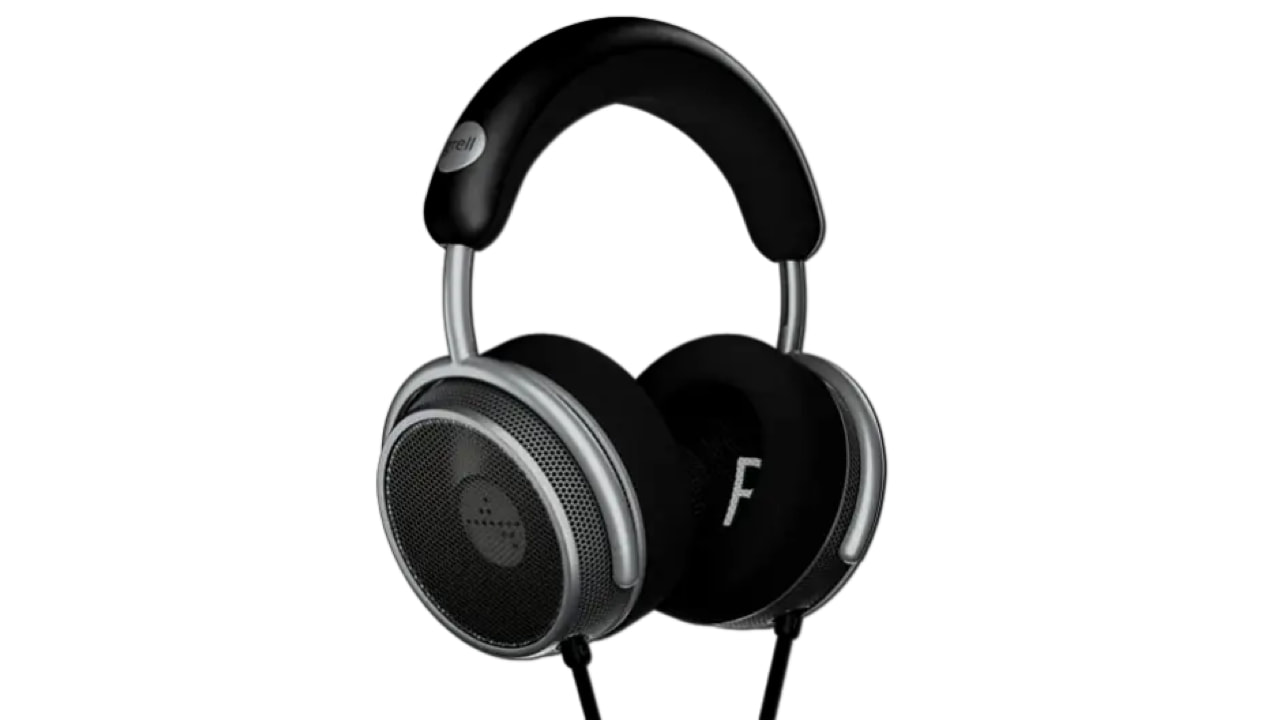
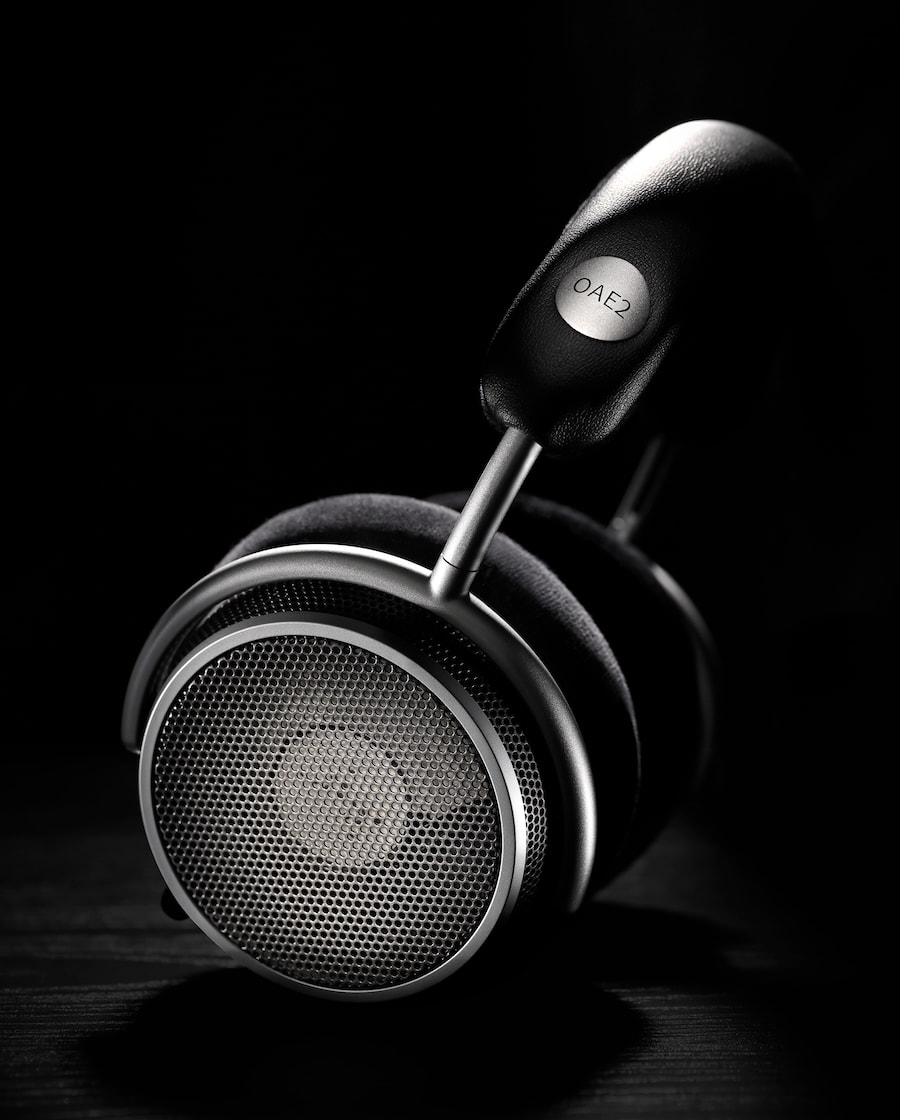
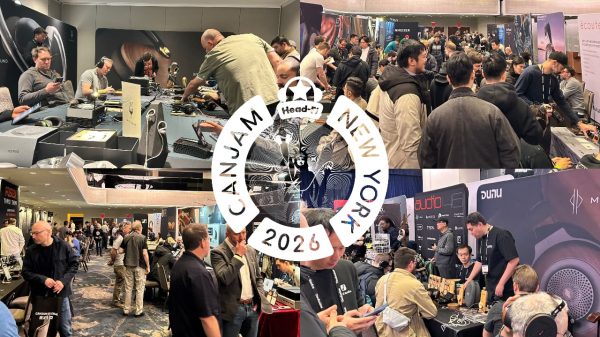
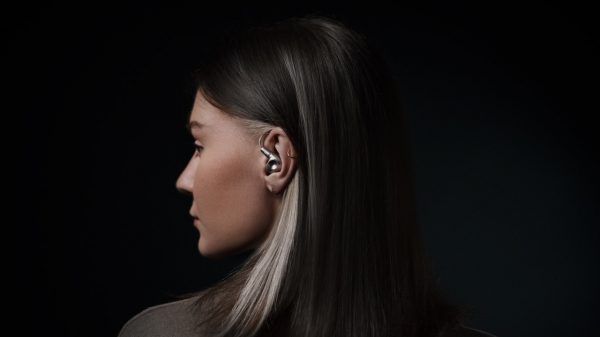
At CanJam NYC 2026 this past weekend, Grell’s latest design, the Grell OAE2 open back headphones, made their U.S. public debut. The $599 model builds on the original OAE1 and continues Grell’s pursuit of tonal accuracy, mechanical precision, and long-term listening comfort. The open back over ear design incorporates a newly optimized dynamic driver and an acoustically refined housing intended to improve airflow and project a more speaker like soundstage presentation in front of the listener.
If you’ve spent enough time walking the halls at hi-fi shows, you know the routine. Every year a handful of startups promise they’ve reinvented the wheel and that what you’re about to hear will change everything you thought you knew about speakers or headphones. You nod politely, sit down, listen for a few minutes, and try not to roll your eyes when the demo playlist inevitably lands on Diana Krall, the Eagles, or Norah Jones.
But when the name on the badge is Axel Grell, you stop joking around and actually pay attention.
Grell is hardly another “trust us, it’s revolutionary” startup voice on a crowded show floor. Before launching his own brand, the veteran headphone engineer spent decades at Sennheiser, where he was responsible for developing some of the most respected high end headphones of the past few decades. Small German company. You might have heard of it. They also make a decent strudel.
How the Grell OAE2 Tries to Move the Soundstage Out of Your Head

One of the biggest limitations of traditional headphones is the so called “in head” effect. Because the drivers sit millimeters from the ear and fire directly into the ear canal, most headphones create a listening perspective where instruments appear to originate from inside the listener’s head rather than from a believable space in front of them. While open back designs can widen the presentation and improve air and separation, they rarely change the fundamental geometry of how the sound reaches the ear. The result is often a presentation that feels spacious but still anchored inside the listener’s skull rather than resembling the externalized imaging produced by loudspeakers.
The Grell OAE2 open back headphones were engineered to address that specific limitation. Instead of following the conventional layout where the driver points straight into the ear canal, Axel Grell designed the acoustic structure so the output interacts more deliberately with the outer ear before entering the ear canal. This approach allows the pinna and surrounding ear structures to contribute to spatial cues in a way that more closely resembles how we hear speakers in a room.
In speaker listening, sound reaches the ear only after interacting with the head, shoulders, and outer ear, creating small timing, phase, and tonal variations that the brain uses to interpret direction, distance, and placement. By preserving more of those interactions inside the headphone structure, the OAE2 attempts to shift the listening perspective forward so that instruments appear positioned in front of the listener rather than inside the head.
The goal is not to artificially exaggerate soundstage width or create gimmicky spatial effects, but to maintain stable imaging, natural treble perception, and controlled low frequency behavior while presenting music in a way that resembles nearfield loudspeaker listening.
For listeners accustomed to the traditional headphone presentation, the perspective can initially feel unfamiliar, but the intention is that the brain adapts to the spatial cues over time, making the presentation feel more natural and less fatiguing during long listening sessions.
German Engineering, Replaceable Parts, and None of That Disposable Headphone Nonsense
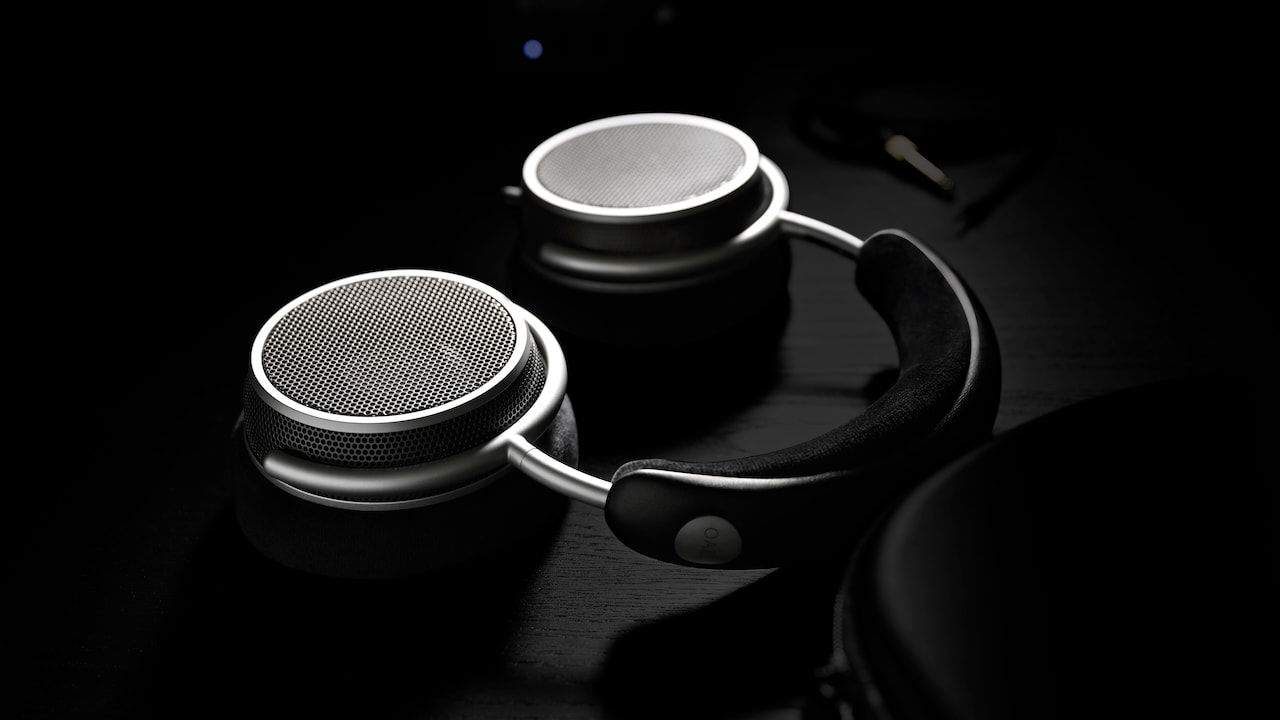
Beyond the acoustic design, the Grell OAE2 reflects Axel Grell’s long standing belief that premium headphones should be built to last. Instead of chasing short product cycles, the design emphasizes durability, serviceability, and long term ownership. In other words, the opposite of the sealed plastic approach that dominates much of the modern headphone market.
At the center of the OAE2 is a 40 mm wideband dynamic driver built around a bio cellulose diaphragm, paired with a carefully tuned damping system. Part of that system includes a precision manufactured stainless steel acoustic mesh produced in Germany, which helps regulate airflow and maintain consistent driver behavior. The goal is controlled acoustics rather than brute force tuning, supporting the headphone’s spatial presentation without introducing unwanted resonances or instability.
Construction follows a modular all metal architecture with replaceable components that can be serviced if parts wear out. The idea is simple: headphones should not become disposable because one component fails. Connectivity is equally straightforward. The OAE2 ships with two detachable 1.8 m cables, including a 3.5 mm single ended cable and a 4.4 mm balanced cable, along with a screw on 3.5 mm to 6.3 mm adapter for traditional headphone amplifiers and a protective carry case.
From a technical standpoint, the OAE2 remains close to the OAE1 but with small refinements. The circumaural open back design uses a dynamic transducer rated from 12 Hz to 34 kHz within ±3 dB, extending from 6 Hz to 46 kHz at -10 dB. Nominal impedance is 38 ohms with 100 dB sensitivity at 1 kHz (1 VRMS), making it compatible with portable players while still benefiting from a capable amplifier. Total harmonic distortion is rated at 0.05 percent at 1 kHz and 100 dB, and the headphone weighs 378 g (13.3 oz) without the cable attached. Slightly heavier than the OAE1 by three grams. German engineering apparently does not skip arm day.
The Germans Ran the Numbers. Now We Listen.
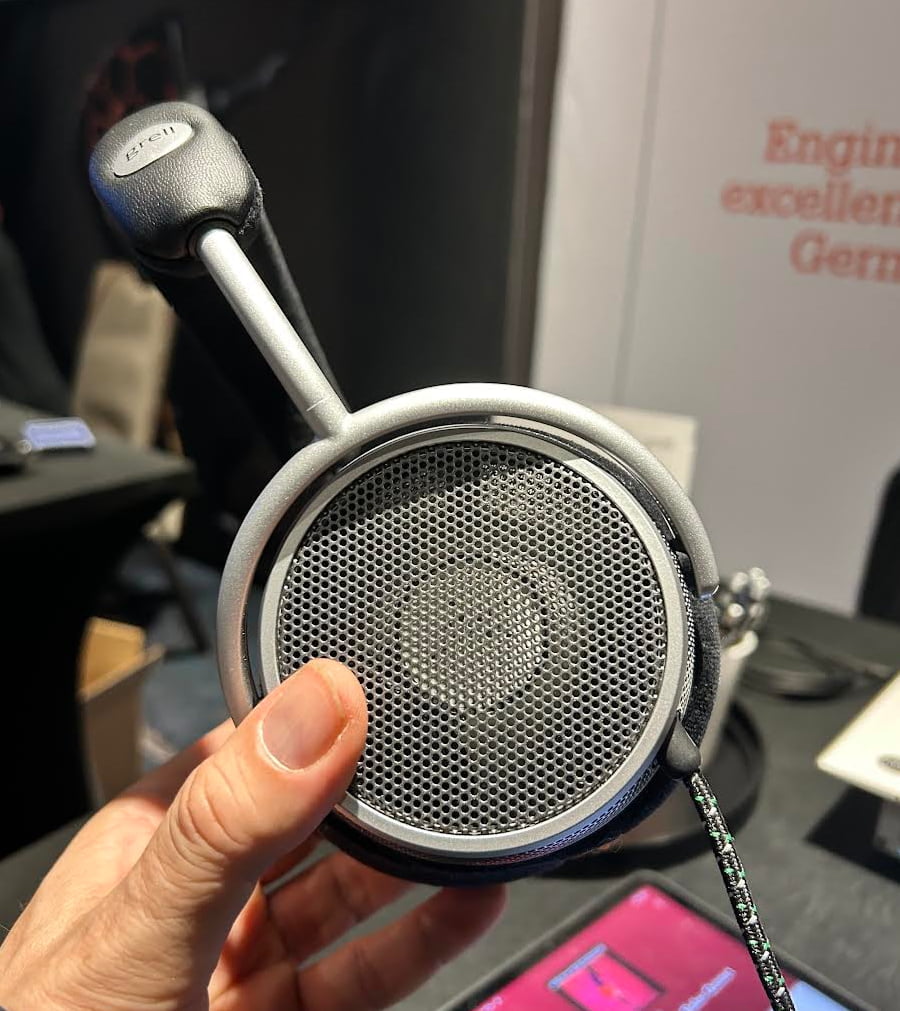
Grell kept things refreshingly simple at CanJam NYC 2026. No $30,000 source chain, no mystical demo playlist, and no attempt to overwhelm people with exotic gear. Just three pairs of the Grell OAE2, a few source devices, and a small stack of EarMen ST-Amp headphone amplifiers priced around $400.
The setup was about as straightforward as it gets for a show floor demo. The EarMen ST-Amp offers both single ended and balanced output options, rated at 0.5W into 32 ohms (4V) single ended and 1.85W into 32 ohms (7.75V) balanced, which is more than enough for a 38 ohm headphone like the OAE2. In other words, plenty of clean power but nothing exotic that might artificially inflate the listening experience.
Even the music selection avoided the usual trade show clichés. There were no sacred audiophile demo tracks looping endlessly in the background. Attendees could simply plug in their own phone and listen to whatever they wanted. Which I appreciated. I even spent a little time surfing through German tracks on the playlist. My German is… limited. Although if knowing Yiddish counts as partial credit, I was doing just fine.
A short run through Deadmau5, Daft Punk, and Aphex Twin was enough to get my attention. The OAE2 leans toward a neutral presentation without obvious boosts or dips across the spectrum. Clean, but not the sterile kind of clean that some German designs fall into. Bass is not tuned for exaggerated punch, but the definition and speed are excellent, especially with electronic music that depends on tight timing. The top end is equally well behaved. Detailed and open without any glare or hardness.

Then came the part that really mattered. Soundstage. The presentation is clearly wide, but not absurdly wide in the artificial sense. Think more East River to the IAC Building on the West Side Highway wide, not across the Hudson into New Jersey for chili dogs at Hiram’s wide. More important than width, however, is placement in front of the listener. If Axel Grell’s goal was to push the image outside the head and create what I would call a “nearface” listening perspective about 6 to 10 inches in front of you, the OAE2 largely succeeds.
Switching over to vocals confirmed that impression. Tracks from Amy Winehouse, Billie Holiday, Bjork, and Belinda Carlisle showed the same spatial behavior. Voices did not collapse into the center of the skull as they often do with headphones. Some appeared slightly closer, others further back, but the image remained focused and stable. Never diffuse. Always locked in dead center. And frankly, that was pretty impressive.
The Bottom Line
The Grell OAE2 stands out for one reason: it actually delivers on the promise of moving the soundstage out of your head and placing it slightly in front of the listener. The effect is not gimmicky or exaggerated. Instead, it feels closer to a nearfield speaker presentation with stable imaging and natural placement. Sonically the tuning leans neutral with clean treble, fast and well controlled bass, and no obvious peaks designed to impress in a quick demo.
Comfort was also encouraging. Clamping force is moderate, the headband is well padded, and the overall build quality feels appropriate for a headphone expected to retail for $599 / £499 / €499. Based on our first listen at CanJam NYC 2026, Axel Grell’s latest design shows real promise. A full review is coming later this month once we spend more time with a production unit.
For more information: grellaudio.com
Related Reading:
- More CanJam NYC 2026 Coverage
- Grell OAE2 Open-Back Headphones To Premiere At CanJam NYC 2026 With Newly Optimized Driver And Forward Projecting Soundstage
- ABYSS Diana TC Signature Debuts At CanJam NYC 2026: Is The $4,995 Planar Headphone Ready To Challenge Audeze, Meze, And Dan Clark Audio?
- Drop + Grell’s OAE1 Headphones Have Become More Affordable And That’s A Very Good Thing: Preview



























Steve
March 9, 2026 at 11:43 am
” The presentation is clearly wide, but not absurdly wide in the artificial sense. Think more East River to the IAC Building on the West Side Highway wide, not across the Hudson into New Jersey for chili dogs at Hiram’s wide. ” Now how would you describe it for anyone not living in your neighbourhood?
Ian White
March 9, 2026 at 2:39 pm
Steve,
Guess you’re not familiar with Manhattan. It’s a fairly wide spread which is enhanced by the position of the drivers. But I’ve heard open-ear designs that can extend even further…which is why I made the reference to across the Hudson River into Jersey (where I do live) and Hiram’s hot dogs.
The most interesting part is how it projects the soundstage in front of you. It’s a near field presentation but more like speakers on your desktop.
IW
Steve
March 10, 2026 at 11:43 am
Hello Ian, thank you for a prompt reply. I’m familiar with Manhatten but not familiar enough that the reference points worked as a description of the width of the soundstage. I live in Paris, so if you’d said “think more the Palais Garnier to the Musée Gustave Moreau wide, not far as Gare du Nord for a beer at Terminus Nord wide” I would known exactly what you meant!
Ian White
March 10, 2026 at 11:44 am
Steve,
Fair enough. I’ve been to Paris a few times to visit family so I’m sorta familiar with the Gare du Nord reference. Either way…they’re impressive for the money.
IW