
Introduction
If you’re still clutching your passive loudspeakers like a security blanket, enjoy the nostalgia while it lasts. The shift is already happening. With every new product cycle, high-end wireless loudspeakers get better, smarter, and—much to the horror of the cable-hoarding crowd—capable of replacing full racks of gear without sacrificing sound quality. By the end of the decade, a lot more audiophiles will have crossed that bridge. Some willingly. Some dragged.
The broader market has already spoken. Wireless loudspeakers continue to dominate mainstream audio sales, and the technical leap over the last five years has been undeniable: more power, better DSP, cleaner app ecosystems, room correction, subwoofer integration, and streaming platforms built directly into the core of the system. The question isn’t why wireless is gaining traction—it’s why wouldn’t a pair of well-engineered active speakers with real connectivity and modern control satisfy 99% of music listeners?
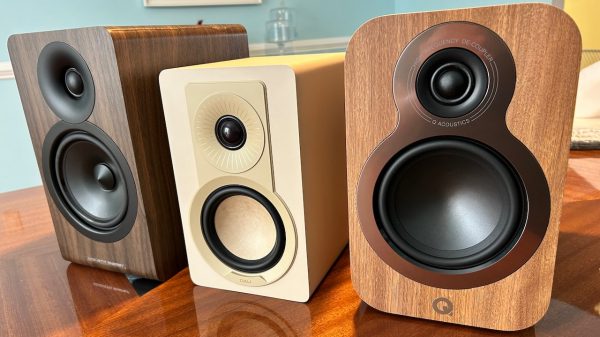
Brands like PSB, Bowers & Wilkins, Sonus faber, ELAC, Focal, Triangle, Dynaudio, Klipsch, and KEF clearly see where this is going. They’re betting the next generation of audiophiles will demand wireless systems that integrate legacy gear, handle home theater duties, connect seamlessly to streaming platforms, and don’t require a crash course in electrical engineering to operate.
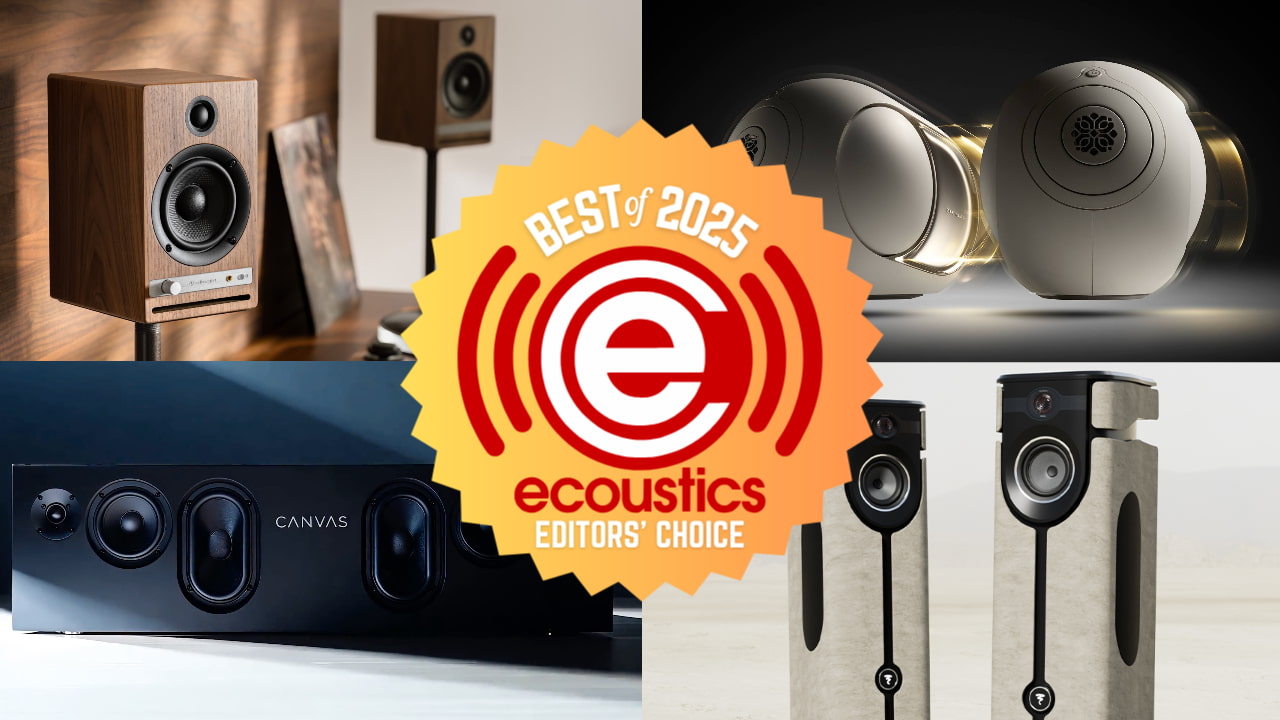
And while KEF has deservedly walked away with more than a few awards in recent years, 2025 brought a wave of compelling alternatives—products we had in-house, tested, lived with, and felt confident elevating beyond the usual suspects. This year’s Editors’ Choice lineup stretches from $249 to $69,000, offering something distinct at various price points.
Streaming support has also graduated from a nice-to-have to mandatory. TIDAL Connect, Spotify Connect, and the rollout of Qobuz Connect are now core expectations, alongside HEOS, BluOS, Chromecast, and Roon Ready certification. HDMI eARC is becoming more common as wireless speakers slide into TV and home theater roles with zero fuss.
Consumers want usability and great sound without the component sprawl. The best wireless speakers we tested deliver exactly that: serious performance, real flexibility, and value that makes traditional separates look over their shoulder. The future? Fewer boxes, fewer headaches, and better sound for more people. No prophecy needed.
What to look for?
Support for Bluetooth aptX HD, aptX Adaptive, aptX Lossless, aptX Low Latency, LDAC, AAC, SBC, and Apple AirPlay 2 is a solid starting point—but don’t expect any one speaker to check every box. Codec support is expanding, and you can expect even more integration in future models as wireless platforms mature.
Just remember: wireless is only wireless until you need power. Every active speaker still requires AC, and many systems link the left and right channels with Ethernet or even traditional speaker cable because only one enclosure houses the amplifiers. The illusion of total freedom isn’t quite there yet.
Control apps are another dividing line. Some brands invest in polished, proprietary ecosystems; others expect you to cast from your streaming app of choice. Class D amplification and smart DSP have played a huge role in enabling companies—Devialet being a prime example—to squeeze real performance out of compact enclosures while offering room correction, dynamic control, and higher output without generating enough heat to toast a bagel.
On the back panel, look for flexibility: RCA inputs (ideally with MM/MC phono options), TOSLINK optical, and 3.5mm aux for legacy gear. HDMI ARC or eARC is becoming essential if you want your speakers to double as a TV audio system, letting your TV remote handle volume without any friction.
And above everything else: the sound still has to move you. Connectivity is great, convenience is better, but none of it matters if the speakers can’t deliver a compelling, musical presentation. Wireless shouldn’t be a compromise. It should be an upgrade.
Best Wireless Speakers of 2025
Denon Home 150 ($249)
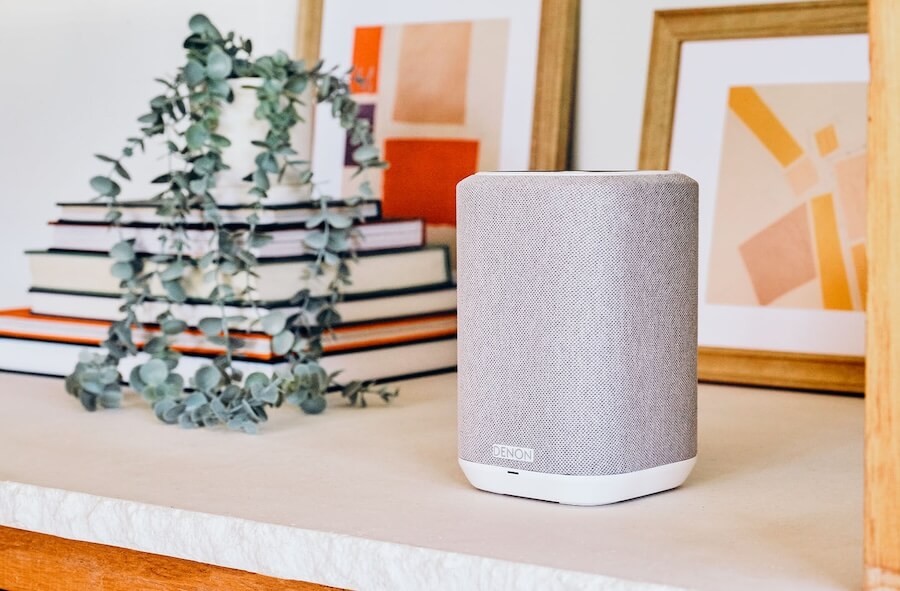
The Denon Home 150 hits a sweet spot between sound quality, smart features, and price, outperforming what you’d expect from a speaker this small. It delivers clear, confident mids and surprisingly punchy bass, with only the treble showing a bit of restraint. Built-in Alexa gives it more utility than your average wireless box, and the HEOS platform lets you stream, group rooms, and integrate it into a broader system. The catch is the HEOS app itself—powerful, yes, but not exactly the most intuitive on mobile. A desktop version would make setup and control far less fiddly.
Where the Home 150 really stretches its legs is in expansion. You can pair it with the Denon Home wireless subwoofer for extra low-end authority, or make it part of a surround setup anchored by the Home Sound Bar 550 and Denon Home Wireless Subwoofer. That flexibility, combined with its compact footprint and solid audio chops, makes the Home 150 an easy recommendation for anyone building a simple, scalable wireless ecosystem.
Go to full review I $249 at Amazon | Crutchfield
Audioengine A2+ Next Gen ($279)

The Audioengine A2+ Next Gen keeps the silhouette everyone already knows—clean, compact, and desk-friendly—but finally drags the long-running bestseller into 2025 with meaningful updates instead of cosmetic fluff. Bluetooth jumps to 5.3 with aptX HD, the DAC moves to true 24-bit resolution via USB-C, and the overall experience feels less like “good for the size” and more like a legitimately modern desktop audio system. The main (left) speaker houses all amplification and inputs, pushing 15W RMS per channel through a Class AB amp that still prioritizes tonal warmth over sterile accuracy. A 2.75″ aramid-fiber woofer and 0.75″ silk-dome tweeter deliver a surprisingly full and clear near-field presentation—still not subwoofer territory, but absolutely satisfying for music, gaming, and day-to-day listening.
Connectivity is where the A2+ Home Music System finally earns its “Next Gen” tag. Alongside analog stereo and RCA inputs, USB-C replaces the aging micro-USB, making laptop and desktop integration frictionless. Bluetooth range stretches up to 100 feet with aptX HD support, and the internal 24-bit DAC is clean enough to make hi-res streaming genuinely worthwhile. If you run a turntable, you’ll still need an external phono preamp, but that’s expected in this size class. The handcrafted MDF cabinets—finished here in a bold Anniversary Edition Matte Orange—remind you that Audioengine still takes build quality seriously. After 18 years and 300,000 units sold, the A2+ doesn’t reinvent itself, but it absolutely sharpens the formula in the ways that matter.
Learn more | $279/pair at Amazon | Crutchfield
Ruark R1 MK4 ($349)
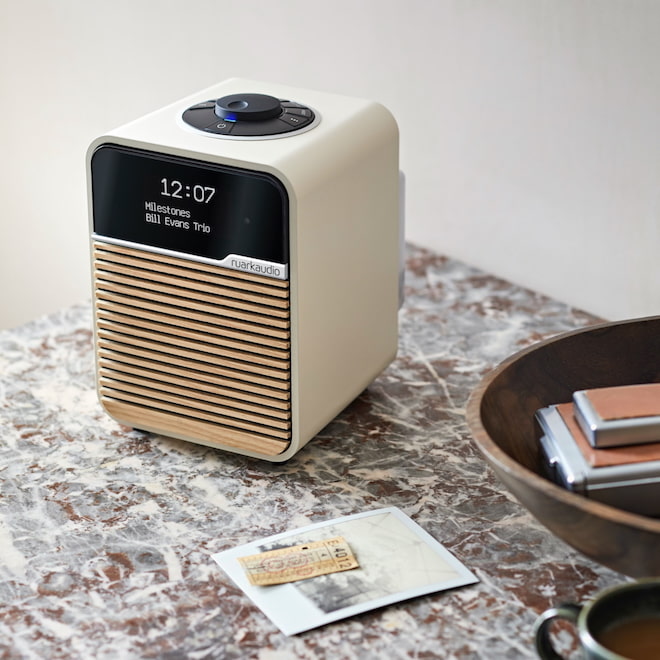
The Ruark R1 MK4 is what happens when a company decides a bedside radio shouldn’t look—or sound—like something that fell out of a hotel lost-and-found bin. In North America, you can forget about its DAB/DAB+ tuners, but the FM and Bluetooth performance more than make up for it. A handcrafted cabinet, custom neodymium NS+ full-range driver, adaptive EQ, and a Class A/B amplifier give it a tone that’s unnervingly natural for a device this small. Bass is richer than physics should allow, mids are warm without turning syrupy, and the treble stays smooth even at higher volumes—perfect for nighttime listening or lazy Sunday mornings. It’s elegant without being pretentious, modern without chasing trends, and built with the kind of materials that tell you someone actually cared during the design phase.
Functionally, the R1 is refreshingly grounded. Bluetooth streaming, FM radio, a proper analog input, and a USB-C port for charging your phone cover every use case this thing is meant for—and none of the ones it isn’t. No Wi-Fi, no apps, no cloud accounts, no privacy policies written by a Bond villain. It’s not portable, and it doesn’t pretend to be; instead, it’s a small, acoustically thoughtful tabletop radio designed to sound great in a bedroom, office, or kitchen. At $399, it’s a premium pick, but it earns its price with legitimate audio chops, impeccable build quality, and a grown-up sense of style. The Ruark R1 is the radio you buy because you want FM and Bluetooth to actually sound good—not because you need yet another gadget begging to be updated before breakfast.
Go to full review | $349 at Amazon
Edifier MR5 ($349/pair)
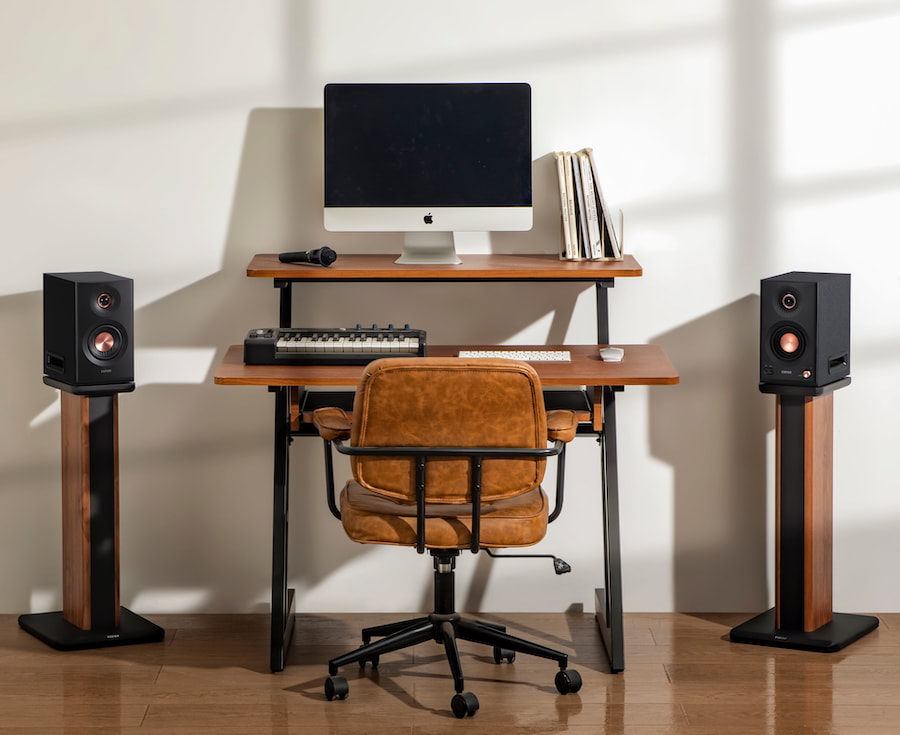
The Edifier MR5 is what happens when someone finally admits that “computer speakers” should no longer sound like they were fished out of a RadioShack clearance bin. Yes, the price jumps to $349, but the upgrade is real: a true 3-way design with a dedicated 5″ woofer, 3.75″ midrange, and 1″ silk-dome tweeter—all powered by three amplifiers per cabinet. With the crossover handled in the digital domain before amplification, each driver gets precisely what it needs, giving the MR5 a full-range, near-field presentation that doesn’t require a subwoofer to feel grounded. The active DSP, DRC, and Hi-Res certifications (wired and wireless) make these feel far more grown-up than their size suggests, and the 46Hz–40kHz response is legitimately flat enough to use for mixing, editing, or just refusing to tolerate mushy midbass at your desk.
Connectivity is equally serious: balanced XLR and TRS, unbalanced RCA, AUX, Bluetooth 6.0 with LDAC, and even a front-panel headphone output. Total output clocks in at 110W RMS (30W×2 bass, 15W×2 mids, 10W×2 highs), with SPL capability up to 101dB at 1 meter—overkill for near-field, but glorious if you enjoy intimidation-by-monitor. Acoustic compensation profiles and customizable EQ via the EDIFIER ConneX app let you tame desk reflections or push a bit more low-end if needed. In small rooms, studios, or tight workspaces, the MR5 simply behaves like a real monitor system—clean, coherent, full-bandwidth—and that’s exactly why it earns the recommendation.
Go to full review | $349/pair at Amazon
Audioengine HD4 Next Gen ($429)
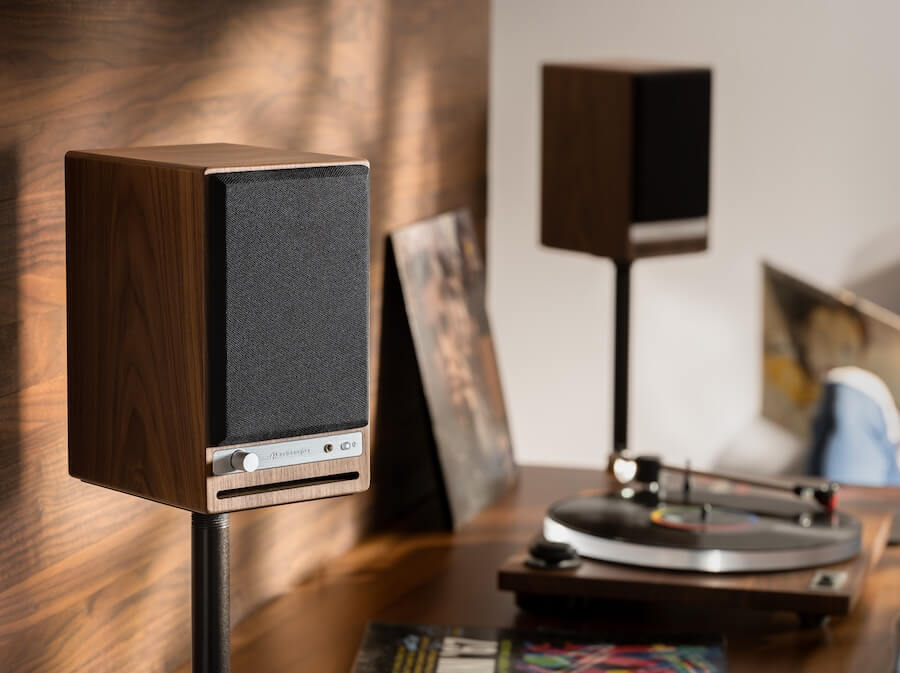
The Audioengine HD4 Next Gen doesn’t pretend to be a do-everything “lifestyle” system—there’s no HDMI ARC, no onboard phono stage, no remote, and definitely no app trying to reinvent the volume knob. Instead, it doubles down on what matters: clean analog sound, modern wireless performance, and enough power to anchor a small room or desktop without cluttering your life with software updates. Bluetooth 5.3 with aptX Adaptive/aptX LL/aptX/AAC/SBC, USB-C, RCA, and 3.5mm inputs cover just about every source that isn’t a TV, and the built-in 24-bit DAC (PCM5100A) makes digital playback surprisingly refined for the price. Inside the left speaker lives all the amplification—30-watts RMS per channel of Class A/B warmth—which then feeds the passive right speaker via standard wire. Translation: simple, reliable, and very on-brand for Audioengine’s “no BS, just music” approach.
Sound quality is where the HD4 Next Gen justifies its under-$450 price tag. The 4-inch aramid-fiber woofers and 0.75-inch silk-dome tweeters deliver a clear, balanced, midrange-forward presentation that feels tailor-made for near-field listening. Bass stops at 60Hz, but the RCA line-out doubles as a subwoofer output if you want more weight. The headphone amp, driven by an OPA1602 and capable of 300mW at 32 ohms, is perfectly serviceable for dynamic headphones and casual late-night sessions—just don’t expect it to wrangle your power-hungry planars. The handcrafted cabinets look sharp, stay compact, and behave like real speakers instead of plastic toys. Yes, the missing conveniences will bother some buyers, and yes, adding stands or a sub pushes the total cost upward—but for a small-room audiophile who wants instant gratification without digital clutter, the HD4 Next Gen nails its mission.
Go to full review | $429/pair at Amazon
Q Acoustics M40 ($1,699)

The Q Acoustics M40 is a powered floorstander that refuses to overthink its mission: deliver full, room-filling sound without forcing you into an AVR, a subwoofer, or a spaghetti bowl of cables. A 100-watt Class D amp (50W per channel) lives inside the primary speaker, driving a 2-way reflex design built around dual 125mm mid/bass drivers and a 22mm tweeter. Bluetooth 5.0 with aptX, aptX HD, aptX LL, AAC, and SBC keeps wireless playback modern, while optical, USB-B (24/192), and dual analog inputs make it simple to plug in a TV, laptop, or streamer. The only feature skipped—intentionally—is a built-in phono stage to keep the system below $999 USD. Build quality is classic Q Acoustics: solid, resonant-free, and surprisingly dense. The fixed grille adds stiffness while slimming down visually, but the cabinets are heavy enough that you’ll want both hands (and possibly a pep talk) before moving them.
Sonically, the M40 plays to its strengths rather than chasing audiophile fireworks. The low end is the star—robust, controlled, and satisfying enough that most listeners won’t feel pressure to add a sub, especially in small and mid-sized rooms. The midrange is clean and slightly forward, giving vocals warmth and presence without drifting into shoutiness. Treble stays smooth and forgiving; it won’t match the openness of Q Acoustics’ passive 5000-series designs, but it also won’t punish modern pop mixes. Detail retrieval is intentionally moderate—the M40 aims for comfort, not clinical dissection—and when fed higher-quality recordings, it still reveals more than expected. Off-axis performance is its main weakness; step too far left or right and midrange clarity and treble finesse fall off quickly, though everything locks back in once you return to center. As an all-in-one powered floorstanding solution, the M40 nails its brief: easy setup, full-bodied sound, and genuine everyday usability without the complexity tax.
Go to full review | $1,699/pair at Amazon
Devialet Phantom Ultimate 108 dB ($3,800)
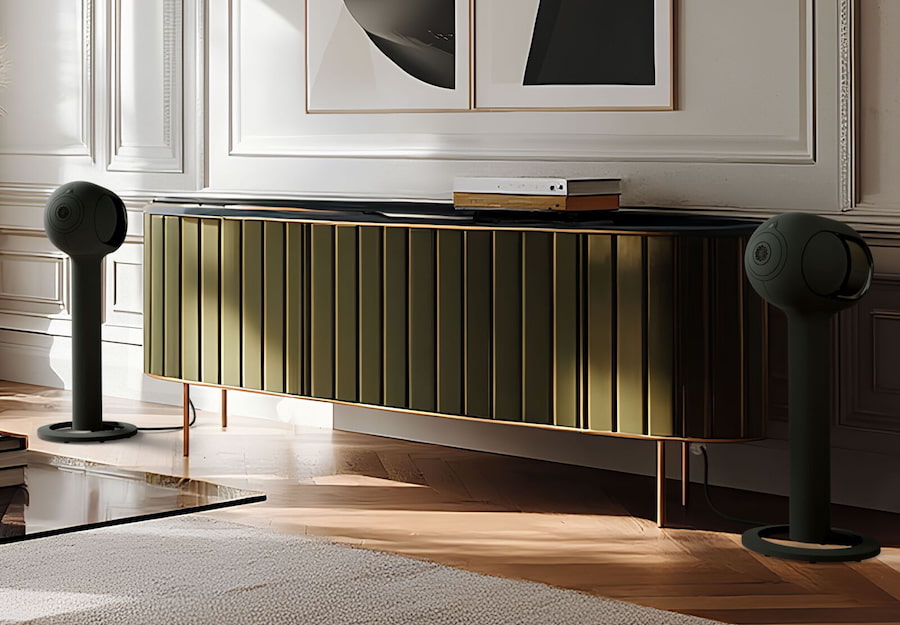
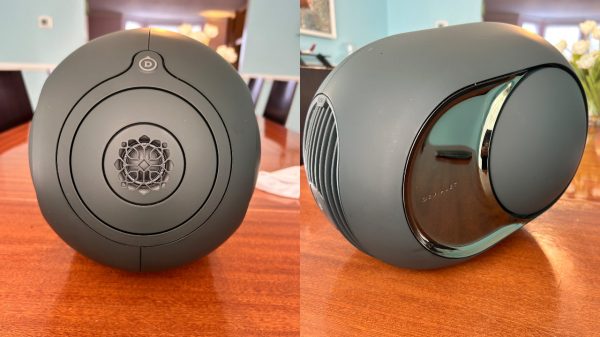
The Devialet Phantom Ultimate 108 dB is what happens when French audio engineers decide that subtlety is for the weak. At $3,800 per speaker, this Deep Forest–finished beast (dark green with black-chrome drama) isn’t pretending to blend in—it’s here to dominate your room, your power outlet, and possibly your structural foundation. Inside the orb-from-another-dimension shell sits Devialet’s latest ADH New Gen amplification, a hybrid Class A/Class D system that’s equal parts finesse and raw violence. With 1,100 watts on tap, 32-bit/96 kHz processing, and a frequency range from a ludicrous 14 Hz to 35 kHz, the 108 dB turns a single speaker into its own indoor weather system. HBI (Heart Bass Implosion) lives up to the name—bass isn’t just heard, it’s felt in joints you forgot you had—and SAM protects the drivers in real time so they don’t self-destruct while doing things physics politely recommends you avoid. The new SoC (NXP i.MX 8M Nano) and DOS3 platform bring improved thermal behavior, better energy management, and full-fat connectivity: WiFi 6, Bluetooth 5.3, Roon Ready, AirPlay, Google Cast, TIDAL Connect, UPnP, and Spotify Connect (Lossless incoming).
Daily use is blissfully simple thanks to a top-mounted touch interface, and the Devialet App offers Music, Podcast, and Cinema modes without drowning you in nonsense menus. But before you get carried away: this thing is heavy. You’ll need two hands, some leg strength, and possibly a spotter. The Tree Stand isn’t optional; it’s life insurance for your $3,800 orb. Once planted, though, the payoff is enormous. The Phantom Ultimate 108 dB fires off precise imaging, a lot of detail, and low-end force that makes your subwoofer feel inadequate and your guests slightly nervous. It plays far louder than any sane person needs, and the industrial design is pure conversation starter—half sculpture, half sci-fi relic. If you want refined, explosive, utterly over-engineered wireless sound—and you’re not afraid of a speaker that stares back at you—the Phantom Ultimate 108 dB is peak Devialet: dramatic, brilliant, a little unhinged, and completely unforgettable.
$3,800 at Amazon | Crutchfield
Canvas HiFi Solo ($4,499)
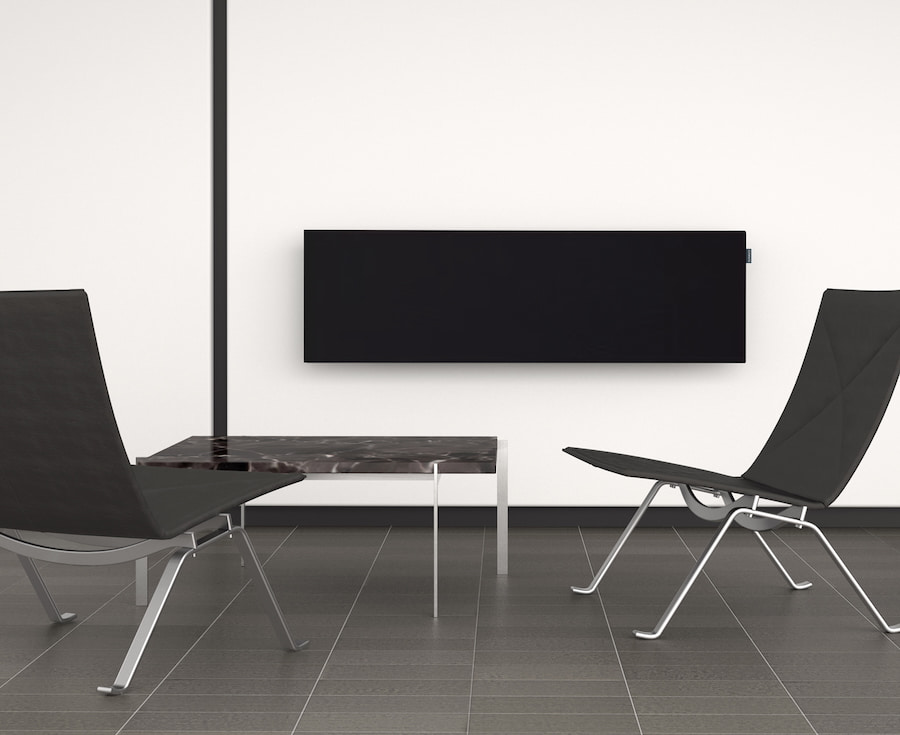
No product in 2025 has hit harder than the Canvas HiFi, and the Solo version delivers the same performance for $500 less by ditching an integrated TV mount. You can put it on a tabletop, mount it to a wall, or let it sit on the floor. Its acoustic design holds up in every configuration we tested. What makes it so compelling is the engineering: a pair of SB Acoustics 6.5″ long-excursion mid-bass drivers, dual 29mm silk-dome tweeters in CANVAS-designed aluminum waveguides, and two 5×8″ passive radiators working inside a surprisingly large, yet thin, 24-liter enclosure. That cabinet volume, combined with a total radiating area of 592 cm² (roughly equivalent to a single 12″ woofer), is the real reason it delivers more output and deeper bass than soundbars boasting “1000-watt” amplifiers. The Solo relies on a 4-channel, 250-watt Class D amp, but its efficiency and displacement give it a level of headroom and low-frequency authority no spec-inflated competitor can match. DSP crossovers tuned through Klippel ensure linear frequency and phase response, and the Burr-Brown 24-bit/192 kHz DAC handles conversion without unnecessary coloration.

The other half of the equation is the Bacch 3D calibration system, which transforms this single speaker bar into a shockingly spacious imaging machine. It creates believable 180-degree placement with sounds materializing well outside the enclosure while keeping vocals locked dead-center and natural. The Solo doesn’t just “sound big for its size”—it routinely produces spatial cues in places where no speaker exists, something traditional soundbars simply can’t replicate. Deep, controlled bass extends down to a verified 30 Hz, outperforming every standalone soundbar we’ve heard and even edging out a number of passive floorstanders. Taken as a whole, the Solo is a rigorously engineered, physics-driven design that marries premium transducers, efficient amplification, and advanced spatial processing to produce one of the most convincing single-enclosure listening experiences of the year.
Focal Diva Mezza Utopia ($69,000)
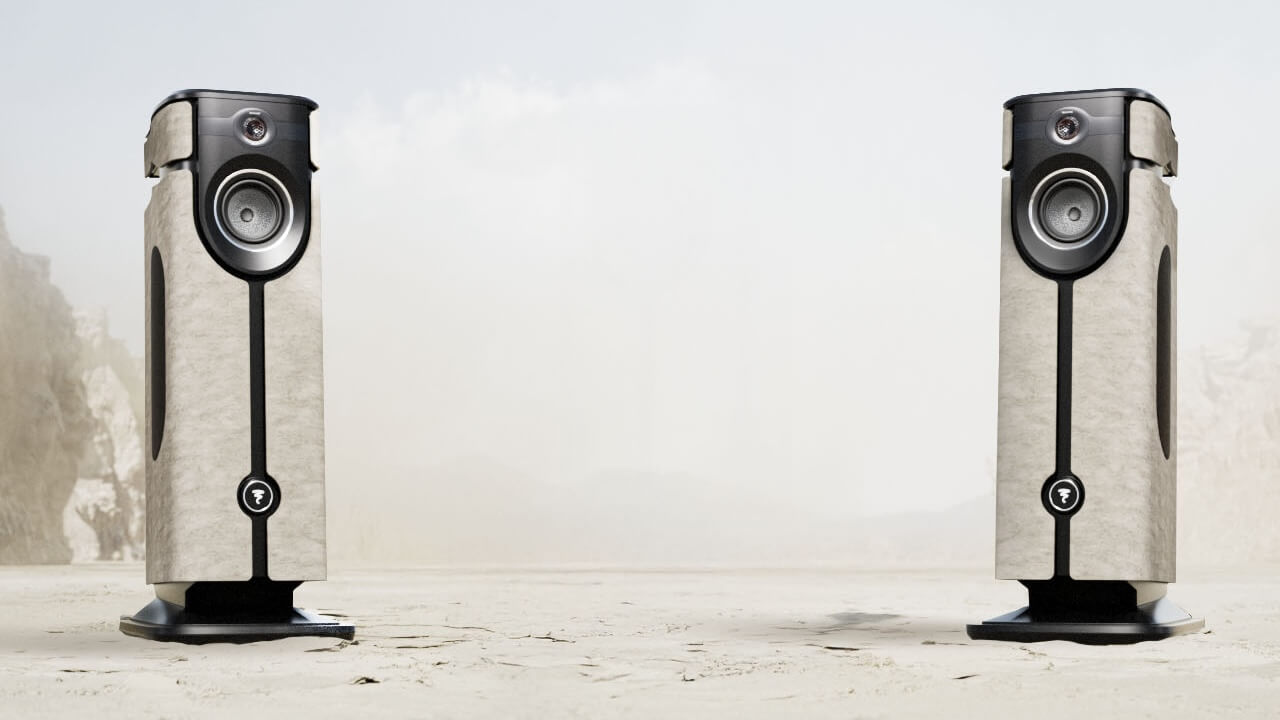
Focal isn’t dipping a toe into the wireless deep end—they’re cannonballing straight into the pool and splashing every separates loyalist clinging to their rack of boxes. The Diva Mezza Utopia is obscenely expensive at $69,000, but it’s also one of the first wireless efforts that feels like a legitimate successor to a statement hi-fi system rather than a lifestyle shortcut. Ultra-Wideband transmission at 96/24 with no compression, Naim’s 500-watt Class A/B muscle per channel, a real 3-way Utopia-grade acoustic platform, and a streaming stack that finally feels complete… you can see where the money went.
The push-push quad-woofer architecture hits with real authority, the beryllium tweeter brings that familiar Utopia sparkle, and the midband has the kind of transparency that usually demands a small country’s GDP in separates. Add IDC for channel clocking, ADAPT for room and user calibration, and multi-room integration for up to 32 Focal & Naim devices, and suddenly this “wireless” system looks less like a convenience product and more like a modernized flagship disguised as two monoliths.
Is it expensive? Absolutely. Is it overkill? Also yes. But is it one of the most complete, best-sounding wireless loudspeaker systems ever engineered? From what we’ve heard so far… very likely. This is the future Focal wants—and if early impressions hold, a lot of audiophiles might decide that letting go of their separates isn’t sacrilege after all.
$69,000/pair at Focal Naim America
The Bottom Line
Taken together, this trio paints a pretty clear picture of where wireless and powered speakers are racing next. On one end, the Devialet Phantom Ultimate 108 dB still rules the “physics-don’t-apply-to-me” lifestyle kingdom—absurd output, aggressive DSP, and a design that looks like it escaped from a sci-fi lab. In the middle, the Q Acoustics M40 plays it cooler: a compact active floorstander with built-in streaming and amplification that can quietly replace the amp-plus-tower combo in the average living room without anyone panicking about rack space.
And then there’s the Focal Diva Mezza Utopia, which more or less tells the entire category to take a seat. It’s wireless, yes—but in the same way a hypercar is technically “street legal.” UWB transmission, Naim Class A/B power, full-tilt Utopia drivers, and calibration tech that would make a mastering engineer blush. It’s a statement piece masquerading as a system simplifier: two monoliths, no cables, no separates, and absolutely no shame in being $69,000 if it means redefining what “wireless” can actually sound like.
Drop down in size and you hit the Audioengine HD4 Next Gen, Edifier MR5, and Audioengine A2+ Next Gen—desktop and nearfield systems that now deliver real hi-fi imaging, proper inputs, and usable Bluetooth without needing a rack of gear. At the smallest, lifestyle end of the spectrum, the Ruark R1 Bluetooth Radio and Denon Home 150 show how far “single-box” speakers have come for kitchens, offices, and bedrooms: proper sound, decent bass, and app or multiroom support in very small footprints.
The Canvas HiFi Solo is the rare “soundbar” that doesn’t behave like one. Its oversized 24-liter enclosure, serious SB Acoustics driver array, and efficient 250-watt Class D amp give it bass depth and output that embarrass traditional bars and even some tower speakers. Add Bacch 3D processing and you get a single-enclosure system that throws a shockingly wide, precise soundstage with locked-in vocals and true 30 Hz authority. If you want the closest thing to a full hi-fi setup from one box, this is it.
The bigger story is that the category has quietly grown up. Class D amplification, better DACs, smarter DSP, and more mature app ecosystems mean you can now pick your form factor—from tiny radio to bookshelf to floorstander—and still get credible sound, streaming, and enough connectivity to integrate a TV, turntable, or computer.
Related Reading:



















MrSatyre
April 6, 2021 at 8:50 pm
Unbelievable that you didn’t include the Elac Navis.
Ian White
April 6, 2021 at 11:50 pm
Not unbelievable as I’ve never heard them. Just because a product exists doesn’t mean that we’ve heard them all.
Asa
December 23, 2024 at 12:33 am
Have the HD6 in a home office, and enjoy them. You might want to add the sub which I also have.
Thanks for all these summary reviews, Ian. Much appreciated!
Ian White
December 23, 2024 at 12:56 am
Asa,
They make good stuff. My kids love their A2+ speakers. Made sense considering their listening habits.
Look for a new focus in 2025 from me on Hi-Fi for smaller spaces. Happy Holidays. Almost time to spend Chanukah with my siblings in Toronto.
IW
James Pelton
November 10, 2021 at 1:40 am
well said. Good article.
Jason Lee
January 13, 2022 at 9:06 pm
If you have to choose only one, which one would you choose?
– Kanto Tuk
– KEF LSX
– Totem Kin Play
Ian White
January 13, 2022 at 9:33 pm
Jason,
KEF has the best control app. Kanto TUK will definitely play louder and has much deeper bass. You also have to connect the two TUK speakers together with the provided speaker cable.
I rather like the TUK.
Ian
Stephen Jeppesen
April 5, 2022 at 2:10 pm
If these speakers here and consider inexpensive. I hate to see the expensive ones.
Kevin McGuiness
July 12, 2022 at 10:42 am
Hello Ian:
I’m trying to decide between the Vanatoo Transparent 1 Encore (Not on this list but maybe you have heard them) and the Q Acoustics MD20. Any thoughts on how these two compare? They would need to project in a larger space and would not be used in a small office or in computer table service.
Thanks very much.
Kevin
Ian White
July 12, 2022 at 11:09 am
Kevin,
I’ve not heard that specific model from Vanatoo so I really can’t compare them to the Q Acoustics model.
The Q are very good speakers but I’m not sure if they are ideal for a “large” space. It really depends on the size of the room.
Best,
Ian
Erik
November 29, 2022 at 9:06 pm
Hi,
Trying to choose between the Vanatoo Transparent Ones or the Audioengine HD6’s to play music in a large bedroom. Your thoughts?
Ian White
November 29, 2022 at 10:54 pm
Audioengine HD6.
Best,
Ian White
GordM
December 11, 2025 at 10:54 pm
The Devialets are intriguing, if a shade beyond my reach.
Ian White
December 11, 2025 at 11:06 pm
Gord,
Full review coming and they are very intriguing. My dog ran out of the room after the first bass notes hit.
IW