In This Article:
- Introduction
- Best Noise Cancellation: Sony WH-1000XM6 ($449)
- Best Mid-Priced: Bowers & Wilkins Px7 S3 ($479)
- Most Versatile: Sennheiser HDB 630 ($499)
- Best High-End Debut: Noble Fokus Apollo ($649)
- Best Luxury: Bowers & Wilkins Px8 S2 ($799)
- Best Sound Quality: Focal Bathys MG ($1,499)
- Best Cost-No-Object: DALI IO-12 ($1,750)
- Best Budget: EarFun Wave Pro ($79)
- Best Gaming Headset: Sony Pulse Elite ($149)
- The Bottom Line
Introduction
2025 didn’t reinvent wireless audio, but it definitely sharpened the edges. Bluetooth LE Audio is finally showing up in the real world, aptX Lossless is no longer a rumor, and LDAC remains the codec Android fans cling to like a security blanket. The majors — Sony, Bose, and Apple — keep inching the bar upward, but the real story is who’s sprinting past them. Sennheiser, Focal, Bowers & Wilkins, and even Noble are delivering better sound than the big three, which tells you where the actual innovation is happening.
Wireless still isn’t on the level of a great passive headphone plugged into a quality dongle DAC, but for 90 percent of listeners the gap is barely noticeable now. ANC is stronger, tuning is smarter, build quality is better, and features are deep enough that most people can forget about the tech and just enjoy the music. Convenience wins, and wireless owns that battlefield.
The other quiet revolution of 2025 is the rise of higher bit-rate Bluetooth USB-C transmitters from Sennheiser, Creative, FiiO, and Questyle. These little dongles finally give users with older hardware — or iPhones that still refuse to join the aptX or LDAC party — a path to experience higher quality wireless audio. Plug one in, and suddenly you’re not stuck in SBC (the original Bluetooth audio standard) purgatory anymore.
It’s a strange but exciting moment for headphones. Flagship models keep battling for ANC supremacy, mid-tier models are inheriting yesterday’s top tech, and the budget class just had its strongest year in a decade. If 2024 felt like the warm-up, 2025 is the year wireless finally walked in like it owned the place.
Best Noise Cancellation: Sony WH-1000XM6 ($449)

The Sony WH-1000XM6 is a classic Sony move: undeniable excellence wrapped in a few head-scratching decisions. It’s their best-sounding and best-performing ANC headphone yet, with upgrades in clarity, dynamics, and noise cancellation that put real distance between the XM6 and every previous generation. The $50 price bump isn’t outrageous, but it does make the competition look hungrier. Comfort can be hit-or-miss for glasses wearers, USB-wired audio is gone (so no charging while listening), and early LC3/Auracast support feels more like a teaser than a finished feature. Still, most of these quirks are manageable—adjust the headband depth, rely on the excellent battery life, and wait for firmware updates to mature the new Bluetooth stack.
On the whole, the WH-1000XM6 delivers the most complete over-ear ANC package of 2025. The build remains largely plastic, but the internal engineering improvements—better drivers, stronger ANC, cleaner tuning, and longer battery life—show real progress where it counts. Improving both sound quality and ANC at the same time is rare, and it’s exactly why Sony earns the crown for over-ear ANC headphone of the year. Some competitors may edge it out in pure sonic refinement, but none offer the XM6’s combination of performance, polish, and real-world usability.
Go to full review | $449 at Amazon | Crutchfield
Best Mid-Priced: Bowers & Wilkins Px7 S3 ($479)
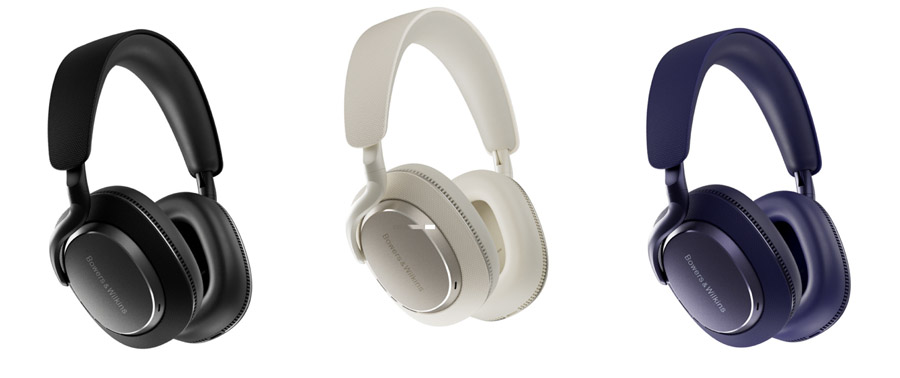
The Bowers & Wilkins Px7 S3 hits a sweet spot in today’s wireless market: lively, dynamic tuning with a Harman-leaning curve, a tasteful bass lift, and far better detail and refinement than anything else near its price. ANC isn’t Sony- or Bose-level, but it’s more than effective enough for commuting, office use, and daily noise control without the overprocessed feel some competitors slip into. The real story is the sound—rich, clean, and surprisingly resolving—and the build quality, which lands closer to the Bathys MG tier than the XM6 tier. At $479, you’d need to jump at least a hundred bucks to find anything that matches it sonically, and in some cases almost a grand if you’re comparing build. If you want better construction than the XM6, better sound than most mid-tier rivals, and comfort that carries you through hours of listening, the Px7 S3 is an easy win.
Stacked against the competition, the Px7 S3 almost feels like it’s priced too low. It outperforms the XM6 in overall fidelity and comfort, feels more premium in the hand, and—while not on the same technical level as the Px8 S2 or Bathys MG—comes shockingly close for far less money. The new Px8 S2 retakes the flagship spot, but the Px7 S3 remains the value king of B&W’s lineup thanks to its blend of musicality, refinement, materials, and real-world usability. If your priority is great sound with luxury build and you don’t need industry-leading ANC, this is the headphone that will make you smile the widest.
Go to full review | $479 at Amazon | Crutchfield
Most Versatile: Sennheiser HDB 630 ($499)
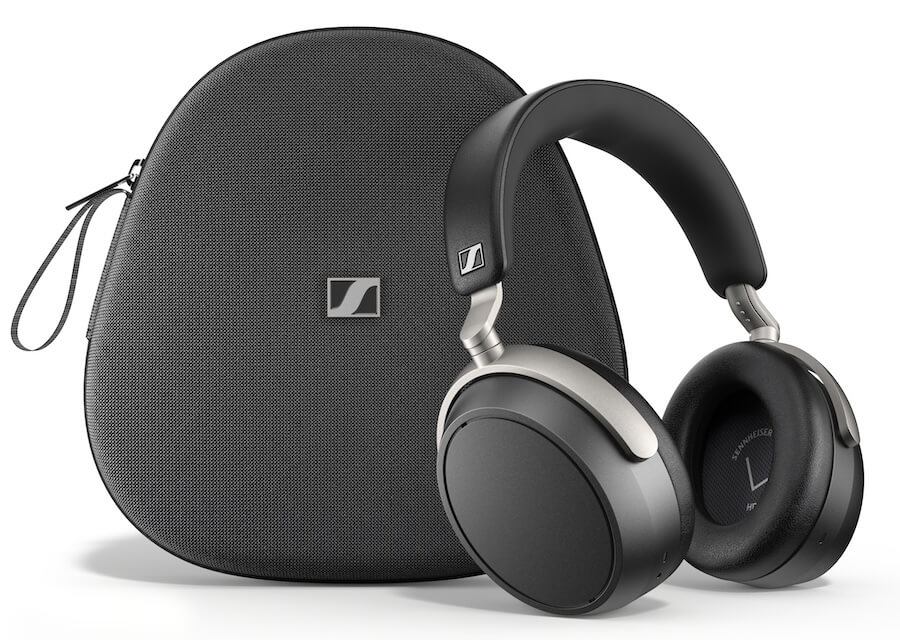
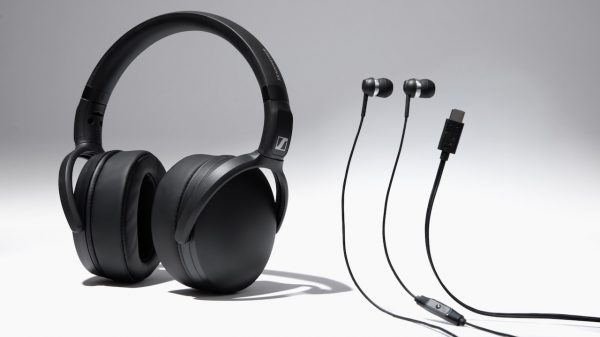
The included BTD 700 USB-C dongle is a real highlight, bringing hi-res wireless audio to devices that normally can’t support it—a smart, well-engineered solution that works seamlessly across Android, iOS, Windows, and macOS. The Smart Control Plus app adds genuine value too, offering a parametric EQ, crossfeed, and bass boost, plus customizable ANC and on-head detection that actually enhance everyday use rather than clutter it.
The strengths here are clear: outstanding clarity, focused mids, and a spacious soundstage that comes surprisingly close to open-back performance. Comfort and battery life are equally impressive, easily covering a full week of daily commuting. Tonally, Sennheiser prioritizes upper-bass and midrange precision over sheer sub-bass weight—so while bass lovers might crave a little more punch, the payoff is exceptional detail, texture, and imaging.
Go to full review | $499 at Amazon | Crutchfield
Best High-End Debut: Noble Fokus Apollo ($649)

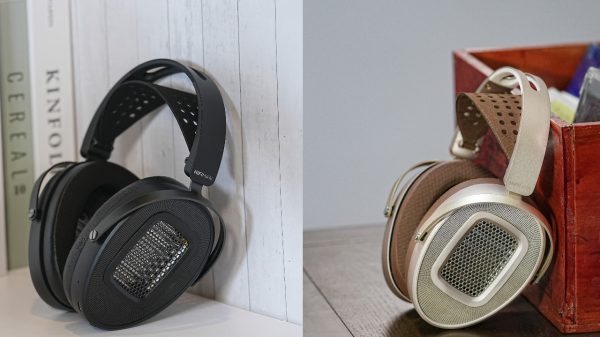
The Noble Fokus Apollo isn’t just Noble’s first wireless headphone—it’s their first over-ear headphone, period. You’d never guess it. At $649, the Apollo lands with a level of build quality and tuning confidence that feels anything but “first attempt.” The star of the show is its hybrid planar magnetic driver, a genuine rarity in wireless designs and a big reason the Apollo can hang sonically with heavy hitters like the B&W Px8 and Focal Bathys. Bluetooth LE adds welcome future-proofing, while aptX, AAC, and LDAC support keep it friendly with existing gear. Out of the box, the tuning leans bass-forward with slightly pulled-back mids, but the built-in 10-band EQ makes dialing in a more neutral or energetic sound profile straightforward.
Feature-wise, ANC isn’t on the Sony/Bose level, but it’s absolutely competitive with the rest of the premium market and more than adequate for daily use. Build quality, materials, and overall polish are right in line with what Noble is known for—high-end, purposeful, and a little luxurious. At $649, it’s not trying to win the value war, but it is trying to win on performance and craftsmanship, and on that front the Apollo lands cleanly. For listeners who want true flagship-tier wireless sound with unique driver tech and a premium feel, Noble’s first over-ear shows up like they’ve been doing this for years.
Go to full review | $649 at Amazon
Best Luxury: Bowers & Wilkins Px8 S2 ($799)

The Px8 S2 is much more than a mild refresh—it’s the overhaul B&W should’ve called the Px9. Sonically, it lands exactly where a $799 flagship should: bass that hits hard without smearing the mids, lively treble that opens up the mix without getting sharp, and a clean, well-defined soundstage that punches above typical wireless boundaries. Support for aptX Adaptive, aptX Lossless, aptX HD, AAC, and SBC, plus the option for wired playback, gives them serious long-term legs—especially with Bluetooth LE support on deck. Compared to the Px7 S3 at $450, the S2 model delivers clear upgrades in driver refinement, resolution, and overall sophistication. And while the original Px8 sparred directly with the original Focal Bathys, the new price gap between the Bathys MG and the Px8 S2 means they no longer live in the same bracket.
Build quality is exactly what you expect from B&W—premium materials, tight tolerances, and a redesigned gimbal and ear cup assembly that noticeably boosts comfort for long listening sessions. ANC takes a big step forward, as does call quality, and the overall tuning is more dynamic, detailed, and confident than the first-gen Px8. The best part? Battery life also improves despite the performance bump. The Px8 S2 may not carry the “Px9” name, but in every practical way, that’s the headphone B&W just released.
Go to full review | $799 at Amazon | Crutchfield
Best Sound Quality: Focal Bathys MG ($1,499)

The Focal Bathys MG marks a clear leap over the original—stronger ANC, cleaner tuning, better dynamics, and a level of refinement that finally makes the “premium wireless” label feel earned. Codec support is still stuck without Bluetooth LE Audio or LDAC, which is a missed opportunity in 2025, but the existing SBC/AAC/aptX/aptX Adaptive pipeline still delivers more than enough fidelity to show off what Focal’s new magnesium driver can do. The build, comfort, and industrial design are all unmistakably Focal, and the sonic upgrade is big enough that the Bathys MG doesn’t just feel like a refresh—it feels like the first truly no-excuses wireless headphone in their lineup.
If you want to hear how good wireless can sound in 2025, this is the one to beat. The Bathys MG edges frighteningly close to wired performance, offering a level of resolution, imaging, and low-end control that will satisfy everyone short of hardcore Susvara truthers. It’s a cost-no-object wireless flagship done right: luxurious without being fragile, powerful without being aggressive, and refined without killing the fun. For a growing number of listening scenarios—commuting, office use, travel, or just not wanting to deal with cables—the Bathys MG proves that wireless has officially crossed the line where “compromise” isn’t the default assumption.
Go to full review | $1,499 at Amazon | Crutchfield
Best Cost-No-Object: DALI IO-12 ($1,750)

The DALI IO-12 prove that wireless ANC headphones can indeed match the performance of many wired models. At $1,750, they’re a serious investment, but the reward is exceptional: precise, immersive sound with excellent imaging and a wide, natural soundstage, all housed in a supremely comfortable, luxurious design. While the absence of advanced codec support and limited EQ flexibility are notable omissions, the IO-12 redeem themselves with impressive battery life, effortless usability, and superb passive isolation. For those willing to pay for top-tier performance, these deliver a wireless listening experience that comes strikingly close to true high-end wired headphones—without giving up convenience.
Go to full review | $1,750 at Amazon | Crutchfield
Best Budget: EarFun Wave Pro ($79)

EarFun has emerged as a solid contender in the $75–$150 headphone category, and the Wave Pro shows a clear focus on fundamentals. The build is straightforward—polymer cups and gimbals, a metal headband, and protein-leather pads—finished in a muted charcoal-and-black design with minimal accents. The 40mm DLC-coated drivers offer good speed and control for the price, and wired measurements revealed a friendly 29Ω load with roughly 102 dB/mW sensitivity, making them easy to drive from any laptop, tablet, or phone with a dongle. LDAC support gives them an edge over many competitors, ANC performance is respectable for travel, and the included hard case makes them simple to pack. Battery life is a highlight, stretching well into multi-day use without needing a recharge.
The sound quality is solid overall, though not without limitations. Imaging depth is modest, and the midrange can feel slightly uneven, but the in-app EQ helps smooth things out. Comfort is good for long listening sessions, the materials feel appropriately sturdy for the price, and the ability to switch to the 3.5mm cable when the battery runs out adds welcome flexibility. The Wave Pro ultimately delivers a practical balance of features, sound quality, and longevity at an accessible price—an appealing option for budget-minded listeners who want reliable performance without unnecessary complications.
Go to full review | $79 at Amazon
Best Gaming Headset: Sony Pulse Elite ($149)
The Sony Pulse Elite is the “budget Audeze Maxwell” for PlayStation users, which feature Audeze planar magnetic drivers, lossless PlayStation Link audio, and strong overall sound quality for $150. Comfort is solid thanks to the suspension headband, though the design is big, the pads are glued on, and the internal ear space runs small, which could be an issue for larger ears. Battery life is excellent at 40+ hours, isolation is modest, and some features require a PS5 to adjust. Still, for the price, you get planar speed, a clean near-neutral tuning, and a surprisingly capable mic—easily outperforming most gaming headsets in this bracket.
The aesthetic is classic black-and-white Sony, with a generous accessory kit including the PlayStation Link dongle, charging hanger, aux cable, and USB-C cable. Bluetooth support is limited to SBC, and connection drops aren’t unheard of, but the real value comes from the lossless wireless mode. If you want a big slice of Maxwell-level performance at half the cost—and you’re rooted in the PlayStation ecosystem—the Pulse Elite is one of the smartest buys of the year.
Go to full review | $149 at Amazon
The Bottom Line
The wireless over-ear category has never been stronger. With excellent options now spanning the $79 to $499 range, you don’t have to spend flagship money to get real performance, and you don’t have to settle for watered-down sound if you’re shopping on a budget. Across the board, ANC is better, tuning is more refined, build quality has stepped up, and battery life is no longer the Achilles heel it once was.
Hi-res wireless is also finally becoming accessible. LDAC, aptX Adaptive, aptX Lossless, and Bluetooth LE Audio are showing up in more headphones than ever, and once source devices fully catch up, we’ll actually see the promise of higher-quality wireless become the norm instead of the exception. Add in the growing ecosystem of Bluetooth transmitters that unlock hi-res codecs on older hardware and iPhones, and the path to better wireless sound is no longer locked behind a $1,200 flagship phone.
If 2024 was the year wireless stopped making excuses, 2025 is the year it matured. There are simply more great choices than ever before, and the performance gap between wireless and wired continues to shrink. Whether you want convenience, travel-ready ANC, or near-audiophile sound without the cables, the category is finally delivering on all fronts.
Related Reading: